Free shipping on orders over $79!

Wine Yeast & Additives

While one would think that wine ingredients consist solely of grape juice and yeast, making wine can actually be much more complex than that!  The ingredients in wine can include different nutrients for the yeast or malolactic bacteria, tannins to add complexity, acids to adjust the pH, and SO2 to help stabilize the wine and protect it from spoiling.  So, where should you start?

If you're wondering where to buy wine yeast, look no further.  We have one of the largest selections available, offer multiple sizes for convenient pitch rates, and guarantee all of our wine yeast to be fresh.  We offer both red wine yeast as well as white wine yeast, and carry a full line of wine additives as well!  Of course, if you have questions on what yeast or additives you should be using for your home made wine, we always invite you to email our support staff at info@moreflavor.com!

Need help picking the right yeast for your grapes? Click here to check out our yeast and grape pairing guide!

Shop by collection
185 products

  • Tannin FT Rouge - PLACEHOLDER Tannin FT Rouge - PLACEHOLDER

    Tannin FT Rouge

    1 review

    Fermentation Tannins lend long-term stability to your wine by laying the right foundation during fermentation.   Scott'Tan FT Rouge is composed of exotic wood and chestnut tannins. Designed specifically for North American red wine fermentations. Benefits can include increased structure and mouthfeel, color stabilization, stability, anti-oxidative qualities, and overall complexity. Tannins can reduce vegetal/herbaceous characteristics and perceived astringency.   To Use: Sprinkle directly onto must and either mix well with your punch down tool or pump over to ensure thorough mixing. If adding to the wine post-fermentation we recommend allowing 3-6 weeks for full integration before racking, fining, filtering or bottling. If being used in conjunction with one another, tannins should be added 6-8 hours after the addition of the enzymes or you run the risk of having the tannins reacting with and removing the enzymes before they have had a chance to do their job!   Recommended dosage rate: 0.8-1.9 g/gal. Use at an initial rate of 1.3 gram per gallon during punch down/pump over. If you want additional tannin add at a rate of .25 g/gal.   A rough approximate of weight is 1 tsp = 2.4 grams. We highly recommend using a scale to weigh the product for an accurate dose. We do not recommend relying on these rough conversions for accurate dosage rates.   Unopened the shelf life is 5 years at 18C (65F).

    $2.79 - $239.99

  • Dry Wine Yeast - ICVD254 - PLACEHOLDER Dry Wine Yeast - ICVD254 - PLACEHOLDER

    Lalvin ICV D254™ | Dry Wine Yeast

    3 reviews

    Lalvin ICV D254 is the go-to choice for winemakers looking to produce wines with remarkable structure, rich mouthfeel, and intense aromatic complexity Whether crafting a powerful Cabernet, refining a lush Chardonnay, or enhancing a blended red, ICV D254 consistently delivers bold, layered wines with exceptional depth Enhance complexity and mouthfeel in premium wines Lalvin ICV D254 is a premium wine yeast strain selected for its ability to enhance mouthfeel, aromatic intensity, and flavor complexity. Known for its impact on color stability and tannin integration, ICV D254 produces wines with rich dark fruit, spice, and earthy notes, making it ideal for full-bodied reds and structured white wines. Enhanced Mouthfeel: Boosts polysaccharide production, contributing to a smooth, velvety texture. Aromatic Complexity: Promotes rich expressions of black cherry, plum, and dark chocolate in reds, and pear, honey, and vanilla in whites. Alcohol Tolerance: Effective up to 16% ABV, allowing for complete fermentation in high-sugar musts. Attenuation Rate: Typically achieves 85–90% attenuation, ensuring a well-structured, dry finish. Temperature Range: Performs optimally between 59°F (15°C) and 82°F (28°C), enhancing both aromatic expression and mouthfeel. Medium Flocculation: Settles well post-fermentation, contributing to clarity and ease of racking. Applications: Full-Bodied Red Wines: Perfect for Cabernet Sauvignon, Merlot, Syrah, and Zinfandel, promoting complexity and tannin integration. Barrel-Aged Reds: Enhances oak integration, providing deeper spice and toasted vanilla notes. White Wines: Ideal for Chardonnay and Viognier, contributing to a creamy mouthfeel and enhanced structure. Blended Reds: Suitable for GSM blends and Bordeaux blends, adding depth and mouth-coating richness. Flavor Profile:  Dark Fruits: Bold expressions of black cherry, plum, and blackberry dominate the palate. Spice & Earthiness: Subtle hints of cocoa, toasted oak, and leather add complexity. Creamy Mouthfeel: Enhanced polysaccharide production leads to a lush, smooth palate experience. Nutty & Vanilla Notes: When barrel-aged, promotes toasted almond and vanilla bean characteristics. Usage:  Rehydration: Rehydrate in 10 times its weight of chlorine-free water at 95°F (35°C) for 15–20 minutes. Stir gently to prevent clumping. Pitch Rate: Use 1–1.5 grams per gallon (0.25–0.4 grams per liter) for optimal fermentation and mouthfeel enhancement. Nutrient Addition: Supplement with yeast nutrient to prevent sluggish fermentation, especially in high-Brix musts. Fermentation Temperature: Maintain between 59°F and 82°F to optimize ester formation and aromatic depth. Extended Maceration: Ideal for long maceration to deepen color, tannin complexity, and mouthfeel. Click here for a PDF of the MoreWine Manual on re-hydrating wine yeast. Click here for a PDF of the MoreWine Yeast and Grape Pairing Guide.  

    $2.99 - $712.99

  • Dry Wine Yeast - Premier Blanc - PLACEHOLDER

    Red Star | Premier Blanc Champagne | Dry Wine Yeast

    3 reviews

    Good for ethanol and SO2 tolerance. Begins fermentation quickly and is reliable at cooler fermentation temperatures. Neutral flavor profile. Recommended for dry white and red wines but actually not the first choice for champagne (DYW10 is.) Alcohol tolerance to 17% and a fermentation range of 60 to 80 degrees. Click here for a PDF of the MoreWine Manual on re-hydrating wine yeast.

    $1.79

  • Dry Wine Yeast - Pasteur Red - PLACEHOLDER Dry Wine Yeast - Pasteur Red - PLACEHOLDER

    Premier Rouge (Pasteur Red) Dry Wine Yeast

    2 reviews

    Strong fermenter for producing full bodied reds, especially good with grapes from the Cabernet and Zinfandel families. Ferments from 60 to 80 degrees. This is the yeast formally known as Pasteur Red.  The 5 gram packet contains enough yeast to make 5 gallons of wine.  Rehydrate at 104F or read our guide below for best rehydration practices.   Click here for a PDF of the MoreWine Manual on re-hydrating wine yeast.

    $1.79 - $39.99

  • Opti-White - PLACEHOLDER Opti-White - PLACEHOLDER

    Opti-White

    If you want to try your hand at winemaking, Opti-White is a key tool that helps preserve the protein stability and color of white wine.   Derived from natural, inactivated yeast, Opti-White has high anti-oxidative properties. It increases mouthfeel, avoids browning, increases the wine's protein stability and volatile thiols (aroma compounds), and protects fresh aromas during aging. Use at the rate of 1.9 grams per gallon. Dilute Opti-White in 4 times its weight of water or must and add at beginning of fermentation.   Approximately 3.4g/tsp. For best results, we recommend using a scale to weigh out the product for an accurate dose.

    $4.49 - $134.99

  • Dry Malolactic Wine Bacteria - Viniflora CH16

    Viniflora® CH16 | Dry Malolactic Bacteria | 1.5 g

    20 reviews

    Selected for its outstanding ability to conduct fast malolactic fermentation in high alcohol red wine Direct inoculation, freeze-dried bacteria – does not require rehydration High numbers of active cells which ensure a quick start of fermentation Good for 66 gallons. Viniflora CH16 is a freeze-dried pure culture of Oenococcus oeni. This malolactic bacterium has been carefully selected to induce malolactic fermentation in red wine with high alcohol levels, after direct inoculation. Viniflora CH16 has been isolated from a 16% Petit shiraz wine in the Russian River area of California, USA. The bacterium's natural environment gives a good picture of its application; CH16 has been carefully selected for its outstanding ability to conduct fast malolactic fermentation in high alcohol red wine (up to 16% v/v) with a pH value above 3.4. Innoculation: Viniflora CH16 should be added to dry wine, immediately after the alcoholic fermentation. Viniflora CH16 should always be inoculated directly into the wine. No rehydration or reactivation is required. For more information about ML Bacteria, please see MoreWine!'s Guide to Malolactic Fermentation. Characteristics: Very high fermentation speed Low production of volatile acidity Outstanding tolerance to high alcohol levels. Excellent all round tolerance to pH, temperature and SO2 No production of biogenic amines Key Features: Recommended for red wines Direct inoculation, freeze-dried bacteria – does not require rehydration High numbers of active cells which ensure a quick start of fermentation This strain is pH tolerant to 3.4, Total SO2 to 40 ppm (red wines), temperature 62 – 77° F and alcohol to 16% (v/v) Low level of volatile acidity Cinnamoyl Esterase Negative

    $34.99

  • Dry Wine Yeast - BM 4X4 - PLACEHOLDER Dry Wine Yeast - BM 4X4 - PLACEHOLDER

    BM 4X4 Dry Wine Yeast

    1 review

    BM 4x4 is a new yeast blend created by Lallemand, designed to provide all of the benefits and flavors of the BM45 yeast strain, along with a much more reliable and consistent fermentation. This means that you'll be getting all of the flavors of jam, rose petals, and cherry liquor with a stronger fermentation with less risk of a stuck or sluggish fermentation. This is a blend between the traditional BM45 and a complimentary strain, chosen for its fermentation kinetics. Positive interaction between these strains means a more dependable fermentation, along with increased aromatic intensity, color intensity, and length of finish. Ideal fermentation temperature is between 64-82°F. This strain will enhance varietal character, and mouthfeel in a wine. Alcohol tolerance is 15%. Click here for a PDF of the MoreWine Manual on re-hydrating wine yeast. Click here for a PDF of the MoreWine Yeast and Grape Pairing Guide.

    $3.49 - $71.99

  • Tannin Complex - PLACEHOLDER

    Tannin Complex

    1 review

    This product replaces our TAN130 - Tan'Cor Enological tannins offer the winemaker the possibility to add refined, highly-bindable tannin to your wine at any stage during the process. Benefits can include increased structure and mouthfeel, color stabilization, stability, anti-oxidative qualities, and overall complexity. Tannins can reduce vegetal/herbaceous characteristics and perceived astringency. We offer four types of oenolgical tannins, two for use during fermentation, and two for use during the aging phase. Aging tannins Tannin Complex is a tannin that is added post fermentation to improve the overall structure and to help protect the wine from oxidation during aging. It is composed of proanthocyanidins and ellagic tannins that integrate easily into young wines. Tannin Complex was specially developed to add structure and a soft mid palate to premium red wines without harshness or a forward oak finish. It can also enhance the varietal fruit character while adding complexity to the finish. Helps stabilize wines by improving the polyphenolic composition. It is especially useful when aging wines in older tannin-leached barrels and with full, fruity, lower tannin varietals like Syrah and Zinfandel. To Use: While racking or stirring, add Tannin Complex to the wine incrementally. Mix well to ensure homogeneity. Final addition should be made 3-6 weeks before bottling to allow for complete polymerization and settling. Use at the rate of 0.20-1.14 g/gal (5-30 g/hL) prior to aging. A rough approximate of weight is 1 tsp = 3.1 grams. We highly recommend using a scale to weigh the product for an accurate dose. We do not recommend relying on these rough conversions for accurate dosage rates.

    $1.99 - $83.99

  • Lallzyme EX - PLACEHOLDER

    Lallzyme EX

    1 review

    Lallzyme EX – Enzyme for Enhanced Color and Juice Release in Early-Drinking Red Wines Improves color extraction while preserving soft, approachable tannins Increases free-run and press juice yield by breaking down cell wall pectins Enhances clarification and reduces solids for easier pressing and settling Supports smooth mouthfeel in red wines intended for early consumption Balanced enzyme activity preserves varietal fruit while aiding extraction efficiency Lallzyme EX is a gentle maceration enzyme developed by Lallemand for red wine fermentations where balance, early drinkability, and clean extraction are key. Its primary function is to degrade grape skin cell walls through pectinase and hemicellulase activity, improving juice yield and the release of color compounds without promoting aggressive tannin extraction. This makes it particularly well-suited for light- to medium-bodied red wines or warm-climate varietals where managing tannin levels is critical. EX helps clarify must, improve press efficiency, and support the production of soft, fruit-driven wines that are ready for market sooner. Comparison to Other Lallemand Maceration Enzymes: Compared to EX-V, which targets tannin structure and aging potential, EX is better for fresh, youthful styles that prioritize fruit expression and roundness. In summary: EX = best for early-release reds, softer tannins, moderate color EX-V = ideal for structure and age-worthines Protocol Dilute Lallzyme EX in 10 times its weight of chlorine-free water. Add to crushed grapes or must at the start of fermentation. Mix well to ensure even distribution. Best activity between 20–30°C. Avoid use below 10°C or after fermentation is complete. Usage Rates Recommended dosage: 20–30 grams per ton of grapes = 0.44–0.66 grams per hectoliter (assuming 450 L/ton) = 0.0044–0.0066 grams per liter = 0.017–0.025 grams per gallon Use the lower range for softer grapes or longer macerations. Use higher rates when working with firmer-skinned varieties or short fermentations where improved extraction and juice yield are needed.  

    $2.39 - $34.99

  • Dry Wine Yeast - D21 - PLACEHOLDER Dry Wine Yeast - D21 - PLACEHOLDER

    Lalvin ICV D21® | Dry Wine Yeast

    ICV-D21 is the ideal choice for winemakers seeking to craft structured, full-bodied wines with bold aromatics and enhanced mouthfeel Whether perfecting a Cabernet Sauvignon, enhancing the richness of Syrah, or adding depth to Chardonnay, ICV-D21 consistently delivers complexity, elegance, and age-worthiness in every bottle Enhanced mouthfeel and rich aromatics for structured red and white wines ICV-D21 is a robust wine yeast strain specially developed by the Institut Coopératif du Vin (ICV) for crafting full-bodied red and white wines with enhanced mouthfeel and complex aromatics. Known for its ability to optimize tannin extraction and promote rich color stability, ICV-D21 is ideal for producing age-worthy wines with layered depth and intense fruit expression. Its consistent fermentation kinetics ensure reliable attenuation and balanced structure in high-Brix musts. Enhanced Mouthfeel: Promotes a smooth, velvety texture with well-structured tannins. Aromatic Complexity: Boosts expressions of dark berries, plum, and subtle floral notes. Alcohol Tolerance: Effective up to 16% ABV, allowing for rich, full-bodied wine production. Temperature Range: Performs optimally between 64°F (18°C) and 86°F (30°C), providing flexibility for various winemaking styles. Medium Flocculation: Contributes to clarity and stability post-fermentation. Low SO₂ Production: Preserves aromatic purity and minimizes off-flavors. Applications: Cabernet Sauvignon: Enhances bold fruit expression and promotes structured tannins. Merlot: Boosts plum and cherry notes while improving mouthfeel. Syrah: Elevates dark fruit and peppery spice with deep color extraction. Grenache: Enhances ripe red fruit flavors with a smooth finish. Chardonnay: Promotes complexity and rounded mouthfeel with subtle floral accents. Flavor Profile:  Dark Fruits: Highlights blackberry, plum, and cherry with concentrated richness. Spice and Floral Notes: Accentuates hints of violet, licorice, and black pepper. Structured Tannins: Integrates smooth tannins for enhanced mouthfeel and aging potential. Aging Potential: Supports long-term aging, improving depth and complexity over time. Usage: Rehydration: Rehydrate in 10 times its weight of chlorine-free water at 95°F (35°C) for 15–20 minutes. Stir gently to prevent clumping. Pitch Rate: Use 1–1.5 grams per gallon (0.25–0.4 grams per liter) for optimal fermentation and flavor development. Nutrient Addition: Supplement with yeast nutrients, particularly in low-nitrogen musts, to ensure complete fermentation. Fermentation Temperature: Maintain between 64°F and 86°F for optimal tannin extraction and aromatic development. Extended Maceration: Ideal for long maceration periods to intensify structure and deepen flavor complexity. Click here for a PDF of the MoreWine Manual on re-hydrating wine yeast. Click here for a PDF of the MoreWine Yeast and Grape Pairing Guide.

    $2.99 - $712.99

  • Lallzyme EX-V - PLACEHOLDER Lallzyme EX-V - PLACEHOLDER

    Lallzyme EX-V™ | Fermentation Enzyme For Structured Red Wines

    6 reviews

    Lallzyme EX-V – Enzyme for Structured Red Wines with Enhanced Color and Tannin Stability Extracts color and tannins with improved integration for wines destined for aging Promotes stable anthocyanin-tannin bonding for long-lasting color Enhances mouthfeel, midpalate weight, and structural balance Improves juice yield and reduces solids through efficient cell wall degradation Balanced enzyme activity supports both extraction and finesse in premium red wines Lallzyme EX-V is a precision enzyme blend developed by Lallemand for red wine fermentations where structure, balance, and ageability are desired. It combines strong pectolytic activity with targeted cellulase and hemicellulase functions to break down grape skin cell walls, facilitating the release of anthocyanins and seed-derived tannins in a controlled, integrative manner. EX-V is ideal for varietals with moderate to firm skins or when crafting red wines intended for barrel aging, as it enhances phenolic complexity without over-extracting bitterness or astringency. Wines fermented with EX-V tend to show refined texture, vivid color, and excellent long-term stability. Comparison to Other Lallemand Maceration Enzymes: Compared to EX, which is best for early-drinking, fruit-forward reds, EX-V is designed for more structured, age-worthy styles with higher tannin and color stability.  EX = softer, fruit-driven reds for early release EX-V = structured, balanced reds with aging potential Protocol Dilute Lallzyme EX-V in 10 times its weight of chlorine-free water. Add to crushed grapes or must at the beginning of fermentation. Mix thoroughly for even dispersion. Optimal temperature range: 20–30°C. Avoid adding below 10°C or after alcoholic fermentation begins. Usage Rates Recommended dosage: 30–40 grams per ton of grapes = 0.66–0.88 grams per hectoliter (assuming 450 L/ton) = 0.0066–0.0088 grams per liter = 0.025–0.033 grams per gallon Use the lower end of the range for moderately structured fruit or extended maceration. Use the higher range for tighter-skinned grapes, shorter fermentations, or when greater phenolic extraction and color stability are required for barrel-aged or long-lived reds.

    $2.89 - $144.99

  • Dry Wine Yeast - BM45 Brunello - PLACEHOLDER Dry Wine Yeast - BM45 Brunello - PLACEHOLDER

    BM45 Brunello Dry Wine Yeast

    A great yeast for making traditional Italian Style wines.   BM45 Brunello Dry Wine Yeast is an Italian isolate that is recommended for Sangiovese and extended maceration wines. It is a slow starter and moderate fermenter. BM45 has high nutritional needs; it should be used in conjunction with Go-Ferm (AD342) and Fermaid K (AD345) in order to minimize H2S production. In red wines, BM45 brings out aromas described as fruit jams, rose petals and cherry liqueur, with notes of sweet spices, licorice and cedar. It should be noted that BM45 may produce a "gamey" quality immediately post alcoholic fermentation, that will age out in about 6 months. Best results from 64 to 82 degrees F, with an alcohol tolerance up to 16%. Click here for a PDF of the MoreWine Manual on re-hydrating wine yeast. Click here for a PDF of the MoreWine Yeast and Grape Pairing Guide.  

    $2.99 - $68.99

  • Reduless - PLACEHOLDER Reduless - PLACEHOLDER

    Lallemand Reduless | Inactivated Yeast with Copper | Fixes H2S Issues

    1 review

    Reduless is a new product from Lallemand that was designed to correct negative VSCs (Voltatile Sulfur Compounds) such as H2S (hydrogen sulfide, A.K.A. "rotten egg") and DMS (dimethyl sulfide, A.K.A. "cooked corn") defects in wine. Made from inactivated yeast that have been infused with copper using a proprietary process, Reduless is a much gentler H2S remedy on the wine than the traditional copper sulfate (CuSO4) treatment alone. If you have an H2S problem, then we recommend treating it with Reduless first. However, if the sulfur problem still remains after the Reduless treatment, then a bench trial with copper sulfate (CuSO4) is recommended. Note: The sooner you catch a sulfur problem the easier it is to deal with! To Use: Dissolve Reduless in 10 times it's weight in water and add immediately to the wine. Stir the wine gently to ensure a thorough homogenization. Rack or filter after 72 hours. Recommended Dosage: 0.4-0.6 g/gal. The maximum amount of copper that can be released into the wine using Reduless at the recommended dosage is 0.02 ppm.  

    $2.49 - $192.99

  • Dry Wine Yeast - RP15 Rockpile - PLACEHOLDER Dry Wine Yeast - RP15 Rockpile - PLACEHOLDER

    Lallemand ENOFERM RP15 Rockpile | Dry Wine Yeast

    6 reviews

    RP15 is the yeast of choice for winemakers seeking to craft powerful, fruit-driven red wines with structured tannins and bold character Whether perfecting a Cabernet Sauvignon, enhancing the richness of Zinfandel, or deepening the complexity of Syrah, RP15 consistently delivers boldness, clarity, and exceptional flavor intensity Enhanced fruit intensity and structured tannins for bold red wines RP15 is a powerful red wine yeast strain specifically selected for its ability to amplify fruit intensity while supporting structured tannin development. Ideal for crafting big, full-bodied reds, RP15 promotes deep color extraction and emphasizes rich, dark fruit aromatics. Its robust fermentation kinetics ensure complete attenuation, even in high-Brix musts, delivering wines with vibrant complexity and age-worthiness. Fruit-Driven Aromatics: Boosts expressions of blackberry, black cherry, and plum, enhancing depth and richness. Enhanced Tannin Structure: Promotes smooth, well-integrated tannins for improved mouthfeel. Alcohol Tolerance: Effective up to 16% ABV, providing stability for high-alcohol wines. Temperature Range: Performs optimally between 64°F (18°C) and 86°F (30°C), allowing for versatile fermentation conditions. Medium to High Flocculation: Contributes to clarity and stability post-fermentation. Low SO₂ Production: Minimizes sulfurous off-flavors, preserving fruit purity. Applications: Cabernet Sauvignon: Elevates boldness and structure while enhancing dark fruit notes. Zinfandel: Highlights spicy characteristics with deep berry undertones. Syrah & Petite Sirah: Enhances complexity with intense fruit and structured tannins. Merlot: Brings forward lush plum and cherry while smoothing tannins for a balanced finish. Flavor Profile:  Dark Fruits: Prominent expressions of blackberry, black cherry, and plum. Spice and Earthiness: Accentuates subtle hints of black pepper, tobacco, and cedar. Smooth Tannin Integration: Balances structure with a rounded mouthfeel. Aging Potential: Supports long-term aging, improving depth and complexity over time. Guidelines: Rehydration: Rehydrate in 10 times its weight of chlorine-free water at 95°F (35°C) for 15–20 minutes. Stir gently to prevent clumping. Pitch Rate: Use 1–1.5 grams per gallon (0.25–0.4 grams per liter) for optimal fermentation and tannin extraction. Nutrient Addition: Supplement with yeast nutrients, particularly in high-Brix musts, to support strong fermentation. Fermentation Temperature: Maintain between 64°F and 86°F to maximize fruit expression and tannin development. Extended Maceration: Suitable for long maceration periods to boost color intensity and mouthfeel.   Click here for a PDF of the MoreWine Manual on re-hydrating wine yeast. Click here for a PDF of the MoreWine Yeast and Grape Pairing Guide.

    $3.19 - $753.99

  • Dry Wine Yeast - Bordeaux Red - PLACEHOLDER Dry Wine Yeast - Bordeaux Red - PLACEHOLDER

    Lallemand UVAFERM BDX™ | Bordeaux Red | Dry Wine Yeast

    2 reviews

    BDX is the yeast of choice for winemakers looking to craft bold, structured red wines with rich complexity and deep color Whether perfecting a Cabernet Sauvignon, enhancing the fruit-forward nature of Merlot, or refining a Bordeaux blend, BDX delivers consistency, elegance, and aging potential in every batch Enhanced structure and rich complexity for bold red wines BDX is a premium wine yeast strain specifically developed for full-bodied red wines that require enhanced structure, color stability, and aromatic complexity. Ideal for Bordeaux varietals, this strain excels at promoting deep color extraction and well-rounded tannin integration. Its robust fermentation capabilities ensure complete attenuation, even in high-sugar musts, while preserving the varietal characteristics and complexity of the wine. Deep Color Extraction: Promotes high anthocyanin stability for vibrant, long-lasting color. Enhanced Tannin Structure: Supports smooth tannin development and mouthfeel integration. Alcohol Tolerance: Effective up to 16% ABV, allowing for strong, full-bodied wines. Temperature Range: Performs optimally between 64°F (18°C) and 86°F (30°C), perfect for achieving rich complexity. High Flocculation: Contributes to excellent clarity post-fermentation. Minimal SO₂ Production: Reduces the risk of off-flavors, preserving natural aromatics. Applications Cabernet Sauvignon: Boosts boldness and enhances tannin structure for optimal aging. Merlot & Malbec: Promotes fruit intensity and smooth mouthfeel while enhancing complexity. Cabernet Franc: Elevates spice and berry notes with refined tannins. Bordeaux Blends: Perfect for crafting structured, age-worthy blends with balanced tannins and vibrant color. Flavor Profile Dark Fruit Expressions: Highlights blackberry, plum, and black cherry with layered depth. Spice and Tobacco Notes: Accentuates hints of black pepper, cedar, and dark chocolate. Smooth Tannin Integration: Creates a well-rounded mouthfeel with structured complexity. Aging Potential: Supports development over time, enhancing depth and smoothness. Usage  Rehydration: Rehydrate in 10 times its weight of chlorine-free water at 95°F (35°C) for 15–20 minutes. Stir gently to prevent clumping. Pitch Rate: Use 1–1.5 grams per gallon (0.25–0.4 grams per liter) for optimal fermentation and tannin extraction. Nutrient Addition: Supplement with yeast nutrients, particularly in low-nitrogen musts, to avoid sluggish fermentation. Fermentation Temperature: Maintain between 64°F and 86°F to promote deep color and structured tannins. Extended Maceration: Ideal for longer maceration periods to intensify flavor and tannin complexity. Click here for a PDF of the MoreWine Manual on re-hydrating wine yeast. Click here for a PDF of the MoreWine Yeast and Grape Pairing Guide.

    $3.19 - $753.99

  • Dry Malolactic Wine Bacteria - LALVIN VP41 - PLACEHOLDER

    Lallemand | LalVin VP41™ | Dry Malolactic Bacteria

    10 reviews

    All-purpose strain for enhanced complexity and mouthfeel LALVIN VP41® is a flexible and adaptable strain that is appreciated for its ability to enhance aromatic complexity, richness, and mouthfeel in different styles of red, white, and rosé wines. White wines have elevated tropical fruit flavors, apple and pear notes, and very low levels of diacetyl Rosé wine aromas are respected and adaptable based on varietal and fermentation aromas Red wines have increased currant and berry flavors and aromas, with enhanced coffee and chocolate notes and sweet tannins Recommended strain for restarting stuck malolactic fermentations At temperatures below 16°C (61°F) it may be slow to start but can complete MLF Selected for its strong implantation rate, steady fermentation kinetics, high alcohol tolerance, enhanced mouthfeel, and ability to improve wine structure Oenococcus oeni isolated in Italy    Alcohol Tolerance: <16% pH: >3.1 Total SO2: <60ppm Temp: >61°F Frequently used in: all styles of red, white, and rosé wines, restarting stuck fermentations   Usage: Add directly to wine and mix thoroughly. Storage: Dated expiration. For short term (<18 months) store at 4°C (39°F). For long term (>18 months) store at –18°C (0°F).    

    $39.99 - $138.99

  • Yeast Hulls - PLACEHOLDER

    Yeast Hulls | For Stuck or Sluggish Ferments

    Yeast Hulls are ususally the first action when you have a stuck or sluggish alcoholic or malolactic fermentation. Yeast Hulls are essentially dead yeast cells that absorb auto toxic yeast by-products that could be inhibiting your active yeast or ML culture from doing their job - finishing your fermentation! Yeast Hulls are then typically followed by Pro-Desert in the case of a stuck alcoholic fermentation or Acti Ml in the case of a stuck ML ferment. As a side note, Yeast Hulls are included in the Fermaid K mix of nutrients to help prevent problem ferments from the onset. The reason you would not use Fermaid K for most stuck ferments is that Fermaid K contains DAP. If DAP (Diammonium Phosphate) is added to the ferment past the point of metabolization by the yeast it could potentially leave an unwanted, residual flavor. Use at the rate of .5 to .9 grams per gallon. If stored in a cool, dry place, will last up to 3 years. A rough approximate of weight is 1 tsp = 2 grams. We highly recommend using a scale to weigh the product for an accurate dose. We do not recommend relying on these rough conversions for accurate dosage rates.

    $1.69 - $249.99

  • Dry Wine Yeast - W15 - PLACEHOLDER Dry Wine Yeast - W15 - PLACEHOLDER

    W15 Dry Wine Yeast

    A fructophile for clean, low temperature ferments. W15 was isolated in 1991 from high quality Muller Thurgau must originating in the vineyards at the Viticulture Research Station in Wadenswil, Switzerland. W15 was developed to ferment dry whites at moderate speeds where bright fruit and heavy mouthfeel are desired. This yeast does just that, and it does so while respecting the varietal characteristics of the fruit. W15 can also be used to ferment high quality, fruit focused, light red wines from Pinot Noir and cool-climate Syrah. Short lag pahse, moderate rate fermenter at temperature ranges between 50 to 81 degrees F. Alcohol tolerant to 16%. W15 produces higher levels of glycerol and succinic acid especially at higher fermentation temperatures (above 77 degrees F). Click here for a PDF of the MoreWine Manual on re-hydrating wine yeast. Click here for a PDF of the MoreWine Yeast and Grape Pairing Guide.

    $2.99 - $62.99

  • Dry Wine Yeast - BA-11 - PLACEHOLDER Dry Wine Yeast - BA-11 - PLACEHOLDER

    BA-11 Dry Wine Yeast

    3 reviews

    BA11 was selected in 1997 near Estacao Vitivinicola de Barraida in Portugal. It has excellent fermentation kinetics, even at low temperatures. It promotes clean, aromatic, estery characteristics during fermentation. BA11 intensifies mouthfeel and augments lingering flavors in both still and sparkling white wines. BA11 encourages the fresh fruit aromas of orange blossom, pineapple and apricot. In relatively neutral white varieties BA11 brings out tropical fruit, cream, vanilla and spice. With fruit from hot climates, BA11 can really help to "flesh out" a wine by its' volume and mouthfeel enhancement. This strain is good by itself, as well as being a great structural component to a blend. Best results from 50 to 77 degrees F, and alcohol tolerant to 16%. Click here for a PDF of the MoreWine Manual on re-hydrating wine yeast. Click here for a PDF of the MoreWine Yeast and Grape Pairing Guide.

    $2.99 - $59.99

  • Go-Ferm Sterol Flash - PLACEHOLDER Go-Ferm Sterol Flash - PLACEHOLDER

    Lallemand | Go-Ferm Sterol Flash™ | Reydrate Yeast in Cold Water

    Due to high demand, the 10 kg is currently out of stock. Be the first to receive your items by placing a pre-order today. We will automatically ship this to you when we receive more inventory. Improves fermentation kinetics and aroma production Allows yeast to be rehydrated in cool water (60°F) without any loss of viability or vitality Eliminates the need for acclimatization steps—rehydrated yeast can be added directly to juice or must after 15 minutes Requires 50% less water than Go-Ferm™ or Go-Ferm Protect Evolution™ Non-clumping, instantly disperses in cool water Go-Ferm Sterol Flash™ is a revolutionary new yeast rehydration nutrient that is fast, simple to use, and saves time, labor, and water without compromising on yeast viability and vitality. Derived from autolyzed yeast, Go-Ferm Sterol Flash™ provides optimized levels of micronutrients (vitamins and minerals) and extremely high levels of survival factors including sterols and unsaturated fatty acids. Go-Ferm Sterol Flash™ has the highest bioavailability of sterols and is produced with a specific Lallemand micro agglomerated process, for instant dispersion during the rehydration step. When suspended in cool water, the high content of sterols are quickly released and integrated in the yeast membrane within 15 minutes. The high content of sterols reinforces the permeability and fluidity of the yeast membrane. Go-Ferm Sterol Flash™ increases yeast viability, yeast vitality, and optimizes wine yeast aroma precursors assimilation under any conditions in red, rose, and white wine fermentation. With Go-Ferm Sterol Flash™, no yeast acclimatization steps are required before inoculation in must. Go-Ferm Sterol Flash™ is a revolutionary yeast rehydration protector with instant dispersion in cool water for a more reliable alcoholic fermentation and wine yeast sensory impact. Use: Use at a rate of 1.25 g Go-Ferm Protect per 1 g of yeast. A rough approximate of weight is 1 tsp = 3.2 grams. We highly recommend using a scale to weigh the product for an accurate dose. We do not recommend relying on these rough conversions for accurate dosage rates. Click Here for a copy of MoreWine!'s Guide to Yeast Rehydration Store in a cool and dry environment at 65°F. Once opened, keep tightly sealed and dry.

    $3.49 - $433.29

  • Dry Malolactic Wine Bacteria - Viniflora - Oenos 2.0 Dry Malolactic Wine Bacteria - Viniflora - Oenos 2.0

    Viniflora® Oenos™ 2.0 | Dry Malolactic Bacteria | 1.5 g

    Oenos™ 2.0 is an ideal strain to achieve a fast, clean malolactic fermentation in barrel aged wines Goes well with most grape varieties, but is mainly used in Cabernet Sauvignon, Syrah, Merlot, Malbec, Pinot noir, Gamay, Nebbiolo, Carignan, Tempranillo and Chardonnay Direct inoculation, freeze-dried bacteria – does not require rehydration High numbers of active cells which ensure a quick start of fermentation Good for 66 gallons Viniflora® Oenos™ 2.0 is a Oenococcus oeni selected for faster malolactic fermentation. Viniflora® Oenos™ 2.0 was launched in 2014 as a new generation of Viniflora® Oenos™. Viniflora® Oenos™ 2.0 fits the same specifications as Viniflora® Oenos™. However, it was selected for even faster malolactic fermentation (figure 1). This means that when a winemaker desires a fast, efficient and reliable malolactic fermentation Viniflora® Oenos™ 2.0 should be the first choose. For more information about ML Bacteria, please see MoreWine!'s Guide to Malolactic Fermentation. Characteristics: The go-to malolactic bacteria for safety and speed in a broad variety of wine styles Produces a medium amount of diacetyl Goes well with most grape varieties, but is mainly used in Cabernet Sauvignon, Syrah, Merlot, Malbec, Pinot noir, Gamay, Nebbiolo, Carignan, Tempranillo and Chardonnay Can be used for early co-inoculation, late co-inoculation as well as sequential inoculation Key Features: Recommended for white and red wines Direct inoculation, freeze-dried bacteria – does not require rehydration High numbers of active cells which ensure a quick start of fermentation This strain is pH tolerant to 3.2, Total SO2 to 40 ppm, temperature 62 – 77°F and alcohol to 15% (v/v) Low level of volatile acidity Cinnamoyl Esterase Negative

    $23.99

  • Delvozyme (Lysozyme) - PLACEHOLDER Delvozyme (Lysozyme) - PLACEHOLDER

    Delvozyme® (Lysozyme)

    1 review

    Wine Making Use Delvozyme (Lysozyme, Lysovin) for controlling lactic acid bacteria growth in your wine. Isolated from egg whites, this enzyme will degrade the cell wall of gram positive bacteria, but will not affect yeast or gram negative bacteria such as Acetobacter. Delvozyme can be used for both Red and White Wine Malo Fermentation. Dosage: To Delay Malolactic Fermentation: Red Wine - add to grapes at 100 - 200 ppm, or 0.38 - 0.76 grams per gallon. White Wine - Add to must at 200 - 300 ppm, or 0.76 - 1.14 grams per gallon. To Block Malolactic Fermentation: White Wine - Add to must or wine at 300 - 500 ppm, or 1.14 - 1.90 grams per gallon. Stabilizing wine after MLF is complete: Add to barrel during storage at 250 - 500 ppm, or 0.95 - 1.90 grams per gallon. When blending partial and complete MLF wines: Add immeditatley after blending at 300 - 500 ppm, or 1.14 - 1.90 grams per gallon, to reduce the risk of further malolactic fermentation (MLF). Within several days any lactic should expire. For sluggish or stuck yeast fermentation: Red Wine - Add at 150 - 400 ppm, or 0.57 - 1.52 grams per gallon. White Wine - add at 300 - 500 ppm, or 1.14 - 1.90 grams per gallon. Directions for use: You can make a 10% solution of Delvozyme in water (100 grams per liter of water). However we find the easiest method is to add the desired dry weight of Lysovin in 5x its weight of warm(tepid) water. Mix for one minute, allow this mixture to stand for 45 minutes and add to must, juice or wine while mixing well. Allow 24 - 48 hours for reaction to complete. **Note: 3tsp Delvozyme = 5g Beer Making Delvozyme can be used in beer making as well. Use either in the starter (recommended if you make starters) or when pitching (adding) the yeast to the wort, do not use over 140 F. Recommended dosages is 1 tsp per 5 gallons of wort. According to studies it has no effect on flavor or clarity. Storage: Should be stored at room temperatures in a dry environment, can be stored up to 5 years.

    $34.99 - $1,359.99

  • Dry Malolactic Wine Bacteria - Viniflora CH35

    Viniflora® CH35 | Dry Malolactic Bacteria | 1.5 g

    5 reviews

    Selected and adapted especially for direct inoculation of rose and white wines Strong fermenter under harsh white wine conditions Direct inoculation, freeze-dried bacteria – does not require rehydration High numbers of active cells which ensure a quick start of fermentation Good for 66 gallons Viniflora CH35 is a freeze-dried culture of Oenococcus oeni. This malolactic bacteria has been selected and adapted especially for direct inoculation of rose and white wines. Viniflora CH35 has been selected for its outstanding performance in malolactic fermentation of difficult white wines. This strain is the perfect match for rose and white wines but can also be used with success in red wines. Application: Viniflora CH35 should be added to dry wine, right after the alcoholic fermentation. No rehydration or reactivation is required. For more information about ML Bacteria, please see MoreWine!'s Guide to Malolactic Fermentation. Characteristics: Outstanding tolerance to low pH and elevated levels of SO2 (down to pH 3.0 and up to 50ppm!) Strong fermenter under harsh white wine conditions Clean and fruity flavor profile No production of biogenic amines High inoculation level encourages a completed malolactic fermentation 14% alcohol tolerance Key Features: Recommended for white wines Direct inoculation, freeze-dried bacteria – does not require rehydration High numbers of active cells which ensure a quick start of fermentation This strain is pH tolerant to 3.0, Total SO2 to 45 ppm (white wines), temperature 59 – 77 ͦF and alcohol to 14% (v/v) Low level of volatile acidity Cinnamoyl Esterase Negative

    $31.99

  • Chromatography Test Kit -Vertical Chromatography Test Kit -Vertical

    Chromatography Test Kit

    36 reviews

    Due to high demand, this item is currently out of stock. Be the first to receive your items by placing a pre-order today. We will automatically ship this to you when we receive more inventory. Paper Chromatograpy test kit used to tell if your malolactic fermentation has gone to completion. This information is essential knowledge for doing SO2 additions, cold stabilization, acid additions, etc on wines that have been innoculated with an ML strain or allowed to undergo natural malolactic fermentation. You will certainly want to know if ML has completed before bottling. Comes with 25 sheets, as many as 4 samples can be tested per sheet (must be tested simultaneously, sheets cannot be re-used). MoreWine! Guide To Malolactic Chromatograpy

    $99.99

  • Dry Wine Yeast - Rhone 4600 - PLACEHOLDER Dry Wine Yeast - Rhone 4600 - PLACEHOLDER

    Rhone 4600 Dry Wine Yeast

    1 review

    Rhone 4600 is a Cote du Rhone isolate that has a short lag phase, low nutrient demand, and has the ability to ferment well at low temperatures. Due to its' high level of polysaccharide production, Rhone 4600 contributes intense mouthfeel and volume to a finished wine. In addition, Rhone 4600 helps create complex aromatic notes along with a high degree of ester production. In whites like Viognier, Marsanne, Roussane, and Chardonnay there is an emphases on pineapple, pear, and apple. When used in Roses made from Mouvedre, Grenache and Syrah, intense, elegant, fresh strawberry becomes the focus. While Rhone 4600 is good for white wine production, it is an excellent yeast for making Roses either by itself or as part of a blend. Best results from 56 to 72 degrees F, with an alcohol tolerance to 15%. Click here for a PDF of the MoreWine Manual on re-hydrating wine yeast. Click here for a PDF of the MoreWine Yeast and Grape Pairing Guide.

    $2.99 - $62.99

  • Dry Wine Yeast - Uvaferm 43 - PLACEHOLDER Dry Wine Yeast - Uvaferm 43 - PLACEHOLDER

    Lallemand UVAFERM 43® | Dry Wine Yeast

    2 reviews

    UVAFERM 43 is the yeast of choice for winemakers aiming to produce powerful, structured red wines with deep color and bold flavor Its resilience under challenging fermentation conditions ensures complete fermentation, making it an invaluable tool in both standard and difficult winemaking scenarios Enhance fermentation power and structure in bold red wines UVAFERM 43 is a robust wine yeast strain, selected for its exceptional ability to ferment under challenging conditions. Its fructophilic nature makes it particularly effective in high-sugar musts, ensuring complete fermentation even when fructose concentrations are elevated. This strain is ideal for crafting full-bodied red wines, offering enhanced color extraction, tannin structure, and aromatic intensity. High Alcohol Tolerance: Capable of fermenting up to 18% ABV, suitable for high-sugar musts. Temperature Resilience: Operates effectively between 55°F (13°C) and 95°F (35°C), accommodating a wide range of fermentation environments. Fructophilic Fermentation: Efficiently ferments musts with high fructose content, common in late-harvest or overripe grapes. Enhanced Color and Tannin Extraction: Promotes the extraction of anthocyanins and polyphenols, contributing to vibrant color and structured mouthfeel. Low Nutrient Requirements: Performs well with minimal nitrogen supplementation, reducing the risk of sluggish fermentation. Applications: Full-Bodied Red Wines: Optimal for varietals like Cabernet Sauvignon, Syrah, Zinfandel, and Malbec, enhancing body and color stability. Fortified Wines: Suitable for Port-style and Amarone-style wines, supporting high alcohol levels. Warm Climate Fermentations: Excels in hot climates where fermentation temperatures are elevated. Stuck Fermentation Recovery: Effective in restarting difficult or stuck fermentations due to its high heat and alcohol tolerance. Flavor Profile:  Dark Fruit Intensity: Emphasizes bold notes of blackberry, black cherry, and plum. Spice and Earthiness: Introduces subtle layers of black pepper, cocoa, and leather for added complexity. Smooth Tannin Structure: Develops well-rounded tannins, contributing to a balanced mouthfeel. Deep Color Stability: Supports anthocyanin preservation, resulting in rich, vibrant hues. Usage:  Rehydration: Rehydrate in 10 times its weight of chlorine-free water at 104°F (40°C) for 15–20 minutes. Stir gently to avoid clumping. Pitch Rate: Use 1–1.5 grams per gallon (0.25–0.4 grams per liter) for optimal fermentation and color development. Nutrient Addition: Supplement with yeast nutrient to optimize fermentation strength, especially in high-Brix musts. Fermentation Temperature: Maintain between 55°F and 95°F to maximize aromatic expression and color stability. Extended Maceration: Suitable for long maceration periods to deepen color and enhance tannin structure. Click here for a PDF of the MoreWine Manual on re-hydrating wine yeast. Click here for a PDF of the MoreWine Yeast and Grape Pairing Guide.

    $2.99 - $712.99

  • Dry Wine Yeast - ICVD80 - PLACEHOLDER Dry Wine Yeast - ICVD80 - PLACEHOLDER

    D80 Dry Wine Yeast

    ICV-D80 was isolated by Dominique Delteil of the ICV in 1992 from the Cote Rotie area of the Rhone Valley. In addition to its' ability to enhance tannin structure, it's know for being able to ferment musts high in sugar and polyphenols. With proper nutrition, aeration and fermentation temperatures below 82 degrees F, ICV-D80 will ferment up to 16% alcohol. ICV-D80 brings high fore-mouth volume, big mid-palate mouthfeel and intense fine grain tannin to reds. It is one of the best strains for contributing big tannin volume in a blend. ICV-D80 is characterized by concentrated, dark fruit, smoke and a licorice finish. When blended with wines fermented with ICV-D254 or Syrah, wines fermented with ICV-D80 bring more tannin intensity to the blend. In short, this yeast is truly great for the structural support it can bring to a wine. However, if the winemaker is looking for highlighted fruit and ethereal top-notes as well, it often may not be the best choice when using a single strain in the vintage. Therefore, it may help to think of it as usually needing a companion strain to help bring everything to a finished wine. Renowned for its ability to enhance tannin structure. Produces flavors of dark fruit, smoke, and licorice. Perfect for reds grown in warmer climates or at lower elevations that need more backbone. High alcohol tolerance to 16%. Use 1 gram per gallon. Click here for a PDF of the MoreWine Manual on re-hydrating wine yeast. Click here for a PDF of the MoreWine Yeast and Grape Pairing Guide.

    $2.99 - $59.99

  • CellarScience - Dry Wine Yeast - Fresh - PLACEHOLDER CellarScience - Dry Wine Yeast - Fresh - PLACEHOLDER

    CellarScience® FRESH Dry Wine Yeast | Premium Wine Yeast

    Producer of fresh fruit aromas/flavors Best choice for fruit forward wines Best choice for ciders Best choice for Roses Ability for ferment cooler Strong fermenter FRESH—well the name says it all. The perfect choice for fermenting fruit forward whites, roses, ciders, and meads. Because FRESH is a Bayanus strain it is able to ferment at lower temperatures, a nice option for producing cleaner more focused fruit flavors. Emphasizes stone fruit flavors. We almost named it Beauty and the Beast because once it starts fermenting it doesn't stop. Super easy to ferment with lower nutrient needs and a a very high alochol tolerance up to 16%. Many cider producers like this yeast for its ability to add those fresh and fruity flavors. Although easy to ferment, we still recommend our CellarScience nutrient regimen of Fermstart, FermFed DAP Free, and FermFed to increase fruit and floral flavors, while avoiding H2S production that can mask fruit.   Start Time: Fast    Alcohol tolerance: 16%    Nitrogen demand: low  YAN Requirement @ 23 Brix: 225 ppm  Production of volatile acidity: Very Low    Production of SO2: Low  Cap/Foaming: Very low  Ease to Ferment with MLF: Average    Malic Consumption: High  Yeast Type: Bayanus Optimal Fermentation Temp: 50–80°F   Proper yeast hydration helps ensure a healthy fermentation. For every gram of yeast, mix .25 g of FermStart yeast nutrient with 25 ml of sterilized tap water between 104–106°F/40–41°C. When water reaches 104°F/40°C, sprinkle yeast into water and stir gently. Allow the slurry to stand undisturbed for 15 minutes and then stir again. For every gram of yeast used add 25 ml of clean must to the yeast slurry and let stand 15–20 minutes. If necessary, use additional must to adjust yeast slurry to within 18°F of must temp before pitching. For a complete nutrient schedule sufficient for most fermentations, add 1.5 g of FermFed DAP Free per gallon of must at the first sign of fermentation and 1 g of FermFed per gallon of must after 1/3 sugar depletion.   Click here for a PDF of the MoreWine Yeast and Grape Pairing Guide.

    $1.79 - $53.69

  • Tannin Riche Extra - PLACEHOLDER

    Tannin Riche Extra

    This product replaces our TAN140 - Tannin Plus Enological tannins offer the winemaker the possibility to add refined, highly-bindable tannin to your wine at any stage during the process. Benefits can include increased structure and mouthfeel, color stabilization, stability, anti-oxidative qualities, and overall complexity. Tannins can reduce vegetal/herbaceous characteristics and perceived astringency. We offer four types of oenolgical tannins, two for use during fermentation, and two for use during the aging phase. Aging Tannins Tannin Riche Extra is a preparation of 100% American oak tannin that has been lightly toasted to impart a soft, aromatic character while enhancing the structure and organoleptic complexity of a wine. Tannin Riche Extra is a great tool for imparting hints of coconut, a heightened vanillin oak character and a smooth finish to your wines. Although designed for fine-tuning a wine, Tannin Riche Extra still maintains the regular properties associated with the use of tannins such as helping with clarification, stability, oxidation, and aging. Works well in conjunction with low doses of other tannins (i.e: Tannin Complex & FT Blanc Soft). To Use: Dissolve the tannin in 10 times its weight in warm water (95F/35C). Add to the wine during a punch-down or pump-over for good mixing. Addition of Tannin Plus should be made a minimum of three weeks before bottling. Recommended dosage: 0.2-0.4 g/gal A rough approximate of weight is 3/4 tsp = 1 gram. We highly recommend using a scale to weigh the product for an accurate dose. We do not recommend relying on these rough conversions for accurate dosage rates.

    $4.99 - $284.99

  • Dry Wine Yeast - Syrah - PLACEHOLDER Dry Wine Yeast - Syrah - PLACEHOLDER

    Lallemand ENOFERM Syrah™ | Dry Wine Yeast

    Syrah is the perfect choice for winemakers aiming to craft powerful, structured red wines with bold fruit expression and deep color stability Whether perfecting a Syrah/Shiraz, boosting the intensity of Cabernet Sauvignon, or refining a GSM blend, Syrah Yeast delivers exceptional flavor, structure, and age-worthiness in every batch Bold structure and intense aromatics for rich, full-bodied reds Syrah is a specialized wine yeast strain meticulously selected to bring out the bold structure and vibrant aromatics characteristic of Syrah and other robust red wines. Renowned for its ability to enhance color stability, deepen tannin integration, and highlight dark fruit notes, Syrah Yeast is the ideal choice for crafting powerful, age-worthy wines. Its controlled fermentation kinetics ensure balanced attenuation, minimizing off-flavors while preserving the wine’s natural complexity. Enhanced Color Stability: Promotes deep anthocyanin extraction for rich, lasting color. Tannin Development: Integrates structured tannins for a smooth, full-bodied mouthfeel. Alcohol Tolerance: Effective up to 16% ABV, supporting the creation of high-alcohol red wines. Temperature Range: Optimally ferments between 64°F (18°C) and 86°F (30°C), allowing for full expression of bold flavors. High Flocculation: Contributes to clarity and stability post-fermentation. Low SO₂ Production: Preserves fruit purity and aromatic intensity. Applications Syrah/Shiraz: Elevates bold black fruit flavors, peppery spice, and deep color. Cabernet Sauvignon: Enhances structure and tannin integration for age-worthy complexity. Grenache: Promotes ripe berry notes with smooth tannins. Malbec: Boosts dark fruit intensity and earthy undertones. Blended Reds: Perfect for GSM (Grenache, Syrah, Mourvèdre) blends, enhancing body and color. Flavor Profile  Dark Fruits: Prominent expressions of blackberry, plum, and dark cherry. Spice and Earthiness: Accentuates hints of black pepper, leather, and subtle tobacco. Full-Bodied Mouthfeel: Enhances the structure and richness of the wine. Aging Potential: Supports long-term aging, improving depth and complexity with time. Usage  Rehydration: Rehydrate in 10 times its weight of chlorine-free water at 95°F (35°C) for 15–20 minutes. Stir gently to prevent clumping. Pitch Rate: Use 1–1.5 grams per gallon (0.25–0.4 grams per liter) for optimal fermentation and tannin development. Nutrient Addition: Supplement with yeast nutrients, particularly in high-sugar musts, to ensure complete fermentation. Fermentation Temperature: Maintain between 64°F and 86°F for optimal color extraction and structured tannin formation. Extended Maceration: Ideal for long fermentations to deepen color and enhance tannin complexity. Click here for a PDF of the MoreWine Manual on re-hydrating wine yeast. Click here for a PDF of the MoreWine Yeast and Grape Pairing Guide.

    $3.19 - $753.99

  • Lallzyme C-Max - PLACEHOLDER Lallzyme C-Max - PLACEHOLDER

    Lallzyme C-Max |

    Enhances clarification and static settling of white and rosé musts under extreme conditions Active and fast depectinisation at low temperature, low pH, or high total pectin content Produces rapid, compact lees and improves juice quality consistently Requires lower dosage for effective results compared to standard enzymes Cinnamyl-esterase-free pectinase blend minimizes ethylphenol precursor release Lallzyme C-MAX™ is a micro-granulated pectolytic enzyme derived from Aspergillus niger, formulated for use in white and rosé wine production where settling conditions may be difficult. With high activities of pectin lyase, pectin methyl esterase, and polygalacturonase, it provides fast, efficient breakdown of pectin, even at low temperatures (as low as 8 °C / 46 °F) or low pH. Its action reduces must viscosity, speeds up clarification, and generates compact, easy-to-rack lees. Because it contains no cinnamyl esterase, Lallzyme C-MAX™ also limits the formation of ethylphenol precursors, contributing to cleaner, more varietally expressive wines. Protocol for Use: Add after pressing or directly into the settling tank. Dilute the enzyme in 10 times its weight in water or juice before use. Mix thoroughly for uniform distribution. Do not add bentonite during enzyme treatment. Clarification typically completes within 24 hours depending on temperature and juice conditions. Usage Rates: Standard conditions (>12 °C / 54 °F): 0.5–1.0 g/hL = 0.005–0.01 g/L = 0.019–0.038 g/gal Cold or high-pectin conditions (8–12 °C / 46–54 °F): 1.0–2.0 g/hL = 0.01–0.02 g/L = 0.038–0.076 g/gal Store in original sealed packaging at 5–15 °C (41–59 °F) in a dry place. Suitable for organic and vegan wine production.

    $2.89 - $129.99

  • Dry Malolactic Wine Bacteria - Enoferm Alpha - PLACEHOLDER

    Lallemand | Enoferm Alpha™ | Dry Malolactic Bacteria

    10 reviews

    Enoferm Alpha will ferment at lower temperatures and at lower pH levels compared to older Viniflora strains of Oenococcus Oeni Alpha was selected as dominant strain that has the capcity to achieve reliable MLF and improve wine complexity This strain will help contribute to mouthfeel while lowering the perception of green and vegetative flavors Lallemand Oenology specializes in the development, production, and marketing of top-grade yeast and bacteria This was the first improved ML strain that we carried and still the most popular. When compared with the older Viniflora strains of Oenococcus Oeni, Enoferm Alpha (which is a different strain of Oenoccoccus Oeni) will ferment at lower temperatures and at lower pH levels. This means it is superior for both red and white wines and can be added later in the wine making process than the Viniflora strain, with the ideal time being right after the completion of primary fermentation. In addition to good performance in harsh conditions, Enoferm Alpha was preferred in blind tastings over the older Viniflora strain for its clean and fruity aromas, a decrease of vegetative and herbaceous notes and increased mouth-feel. Now we are selling multiple strains of improved ML bacteria including Beta, VP41, 31, and Baccus, giving you lots great bugs to choose from. Alpha was selected as dominant strain that has the capcity to achieve reliable MLF and improve wine complexity. Alpha will help contribute to mouthfeel while lowering the perception of green and vegetative flavors. Its low production of biogenic amines respects health concerns. For more information about ML Bacteria, please see MoreWine!'s Guide to Malolactic Fermentation. 2.5 g: good for 66 gallons 25 g: good for 660 gallons Alcohol tolerance: <15.5% v/v. SO2 tolerance: <50 ppm pH: >3.2 Temperature: >57°F You can't store malolactic bacteria once the package has been opened. Note: Malolactic bacteria added during the ferment will compete with the yeast for nutrients and are atagonistic to yeast, potentially causing higher VA levels. The best time to add an ML culture is after racking off the gross lees.

    $39.99 - $171.99

  • Dry Wine Yeast - MT - PLACEHOLDER Dry Wine Yeast - MT - PLACEHOLDER

    MT Dry Wine Yeast

    2 reviews

    MT was selected in Saint Emilion by the ITV Bordeaux and Martin Vialatte Oenologie in collaboration with the INRA Montpellier for its' ability to enhance varietal fruit and floral aromas, along with strawberry jam, caramel, and spice notes. Although highly recommended for Merlot and Cabernet Sauvignon, MT also does well in most red programs where a "soft, fresh bowl of berries" element is needed/desired either by itself or as part of a blend. Wines made with MT show good colour stability along with enhanced tannic structure and rich mouthfeel, making MT an ideal compliment to winemaking styles destined for aging. Although MT's fermentation kinetics are steady and its' alcohol tolerance is fairly high, it will still benefit from a balanced nutrient strategy, especially in musts with low available nitrogen and a high potential alcohol. Best results from 59 to 90 degrees F, with an alcohol tolerance to 15%. Click here for a PDF of the MoreWine Manual on re-hydrating wine yeast. Click here for a PDF of the MoreWine Yeast and Grape Pairing Guide.

    $3.19 - $66.99

  • Dry Wine Yeast - GRE - PLACEHOLDER Dry Wine Yeast - GRE - PLACEHOLDER

    GRE Dry Wine Yeast

    2 reviews

    For easy-to-drink Rhone style wines. This versatile strain is suitable for reds, roses and whites. In red wines, it contributes up front fruit to easy-to-drink Rhone style wines, often with a nice spicy quality if present in the fruit. ICV-GRE can also be effectively used with short skin contact regimes (3 to 5 days) to reduce vegetal and undesirable sulfur components in varietals like Merlot, Cabernet, Grenache and Syrah. In addition to bringing fresh, ripe fruit qualities, ICV-GRE also helps to enhance the mouthfeel of a wine. While it may not be a powerhouse in itself, this yeast truly excels at being able to keep a red wine blend from potentially becoming too heavy and pedestrian. When used in fruit focused whites like Chenin blanc, Riesling, and Viognier, ICV-GRE results in stable fresh fruit characteristics and delivers a big fore-mouth impact. Alcohol tolerant to 15%, best results from 59 to 82 degrees F. Click here for a PDF of the MoreWine Manual on re-hydrating wine yeast. Click here for a PDF of the MoreWine Yeast and Grape Pairing Guide.

    $2.99 - $62.99

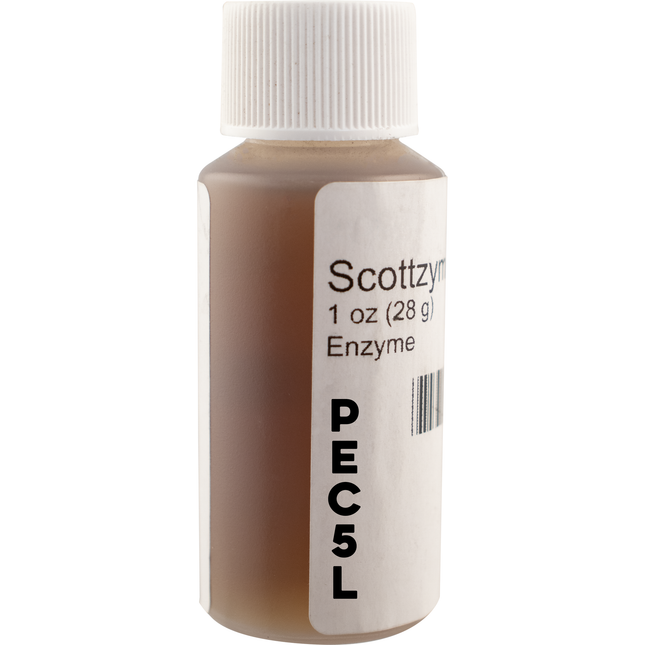
  • Scottzyme PEC5L - PLACEHOLDER Scottzyme PEC5L - PLACEHOLDER

    Scottzyme Pec5L

    1 review

    Scottzyme PEC5L – Pectinase Enzyme for Enhanced Settling and Juice Yield Rapidly breaks down soluble pectins for faster settling and improved clarity Increases free-run and press yield by reducing viscosity and cell wall resistance Improves flotation efficiency and tightens lees compaction Effective across a wide pH range and performs well at low temperatures Ideal for white, rosé, and fruit wines requiring fast clarification and clean separation Scottzyme PEC5L is a highly active liquid pectinase enzyme formulated to reduce pectin-related haze and increase processing efficiency in juice production. By breaking down soluble pectins, PEC5L dramatically improves juice release during pressing, reduces must viscosity, and accelerates settling or flotation. The result is clearer juice, more compact lees, and higher overall yield. Its formulation is optimized for cool-temperature performance and a broad pH range, making it a versatile tool in grape and non-grape juice clarification. Unlike general pectinases, PEC5L is designed to act quickly and cleanly, without over-extraction of phenolics or bitterness. Protocol Dilute Scottzyme PEC5L in 10 times its volume of chlorine-free water or juice. Add to must or juice immediately after crushing or during transfer to settling tank. Mix well to ensure even distribution. For flotation, add just before or during the flotation process. Avoid adding at the same time as SO₂ or bentonite. Usage Rates Recommended dosage: 1.5–4.0 mL per 1000 lb of fruit or 0.075–0.2 mL per gallon of juice = approximately 0.02–0.05 mL per liter Use lower rates for clean, low-pectin fruit or warmer temperatures. Use higher rates for pectin-rich grapes, low temperatures, or difficult-to-settle musts. Allow contact time of 2 to 12 hours depending on conditions and desired level of clarification.  

    $13.99 - $69.99

  • CellarScience - Dry Wine Yeast - Citrus - PLACEHOLDER CellarScience - Dry Wine Yeast - Citrus - PLACEHOLDER

    CellarScience® CITRUS Dry Wine Yeast | Premium Wine Yeast

    Cleaves (Chops!) thiols releasing citrus, passionfruit, grapefruit, floral flavors Ferment at 58-61 for maximum enzymatic activity #1 Choice for Sauvinon Blanc. Also good for Viognier Oh thiols, you elusive magical compound. Nice try hiding behind Cysteine-4mmp, but CITRUS sees you. Cleaving thiols from other compounds is what CITRUS does, releasing the classic citrus, lime, passionfruit, and floral flavors that help separate styles like Sauvignon Blanc and Viognier from ordinary white table wine. Also can be used with Chardonnay , other whites, and is great for Rose. CITRUS can ferment at cooler temperatures but the enzymatic cleaving activity is highest at around 56-60F.  So if you like Zesty Grapefruit, lime, lemon peel, floral, and passionfruit flavors, CITRUS may be your yeast.  This yeast is good and perserving acidity so if you are working with whites from a warmer region that can be particularly helpful.     More on Thiols: Thiols are organic sulphur compounds that are resonsible for the most prized flavors in many white wines. 4mmp (black current), 3MH (Passion fruit, Grapefruit and Citrus) and 3MHA (Tropical Passionfruit, Rose)    Start Time: Average Alcohol tolerance: 14%+ Nitrogen Demand: low Production of volatile acidity: Average Production of H2S: Average Production of SO2: Low Ease to Ferment with MLF: Good Optimal Fermentation Temp: 53–73°F (Ideal for enzymatic activity: 56–60°F)   Proper yeast hydration helps ensure a healthy fermentation. For every gram of yeast, mix .25 g of FermStart yeast nutrient with 25 ml of sterilized tap water between 104–106°F/40–41°C. When water reaches 104°F/40°C, sprinkle yeast into water and stir gently. Allow the slurry to stand undisturbed for 15 minutes and then stir again. For every gram of yeast used add 25 ml of clean must to the yeast slurry and let stand 15–20 minutes. If necessary, use additional must to adjust yeast slurry to within 18°F of must temp before pitching. For a complete nutrient schedule sufficient for most fermentations, add 1.5 g of FermFed DAP Free per gallon of must at the first sign of fermentation and 1 g of FermFed per gallon of must after 1/3 sugar depletion.   Click here for a PDF of the MoreWine Yeast and Grape Pairing Guide.

    $1.79 - $49.19

Login

Forgot your password?

Don't have an account yet?
Create account