Detecting your location...

Wort Oxygenation & Aeration

Wort aeration and oxygenation will help to make sure your fermentation goes well!  Maintaining healthy yeast during the fermentation process is important because healthy yeast create better tasting beer with less off flavors. While yeast is easy to acquire, it’s a bit more complicated to add the oxygen that is so necessary for the yeast growth phase. MoreBeer! carries wort oxygenation and aeration products that add the essential oxygen to the wort, and they come in a variety of different styles that enable you to introduce the oxygen a few different ways.

MoreBeer! carries stainless oxygen stones that add oxygen to the wort at the time of fermentation through  both aquarium pumps and oxygenation systems. Whichever type of wort oxygenation or aeration device you prefer, MoreBeer! offers them all at affordable prices!

Some Useful Information When Oxygenating:
  • Only add oxygen to wort when inoculating at the beginning of fermentation. (Adding it later will oxydize the beer.)
  • Only add oxygen to cooled wort (< 80 F). Adding oxygen to hot wort creates off flavors (Hot Side Aeration) and can darken the color.
  • Yeast use all availible oxygen in the first 3-9 hours. As long as you are doing a 1 or 2 time dose and are not running pure oxygen on a continuous basis, there is no real danger of over-oxygenating, only under-oxygenating.

Want to learn More! about how yeast use oxygen? Click here, to check out our article on the subject.

Shop by collection
30 products

  • Sanitary Filter Sanitary Filter

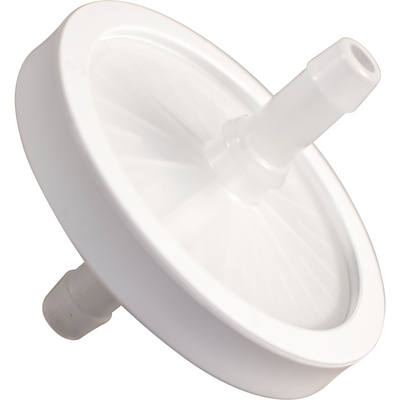
    Sanitary Filter

    93 reviews

    This versatile little filter is a beer maker's insurance policy! Whether you’re aerating or racking you will appreciate having the peace-of-mind of knowing that your brew will not be contaminated by whatever is floating around in the air. Use it anywhere you need to keep something sanitary. Both 1/4"" and 3/8"" tubing will attach to it, and it will snugly fit in any standard stopper as well.   Check out this list of suggested uses: Airlock: The most common use might be as an airlock on any kind of fermenter. Unlike other small sanitary filters, this unit fits perfectly into a stopper. Works great for conical fermenters where air is taken in when samples are taken or trub is dumped. Using the sanitary filter as airlock also eliminates the concern of drawing air back in as hot liquid cools and contracts in a fermenter. It is not appropriate for long term storage of beer as it is not an oxygen barrier. Inline Aeration/Oxygenation Filter: With an oxygenation or aeration system, such as our FE375 or FE380, it will filter contaminants out of oxygen or air. It is connected inline between pump/O2 tank and Stainless Diffusion Stone. Hand Pumps: Some breweries use this filter with the breweries hand pump system. Air going back into the cask is sanitized through this filter. This has extended shelf life of Real Ales by up to 2 weeks! CO2 Filtration: Used inline with your CO2 Kegging setup, this piece can be used to filter out any potential contaminants from your CO2 Tank.   About the inline filters: There are two sides to the filter - an "in" and an "out". The direction you use doesn't matter, however, you want to take note of which way you first push air through it and always keep it that way. There is an arrow on the edge of the filter housing that we use to keep the airflow going one direction when using it. The filter should never get wet, so don't try and sanitize it by dunking it in sanitizer. If you want to clean the outside of it, use Alpet D2. To store the filter, use a little tinfoil on the "In" of the filter and store in a zip-lock bag. Can last up to 1 year. Discard if there are any signs of discoloration.   This product qualifies as a HEPA filter under US government standards.   STORE DRY AT ALL TIMES. DO NOT SANITIZE FILTER.   **NOTE: Temporarily shipping a smaller diameter unit due to supply chain issues**

    $5.49

  • The OxyWand Oxygenation Kit (0.5 Micron) The OxyWand Oxygenation Kit (0.5 Micron)

    The OxyWand™ Wort Oxygenation Kit - 0.5 Micron

    82 reviews

    Oxygenate your wort like the pros with the OxyWand Oxygenation kit! Insert the oxygenation wand into your fermenter and pump in thousands of microscopic oxygen bubbles for 1-2 minutes to improve the health of your yeast. Healthy yeast produce amazing flavors and have the stamina to completely finish fermentation. That is not the only reason yeast love the OxyWand™. Yeast hate to compete with bacteria and you hate to drink them. Sintered stainless stones are made of tightly compressed stainless steel powder to create a porous block through which oxygen can flow. This micro maze is also the perfect environment for bacteria to live in after the stone has been used once in wort. That is why we love to boil our stones prior to use. The stone on the OxyWand™ is connected via a 1/4" flare fitting and can easily be removed and cleaned after use and then boiled before your next brew day. This OxyWand™ Oxygenation kit comes complete with adjustable brass oxygen regulator, Sanitary air filter, 4 ft of tubing, Instructions, and a 26" long 0.5 Micron OxyWand™. The advantage of using compressed oxygen to oxygenate is speed - you can oxygenate your wort in 60 seconds as opposed to 30-120 minutes with aeration. This .5 micron stone can only be used with compressed oxygen because an aeration pump does not supply enough pressure. If you are looking for an Oxywand to use with aeration pumps please see the 2 micron version.

    $59.99

  • Low stock! Blichmann Oxygen Flow Regulator Blichmann Oxygen Flow Regulator

    Blichmann Oxygen Flow Regulator

    28 reviews

    Most oxygen regulators only regulate pressure but the Blichmann Oxygen Flow Regulator allows you to dial in the actual rate of flow. Turn the dial to your preferred flow rate, measured in liters of oxygen per minute, and you can feel confident in knowing precisely how much oxygen is being introduced into your wort. It is important to know the flow of oxygen because depending on your downstream restriction the actual flow can vary a lot. Remove the guess work with the Oxygen Flow Regulator from Blichmann. Measuring your dissolved oxygen usually would run you $300 or more but with the Oxygen Flow Regulator you can know exactly how much oxygen was put into your wort for less than $50.

    $49.49

  • Aeration System Aeration System

    Aeration System

    104 reviews

    Instead of diffusing pure oxygen into your wort this system uses filtered air. The included air-pump pushes air through an inline sanitary filter which is then dispersed into the wort through our two micron threaded stainless steel diffusion stone. The advantage of an aeration system is that you never have to buy replacement oxygen tanks. The down side is that aeration takes longer than oxygenation. Because the atmosphere is only about 20% oxygen, the diffusion stone must be left running in the wort for approximately 30–120 minutes (however even 5 minutes of aeration is better than shaking the carboy.) There is no concern of contamination during this period, however you do have to monitor the fermenter periodically for possible over foaming. While you are brewing, this system can also be used to pre-fill fermenters with sanitary air. Replacement filters, FIL90, which need replacement every few years, are available for $4.99. About the inline filters: There are two sides to the filter - an "in" and an "out". The direction you use doesn't matter, however, you want to take note of which way you first push air through it and always keep it that way. There is an arrow on the edge of the filter housing that we use to keep the air flow going one direction when using it. The filter should never get wet, so don't try and sanitize it by dunking it in sanitizer. If you want to clean the outside of it, use Alpet D2 (CL60). To store the filter, use a little tinfoil on the "Out" of the filter and store in a zip-lock bag. The stone is attached to semirigid polyethylene tubing temp rated from -40°F to 140°F.

    $36.99

  • Oxygen Flow Meter w/ Duotight Fittings Oxygen Flow Meter w/ Duotight Fittings

    Oxygen Flow Meter w/ Duotight Fittings

    12 reviews

    Take the guesswork out of oxygenation with this handy flow meter. If you're using pure O2 to oxygenate your wort, you're likely using a disposable cylinder with a simple brass regulator, and have no way to measure how much oxygen is actually being added. You're essentially left to finding the "sweet spot" on the dial when you open the regulator and aim for the same spot on the next use. Get repeatable results by adding this flow meter to your setup. This device will allow you to dial in the flow rate and help you add the same amount of oxygen from batch to batch. The flow meter comes with male flare thread inlet and outlet and includes two Duotight fittings. It's ready for use with 8 mm OD EVABarrier tubing right out of the box, or you can add a swivel nut and barb for use with other size tubings. Once yeast pitching temperatures are reached, we recommend using a 0.5 micron diffusion stone and adding pure O2 at a 1L/minute flow rate for 60 seconds to acheive the recommened 10-14 ppm dissolved oxygen. Features: 1/4" Male Flare Inlet/Outlet Duotight Fittings for 8 mm OD Tubing Included Scaled for 0.1 to 1.5 L/min Flow Rate 3.6" H x 0.9" W Kegland Part number: KL13185

    $27.49

  • OxyWand - 0.5 Micron OxyWand - 0.5 Micron

    The OxyWand™ - 0.5 Micron

    13 reviews

    Yeast across the World have a new best friend, the OxyWand™. Insert the oxygenation wand into your fermenter and pump in thousands of microscopic oxygen bubbles for 1-2 minutes to improve the health of your yeast. Healthy yeast produce amazing flavors and have the stamina to completely finish fermentation. That is not the only reason yeast love the OxyWand™. Yeast hate to compete with bacteria and you hate to drink them. Sintered stainless stones are made of tightly compressed stainless steel powder to create a porous block through which oxygen can flow. This micro maze is also the perfect environment for bacteria to live in after the stone has been used once in wort. That is why we love to boil our stones prior to use. The stone on the OxyWand™ is connected via a 1/4" flare fitting and can easily be removed and cleaned after use and then boiled before your next brew day. The assembly is 26" long and will easily reach the bottom of glass carboys, dropped into stainless conicals, Speidel fermenters, etc. The 0.5 micron size stone is designed specifically for use with compressed oxygen tanks. You will want to use 1/4" tubing. See the recommended regulator below to connect to disposable style compressed oxygen cylinders available from your local hardware store. The advantage of using compressed oxygen to oxygenate is speed - you can oxygenate your wort in 60 seconds as opposed to 5 minutes with aeration. This .5 micron stone can only be used with compressed oxygen because an aeration pump does not supply enough pressure. If you are looking for an Oxywand to use with aeration pumps please see the 2 micron version.

    $29.99

  • Oxygen Regulator - For Disposable Tanks w/barb Oxygen Regulator - For Disposable Tanks w/barb

    Oxygen Regulator

    45 reviews

    Get your fermentation started faster and finished cleaner by oxygenating!    Just screw this high quality brass regulator to the top of a disposable oxygen bottle, and use it with one of our diffusion stones to aerate your wort.   Features: 1/4" Barb Outlet Max Delivery Pressure: 100 PSI Max Flow Rate:  180 CFH Regulator is Left Hand Thread Stainless Steel Actuating Rod Machined brass body with adjusting cap, piston and hose connection

    $44.99

  • OxyWand - 2 Micron OxyWand - 2 Micron

    The OxyWand™ - 2 Micron

    17 reviews

    Yeast across the World have a new best friend, the OxyWand™.  Insert the areation wand into your fermenter and pump in thousands of microscopic oxygen bubbles for 1-2 minutes to improve the health of your yeast. Healthy yeast produce amazing flavors and have the stamina to completely finish fermentation.  That is not the only reason yeast love the OxyWand™.  Yeast hate to compete with bacteria and you hate to drink them.  Sintered stainless stones are made of tightly compressed stainless steel powder to create a porous block through which oxygen can flow. This micro maze is also the perfect environment for bacteria to live in after the stone has been used once in wort. That is why we love to boil our stones prior to use.  The stone on the OxyWand™ is connected via a 1/4" flare fitting and can easily be removed and cleaned after use and then boiled before your next brew day.   The assembly is 26" long and will easily reach the bottom of glass carboys, dropped into stainless conicals, Speidel fermenters, etc. The 2 micron size stone works well with both compressed oxygen or aeration pumps. You will want to use 1/4" tubing. See the recommended regulator below to connect to disposable style compressed oxygen cylinders available from your local hardware store.  See the high-pressure, deep water style air pump to use with regular air.  The advantage of using compressed oxygen to oxygenate is speed - you can oxygenate your wort in 60 seconds as opposed to 30-120 minutes with aeration. The advantage of using a pump for aeration is cost - you never have to buy compressed oxygen cylinders.  

    $29.99

  • Ss Brewtech Inline Oxygenation Kit Ss Brewtech Inline Oxygenation Kit

    Ss Brewtech Inline Oxygenation Kit

    4 reviews

    The Inline Oxygenation Kit from Ss Brewtech is designed to oxygenate wort during transfers to your BME Chronical or Unitank. The kit has a fully welded oxygen stone and all 1.5 in. TC connections. It also comes with a ball valve on the gas inlet to control the flow of oxygen. Features: All Sanitary 1.5 in. TC Connections 3/8 in. Barbed Oxygen Inlet with Ball Valve Made from 304 Stainless Steel TC Clamps and Gaskets are Included

    $138.95

  • Wort Aerator - Air Pump Kit Wort Aerator - Air Pump Kit

    Wort Aerator | Air Pump Kit | Aeration System w/ Filter & Diffusion Stone

    Aerate your wort automatically with this complete aeration system. Includes compact air pump, air filter, diffusion stone, and EVABarrier tubing. This aeration system diffuses oxygen into your wort using the air around you, so there's no need to buy pure oxygen cylinders again and again. The down side is that aeration takes longer than oxygenation. Because the atmosphere is only about 20% oxygen, the diffusion stone must be left running in the wort for approximately 30–120 minutes (but even 5 minutes of aeration is better than shaking the carboy). The sterile filter will prevent contamination during this period, but you will need to monitor the fermenter periodically for possible over foaming. To clean your stainless stone, we recommend boiling it for several minutes and storing it in a zip lock bag between uses. It can clog easily with the oil in your fingers, so use gloves when attaching it to the tubing. NOTE: You will need to use hot water to soften the 4 mm x 8 mm EVABarrier tubing when attaching the stone. Needle nose pliers can help to widen the tubing, if necessary. Hose clamps won't be required once it's attached. You will also need to cut a short piece of tubing to bridge the connection from the air pump to the air filter and the air filter to the diffusion stone. You do not want the air filter to get wet or be inserted into your fermenter, so keep the air filter close to the pump. The sanitary air filter can last up to 1 year, but should be replaced if there are any signs of discoloration. Includes: CE Air Pump 15 micron sintered stainless stone with barb 0.2 micron autoclavable air filter Approximately 5 ft. of EVABarrier tubing (4mm ID x 8mm OD) KegLand Part Number: KL03926

    $27.49

  • Dual Gauge Oxygen Regulator - For Disposable Tanks Dual Gauge Oxygen Regulator - For Disposable Tanks

    Dual Gauge Oxygen Regulator for Disposable Tanks

    Infusing your wort with pure oxygen immediately before pitching yeast is the best way to get your fermentation started faster and finished cleaner. This dual gauge oxygen regulator is compatible with standard disposable O2 tanks and provides a higher level of control when pumping oxygen into your wort. Using the adjustment knob, you can dial in the psi of the gas leaving the tank, leading to more consistent results. We recommend oxygenating wort using a 0.5 micron diffusion stone. Instructions:  Attach the regulator to your oxygen tank Turn the pressure up to 10-20 psi Immerse diffusion stone in wort for 1-2 minutes Please note: your wort must be chilled to yeast pitching temperature before adding oxygen. It is much more difficult for oxygen to dissolve into solution when the wort is still warm. Kegland Part number: KL02165

    $43.99

  • Kegland - 0.2 Micron Air Filter - Airlock or Aeration Kegland - 0.2 Micron Air Filter - Airlock or Aeration

    Compact Sanitary Filter

    These 0.2 Micron Air Filters have a fine enough filter membrane that they can filter out microbes and bacteria. They can be used with any oil free air compressor such as a pond pump, or other type of pump. They can also be used as an airlock in the top of your fermenter or used to filter air going back into a cask when dispensing real ale.  This filter is not suitable for liquids and should be discarded if it gets wet. Compatible with 4 mm ID EVABarrier tubing. You will need to heat up the tubing and use needle nose pliars to widen the inner diameter. No hose clamp required. Specs: 0.2 Micron Pore Size PE Membrane Suitable for 3/16" ID tubing KegLand Part Number: KL08587    

    $4.39

  • The OxyWand Oxygenation Kit (2 Micron) The OxyWand Oxygenation Kit (2 Micron)

    The OxyWand™ Oxygenation Kit - 2 Micron

    3 reviews

    Due to high demand, this item is currently out of stock. Be the first to receive your items by placing a pre-order today. We will automatically ship this to you when we receive more inventory.   Oxygenate your wort like the pros with the OxyWand Oxygenation kit! Insert the oxygenation wand into your fermenter and pump in thousands of microscopic oxygen bubbles for 1-2 minutes to improve the health of your yeast. Healthy yeast produce amazing flavors and have the stamina to completely finish fermentation.  That is not the only reason yeast love the OxyWand™.  Yeast hate to compete with bacteria and you hate to drink them.  Sintered stainless stones are made of tightly compressed stainless steel powder to create a porous block through which oxygen can flow. This micro maze is also the perfect environment for bacteria to live in after the stone has been used once in wort. That is why we love to boil our stones prior to use.  The stone on the OxyWand™ is connected via a 1/4" flare fitting and can easily be removed and cleaned after use and then boiled before your next brew day.   This OxyWand™ Oxygenation kit comes complete with adjustable brass oxygen regulator, Sanitary air filter, 4 ft of tubing, Instructions, and a 26" long 2 Micron OxyWand™. The advantage of using compressed oxygen to oxygenate is speed - you can oxygenate your wort in a couple minutes as opposed to 30-120 minutes with aeration. The 2 micron stone has the advantage of being less prone to clogging due to its larger pores. We recommend 2 minutes of oxygenation with the 2 micron stone (for mid to low gravity wort).

    $59.99

  • Blichmann Premium In-Line Oxygenation Kit Blichmann Premium In-Line Oxygenation Kit

    Blichmann Premium Inline Oxygenation Kit

    16 reviews

    Get your yeast started right by providing the perfect amount of dissolved oxygen in your wort. Proper oxygen levels reduce lag time for the yeast to get started and helps prevent off-flavors from stressed yeast.  Features: Stainless steel diffusion stone Two 1/2 in. Blichmann Quick Connectors Oxygen Flow Regulator 5 ft. oxygen hose Easy to clean Does not work with disposable O2 tanks Note: Oxygen tank not included.

    $141.99

  • Aeration Pump

    Whisper Aeration Pump

    10 reviews

    Designed to work with our 2 micron sintered stainless stone. 1/8" barb output.

    $17.99

  • Low stock! Oxygenation Partial System Oxygenation Partial System

    Oxygenation Kit - Partial System

    200 reviews

    This Oxygenation System pumps pure oxygen into your cooled wort using a disposable oxygen tank and stainless steel diffusion stone. Takes a mere 1-2 minutes of operation to achieve adequate oxygen levels. Comes with a regulator for disposable oxygen tank, sterile inline filter, our threaded .5 micron stainless steel oxygenation stone and tubing. Yeast need oxygen to make good beer. The problem is that after boiling for an hour the wort is void of oxygen. Fermentations with low levels of oxygen will produce yeast that start slower, have sluggish ferments, and are more likely to poop-out and stop fermenting. On the contrary, fermentations that have been infused with oxygen will have healthier yeast that start faster, ferment faster, have a greater tolerance to alcohol, produce beers with less residual sugar, and produce better overall flavors. Currently, the standard practice of getting oxygen to the yeast is to splash the wort as it enters the fermenter or to shake the fermenter once full. This practice is definitely better than nothing, however it is impossible to infuse enough oxygen by shaking or splashing and the air you do infuse is usually contaminated to some extent. Please Note: Disposable Oxygen tank is Not Included.  These are available at some hardware stores. Each disposable oxygen tank will last for approximately 10-15 five gallon batches. About the inline filters: There are two sides to the filter - an "in" and an "out". The direction you use doesn't matter, however, you want to take note of which way you first push air through it and always keep it that way. There is an arrow on the edge of the filter housing that we use to keep the air flow going one direction when using it. The filter should never get wet, so don't dunk it in sanitizer. If you want to clean the outside of it, use Alpet D2. To store the filter, use a little tinfoil on the "In" of the filter and store in a zip-lock bag. Oxygen Regulator Features: 1/4" Barb Output Max Delivery Pressure: 100 PSI Max Flow Rate:  180 CFH Regulator is Left Hand Thread Stainless Steel Actuating Rod Machined brass body with adjusting cap, piston and hose connection

    $54.99

  • Aeration Partial System Aeration Partial System

    Aeration Partial System

    10 reviews

    Aerating your wort leads to faster, healthier fermentation, and that means better beer! Stop lifting and shaking carboys to try to introduce oxygen for your yeast--smart brewers use the right tool for the job. Our aeration system (FE380) comes with an inline filter, stainless steel diffusion stone, and tubing. This kit does not include the air pump. Most aquarium style air pumps will work; we recommend a deep water pump. About the inline filters: There are two sides to the filter - an "in" and an "out". The direction you use doesn't matter, however, you want to take note of which way you first push air through it and always keep it that way. There is an arrow on the edge of the filter housing that we use to keep the airflow going one direction when using it. The filter should never get wet, so don't try and sanitize it by dunking it in sanitizer. If you want to clean the outside of it, use Alpet D2. To store the filter, use a little tinfoil on the ""In"" of the filter and store in a zip-lock bag. Can last up to 1 year. Discard if there are any signs of discoloration. The stone is attached to semirigid polyethylene tubing temp rated from -40°F to 140°F. STORE DRY AT ALL TIMES. DO NOT SANITIZE FILTER.

    $20.99

  • OxyWand Attachment Kit OxyWand Attachment Kit

    The OxyWand™ - Connecting Kit

    2 reviews

    If you already have an OxyWand™, this connecting kit includes all hardware necessary to connect your OxyWand™ to a disposable oxygen tank. Control the flow of oxygen with the adjustable oxygen regulator, and gives you piece of mind that sanitary oxygen is feeding your yeast thanks to the inline sanitary oxygen filter. Four feet of tubing along with 26" of OxyWand™ gives you access to hard to reach fermenters. Includes: Adjustable Brass Oxygen Regulator Sanitary Inline Oxygen Filter Four Feet of Tubing Instructions for use Please Note: This kit does not include the OxyWand™ itself. For a complete oxygenation system using the OxyWand™, See related product!

    $44.99

  • Anvil O2 Wand with Regulator Anvil O2 Wand with Regulator

    Anvil O2 Wand with Regulator - 10 Micron

    2 reviews

    The heavy duty tube with integral barb is an extra-long 24" to reach the bottom of fermentors. This high quality product will help provide an optimal environment for yeast and fermentation.   Features: Heavy duty tube with integral barb Easily sanitized stainless diffusion stone Extra long 24" wand Ideal for oxygenating wort for improved yeast health 10 micron diffusion stone   To Use: Soak hose and wand in sanitizer - do not immerse regulator Slide hose onto end of wand barb Connect flare end of hose to regulator Place wand into the bottom of the fermentor Gradually increase the flow of the regulator until bubbles are visible Slowly stir for 1 minute for every 5-10 gallons Turn off regulator and remove wand from fermentor Sanitize as above and dry thoroughly before storing

    $67.99

  • Low stock! Inline Thermometer - Assembly Inline Thermometer - Assembly

    Inline Thermometer Assembly

    6 reviews

    This is the Thermometer half of the FE390. One side has a 3/8" Barb and the other has a 1/2" fnpt. Add a H616 barb or use alone or thread on to a 1/2" npt fitting. It is used to measure the temperature on the outflow side of your counterflow wort chiller. How long should I apply oxygen while transferring to the fermenter? We recommend you transfer half of your wort to your fermenter before applying inline oxygen (O2) to your wort transfer. If you apply O2 the whole time while transferring you are wasting O2.

    $49.99

  • Mini Oxygen Regulator Mini Oxygen Regulator

    Mini Oxygen Regulator

    Mini oxygen regulator with integrate gauge for beverage applications. Use with a refillable O2 cylinder to oxgenate wort before pitching yeast. Features: CGA-540 connection 0 - 4 LPM flow range with 1/16th increment Barbed outlet Dimensions: Weight: 1.25 lb Length: 6.75" Width: 1.75" Depth: 1.25"

    $54.99

  • Low stock! Pro Series - Oxygenation Assembly

    Wort Oxygenation System - Professional Series

    5 reviews

    This 1.5" TC assembly comes with two clover clamp tees, clover clamp inline sight gauge, thermometer, our own clover clamp stainless steel oxygenation stone and four clover clamps. Use 6-8 PSI or until you can see bubbles for wort aeration.

    $329.99

  • Low stock! Stainless in-line Oxygenation Assembly

    Inline Oxygenation Assembly (Stainless)

    19 reviews

    This completely stainless, inline oxygenation system injects oxygen into your wort as it travels from your wort chiller to fermenter and allows you to read the temperature coming out of your wort chiller at the same time. It has a 3" Dial Stainless thermometer and a 2 micron diffusion stone. The inlets and outlets are 1/2" barb. The oxygen inlet is 3/8". It is the economical alternative to our completely sanitary, stainless oxygen system, PRO30.   How long should I apply oxygen while transferring to the fermenter? — We recommend you transfer half of your wort to your fermenter before applying inline oxygen (O2) to your wort transfer.  If you apply O2 the whole time while transferring you are wasting O2.  

    $99.99

  • Low stock! Yellow Ball Lock Cap Oxygenation Stone - 2 micron - Ball Lock Quick Disconnect (QD) Yellow Ball Lock Cap Oxygenation Stone - 2 micron - Ball Lock Quick Disconnect (QD)

    KegLand Ball Lock Cap Diffusion Stone | Oxygenation & Carbonation Stone | 2 Micron

    Quickly diffuse oxygen or CO2 into your wort or finished beer with this convenient ball lock diffusion stone Attach to the Hop Bong Sight Glass and feed gas while liquid passes through Diffuse oxygen inline as chilled wort transfers from boil kettle to ferment Diffuse CO2 inline as cold crashed beer transfer from fermenter to keg This pre-assembled diffusion stone can be easily integrated with the Hop Bong Sight Glass to make an inline oxygenation system. At the top you have the Yellow Ball Lock Cap with PCO1881 threads that will install on the side port of the Hop Bong. A short piece of 3/16" ID silicone tubing is used to attach the 2 Micron diffusion stone which rests inside the Hop Bong. Connect your oxygen tank to the ball lock cap with a ball lock quick disconnect, turn on the gas, and pass your chilled beer from your kettle through the Hop Bong and into your fermenter. In the same fashion, this assembly can be used to help carbonate your beer by feeding CO2 into the ball lock cap and passing your finished beer from your fermenter through the Hop Bong and into your keg. A complete kit is coming soon, but here are the pieces you'll need to assemble your own Hop Bong Inline Diffusion System. 1.5" T.C. Hop Bong Sight Glass (FE201) (2) 1.5" T.C. Hop Bong Caps (FE203) (2) 1.5" Tri-Clamps (FF10) (2) 1.5" Tri-Clamp Gaskets (FF101) (2) Red Plastic Ball Lock Caps (FE13)

    $26.49

  • Stainless in-line Oxygenation Assembly with no Barbs

    Inline Oxygenation Assembly (No Barbs)

    10 reviews

    Our FE390A is just like the FE390, except we took off the barbs and left the fittings up to you. So many of our customers wanted this option, we decided to make it a kit and allow other people to get creative! Works well with our polysuphone QD's. The unit features a stainless thermometer, stainless tee, and a stainless oxygenation stone. The barb on the stone is 3/8". How long should I apply oxygen while transferring to the fermenter?  —  We recommend you transfer half of your wort to your fermenter before applying inline oxygen (O2) to your wort transfer. If you apply O2 the whole time while transferring you are wasting O2.

    $79.99

  • Diffusion Stone - .5 Micron (Carbonation/Oxygenation Stone)

    Oxygen Stone - 0.5 Micron (1/4 in. Barb)

    22 reviews

    Better Than Shaking a Keg!   Are you tired of carbonating your beer the unpredictable way? You crank up the PSI in the keg, shake, and wait with bated breath, hoping you didn’t just over-carbonate your batch. Using a diffusion stone pays off with a reliable level of carbonation every time.   Our .5 micron carb stone is ideal to force carbonate your kegged beer, or as an aeration stone prior to fermentation. It produces nice small bubbles, giving more surface area for diffusion.    0.5 micron stone 316 Stainless 1/2" diameter. Stone is 1" in length. Overall length is 1 7/8" The barb is 1/4" OD   To Use: Attach 2 feet of 1/4" tubing to the stone and the "gas in" dip tube inside the keg. (Tubing not included). Set your desired pressure on the regulator and gas gets emitted through the .5 micron stainless stone. The bubbles rise through the beer creating so much surface area contact between gas and liquid that the absorption rate is very rapid. This is very similar to how beer is carbonated in breweries.   Cleaning & Sanitizing: It is important to know the oils from your skin can clog the small pores in the stone. We that you attach the tubing to the stone, then hold the assembly by the tubing while submerging the stone in boiling water for a few minutes to break down and drive the oils out. When the stone comes out of the boiling water, tightly wrap it in saniitized aluminum foil until you are going to mount it in your keg. 

    $12.99

  • Diffusion Stone - .5 Micron w/ Flare Threads

    Oxygen Stone - 0.5 Micron (Flare Threads)

    22 reviews

    New! Easier to Sanitize Design This innovative design was the result of customer feedback about the difficulty of santizing our traditional barbed stone when tubing was attached. We added threads instead of a barb and now you can use the fittings you see at the bottom of this page to connect and disconnect your tubing. This allows you to place the stone by itself directly in a pot of boiling water to sanitize. Easy. 316 Stainless 1/2" diameter. Stone is 1" in length. Overall length is 1 7/8" To Sanitize To properly sanitize your stones, we recommend you run it in a sanitized solution for 5 minutes. If the stone becomes clogged we recommend boiling the carb stone for 1-3 minutes to help break down anything within it. Important Notes You do not want to touch the stainless stone portion with your hands. The oils on your fingers can actually clog the small pores in the stone. The stone does not come with the barb fitting or flare nut - those will have to be purchased on their own. See the Related Items below. The .5 Micron stone is more commonly used for carbonation. However it can be used pre-fermentation with an O2 tank and regulator for oxygenation. Not the ideal choice if you want to aerate with an oxygen pump (aquarium pump) - use KEG590 for aeration. And if you are looking for a neat, all-in-on complete system for carbonation check out our Carbonating Keg Lid.

    $14.99

  • Diffusion Stone - 2 Micron w/ Flare Threads

    Oxygen Stone - 2 Micron (Flare Threads)

    22 reviews

    New! Easier to Sanitize Design This innovative design was the result of customer feedback about the difficulty of santizing our traditional barbed stone when tubing was attached. We added threads instead of a barb and now you can use the fittings you see at the bottom of this page to connect and disconnect your tubing. This allows you to place the carb stone by itself directly in a pot of boiling water to sanitize. Easy. 316 Stainless 1/2" diameter. Stone is 1" in length. Overall length is 1 7/8" To Sanitize To properly sanitize your stones, we recommend you run it in a sanitized solution for 5 minutes. If the stone becomes clogged we recommend boiling the stone for 1-3 minutes to help break down anything within it. Important Notes You do not want to touch the stainless stone portion with your hands. The oils on your fingers can actually clog the small pores in the stone. The stone does not come with the barb fitting or flare nut - those will have to be purchased on their own. See the Related Items below. The 2 Micron size is more commonly used for aeration or oxygenation pre fermentation, but can be used to carbonate beer. If you wish to use an aquarium style Aeration Pump to pump air through this stone we recommend a "deep water" type for aquariums, as these will have the necessary PSI to force the air through the stone and into the wort. If you are looking for a ready to use package check out Complete Aeration System. Thank You!

    $14.99

  • Oxygen Tank 20 (cu/ft) Oxygen Tank 20 (cu/ft)

    Steel 20 ft³ Oxygen Tank | New | CGA540 Valve | US DOT Appoved

    2 reviews

    Yeast require oxygen for growth, make sure you always have some available to oxygenate your wort prior to pitching! This 20 cubic foot O2 cylinder is good for about 500 batches of beer. Hate having your disposable oxygen tank run out right before you were about to pitch your yeast? Or just tired of running through disposable tanks in general? Consider stepping up to a refillable oxygen cylinder. Whether you brew big batches or brew frequently, a refillable oxygen tank is a great way to save time and money. The tank needs to be hydrotested every 10 years and is easily and affordably filled at any participating welding gas company. Specs: Cylinder: 20 cu ft Material: Steel Cylinder – Standard Valve Capacity: 20 cu ft (566 Liters) Service Pressure: 2015 PSI / 139 Bar   Test Pressure: 3360 PSI DOT- and TC- Approved Valve Type: CGA540 Dimensions: Diameter: 5.2" (132 mm) Height: 14.8" (376 mm) Empty Weight: 14.1 lb    

    $139.99

  • Diffusion Stone - 2 Micron (Oxygenation/Aeration)

    Oxygen Stone - 2 Micron (1/4 in. Barb)

    28 reviews

    Healthy yeast need plenty of oxygen to grow. Aerating your wort before pitching your yeast will give it just the boost it needs!    Use this 2 micron oxygen / carb stone with an oxygen source or aeration pump. The barb is 1/4" OD. (Note: if you are using an aeration pump, we recommend a "deep water" type for aquariums, to ensure teh pump is strong enough to force the air through the stone and into the wort)   Specifications AISI 316L Stainless Steel Stone is 1/2"" diameter and 1" in length. 1/4" OD barb 1 7/8" Overall length  

    $12.99

Frequently Asked Questions

What is the difference between oxygenation and aeration? +

Oxygenation involves injecting the wort with 99% pure oxygen. Aeration involves injecting the wort with air, of which only 21% (by mole) is oxygen. Both obtain the same end result of supplying the yeast with oxygen. Aeration will take longer and if you are using a small fermenter foaming may be an issue. Budweiser will not use pure oxygen because they feel it "is difficult to be consistent". However you could not get enough oxygen from air to make a Barley Wine.

Wort Oxygenation & Aeration Collection Article +

Oxygen's Role in the Fermentation of Beer By Tracy Aquilla (Brewing Techniques) Fermentation is perhaps the most interesting and exciting part of brewing beer. There is something fascinating about watching yeast in action, and being close to the process contributes immensely to my enjoyment of my beer. No matter how well we do our part in preparing bitter wort for fermentation, it is the yeast that turns it into beer. For this reason alone, it is important to understand and appreciate what these microorganisms are really doing inside our fermentors. Most of the popular brewing literature, however, fosters a misconception about yeast and fermentation. This articles sets the record straight. Most of the brewing literature indicates that brewers’ yeast ( Saccharomyces cerevisiae and S. uvarum) required dissolved oxygen for a brief period of time after pitching so the cells can respire and grow, implying that yeast needs oxygen to bud and must respire before it can ferment wort. It is true that aerating or oxygenating wort is generally beneficial to fermentation, but it is untrue to say that yeast requires oxygen to reproduce or that yeast uses oxygen to respire during fermentation. The misunderstanding may be subtle, but it is a misunderstanding nonetheless. Gaining a clear understanding of the truth about how yeast works not only sets us on sound technical foundations, but has practical applications as well. This article briefly discusses yeast metabolism, clarifies the role of oxygen, and suggests some practical applications of this more refined understanding of fermentation processes. Click here to browse our extensive selection of beer yeast, starters and nutrients! Origins of Error The popular literature implies that yeast requires oxygen (it doesn’t) and that yeast cannot bud without oxygen (it can). In the home brewing literature, it is likely that the authors of these books and articles have the right idea but simply omitted certain details to make their subject more accessible to a largely nonscientific audience. Home brewing literature typically lacks adequate details and citations referring to original scientific research. The professional brewing literature is not immune to the problem, either. Though the professional literature is certainly much more detailed, even these authors often lose sight of the big picture. Whatever the reasons, the literature tends to paint a distorted picture of reality, and many brewers have come away from reading these books with some serious misconceptions about yeast biology and brewery fermentation. I think most brewers are capable of handling the whole truth when it comes to the “facts of life” with yeast, and it is time to bring it to light. What follows will by necessity get a bit technical, but that is the nature of biochemistry. I believe that the more you know about what is going on in your fermentor , the more it can help you to make better beer, so try to bite the bullet and slog through the details. The rewards of understanding will be great. Life Is Based on Carbon and Energy All living things on earth incorporate carbon as a structural element, and all living things require a source of energy to function and remain alive. While some organisms, such as green plants, are capable of capturing the sun’s energy and fixing carbon dioxide from the air, most others, such as yeast and humans, depend on organic food sources to meet their carbon and energy requirements. In brewers’ yeast, both carbon and energy are obtained through the oxidation of organic nutrient molecules (glucose, for example). Metabolism: Biochemists use the term metabolism to describe the entire set of chemical reactions that organic molecules undergo in living cells. Metabolism can be further subdivided into catabolism, which is the degradation of energy-rich nutrient molecules, and anabolism, which is the biosynthesis of new cellular components (the cell’s creation of “building blocks”). During catabolism, the chemical bonds of an organic molecule (glucose, for example) are broken, and the cells capture some of the energy stored in these bonds. The cells store this energy for use in the anabolic reactions that are responsible for growth and development. The compound that serves as the main storehouse of this cellular energy is called ATP (adenosine triphosphate). Much of the energy released through catabolism is captured by ATP and stored in its high-energy phosphate bonds, to be used when ATP participates in anabolic reactions.* Some metabolic energy is also released from nutrient molecules in the form of electrons, which are then captured by other important compounds in the cell, but I don’t want to muddy the water here with too many small details. Respiration and Fermentation Yeast synthesizes ATP through two major biochemical pathways: respiration and fermentation. During both respiration and fermentation, yeast cells break down glucose molecules within the cell to release energy (this process is called glycolysis), and some of this energy is captured and stored in the ATP’s high-energy phosphate bonds. The breakdown of glucose also releases carbon atoms, which become available for biosynthetic reactions, enabling the yeast to grow and reproduce by budding. The rest of the carbon ends up in the by-products of these reactions, such as carbon dioxide, ethanol, and other more minor compounds. Other fermentable sugars, such as maltose, are first converted to glucose before entering these metabolic pathways (fructose, however, may enter the glycolytic pathway directly). Respiration: To most people, respiration means simply the consumption of oxygen (breathing), but to biochemists it means something very different. To a biochemist, respiration is the production of biochemical energy (in the form of ATP) through a process called oxidative phosphorylation, which takes place in the cell’s mitochondria. This process completely oxidizes glucose. Much of the energy released is captured by ATP in a series of tightly coupled biochemical reactions. This process is absolutely dependent on oxygen, and it produces water and carbon dioxide as by-products. Respiration is not possible without a source of oxygen, and exceptions to this rule are extremely rare in nature (only in certain rare microorganisms). Fermentation: Fermentation is the production of biochemical energy (in the form of ATP) through a process called substrate-level phosphorylation. This process only partially oxidizes glucose, producing mainly ethanol and carbon dioxide as by-products. While some of the energy released in this process is captured by ATP, fermentation yields far less energy than respiration because much of the potential energy still remains in the chemical bonds of the partially oxidized byproduct ethanol. During respiration, yeast derives a net gain of 28 molecules of ATP from each glucose molecule; during fermentation, it gains only 2. The partial oxidation that occurs during fermentation does not require free oxygen. (Note that despite the name of the process, oxidation does not necessarily involve oxygen; it simply means that electrons are transferred during a reduction-oxidation reaction — oxygen, however, frequently happens to be the electron acceptor, as in respiration.) Fermentation can proceed either in the presence or absence of oxygen. In the absence of oxygen, fermentation is the only choice possible for yeast. Brewers’ yeast is able both to respire and ferment, a luxury most organisms do not enjoy. What determines its ability to grow and reproduce is the presence of the required nutrients, independent of whether the environment is aerobic (exposed to air) or anaerobic (without air). Although brewers’ yeast is able to use both respiration and fermentation metabolic pathways, it does not respire if a relatively high concentration of fermentable sugar is available, even when ample oxygen is available for respiration. The tendency for fermentation: Brewers’ yeast has a very strong tendency toward fermentation and will respire only when the concentration of fermentable sugars is very low and oxygen is available. In beer making, yeast will ferment rather than respire, regardless of the oxygen concentration, because the wort usually supplies an overwhelming abundance of fermentable sugar. The production of ethanol during fermentation may contribute to yeast survival because of its toxicity to other microorganisms. So yeast can use any of three major metabolic modes: aerobic fermentation in the presence of sugar and oxygen, anaerobic fermentation in the presence of sugar but absence of oxygen, and respiration (necessarily aerobic) in the presence of oxygen and a low concentration of fermentable sugar. The hazards of respiration: As a further testament to its flexibility, yeast is also diauxic, meaning the cells can use more than one carbon source for their energy needs. Under certain circumstances, yeast can respire ethanol as well as glucose, producing acetic acid (vinegar) as a by-product. This process can occur only in the presence of oxygen when no alternative energy source (that is, no fermentable sugar) is available. Fortunately, our yeast does not normally get the chance to oxidize ethanol to acetic acid because by the time all the sugar is gone and ethanol is available for respiration, no dissolved oxygen is left in solution. Therefore, one reason brewers try to avoid aeration after fermentation has begun is to prevent their beer from turning sour. Another hazard of aeration in the brewhouse at this stage is that it can also promote chemical oxidation reactions (yielding nasty aldehydes like trans- 2-nonenal), which cause staling of the finished beer. I should emphasize that although yeast is capable of performing respiration, this pathway is irrelevant for brewers because respiration does not normally occur in the production of beer. Why Yeast Doesn’t Respire in Wort Basically, yeast does not respire in wort because it doesn’t have to! Like most other organisms, yeast does only what is necessary for survival and reproduction. If resources such as sugar are abundant, they are used in abundance (and generally wasted). In the case of brewers’ yeast, respiration does not occur in the presence of glucose, regardless of the oxygen concentration. This phenomenon has been called the Crabtree effect (named after H.G. Crabtree, the scientist who discovered it in tumor cells in 1929). The Crabtree effect is a metabolic regulatory mechanism that causes aerobically growing yeast to repress the respiratory pathway in favor of fermentation if fermentable sugars are available. All fermentable sugars, including fructose, maltose, and sucrose (and galactose to a limited extent), induce the Crabtree effect, but glucose exhibits the strongest effect. Brewers’ yeast is often said to prefer fermentation only when glucose levels are high, but “high” is a relative term; glucose in excess of about 0.4% (w/v) will bring on the Crabtree effect; most worts (both all-malt and adjunct) contain an excess of 1% glucose, which is more than enough glucose to induce the Crabtree effect. The other fermentable sugars present in wort induce the Crabtree effect as well (for example, a wort with an O.G. of 1.040 [10 °P] is 10% sugar). This high concentration of sugar makes it virtually impossible for brewers’ yeast to respire in wort. The True Role of Oxygen — Biosynthesis Thus far, we have established that yeast does not really require oxygen. Most animals will die after several minutes without oxygen; brewers’ yeast does not require it at all in the presence of sufficient nutrients, because it doesn’t need to respire. Saccharomyces species of yeast, in fact, are exceptional in that they represent the few rare species of yeast that have absolutely no requirement for oxygen and can grow under strict anaerobic conditions. (Most other yeasts, even those that can ferment sugar [for example, Brettanomyces ], cannot grow without oxygen.) Yet the brewing literature and all brewing experience point to the need for oxygen for healthy fermentations. What role does oxygen play? It is well-documented that yeast uses oxygen whenever it is available, even during fermentation, and yeast cells rapidly absorb essentially all of the oxygen made available to them. Yeast, however, will use the overwhelming majority (if not all) of the available oxygen in biosynthetic reactions, not for respiration. The dissolved oxygen levels in wort drop from saturation to near zero very quickly after pitching yeast, usually within 30 minutes under ideal conditions, because yeast absorbs the oxygen for eventual membrane biosynthesis. The oxygen enables the cells to grow much faster and to reach a higher cell density. This effect is not the result of respiration but is the result of oxygen providing the means for sterol synthesis. In the absence of sufficient preexisting wort sterols, oxygen is limiting at this point; in other words, without it, the yeast will starve. Sterol synthesis: During aerobic fermentation, dissolved oxygen is used in the biosynthesis of unsaturated fatty acids and sterols (mainly ergosterol), which are essential components of cell membranes. (Cell walls, by contrast, are composed mostly of carbohydrates.) These sterols and unsaturated fatty acids are important to yeast because budding can cease if their levels get too low. *To be more precise, yeast in an aerobic culture is actually respiro-fermentative, meaning that both respiration and fermentation occur simultaneously, though respiration occurs to a very limited (essentially negligible) extent while the fermentative pathway overwhelmingly dominates. This dual pathway may be one source of the common misconception that yeast respires upon pitching and requires oxygen to reproduce. The so-called “leaky” metabolic control mechanism of respiro-fermentation is necessary, however, to allow some carbon in wort (although less than 1–2% of the total glucose) to enter the biosynthetic pathways. The carbon enters the pathway at the beginning of the process of respiration, but then gets diverted for biosynthesis. The important point here is that neither respiration nor oxygen is required for energy production and yeast budding. The cell membrane is the structure that controls what flows into and out of the cell. If these membranes lack sufficient sterols, the yeast cells become weak, leaving the cells susceptible to a variety of problems. Weakened cells can become intolerant of alcohol, and the alcohol can kill them. Weakened cells can also result in stuck fermentations and numerous off-flavors. If the membranes contain sufficient levels of sterols, however, the cells are much stronger, more cells will thrive to finish the fermentation, and the yeast may complete the fermentation significantly faster. The real requirement for oxygen, then, is to help produce fatty acids and sterols, which are very important components of the cell membrane. The reason wort aeration (or oxygenation with pure oxygen) is considered so important to brewery fermentations is that yeast can synthesize the lipids needed for membrane biosynthesis only when dissolved oxygen is available. If yeast had an independent source of these important lipids, however, the so-called requirement for oxygen could theoretically be eliminated completely. Alternatives to sterol synthesis: Another way to provide lipids is to introduce into the starter a yeast nutrient that contains dead yeast , and thus lipids (not all yeast nutrients contain these). Still another source of these lipids could come from the “break material” (trub) left in the fermentor. This greasy, sludge-like matter forms in the wort upon boiling and cooling and eventually sinks to the bottom of the vessel. This material derives a significant lipid content (up to 50% in cold break) from the barley malt, and it contains the unsaturated fatty acids the yeast needs to synthesize strong, healthy membranes. Although nearly all brewers agree that the hot break (produced after boiling) can produce off-flavors if it is not removed from the wort, there is still a good deal of discussion over whether leaving cold trub in the fermentor can help fermentation (there is some speculation that the trub also provides nucleation sites that control CO 2 toxicity) and whether trub is detrimental to beer flavor. Practical Applications Many brewers have successfully made decent beer without aerating their worts, but those who do aerate generally observe more rapid and possibly even more complete fermentations. As I mentioned at the beginning of this article, knowing more about what goes on in the fermentor can help you make better beer. Now that we know what yeast do with oxygen, we are in a much better position to decide how much the wort needs and when to add it. Strength in numbers: Though leaving some cold break in the fermentor may boost your fermentation, the most common remedies for slow or stuck fermentations (and many other problems in the brewhouse) are wort aeration (before or after pitching time) and increased pitching rates. I do not believe that brewers necessarily need to aerate their worts at all if the pitching yeast comes from a fresh starter culture that itself has been well-aerated during growth and stepped up to produce a sufficient number of healthy cells, or if a large culture is repitched from a very recent (aerated) batch. Wort aeration is clearly beneficial, however, if you are unable to obtain the optimal pitching rate (about 1 million active cells per mL per degree Plato, or about 5 to 10 million active cells per mL for typical worts) — and many brewers cannot. Thus, wort aeration can often make the difference between a good beer and a great beer. It is important to note, however, that it is possible to overaerate and, when using pure oxygen gas, even easier to overoxygenate. In particular, overaeration can produce certain secondary compounds, such as vicinal diketones (VDKs, of which diacetyl is one), oxo-acids, fusel alcohols, and their derivative esters. Aeration needs are yeast strain-specific: Another thing to remember is that the oxygen “requirement” (that is, the aeration needs) of brewers’ yeast is strain-dependent and that what might be adequate for one strain could be insufficient or excessive for another. For this reason, it is probably best to be familiar with your yeast, to know when aeration is necessary, and to aerate the wort only to saturation (about 8 ppm of oxygen for most worts) upon pitching and then to stop. Keep in mind also that oxygen is beneficial even at levels well below saturation, so aerating even a little will actually help a lot. Aeration needs may be style-specific: In certain styles of beer in which metabolic byproducts of yeast growth (such as VDKs, oxo-acids, fusel alcohols, and their derivative esters) are undesirable, it is even preferable not to aerate the cold wort. Avoiding aeration may be particularly desirable when fermenting high-gravity worts that will naturally result in the formation of more esters. (Strong Scotch ale is one example of a beer that usually has a high original gravity and a very clean finished beer, that is, free from fusels, esters, and VDKs.) Dissolved oxygen is also known to produce the nonenzymatic production of diacetyl by oxidation of alpha-acetolactate. By pitching a larger starter culture (ideally, at the optimal rate), keeping the initial fermentation temperature relatively low, and minimizing (or even eliminating) the wort aeration step, a brewer can avoid extensive yeast growth during fermentation and the excretion of the secondary compounds that naturally accompany reproductive activity. (You should also pour off the liquid from your starter before pitching to avoid any undesirable byproducts of the starter’s aerobic fermentation.) Note: Avoid overpitching; pitching rates significantly higher than the optimum have been reported to result in “yeast-bite” and are not recommended. Improve your fermentation, browse our selection of aearation equipment! The Aeration “Default” Having said all this, however, it is rare for a home brewer to obtain the optimal pitching rate, and aeration is therefore generally the rule, particularly if the brewer wishes to obtain reasonable attenuation of a very heavy wort. In the case of strong ales such as barleywines, for example, esters are generally seen as desirable, as is a very high concentration of ethanol. Because high attenuation is the main goal with this style and esters are not really a problem, the combination of a high pitching rate and wort aeration is likely to produce the best results. Keep in mind, though, that oxygen is less soluble (up to 15% less) in worts of very high gravity, so you will generally need to aerate these worts for a longer time than usual to obtain saturation; or, better yet, use pure oxygen. Because commercial breweries recycle their yeast by repitching rather than using starter cultures, they also generally find it most convenient to aerate the cold bitter wort. Wort aeration increases the rate and extent of yeast growth and hence decreases lag time and results in a larger population of cells. This in turn generally leads to more complete attenuation and fewer undesirable flavors in the finished beer. Know Your Options So, the bottom line is that yeast does not generally respire, and it does not even need oxygen at all to survive and grow. Yeast does, however, need lipids to build cell membranes and in their absence will readily consume oxygen for their synthesis. Aerating your wort may solve some fermentation problems, but remember that if you’re pitching a fresh, healthy yeast culture of the optimal size, aeration is usually not essential and may even be undesirable in certain cases. Most important, the level of dissolved oxygen necessary in wort to produce the best beer depends on the strain of yeast being used, its viability, the pitching rate, and the style of beer being made.

Why and how should I add oxygen to my un-fermented wort? +

Yeast consume oxygen during the aerobic replication process. The objective is to build strong cell membranes capable of withstanding higher alcohol contents, and also to build up metabolic energy used during later anaerobic fermentation. In oxygen-depleted wort conditions (zero oxygen), yeast will reproduce only to approximately half the number of total cells possible. In oxygen-deficient wort conditions (low oxygen) you will experience unwanted longer lag times, higher ester levels, and higher residual gravities. Higher gravity beers have even greater requirements for oxygen. So, how do you get oxygen into your wort? A simple way is to rock or shake the carboy for 5-15 minutes. Another way, is to use the Fermentap Siphon Spray Wort Aerator. These methods, while labor intensive, effectively dissolve an acceptable level of oxygen into solution. For even greater oxygenation, use either a MoreBeer! Oxygenation System (Ideal) or a MoreBeer! Filtered Aeration System.

Does the ambient temperature of my wort affect how my oxygen will be absorbed? And what can I do to compensate for this? +

Yes. During the warm summer months, the solubility of high gravity beers (1.060 +) is very low, so you will need to oxygenate a bit longer to achieve the same results.

Login

Forgot your password?

Don't have an account yet?
Create account