
Wine Making Additives (During Ageing)
Shop by collection


-


Fermaid K
Smart brewers know that a yeast starter is the best way to ensure proper cell count and yeast viability prior to pitching. If you want a reliable starter for your batch of beer, you need to feed the yeast. Adding a yeast nutrient to the starter will give the yeast an added boost! Fermaid K is a yeast nutrient that works for starters and main fermentation. Here’s how it works: Fermaid K is a complex formula that provides DAP, free amino acids, yeast hulls, unsaturated fatty acids, sterols; and micronutrients such as magnesium sulfate, thiamin, folic acid, biotin, calcium pantothenate, and other vitamins and minerals. Yeast use Nitrogen for protein synthesis and to maintain cellular growth. Nitrogen from the alpha amino acids contained in Fermaid K is utilized much more efficiently than from the ammonia salts like DAP. The unsaturated fatty acids and sterols available in Fermaid K are important survival factors needed to maintain alcohol resistance. They also help keep volatile acidity levels low. The cell wall fractions, available through the included yeast hulls, absorb medium chain fatty acids that are toxic to the yeast. They also provide nucleation sites to help keep the yeast in suspension. You do not need to add any additional fertilizers or DAP when adding Fermaid K. Use approximately 1 gram per gallon. Rehydrate in distilled water. A rough approximate of weight is 1 tsp = 4.7 grams. We highly recommend using a scale to weigh the product for an accurate dose. For a similar product check out CellarScience® FermFed Yeast Nutrient!
$1.99 - $429.99
-


Fermaid O Yeast Nutrient
The Fermaid line of products are a range of nutrients that have been adopted from winemaking and put to use supporting beer fermentations as well. Fermaid O is a newer formulation of the long trusted Fermaid K nutrient which replaces the inorganic DAP in Fermaid K with an organic source of nitrogen instead. The organic nitrogen in Fermaid O is better for your yeast, and that results in better beer! Organic Nitrogen is easier for your yeast to digest, resulting in a smoother, more consistent fermentation. Fermaid O fermentations show fewer temperature spikes, which minimizes negative effects that can be caused by heat. Compared to DAP, Fermaid O results in more consistent and complete fermentation, and lower levels of negative sulfur compounds and other off-flavors. Use at a rate of 1.5g / gal of wort. Dissolve in a small amount of wort or water and add to your fermenter at pitching. Like Fermaid O? Then you will love CellarScience™ FermFed DAP Free Yeast Nutrient!
$3.79 - $505.99
-


Campden Tablets (Sodium Metabisulphite) - 25 Tablets
Sodium metabisulfite campden tablets are an excellent way to remove chloramine from tap water prior for brewing. Simply crush up one campden tablet, drop it in your brewing water prior to adding anything else, and proceed as normal!
$1.99
-


Lallemand | Go-Ferm Protect | Yeast Rehydration Nutrient
A new, advanced formulation of Go-Ferm Go-Ferm Protect is a natural yeast nutrient that is added to the yeast hydration water before adding your selected yeast strain. Its complex formula provides your yeast with the proper sterols, unsaturated fatty acids and micronutrients needed to begin fermentation in optimal shape. The great thing about Go-Ferm Protect is that the proper nutrients and vitamins are introduced BEFORE the yeast is added to the must. This way 100% of the nutrients are available to your selected yeast strain and won't be stolen away by any indigenous yeast or bacteria that may be present in the must before your yeast can become established. Go-Ferm Protect was created as a result of a multi-year study of problem fermentations by Lallemand and the National Agricultural Research Institute (INRA) in France. During this period, they looked at the adverse effects on the yeast from overripe fruit (>28 Brix), low nutrient levels, overclarification of the juice and poor fruit quality (Botrytis, rot, high bacteria count, insecticide and fungicide residue). Their research showed that musts deficient in sterols and unsaturated fatty acids made yeast more susceptible to ethanol toxicity (high alcohol), osmotic shock (high sugar), temperature and others stress factors. In response to this data they created the NATSTEP (NATural STErol Protection) process that incorporated sterols, unsaturated fatty acids, as well as vitamins and minerals into an advance yeast hydration nutrient: Go-Ferm Protect. Go-Ferm Protect provides a combination of protective and nutritional benefits that ensure your yeast begins your fermentation in peak form! The best part is that if your fruit is in great shape then Go-Ferm Protect will simply help your yeast out that much more! Go-Ferm Protect does not contain any DAP, as DAP is harmful to the yeast during the rehydration process. GO-Ferm is usually used in conjunction with our Fermaid K yeast nutrient; where Go-Ferm Protect is used at yeast hydration then Fermaid K is added at the first signs of fermentation and again after 1/3 sugar depletion. Use: Use at a rate of 1.25 g Go-Ferm Protect per 1 g of yeast. A rough approximate of weight is 1 tsp = 3.2 grams. We highly recommend using a scale to weigh the product for an accurate dose. We do not recommend relying on these rough conversions for accurate dosage rates. Download the PDF Like Go Ferm Protect? Then you will love CellarScience® FermStart!
$2.79 - $444.99
-

Chalk (Calcium Carbonate)
Calcium carbonate is used to reduce the acidity of wine. It does not require cold-stabilization to force complete precipitation, as does potassium carbonate. However, calcium carbonate is more likely to affect the flavor than potassium carbonate, and may take a few months to fully precipitate. One-quarter ounce (about 4 teaspoons) of calcium carbonate reduces acidity in one gallon by about 0.25%. Foaming may occur because of the production of CO2. Do not use more than one ounce per gallon. Wait 24 hours and rack wine. Calcium carbonate is also used in beer to increase the temporary hardness of water. Traditionally used in English stouts, pale ales and bitters. Usage: Usage varies with acid level Common name: Chalk
$1.69 - $79.99
-


Potassium Metabisulfite
Potassium Metabisulfite, (often referred to as "SO2", "sulfites" "meta", or "meta-bi") has several uses in winemaking. At the crush, sulfites are generally used to help control the spoilage bacteria and indigenous yeast that may already be present both on the fruit and in the winery (i.e. on the picking bins, processing equipment, tanks, tubing, etc). The amount generally used is enough to inhibit most of the unwanted organisms but not enough to hinder a cultured yeast, which has a higher tolerance to sulfites than most of the indigenous organisms do. This inhibition effectively "wipes the slate clean" for the cultured yeast to step in and rapidly colonize the must so that it can effectively dominate the subsequent fermentation. In addition, sulfites also help to inhibit the enzymatic browning of both musts and finished wines so that all of their delicate complexities can be preserved. Later, during storage and in the bottle, sulfites at the proper levels will further protect a wine by continuing to inhibit spoilage organisms, as well as by scavenging oxygen. Note that the exact amount needed to effectively do the job is determined by the pH of the wine. Refer to our MoreManuals! on Red or White Winemaking or one of the winemaking books that we offer for a complete explanation on how to properly manage sulfites. In addition, it's important to keep in mind that free SO2 levels fall faster in wood cooperage than in glass or stainless, so if you are using a barrel you will most likely need to manage sulfite levels more closely. The most common form of Metabisulfite is as a powder which is fixed with potassium or sodium. 1/4 tsp of Potassium Metabisulfite adds 50ppm to 5 gallons of must. Old Metabisulfite loses potency with time and should be replaced every year to assure that you are getting correct levels. You can use old Metabisulfite to make solutions for sanitizing equipment.
$6.99 - $239.99
-

Potassium Sorbate (Sorbistat K)
Sorbistat K, Potassium Sorbate, ensures against renewed fermentation in wine when residual sugar is added post the initial ferment. Add at the rate of .5 to .75 grams per gallon (125-200ppm) in conjunction with .3 grams of meta-bisulphite (50ppm) per gallon. Use the higher end of the range (200 ppm) as the wine's pH approaches or exceeds 3.5 or when the alcohol conent of the wine is below 10%. Note: Will not stop an active fermentation. Potassium sorbate should not be used if the wine underwent an ML fermentation because sorbic acid (in the potassium sorbate) will react with lactic bacteria to produce a "geranium" smelling off-flavor. A rough approximate of weight is 1 tsp = 2.3 grams. We highly recommend using a scale to weigh the product for an accurate dose. We do not recommend relying on these rough conversions for accurate dosage rates.
$3.49 - $399.99
-

Pectic Enzyme
When you make a specialty beer with fruit, you want it to look brilliant as well as taste amazing. This Pectic Enzyme will take the haze out of your brew and keep it looking clear. Pectic Enzymes are used to reduce the hazing effect of pectins when using real fruit in your beer, wines, or meads by breaking down the pectin in the fruit so it doesn’t show up as a haze in your finished product. To use, mix 2 tsp of pectic enzyme with cold water and add to 5 - 6 gallon of wort before the start of fermentation. Enzymes denature above 150° Fahrenheit (approximately) so only add them to your product after it has cooled.
$2.99 - $13.49
-


Diammonium Phosphate (DAP) - Yeast Nutrient
Due to high demand, the 50 lb is currently out of stock. Be the first to receive your items by placing a pre-order today. We will automatically ship this to you when we receive more inventory. Give your yeast an added boost with this yeast nutrient. Diammonium Phosphate (DAP) is a good source of nitrogen for yeast. The added nitrogen will help the yeast will remain active through the ferment. Use 1/2-3/4 gram per gallon (1/2 tsp per 5 gallons). A rough approximate of weight is 1 tsp = 3.1 grams. We highly recommend using a scale to weigh the product for an accurate dose. We do not recommend relying on these rough conversions for accurate dosage rates.
$4.99 - $169.99
-


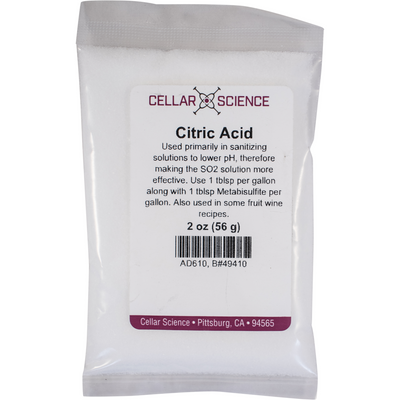
Citric Acid
Used primarily in sanitizing solutions to lower pH, therefore making the SO2 solution more effective. Use 1 tbsp per gallon along with 1 tbsp meta per gallon. Citric is not added directly to must prior to either primary or ml fermentation as its metabolism can lead to volatile acidity. A rough approximate of weight is 1 tsp = 4 grams. We highly recommend using a scale to weigh the product for an accurate dose. We do not recommend relying on these rough conversions for accurate dosage rates. Domestically produced in the USA.
$2.99 - $259.99
-

American Oak Chips - Medium Toast
Our high quality, yet inexpensive American oak chips. These are toasted to a Medium Toast.
$2.39 - $199.99
-

American Oak Cubes (Stavin) - Medium Plus Toast
Premium, Fire-Toasted Oak Cubes from Stavin Medium + Toast American Oak will impart flavors of campfire, vanilla, roasted coffee and butterscotch. These fire-toasted oak cubes are as close as you can come to the full range of flavors you would get from aging your beer in a full sized barrel, unlike convection-toased cubes. The difference is that convection toasted cubes are made by cutting the stave to size, then passing the small cubes through a toasting chamber. Stavin fire-toasts their staves whole, just like they would when making a barrel, and then cuts them down to size. The result is a gradation of toasting from the surface through to the center of the cube, where each different toast level represents a different flavor set that the oak will give your beer. The result is a much more complex and natural profile; by comparison convection toasted cubes taste one dimensional. Oak cubes also release their flavor into your beer more slowly than chips, giving you more control over the final degree of impact in your beer. You should plan on an extended aging period of 1-6 months when using cubes. This longer contact time again promotes flavor complexity by allowing all the flavors of the oak and your beer to marry. Recommended Dosage is 2 oz per 5 gallons for impact equivalent to aging in a brand new oak barrel. Download the PDF
$4.69 - $679.99
-


Campden Tablets (Potassium Metabisulfite)
In wine, used to kill naturally occurring microorganisms and prevent spoilage. Also works as an antioxidant. Add at a rate of 1 tab/gallon to achieve 75 ppm free SO2. These tablets use potassium metabisulphate as opposed to sodium metabisulphate. This is generally preferred by winemakers who do not want to add sodium into their wine. Can also be added to water to remove chloramine (1 tab is sufficient for roughly 5-20 gallons)
$1.99 - $79.99
-

Potassium Carbonate
Potassium Carbonate is used to lower acidity levels in wine. 3.8 grams per gallon will reduce acidity by about .1%. Potassium Carbonate requires that the fermenter be stored cold for several weeks after application (please see our guides to Cold Stabilization in the documents tab above). During the period of cold stabilization the tartaric acid drops out as potassium bitartrate. Doing a trial run with a small amount is strongly suggested to determine exactly what the drop in acidity will be. Calcium carbonate can be used in a similar manner and does not require cold stabilization. However it adversely affects flavor, takes month to precipitate out of solution, and preferentially reduces tartaric acid first before affecting malic or citric acid. A rough approximate of weight is 1 tsp = 8.3 grams. We highly recommend using a scale to weigh the product for an accurate dose. We do not recommend relying on these rough conversions for accurate dosage rates.
$1.99 - $179.99
-

Tannin FT Blanc Soft
This product replaces our TAN150 - Tannin Galalcool Enological tannins offer the winemaker, cider maker, or mead maker the possibility to add refined, highly-bindable tannin at any stage during the process. Benefits can include increased structure and mouthfeel, color stabilization, stability, anti-oxidative qualities, and overall complexity. Tannins can reduce vegetal/herbaceous characteristics and perceived astringency. We offer four types of oenolgical tannins, two for use during fermentation, and two for use during the aging phase. Protection & Improved Structure! Designed for white/rose wine fermentations (including fruit wines, ciders, and mead), Scott'Tan FT Blanc Soft is a specially formulated, colorless tannin derived from Gall Nuts. When used at the beginning of the fermentation, FT Blanc Soft helps provide protection from oxidation so more of the wines delicate aromas and flavors are preserved. In addition, FT Blanc Soft's continual bonding going on throughout the fermentation improves mouthfeel and help significantly reduce or eliminate vegetal/herbaceous characters and bitterness. FT Blanc Soft imparts a perception of sweetness without contributing any sugars, along with a low-level, beneficial minerality. Note: FT Blanc Soft can also be used as an ageing tannin post-fermentation as well! To Use Add directly to the grapes at the crusher or to the juice/wine. Mix thoroughly to ensure homogenization. Note: If using FT Blanc Soft as an aging tannin, final addition should be made 3-6 weeks before bottling to allow for complete polymerization and settling. Recommended dosage rate: 0.2-0.6 g/gal (5-15 g/hL) A rough approximate of weight is 1 tsp = 2.3 grams. We highly recommend using a scale to weigh the product for an accurate dose. We do not recommend relying on these rough conversions for accurate dosage rates.
$1.99 - $127.99
-


Ascorbic Acid
Due to high demand, this item is currently out of stock. Be the first to receive your items by placing a pre-order today. We will automatically ship this to you when we receive more inventory. Ascorbic acid is a quick-acting and powerful antioxidant that is used in white winemaking to protect against light and short aerations, such as racking and bottling. It works by rapidly converting dissolved oxygen into hydrogen peroxide before it has a chance to react with oxidative enzymes and cause browning. However, this hydrogen peroxide itself needs to be removed from the wine in order to avoid the very phenomenon that was trying to be avoided in the first place, namely oxidizing the wine. The answer lies in always making sure that the free SO2 levels are correct, both before the ascorbic addition is to be made and after. (Note that "Titrettes" are not accurate enough for this, and that a more precise means of determing free SO2 is needed, such as an Aeration-Oxidation set-up). Addition rate is around 50 mg/l (ppm) as long as the free SO2 is maintained at 30 mg/l (ppm). A rough approximate of weight is 1 tsp = 3.2 grams. We highly recommend using a scale to weigh the product for an accurate dose. We do not recommend relying on these rough conversions for accurate dosage rates.
$2.49 - $879.99
-

OCI American Oak Cubes | Medium Toast
Convection toasted Oak Cubes made in the US from American Oak. These Oak Cubes impart similar flavors as the equivalent oak type and toast level chip, but extract more slowly giving you more control over the final impact in your beer. These cubes are produced from staves of American oak that have been air-seasoned for 18-24 months, then toasted to a Medium Toast. They will add a sweet, butterscotch note with a hint of bourbon char to your beer. Suggested dosage is 2-4 oz per 5 gallons of beer.
$6.49 - $729.99
-

French Oak Cubes (Stavin) - Medium Toast
Due to high demand, 20 lb is currently out of stock. Be the first to receive your items by placing a pre-order today. We will automatically ship this to you when we receive more inventory. Premium, Fire-Toasted Oak Cubes from Stavin Medium Toast French Oak will impart flavors of coconut, vanilla, cinnamon and chocolate. These fire-toasted oak cubes are as close as you can come to the full range of flavors you would get from aging your beer in a full sized barrel, unlike convection-toased cubes. The difference is that convection toasted cubes are made by cutting the stave to size, then passing the small cubes through a toasting chamber. Stavin fire-toasts their staves whole, just like they would when making a barrel, and then cuts them down to size. The result is a gradation of toasting from the surface through to the center of the cube, where each different toast level represents a different flavor set that the oak will give your beer. The result is a much more complex and natural profile; by comparison convection toasted cubes taste one dimensional. Oak cubes also release their flavor into your beer more slowly than chips, giving you more control over the final degree of impact in your beer. You should plan on an extended aging period of 1-6 months when using cubes. This longer contact time again promotes flavor complexity by allowing all the flavors of the oak and your beer to marry. Recommended Dosage is 2 oz per 5 gallons for impact equivalent to aging in a brand new oak barrel
$9.99 - $729.99
-

Malic Acid Powder
Due to high demand, the 55 lb is currently out of stock. Be the first to receive your items by placing a pre-order today. We will automatically ship this to you when we receive more inventory. 3.4g per gallon adjusts acidity by +.1%. It will lower pH less than will tartaric acid. Malic acid is the acid found in apples and is therefore the best choice for adjusting ciders. Malic is less sour than tartaric acid and can also be used to make acid adjustments in Rieslings, Gewurztraminer, and Muscat varieties, though many winemakers still prefer to use tartaric acid in these situations. You would not want to add Malic acid to any wine that will undergo a malolactic fermentation. As a note: only half of the artificially added malic acid will convert to lactic acid during a malolactic fermentation. A rough approximate of weight is 1 tsp = 2.7 grams. We highly recommend using a scale to weigh the product for an accurate dose. We do not recommend relying on these rough conversions for accurate dosage rates.
$2.99 - $379.99
-

French Oak Chips | Medium Toast
Oak Chips are a fast and economical way to add oak barrel flavor to any beer. Oak Chips are made from seasoned American and French Oak staves which are chipped down and toasted to create flavors similar to what you'd get from a barrel. The available toast levels are Medium, Medium +, and Heavy. It's important to understand that each toasting level creates different flavors in the oak; not a greater intensity of impact in your beer. Don't think of them as weak, normal & strong; they're each a different flavor profile. These staves for these Medium Toast French Oak chips are sourced from a cooper (barrel maker) in Napa, CA. They deliver clove and spice flavors of medium intensity, along with strong flavors of Butterscotch & perceived sweetness. Because of the high surface area, oak chips can extract quickly and care should be taken not to overdo it. Taste your beer frequently after the first week of contact and be ready to rack off the oak chips. Suggested Dosage is 1-2 oz per 5 gallons.
$2.99 - $319.99
-

Tartaric Acid
For the beer maker who is also intrigued with making wine. MoreWine!'s Tartaric Acid is processed naturally in Europe from grapes and is the preferred acid for adjusting acid levels in wine. Be aware that a lot Tartaric Acid available to home winemakers is artificially made, comes from China, and does not integrate into the wine as well. Some of this tartaric includes the designation of "food-grade". Because MoreWine! packages this product you can be assured you are getting the highest winery-grade quality. 3.8g per gallon adjusts acidity by +.1%. As a note: some tartaric acid will drop out of suspension as potassium bitartrate if you are doing any cold stabilization. You might want to re-test total acidity after cold stabilization.
$5.99 - $349.99
-

Bentonite | Volclay KWK Krystal Klear
Volclay KWK Krystal Klear Bentonite is a clay-like mineral with a negative charge that, similar to Sparkolloid, removes positively charged particles. It is most effective when the wine is at a warmer temperature, so we recommend using it for fining in late spring or early summer. It also works better at lower pH levels because proteins have a stronger positive charge in more acidic conditions. Generic Low-Level Fining for 5 Gallons: Blend 1/2 tsp (about 3g) of bentonite with 1/2 cup of hot water (140 to 200°F) in a blender for 1-2 minutes. Let the mixture sit for 60 minutes, then stir it well before adding it to the wine. Allow the wine to stand for 10-14 days before racking off. This method achieves a fining rate of 0.16g/L. Generic Mid-Level Fining: Follow the same steps as above but use 9 grams of bentonite and 3/4 cup of hot water. This method achieves a fining rate of 0.5g/L. More Scientific Approach: You can create a 5% bentonite stock solution and run bench trials to determine the lowest effective concentration for clearing the wine. Since fining is non-selective, it removes both undesirable particles like yeast and some desirable phenolic compounds. Therefore, it's best to use the lowest effective concentration. To make a 5% solution, dissolve 50 grams of bentonite in 850ml of hot water, mix thoroughly, and top up with water to a final volume of 1L. Set up trials with clear jars of equal volume, adding varying amounts of the solution to achieve addition rates between 0.3g/L and 2.0g/L. You’ll need to do some calculations to determine the right amount for your needs. Let the trials clear overnight. For more detailed technical information, consult BK653 - Monitoring the Winemaking Process from Grapes to Wine - Techniques & Concepts. Fining with Wine Kits: When using a wine kit made from concentrate, bentonite is typically added on the first day for a few reasons. It serves as a nucleation site for CO2 removal. The CO2 movement helps distribute the bentonite throughout the wine, allowing you to use less and achieve effective fining in a shorter time.
$1.99 - $79.99
-


American Oak Chips | Heavy Toast
Oak Chips are a fast and economical way to add oak barrel flavor to any beer. Oak Chips are made from seasoned American and French Oak staves which are chipped down and convection-toasted to create flavors similar to what a comparably toasted barrel would impart. The available toast levels are Medium, Medium +, and Heavy. It's important to understand that each toasting level creates different flavors in the oak; not a greater intensity of impact in your beer. Don't think of them as weak, normal & strong; they're each a different flavor profile. Heavy Toast American Oak chips will impart strong flavors of Vanilla & Char, with a small note of Clove. These chips will not impart the coconut flavor often characteristic of lower toast American oaks. Because of the high surface area, oak chips can extract quickly and care should be taken not to overdo it. Taste your beer frequently after the first week of contact and be ready to rack off the oak chips. Suggested Dosage is 1-2 oz per 5 gallons.
$4.99 - $199.99
-


Opti Malo Plus
Opti'Malo Plus is a natural nutrient developed by Lallemand specifically for Malolactic Fermentation. It is a blend of inactive yeasts rich in amino acids, mineral cofactors, vitamins, cell wall polysaccharides and cellulose. The cellulose provides surface area to keep the bacteria in suspension and to help adsorb toxic compounds that may be present at the end of primary fementation. Opti'Malo Plus serves an analogous function to Fermaid-K for yeast fermentations. To Use: Suspend in a small amount of wine or water (just enough to dissolve it) and add to the wine at the same time as the Malolactic bacteria. Opti'Malo Plus should not be added directly to the rehydration water. Recommended Dosage: Use Opti'Malo Plus at a rate of 1 g/gal of wine. A rough approximate of weight is 1 tsp = 3.1 grams. We highly recommend using a scale to weigh the product for an accurate dose. We do not recommend relying on these rough conversions for accurate dosage rates.
$2.69 - $84.99
-


ACTI-ML
Acti-ML is a Malolactic nutrient used during rehydration of both direct inoculation and standard-type Malolactic Bacteria strains. It is a specific blend of inactive yeasts rich in amino acids, mineral cofactors and vitamins. These inactive yeasts are mixed with cellulose to provide more surface area to help keep the bacteria in suspension. Acti-ML can help strengthen the development of bacteria growth under difficult conditions. Please note that due to its unique formulation, only Acti-ML can be used in the hydration phase of malolactic bacteria. Other ML nutrient formulas are not compatible with this protocol and their use during the hydration phase could severely limit the bacteria's viability! Acti-ML serves an analogous function to Go-Ferm Protect in yeast fermentations. To Use: Mix Acti-ML into 5 times its weight in 25C (77F) chlorine-free water. Add your bacterial culture, then wait 15 minutes before adding to the wine. Dosage rate: 0.84g/gal of wine
$2.29 - $84.99
-


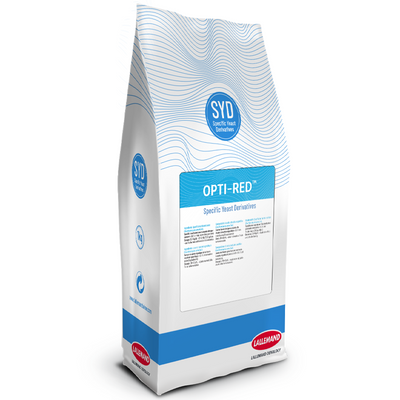
Lallemand Opti Red | For Color | Body | Tannin Integration
OptiRED – Lallemand Yeast Derivative for Color, Body & Tannin Integration in Red Wines Enhances early formation of polysaccharide–polyphenol complexes for more intense, stable color Rounds and smooths tannins to reduce harshness and astringency Builds fuller body and improved mouthfeel without altering varietal expression Can be used at the start or during fermentation for flexible control over tannin structure Outperforms generic inactivated yeast products by delivering high‑molecular‑weight mannoproteins via MEX™ processing OptiRED is a tailored inactivated yeast derivative produced by Lallemand using an innovative MEX™ method that makes high-molecular-weight polysaccharides immediately available in the must. When introduced early during maceration or alcohol fermentation, these compounds complex with freshly released anthocyanins and tannins, protecting color integrity and creating softer, more integrated tannin profiles. The result is a red wine with enhanced intensity, smoother palate, improved structural balance, and longer-term color stability—without over‑manipulating varietal character. This effect is particularly noticeable in light‑ to medium‑bodied reds or in vintages with lower phenolic maturity. Protocol Suspend the recommended dose in 10× its weight of clean must or water. Stir thoroughly to ensure full dispersion, then add at one of these points: • At the beginning of maceration or alcoholic fermentation for enhanced color protection and tannin integration • Toward the end of fermentation to smooth out persistent harshness without affecting initial extraction. Usage Rates Recommended dosage: 20–40 g per hectoliter = 0.2–0.4 g per liter = 0.76–1.5 g per gallon For standard use, 30 g/hL (0.3 g/L or ~1.14 g/gal) provides excellent balance between color enhancement and mouthfeel refinement. For home users a rough approximate of weight is 1 tsp = 2.6 grams. We highly recommend using a scale to weigh the product for an accurate dose. We do not recommend relying on these rough conversions for accurate dosage rates.
$2.69 - $449.99
-

Hungarian Oak Cubes (Stavin) - Medium Plus Toast
Cubes have a longer contact time than traditional chips do, which make them better for long-term aging of wines and beers. Also, longer contact time means longer extraction of flavors (3-6 months), which leads to a more complex combination of flavors. Chips are usually done giving flavor after a week, there by contributing a harsh, flat oak flavor. Our cubes are fires toasted and cut by Stavin, a leading supplier of high-quality oak alternatives to top commercial wineries. Download the PDF
$4.69 - $649.99
-


Tannin FT Rouge
Fermentation Tannins lend long-term stability to your wine by laying the right foundation during fermentation. Scott'Tan FT Rouge is composed of exotic wood and chestnut tannins. Designed specifically for North American red wine fermentations. Benefits can include increased structure and mouthfeel, color stabilization, stability, anti-oxidative qualities, and overall complexity. Tannins can reduce vegetal/herbaceous characteristics and perceived astringency. To Use: Sprinkle directly onto must and either mix well with your punch down tool or pump over to ensure thorough mixing. If adding to the wine post-fermentation we recommend allowing 3-6 weeks for full integration before racking, fining, filtering or bottling. If being used in conjunction with one another, tannins should be added 6-8 hours after the addition of the enzymes or you run the risk of having the tannins reacting with and removing the enzymes before they have had a chance to do their job! Recommended dosage rate: 0.8-1.9 g/gal. Use at an initial rate of 1.3 gram per gallon during punch down/pump over. If you want additional tannin add at a rate of .25 g/gal. A rough approximate of weight is 1 tsp = 2.4 grams. We highly recommend using a scale to weigh the product for an accurate dose. We do not recommend relying on these rough conversions for accurate dosage rates. Unopened the shelf life is 5 years at 18C (65F).
$2.79 - $259.99
-


Opti-White
If you want to try your hand at winemaking, Opti-White is a key tool that helps preserve the protein stability and color of white wine. Derived from natural, inactivated yeast, Opti-White has high anti-oxidative properties. It increases mouthfeel, avoids browning, increases the wine's protein stability and volatile thiols (aroma compounds), and protects fresh aromas during aging. Use at the rate of 1.9 grams per gallon. Dilute Opti-White in 4 times its weight of water or must and add at beginning of fermentation. Approximately 3.4g/tsp. For best results, we recommend using a scale to weigh out the product for an accurate dose.
$4.49 - $154.99
-

Tannin Complex
This product replaces our TAN130 - Tan'Cor Enological tannins offer the winemaker the possibility to add refined, highly-bindable tannin to your wine at any stage during the process. Benefits can include increased structure and mouthfeel, color stabilization, stability, anti-oxidative qualities, and overall complexity. Tannins can reduce vegetal/herbaceous characteristics and perceived astringency. We offer four types of oenolgical tannins, two for use during fermentation, and two for use during the aging phase. Aging tannins Tannin Complex is a tannin that is added post fermentation to improve the overall structure and to help protect the wine from oxidation during aging. It is composed of proanthocyanidins and ellagic tannins that integrate easily into young wines. Tannin Complex was specially developed to add structure and a soft mid palate to premium red wines without harshness or a forward oak finish. It can also enhance the varietal fruit character while adding complexity to the finish. Helps stabilize wines by improving the polyphenolic composition. It is especially useful when aging wines in older tannin-leached barrels and with full, fruity, lower tannin varietals like Syrah and Zinfandel. To Use: While racking or stirring, add Tannin Complex to the wine incrementally. Mix well to ensure homogeneity. Final addition should be made 3-6 weeks before bottling to allow for complete polymerization and settling. Use at the rate of 0.20-1.14 g/gal (5-30 g/hL) prior to aging. A rough approximate of weight is 1 tsp = 3.1 grams. We highly recommend using a scale to weigh the product for an accurate dose. We do not recommend relying on these rough conversions for accurate dosage rates.
$1.99 - $94.99
-

American Oak Cubes (Stavin) - Heavy Toast
Premium, Fire-Toasted Oak Cubes from Stavin Heavy Toast American Oak will impart flavors of char, spice and roasted coffee; with hints of vanilla and butterscotch. These fire-toasted oak cubes are as close as you can come to the full range of flavors you would get from aging your beer in a full sized barrel, unlike convection-toased cubes. The difference is that convection toasted cubes are made by cutting the stave to size, then passing the small cubes through a toasting chamber. Stavin fire-toasts their staves whole, just like they would when making a barrel, and then cuts them down to size. The result is a gradation of toasting from the surface through to the center of the cube, where each different toast level represents a different flavor set that the oak will give your beer. The result is a much more complex and natural profile; by comparison convection toasted cubes taste one dimensional. Oak cubes also release their flavor into your beer more slowly than chips, giving you more control over the final degree of impact in your beer. You should plan on an extended aging period of 1-6 months when using cubes. This longer contact time again promotes flavor complexity by allowing all the flavors of the oak and your beer to marry. Recommended Dosage is 2 oz per 5 gallons for impact equivalent to aging in a brand new oak barrel. Download the PDF
$7.99 - $529.99
-


OCI French Oak Cubes | Medium Toast
Convection toasted Oak Cubes made in the US from French Oak. These Oak Cubes impart similar flavors as the equivalent oak type and toast level chip, but extract more slowly giving you more control over the final impact in your beer. These cubes are produced from staves of French oak that have been air-seasoned for 18-24 months, then toasted to a Medium Toast. They will add a sweet, butterscotch note with hints of Vanilla and Spice to your beer. Suggested dosage is 2-4 oz per 5 gallons of beer.
$6.99 - $719.99
-


Aroma Sciences | American Bourbon Barrel Liquid Extract | Double Concentrated | Natural Evaporated Oak Extract
Impart a perfect replication of barrel aromatics without the lengthy process of barrel ageing Consistent, repeatable results every time without the need to blend various barrels of product together Infuse oak aromatics into beer in minutes. Safe for use with low alcohol beers as there's no risk of infection that comes from barrel ageing beer below 12% ABV Increase the perceived quality of your wine without drastically increasing production overhead or lead time Eliminate the expensive, compounding loss of the "Angel's Share"—spirits typically lose 5-10% of their volume in barrels due to evaporation 2X Concentrate. This is a more concentrated extract than the standard Aroma Science extracts that requires approximately half the typical dosage Complex and spiritous with grainy woody, creamy coconut, caramel, and fruity notes with subtle hints of smoke. Bold flavors of dark caramel, cinnamon, leather, and a touch of vanilla. More intense aromatics than the classic series. Use less. Aroma Science's internationally-patented Evaporative Extraction™ technology naturally captures complex aromatics from wine and whiskey barrels to create aroma profiles that are perfect copies of the original barrel source. Use to balance and boost oak aroma in beer, wine, spirits, ciders, seltzers, and traditional, reduced proofed, and nonalcoholic ready-to-drink cocktails. Typical recommended dosing in beer & wine is approximately 0.75-3 mL per gallon and anywhere from 2-30 mL per gallon with spirits. See AromaSciences.com for detailed dosing recommendations for Beer, Wine, and Spirits. Ingredients: Ethanol, Water, Oak Made in the USA
$18.99 - $344.99
-


Lallzyme EX-V™ | Fermentation Enzyme For Structured Red Wines
Lallzyme EX-V – Enzyme for Structured Red Wines with Enhanced Color and Tannin Stability Extracts color and tannins with improved integration for wines destined for aging Promotes stable anthocyanin-tannin bonding for long-lasting color Enhances mouthfeel, midpalate weight, and structural balance Improves juice yield and reduces solids through efficient cell wall degradation Balanced enzyme activity supports both extraction and finesse in premium red wines Lallzyme EX-V is a precision enzyme blend developed by Lallemand for red wine fermentations where structure, balance, and ageability are desired. It combines strong pectolytic activity with targeted cellulase and hemicellulase functions to break down grape skin cell walls, facilitating the release of anthocyanins and seed-derived tannins in a controlled, integrative manner. EX-V is ideal for varietals with moderate to firm skins or when crafting red wines intended for barrel aging, as it enhances phenolic complexity without over-extracting bitterness or astringency. Wines fermented with EX-V tend to show refined texture, vivid color, and excellent long-term stability. Comparison to Other Lallemand Maceration Enzymes: Compared to EX, which is best for early-drinking, fruit-forward reds, EX-V is designed for more structured, age-worthy styles with higher tannin and color stability. EX = softer, fruit-driven reds for early release EX-V = structured, balanced reds with aging potential Protocol Dilute Lallzyme EX-V in 10 times its weight of chlorine-free water. Add to crushed grapes or must at the beginning of fermentation. Mix thoroughly for even dispersion. Optimal temperature range: 20–30°C. Avoid adding below 10°C or after alcoholic fermentation begins. Usage Rates Recommended dosage: 30–40 grams per ton of grapes = 0.66–0.88 grams per hectoliter (assuming 450 L/ton) = 0.0066–0.0088 grams per liter = 0.025–0.033 grams per gallon Use the lower end of the range for moderately structured fruit or extended maceration. Use the higher range for tighter-skinned grapes, shorter fermentations, or when greater phenolic extraction and color stability are required for barrel-aged or long-lived reds.
$2.89 - $155.99
-

French Oak Cubes (Stavin) - Medium Plus Toast
Premium, Fire-Toasted Oak Cubes from Stavin Medium + Toast French Oak will impart flavors of vanilla, cinnamon and chocolate with notes of coffee and campfire. These fire-toasted oak cubes are as close as you can come to the full range of flavors you would get from aging your beer in a full sized barrel, unlike convection-toased cubes. The difference is that convection toasted cubes are made by cutting the stave to size, then passing the small cubes through a toasting chamber. Stavin fire-toasts their staves whole, just like they would when making a barrel, and then cuts them down to size. The result is a gradation of toasting from the surface through to the center of the cube, where each different toast level represents a different flavor set that the oak will give your beer. The result is a much more complex and natural profile; by comparison convection toasted cubes taste one dimensional. Oak cubes also release their flavor into your beer more slowly than chips, giving you more control over the final degree of impact in your beer. You should plan on an extended aging period of 1-6 months when using cubes. This longer contact time again promotes flavor complexity by allowing all the flavors of the oak and your beer to marry. Recommended Dosage is 2 oz per 5 gallons for impact equivalent to aging in a brand new oak barrel.
$9.99 - $749.99
-

Lallzyme EX
Lallzyme EX – Enzyme for Enhanced Color and Juice Release in Early-Drinking Red Wines Improves color extraction while preserving soft, approachable tannins Increases free-run and press juice yield by breaking down cell wall pectins Enhances clarification and reduces solids for easier pressing and settling Supports smooth mouthfeel in red wines intended for early consumption Balanced enzyme activity preserves varietal fruit while aiding extraction efficiency Lallzyme EX is a gentle maceration enzyme developed by Lallemand for red wine fermentations where balance, early drinkability, and clean extraction are key. Its primary function is to degrade grape skin cell walls through pectinase and hemicellulase activity, improving juice yield and the release of color compounds without promoting aggressive tannin extraction. This makes it particularly well-suited for light- to medium-bodied red wines or warm-climate varietals where managing tannin levels is critical. EX helps clarify must, improve press efficiency, and support the production of soft, fruit-driven wines that are ready for market sooner. Comparison to Other Lallemand Maceration Enzymes: Compared to EX-V, which targets tannin structure and aging potential, EX is better for fresh, youthful styles that prioritize fruit expression and roundness. In summary: EX = best for early-release reds, softer tannins, moderate color EX-V = ideal for structure and age-worthines Protocol Dilute Lallzyme EX in 10 times its weight of chlorine-free water. Add to crushed grapes or must at the start of fermentation. Mix well to ensure even distribution. Best activity between 20–30°C. Avoid use below 10°C or after fermentation is complete. Usage Rates Recommended dosage: 20–30 grams per ton of grapes = 0.44–0.66 grams per hectoliter (assuming 450 L/ton) = 0.0044–0.0066 grams per liter = 0.017–0.025 grams per gallon Use the lower range for softer grapes or longer macerations. Use higher rates when working with firmer-skinned varieties or short fermentations where improved extraction and juice yield are needed.
$2.39 - $37.99
-


Lallemand Reduless | Inactivated Yeast with Copper | Fixes H2S Issues
Reduless is a new product from Lallemand that was designed to correct negative VSCs (Voltatile Sulfur Compounds) such as H2S (hydrogen sulfide, A.K.A. "rotten egg") and DMS (dimethyl sulfide, A.K.A. "cooked corn") defects in wine. Made from inactivated yeast that have been infused with copper using a proprietary process, Reduless is a much gentler H2S remedy on the wine than the traditional copper sulfate (CuSO4) treatment alone. If you have an H2S problem, then we recommend treating it with Reduless first. However, if the sulfur problem still remains after the Reduless treatment, then a bench trial with copper sulfate (CuSO4) is recommended. Note: The sooner you catch a sulfur problem the easier it is to deal with! To Use: Dissolve Reduless in 10 times it's weight in water and add immediately to the wine. Stir the wine gently to ensure a thorough homogenization. Rack or filter after 72 hours. Recommended Dosage: 0.4-0.6 g/gal. The maximum amount of copper that can be released into the wine using Reduless at the recommended dosage is 0.02 ppm.
$2.49 - $211.99
-


French Oak Chips | Heavy Toast
Oak Chips are a fast and economical way to add oak barrel flavor to any beer. Oak Chips are made from seasoned American and French Oak staves which are chipped down and convection-toasted to create flavors similar to what a comparably toasted barrel would impart. The available toast levels are Medium, Medium +, and Heavy. It's important to understand that each toasting level creates different flavors in the oak; not a greater intensity of impact in your beer. Don't think of them as weak, normal & strong; they're each a different flavor profile. Heavy Toast French Oak chips will impart strong flavors of Clove, Spice, Smoke & Butterscotch; along with a small amount of Vanilla & Coconut flavor. Because of the high surface area, oak chips can extract quickly and care should be taken not to overdo it. Taste your beer frequently after the first week of contact and be ready to rack off the oak chips. Suggested Dosage is 1-2 oz per 5 gallons.
$6.99 - $499.99
-

Yeast Hulls | For Stuck or Sluggish Ferments
Yeast Hulls are ususally the first action when you have a stuck or sluggish alcoholic or malolactic fermentation. Yeast Hulls are essentially dead yeast cells that absorb auto toxic yeast by-products that could be inhibiting your active yeast or ML culture from doing their job - finishing your fermentation! Yeast Hulls are then typically followed by Pro-Desert in the case of a stuck alcoholic fermentation or Acti Ml in the case of a stuck ML ferment. As a side note, Yeast Hulls are included in the Fermaid K mix of nutrients to help prevent problem ferments from the onset. The reason you would not use Fermaid K for most stuck ferments is that Fermaid K contains DAP. If DAP (Diammonium Phosphate) is added to the ferment past the point of metabolization by the yeast it could potentially leave an unwanted, residual flavor. Use at the rate of .5 to .9 grams per gallon. If stored in a cool, dry place, will last up to 3 years. A rough approximate of weight is 1 tsp = 2 grams. We highly recommend using a scale to weigh the product for an accurate dose. We do not recommend relying on these rough conversions for accurate dosage rates.
$1.69 - $249.99
-


Lallemand | Go-Ferm Sterol Flash™ | Reydrate Yeast in Cold Water
Improves fermentation kinetics and aroma production Allows yeast to be rehydrated in cool water (60°F) without any loss of viability or vitality Eliminates the need for acclimatization steps—rehydrated yeast can be added directly to juice or must after 15 minutes Requires 50% less water than Go-Ferm™ or Go-Ferm Protect Evolution™ Non-clumping, instantly disperses in cool water Go-Ferm Sterol Flash™ is a revolutionary new yeast rehydration nutrient that is fast, simple to use, and saves time, labor, and water without compromising on yeast viability and vitality. Derived from autolyzed yeast, Go-Ferm Sterol Flash™ provides optimized levels of micronutrients (vitamins and minerals) and extremely high levels of survival factors including sterols and unsaturated fatty acids. Go-Ferm Sterol Flash™ has the highest bioavailability of sterols and is produced with a specific Lallemand micro agglomerated process, for instant dispersion during the rehydration step. When suspended in cool water, the high content of sterols are quickly released and integrated in the yeast membrane within 15 minutes. The high content of sterols reinforces the permeability and fluidity of the yeast membrane. Go-Ferm Sterol Flash™ increases yeast viability, yeast vitality, and optimizes wine yeast aroma precursors assimilation under any conditions in red, rose, and white wine fermentation. With Go-Ferm Sterol Flash™, no yeast acclimatization steps are required before inoculation in must. Go-Ferm Sterol Flash™ is a revolutionary yeast rehydration protector with instant dispersion in cool water for a more reliable alcoholic fermentation and wine yeast sensory impact. Use: Use at a rate of 1.25 g Go-Ferm Protect per 1 g of yeast. A rough approximate of weight is 1 tsp = 3.2 grams. We highly recommend using a scale to weigh the product for an accurate dose. We do not recommend relying on these rough conversions for accurate dosage rates. Download the PDF Store in a cool and dry environment at 65°F. Once opened, keep tightly sealed and dry.
$3.49 - $468.99
-


Aroma Sciences | American Oak Barrel Liquid Extract | Medium Toast | Natural Evaporated Oak Extract
Impart a perfect replication of barrel aromatics without the lengthy process of barrel ageing Consistent, repeatable results every time without the need to blend various barrels of product together Infuse oak aromatics into beer in minutes. Safe for use with low alcohol beers as there's no risk of infection that comes from barrel ageing beer below 12% ABV Increase the perceived quality of your wine without drastically increasing production overhead or lead time Eliminate the expensive, compounding loss of the "Angel's Share"—spirits typically lose 5-10% of their volume in barrels due to evaporation A perfect presentation of American oak. Coconut notes predominate with vanilla, sweet spices, nutmeg, and cloves. Seamless blend of flavors including vanilla, toffee, toasted nuts and rich caramel sweetness. Aroma Science's internationally-patented Evaporative Extraction™ technology naturally captures complex aromatics from wine and whiskey barrels to create aroma profiles that are perfect copies of the original barrel source. Use to balance and boost oak aroma in beer, wine, spirits, ciders, seltzers, and traditional, reduced proofed, and nonalcoholic ready-to-drink cocktails. Typical recommended dosing in beer & wine is approximately 1.5-6 mL per gallon and anywhere from 6-60 mL per gallon with spirits. See AromaSciences.com for detailed dosing recommendations for Beer, Wine, and Spirits. Ingredients: Ethanol, Water, Oak Made in the USA
$18.99 - $204.99
-

Wine Conditioner - 500mL
Wine Conditioner is a combination sugar/sorbate solution for adding to a fermented wine in order to give it some residual sweetness. The sorbate helps prevent fermentation of the sugar that you are adding. Solution is 76-78° Brix. Directions: Add to taste, usually up to 125ml (4 oz) per 23L (5 gal) of wine. Wine must be stabilized before adding sweetener.
$8.99
-


Delvozyme® (Lysozyme)
Wine Making Use Delvozyme (Lysozyme, Lysovin) for controlling lactic acid bacteria growth in your wine. Isolated from egg whites, this enzyme will degrade the cell wall of gram positive bacteria, but will not affect yeast or gram negative bacteria such as Acetobacter. Delvozyme can be used for both Red and White Wine Malo Fermentation. Dosage: To Delay Malolactic Fermentation: Red Wine - add to grapes at 100 - 200 ppm, or 0.38 - 0.76 grams per gallon. White Wine - Add to must at 200 - 300 ppm, or 0.76 - 1.14 grams per gallon. To Block Malolactic Fermentation: White Wine - Add to must or wine at 300 - 500 ppm, or 1.14 - 1.90 grams per gallon. Stabilizing wine after MLF is complete: Add to barrel during storage at 250 - 500 ppm, or 0.95 - 1.90 grams per gallon. When blending partial and complete MLF wines: Add immeditatley after blending at 300 - 500 ppm, or 1.14 - 1.90 grams per gallon, to reduce the risk of further malolactic fermentation (MLF). Within several days any lactic should expire. For sluggish or stuck yeast fermentation: Red Wine - Add at 150 - 400 ppm, or 0.57 - 1.52 grams per gallon. White Wine - add at 300 - 500 ppm, or 1.14 - 1.90 grams per gallon. Directions for use: You can make a 10% solution of Delvozyme in water (100 grams per liter of water). However we find the easiest method is to add the desired dry weight of Lysovin in 5x its weight of warm(tepid) water. Mix for one minute, allow this mixture to stand for 45 minutes and add to must, juice or wine while mixing well. Allow 24 - 48 hours for reaction to complete. **Note: 3tsp Delvozyme = 5g Beer Making Delvozyme can be used in beer making as well. Use either in the starter (recommended if you make starters) or when pitching (adding) the yeast to the wort, do not use over 140 F. Recommended dosages is 1 tsp per 5 gallons of wort. According to studies it has no effect on flavor or clarity. Storage: Should be stored at room temperatures in a dry environment, can be stored up to 5 years.
$34.99 - $1,490.99
-


Aroma Sciences | French Oak Barrel Liquid Extract | Medium Toast | Natural Evaporated Oak Extract
Impart a perfect replication of barrel aromatics without the lengthy process of barrel aging Consistent, repeatable results every time without the need to blend various barrels of product together Infuse oak aromatics into beer in minutes. Safe for use with low alcohol beers as there's no risk of infection that comes from barrel aging beer below 12% ABV Increase the perceived quality of your wine without drastically increasing cost or production time Eliminate the expensive, compounding loss of the "Angel's Share"—spirits typically lose 5-10% of their volume in barrels due to evaporation French Oak extract is subtle and complex with exotic savory spice and hints of dark chocolate and roasted coffee. Mellow spice notes with a smooth mocha and toffee finish. Aroma Science's internationally-patented Evaporative Extraction™ technology naturally captures complex aromatics from wine and whiskey barrels to create aroma profiles that are perfect copies of the original barrel source. Use to balance and boost oak aroma in beer, wine, spirits, ciders, seltzers, and traditional, reduced proofed, and nonalcoholic ready-to-drink cocktails. Typical recommended dosing in beer & wine is approximately 1.5-6 mL per gallon and anywhere from 6-60 mL per gallon with spirits. See AromaSciences.com for detailed dosing recommendations for Beer, Wine, and Spirits. Ingredients: Ethanol, Water, Oak Made in the USA
$18.99 - $244.99
-

Tannin Riche Extra
This product replaces our TAN140 - Tannin Plus Enological tannins offer the winemaker the possibility to add refined, highly-bindable tannin to your wine at any stage during the process. Benefits can include increased structure and mouthfeel, color stabilization, stability, anti-oxidative qualities, and overall complexity. Tannins can reduce vegetal/herbaceous characteristics and perceived astringency. We offer four types of oenolgical tannins, two for use during fermentation, and two for use during the aging phase. Aging Tannins Tannin Riche Extra is a preparation of 100% American oak tannin that has been lightly toasted to impart a soft, aromatic character while enhancing the structure and organoleptic complexity of a wine. Tannin Riche Extra is a great tool for imparting hints of coconut, a heightened vanillin oak character and a smooth finish to your wines. Although designed for fine-tuning a wine, Tannin Riche Extra still maintains the regular properties associated with the use of tannins such as helping with clarification, stability, oxidation, and aging. Works well in conjunction with low doses of other tannins (i.e: Tannin Complex & FT Blanc Soft). To Use: Dissolve the tannin in 10 times its weight in warm water (95F/35C). Add to the wine during a punch-down or pump-over for good mixing. Addition of Tannin Plus should be made a minimum of three weeks before bottling. Recommended dosage: 0.2-0.4 g/gal A rough approximate of weight is 3/4 tsp = 1 gram. We highly recommend using a scale to weigh the product for an accurate dose. We do not recommend relying on these rough conversions for accurate dosage rates.
$4.99 - $293.99
-

Xoakers French Oak - Medium Plus Toast
Xoakers are 1" Solid Oak spheres made from high quality French oak and seasoned for a minimum of 24 months. They will contribute a complex oak character while softening and rounding the wine as well. What sets these apart though, are their shape and ease of use. The uniform size allows for precise dosing, and easy removal once complete. Whether you are using carboys or neutral barrels, additions are as simple as counting out however many Xoakers you need, and tossing them in. Every vessel will be oaked to the same extent when using these, and no need to weigh them out! Removing them is as simple as turning over your carboy or barrel, and watching them roll out! These can be used in both red and white wines, and are perfect for carboys, barrels, small tanks, and kegs. Ideal oak for the home winemaker! These Convection Toasted Medium Plus French Oak Xoakers are packed in Mylar bags, and will contribute various flavors depending on the wine. The 8 pack will treat 4-8 gallons & 1 lb will treat 35-70 gallons. Dosage: 1-2 Xoakers / Gallon (3.78 L) wine (depends on desired Oak Impact) Contact Time: 4 Month Minimum Recommended Useful Life in Wine: 12 Months Size: 1" Diameter Spheres, 70 French Oak Xoakers / lb Liquid Displacement: .10 gal (.41 L) Toast Level: Med +
$9.49 - $69.99
-


WineStix - Medium Toast French Oak Carboy 2 Pack
WineStix are a new form of oak integration for wine, designed to give new barrel flavors with an extraction time similar to cubes. The combination of Short and Long grains result in amazing gradience of flavor similar to barrels, while extracting significantly quicker! These are Medium toast French Oak staves, and depending on the wine, will impart flavors of vanilla and coffee, while clearing out negative vegetal flavors and astringency from the wine. This is a two pack of WineStix, sized specifically for a 5-6 gallon carboy of wine. WineStix will easily fit through the mouth of a glass carboy, and can be attached to a string via the drilled hole for easy removal! One carboy Winestix will treat 5-6 gallons of wine.
$15.99
-


Lallzyme C-Max |
Enhances clarification and static settling of white and rosé musts under extreme conditions Active and fast depectinisation at low temperature, low pH, or high total pectin content Produces rapid, compact lees and improves juice quality consistently Requires lower dosage for effective results compared to standard enzymes Cinnamyl-esterase-free pectinase blend minimizes ethylphenol precursor release Lallzyme C-MAX™ is a micro-granulated pectolytic enzyme derived from Aspergillus niger, formulated for use in white and rosé wine production where settling conditions may be difficult. With high activities of pectin lyase, pectin methyl esterase, and polygalacturonase, it provides fast, efficient breakdown of pectin, even at low temperatures (as low as 8 °C / 46 °F) or low pH. Its action reduces must viscosity, speeds up clarification, and generates compact, easy-to-rack lees. Because it contains no cinnamyl esterase, Lallzyme C-MAX™ also limits the formation of ethylphenol precursors, contributing to cleaner, more varietally expressive wines. Protocol for Use: Add after pressing or directly into the settling tank. Dilute the enzyme in 10 times its weight in water or juice before use. Mix thoroughly for uniform distribution. Do not add bentonite during enzyme treatment. Clarification typically completes within 24 hours depending on temperature and juice conditions. Usage Rates: Standard conditions (>12 °C / 54 °F): 0.5–1.0 g/hL = 0.005–0.01 g/L = 0.019–0.038 g/gal Cold or high-pectin conditions (8–12 °C / 46–54 °F): 1.0–2.0 g/hL = 0.01–0.02 g/L = 0.038–0.076 g/gal Store in original sealed packaging at 5–15 °C (41–59 °F) in a dry place. Suitable for organic and vegan wine production.
$2.89 - $134.99


You have seen 48 out of 146 products