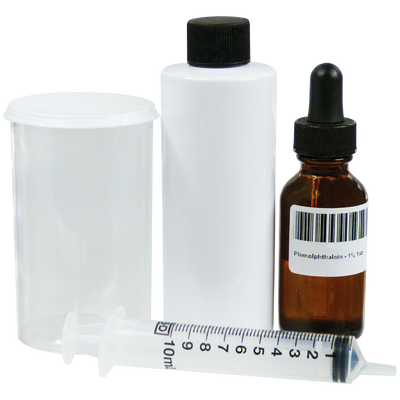
This is an all inclusive reagent and reaction vial combo kit with enough supplies for 20 tests. It includes two bottles of 5mL of Boost Juice, two vials of 0.5mL of 1M Malic Acid Solution, two bottles of 30 mL of 0.4 g/L Malic Acid Standard, and two bottles of 30 mL of 0.1 g/L Malic Acid Standard.
Please note: Product should be stored either frozen or refrigerated upon arrival. Please freeze Biopressure Reaction vials, 1M Malic Acid solution, and both Malic Acid Standards upon receipt. Boost Juice should be kept in the refrigerator to maintain its effectiveness.
The HI9146 is a rugged, portable dissolved oxygen (DO) meter designed to provide laboratory precision and accuracy under harsh environmental and industrial conditions. This meter offers many features including automatic calibration, auto-endpoint detection, and compensation for temperature, salinity and altitude. The HI9146 is supplied complete with polarographic probe, PTFE membrane caps, electrolyte fill solution, and rugged carrying case.
Easily Replaceable Membrane Caps
Automatic Calibration
Best suited for measuring DO during the fermentation/aging process in both beer and wine (not recommended for use during bottling, and cannot be used in carbonated beer).
Application Note
During the aging process, wine can range from 6-9mg/L and when bottled most wines should be below 1.25mg/L for Red and 0.6mg/L for white. Based on specifications, the HI9146W is well suited for use during the fermentation/aging process in both beer and wine, however it is not recommended for use during the bottling process.
Dissolved oxygen is a commonly measured parameter in wine analysis. The HI9146 is a rugged, portable dissolved oxygen (DO) meter designed to provide high accuracy measurements whether in the field or in the lab. The meter features automatic calibration performed at one or two points in saturated air and/or zero oxygen solution.All readings are automatically compensated for temperature variations and can be frozen on the display upon stability using the auto-end feature. Salinity and altitude compensation are user adjustable based on the environmental conditions that are present. The HI9146 features a Battery Error Prevention System (BEPS) that detects when the batteries become too weak to ensure reliable measurements. The HI9146 is supplied complete and ready to use.
Features at a Glance
Polarographic Measuring System
The meter and probe use polarographic sensor technology based on the Ross and Clark polarographic measurement method. The probe is comprised of a platinum cathode and silver anode in an electrolyte solution held in place over the surfaces of the electrodes by a polymer membrane. An external voltage applied across the system establishes a current proportional to the concentration of dissolved oxygen.
Replaceable Membrane Caps
The pretensioned thin polytetrafluoroethylene (PTFE) membranes employ a screw cap design that can be changed quickly by simply filling with the HI7041 electrolyte fill solution and screw on the DO probe.
Automatic Calibration - Calibration can be performed at one or two points to 100% and/or 0% saturation. The 100% saturation is done in air while the 0% is done with the HI7040 bicomponent zero oxygen solution.
Good Laboratory Practice (GLP)
The Good Laboratory Practice feature allows the user to recall calibration information including date, time and calibrations points.
Automatic Temperature Compensation - All readings are automatically compensated for temperature variations with a high accuracy, built in linearized thermistor temperature sensor behind a stainless steel cover.
Altitude Compensation
The HI9146 allows for altitude compensation for up to 4000 meters with a 100 meter resolution.
Salinity Compensation
Salinity compensation is adjustable from 0 to 80 g/L (ppt) with a 1 g/L resolution for the measurement of DO is brackish and seawater.
Auto End Point
The HI9146 features an auto endpoint mode in which when selected the reading will frozen on the display once a stable measurement is obtained. The auto-end feature allows for consistency among various users by ensuring that stability has been achieved before recording a measurement.
Backlit LCD
The HI9146 has a display with a backlight for easy viewing of readings in poor lighting conditions.
Battery Error Prevention System (BEPS)
The Battery Error Prevention System detects when the batteries become too weak to ensure reliable measurements. The backlight feature is automatically disabled when batteries are getting low and a clear indication is displayed to warn the user of this condition.
Thin Polarographic Dissolved Oxygen Probe for Wine
The HI76408 is a thinner Clark-type polarographic dissolved oxygen probe for Hanna’s benchtop and portable dissolved oxygen meters. The probe is constructed of durable ABS plastic and contains an integrated temperature sensor for temperature compensated measurements. It is compatible with our HI76407A/P PTFE membrane caps. Each membrane separates the probe’s platinum cathode and silver anode from the water sample being measured. Oxygen diffuses across the membrane and interacts with the polarographic system to produce a current proportional to oxygen concentration. Each cap is easily filled with HI7041 electrolyte and screwed on to the probe. The probe’s thin design makes it ideal for wine packaging measurements.
Rugged portable dissolved oxygen meter (DO meter).
Automatic Calibration.
Auto End Point mode which will freeze display once stable measurement is obtained.
Backlit LCD for easy view in poor lighting.
Note: This can only be used in uncarbonated beer.
The Milwaukee MA800 hard plastic carrying case is a high quality, foam lined, lightweight case. This case is designed for the Milwaukee Refractometer product line.
MA800 Design features
Designed specifically for Milwaukee Refractometers
Specific foam cut insert to prevent meter rattle
Lightweight
Easy carrying handle
Strong outer plastic design
Strong fasteners for long-term use
The Milwaukee MA905B/3 is a replacement pH Probe for any Milwaukee meter that uses a BNC connector. Using the BNC connection, the probe connects quickly and tightly with no worries of slipping off.
The MA905B/3 has a rugged body (PVC), comes with a 3 meter (9.8') cable, BNC connector, and can withstand up to 6 bar of pressure (meter(s) sold separately).
The Milwaukee MA957 CO2 Adjustable Flow Pressure Regulator is a High Quality brass fittings regulator, designed for long lasting use in your Aquarium and Hydroponics applications. Can be used with all Milwaukee controllers. Set of one (1) per package.
The Milwaukee MA957 High Quality CO2 Adjustable Flow Pressure Regulator has a Solenoid, a 4' cord, standard brass fittings, diaphram valves and a bubble counter. Designed to be used with ALL Milwaukee MCXXX Controllers such as MC122 and MC125.
The Milwaukee MA955 CO2 Gas on/off Soleniod Valve is a High Quality brass fittings valve, designed for long lasting use in your Aquarium and Hydroponics applications. Can be used with all Milwaukee controllers. Set of one per package.
The Milwaukee MA955 High Quality CO2 valve has a 4' cord, standard brass fittings and 110v power requirements. To be used with ALL Milwaukee MCXXX Controllers.
The Milwaukee Instruments MP810 Dosing Pump lets you easily automate dosing. The pump offers a maximum pressure of 1.5 bar or more than 50 feet of head pressure with a 0.39628 GPH dosing flow, aprox. 9.5 GPD.
The Milwaukee MC740 PRO Conductivity (EC) controller and pump lets you measure and adjust EC levels automatically.
Control the EC and Fertilizer Dosage in your Tank Automatically
Control the EC and Fertilizer Dosage in your Tank Automatically. The MC740 kit includes the MC311 EC controller and the MP810 dosing pump to automatically monitor and fine-tune EC levels. Just set your EC parameters and let the Milwaukee EC Controller and pump do the rest. Common uses are nutrient tanks.
Features
Accuracy
The Milwaukee PRO EC controller offers an accuracy to ±2% full scale.
Automation
The controller provides a control range of 0.0 to 10.0 mS/cm with alarms that activate when readings are higher or lower than set point.
Compatible dosing pump
The Milwaukee MP810 dosing pump (designed specifically for use with the MC311) is included in the kit.
Easy installation
The MC740 EC controller and pump kit comes with a complete mounting kit including a probe holder.
Design Features
Fast easy to read current results with large digital LCD readout
Accurate to ±2% full scale
Simple one-point calibration with manual trimmers for easy adjustment
0.8 to 2.8 mS alarm set point range is easily accessible on the front panel
Alarm activated when reading is above or below set point
Comes with full mounting kit including probe holders
MA812/2 hardwired EC probe
6.5’ probe cables for extra flexibility
12 VDC power supply
Pump provides a maximum pressure of 1.5 bar or more than 50 feet of head pressure with a 0.39268 GPH / 9.5 GPD dosing flow.
Uptake & Discharge Tubing Material: Polyethylene, 4.92' / 1.5 m.
Black Pump Squeeze Tube Material: Norprene.
The Milwaukee MC720 PRO pH controller and pump lets you measure and adjust pH levels automatically.
Summary
The MC720US kit includes the MC122 pH controller and MP810 dosing pump to automatically monitor and fine-tune pH levels. Just set your pH parameters and let the MC720US pH Controller and pump do the rest.
The MC720US is preferred by people looking to dial in their testing program when they have an ongoing need to maintain levels. Common uses are nutrient tanks and aquariums.
Features
Accuracy
The Milwaukee PRO pH controller offers an accuracy to ±0.2 pH with two point manual calibration.
Automation
The controller provides a control range of 5.5 to 9.5 pH with alarms that activate when readings are higher or lower than set point.
Compatible dosing pump
The Milwaukee MP810 dosing pump (designed specifically for use with the MC122) is included in the kit.
Easy installation
The MC720 pH controller and pump kit comes with a complete mounting kit including a probe holder.
Design features
Fast easy to read current results with large digital LCD readout
Accurate to ±0.2 pH
Simple two-point calibration for increased accuracy with manual trimmers for easy adjustment
5.5 to 9.5 pH alarm set point range is easily accessible on the front panel
Alarm activated when reading is above or below set point
Comes with full mounting kit including probe holders
Lab grade, double junction, gel filled probe designed for low maintenance
6.5’ probe cables for extra flexibility
12 VDC power supply
Pump provides a maximum pressure of 1.5 bar or more than 50 feet of head pressure with a 0.39268 GPH / 9.5 GPD dosing flow.
Uptake & Discharge Tubing Material: Polyethylene, 4.92' / 1.5 m.
Black Pump Squeeze Tube Material: Norprene.
Use and Care
pH meters usually start performing poorly because of problems with the probe. The two parts of the pH probe that cause problems are the glass sensing bulb and the reference junction.
Sensing bulb
The glass bulb loses sensitivity with use and will eventually fail. This is true of all pH probes.
Reference junction
The reference junction is a small hole that allows the meter to compare the sample to a reference. The reading is generated based on the electrical difference between the sample and reference. If the junction hole gets clogged, the pH probe will no longer function.
You can extend the life of your pH electrode in the following ways.
Storage
The pH probe needs to be kept hydrated. Long periods of dry storage will damage the sensitivity of the probe. Allowing the probe to dry out may also result in the junction hole getting clogged.
Store the pH probe in storage solution MA9015. Only use tap water short-term if MA9015 is not immediately available and NEVER store in distilled Water (DI) or Reverse Osmosis (RO) water. This will damage the sensitivity of the probe.
This best way to store the probe is with the probe's cap filled with MA9015 Storage Solution and the cap tightened to prevent leakage. It is also recommended that to store the electrode upright to further reduce the potential for leakage.
Cleaning
Residue from the sample can impact the sensitivity of the sensing bulb and block the junction. This is especially true if the sample has a lot of organic material. We recommend regularly soaking the probe in MA9016 Cleaning Solution for about 20 minutes.
Calibration
The pH sensing bulbs become less sensitive over time so make sure that you are calibrating reguarly to keep your PRO pH controller accurate. Also, calibrate after cleaning or a long period of storage.
Accurate. Simple. Reliable. 24/7 pH Control.
The Milwaukee MC311 PRO Conductivity (EC) controller lets you measure and adjust EC levels automatically.
Summary
The MC311 EC controller automatically monitors and fine-tunes EC levels. Just set your EC parameters and let the Milwaukee EC Controller do the rest.
The MC311 is preferred by people looking to dial in their testing program when they have an ongoing need to maintain levels. Common uses are nutrient tanks and aquariums.
Features
Accuracy
The Milwaukee PRO EC controller offers an accuracy to ±2% full scale.
Automation
The controller provides a control range of 0.0 to 10.0 mS/cm with alarms that activate when readings are higher or lower than set point.
Compatible dosing pump
Milwaukee also offers the optional MP810 dosing pump
Easy installation
This EC Controller comes with a complete mounting kit including a probe holder.
Design features
Fast easy to read current results with large digital LCD readout
Accurate to ±2% full scale
Simple one-point calibration with manual trimmers for easy adjustment
0.8 to 2.8 mS alarm set point range is easily accessible on the front panel
Alarm activated when reading is above or below set point
Comes with full mounting kit including probe holders
MA812/2 hardwired EC probe
6.5’ probe cables for extra flexibility
12 VDC power supply
Accurate. Simple. Reliable. 24/7 pH Control.
The Milwaukee MC122 PRO pH controller lets you measure and adjust pH levels automatically.
The MC122 controller automatically monitors and fine-tunes the pH levels. Just set your pH parameters and let the MC122 do the rest. The controller provides a control range of 5.5 to 9.5 pH with alarms that activate when readings are higher or lower than set point.
The MC122 is preferred by people looking to dial in their testing program when they have an ongoing need to maintain levels. Common uses are nutrient tanks and aquariums.
Features
Accuracy
The Milwaukee PRO pH controller offers an accuracy to ±0.2 pH with two point manual calibration.
Automation
The controller provides a control range of 5.5 to 9.5 pH with alarms that activate when readings are higher or lower than set point.
Compatible dosing pump
Milwaukee offers the MP810 dosing pump
Easy installation
The pH Controller comes with a complete mounting kit including a probe holder.
Design features
Fast easy to read current results with large digital LCD readout
Accurate to ±0.2 pH
Simple two-point calibration for increased accuracy with manual trimmers for easy adjustment
5.5 to 9.5 pH alarm set point range is easily accessible on the front panel
Alarm activated when reading is above or below set point
Comes with full mounting kit including probe holders
Lab grade, double junction, gel filled probe designed for low maintenance
6.5’ probe cables for extra flexibility
12 VDC power supply
Small footprint of 5.9 x 3.2 x 1.35”
Lightweight monitor at approx 6.3 oz.
Use and Care
pH meters usually start performing poorly because of problems with the probe. The two parts of the pH probe that cause problems are the glass sensing bulb and the reference junction.
Sensing bulb
The glass bulb loses sensitivity with use and will eventually fail. This is true of all pH probes.
Reference junction
The reference junction is a small hole that allows the meter to compare the sample to a reference. The reading is generated based on the electrical difference between the sample and reference. If the junction hole gets clogged, the pH probe will no longer function.
You can extend the life of your pH electrode in the following ways.
Storage
The pH probe needs to be kept hydrated. Long periods of dry storage will damage the sensitivity of the probe. Allowing the probe to dry out may also result in the junction hole getting clogged.
Store the pH probe in storage solution MA9015. Only use tap water short-term if MA9015 is not immediately available and NEVER store in distilled Water (DI) or Reverse Osmosis (RO) water. This will damage the sensitivity of the probe.
This best way to store the probe is with the probe's cap filled with MA9015 Storage Solution and the cap tightened to prevent leakage. It is also recommended that to store the electrode upright to further reduce the potential for leakage.
Cleaning
Residue from the sample can impact the sensitivity of the sensing bulb and block the junction. This is especially true if the sample has a lot of organic material. We recommend regularly soaking the probe in MA9016 Cleaning Solution for about 20 minutes.
Calibration
The pH sensing bulbs become less sensitive over time so make sure that you are calibrating reguarly to keep your PRO pH controller accurate. Also, calibrate after cleaning or a long period of storage.
Accurate. Simple. Reliable. 24/7 Conductivity (EC) Monitoring.
The Milwaukee MC310 PRO Conductivity (EC) monitor lets you measure EC levels automatically and alerts with an alarm when out of the set point range.
Summary
The MC310 EC automatically monitors your EC levels. Just set your EC parameters and let the Milwaukee EC monitor do the rest. The monitor has a set point range from 1.0 to 5.0 mS/cm with alarms that activate when readings are higher or lower than set point.
The MC310 is preferred by people looking to dial in their testing program when they have a need to maintain levels. Common uses are nutrient tanks, hydroponics, and horticulture.
Features
Accuracy
The Milwaukee PRO EC monitor offers an accuracy to ±2% full scale.
Automation
The monitor has a set point range from 1.0 to 5.0 mS/cm with alarms that activate when readings are higher or lower than set point.
Easy installation
This EC monitor comes with a complete mounting kit including a probe holder.
Design features
Fast easy to read current results with large digital LCD readout
Accurate to ±2% full scale
Simple one-point calibration with manual trimmers for easy adjustment
1.0 to 5.0 mS/cm alarm set point range is easily accessible on the front panel
Alarm activated when reading is above or below set point
Comes with full mounting kit including probe holders
MA812/2 hardwired EC probe
6.5’ probe cables for extra flexibility
12 VDC power supply
Range:0.0 - 10.0 mS/cm
Resolution:0.1 mS/cm
Calibration:Manual, 1-point
The Milwaukee MC110 PRO pH monitor (mid-range setpoint) offers lab grade accuracy with an easily viewable continuous check on pH levels with alarms.
Design features
Fast easy to read results with large digital LCD readout
±0.2 pH accuracy with a full pH range
3.5 to 7.5 pH alarm set point range is easily accessible on the front panel
Alarm activated when reading is above or below set point
Simple manual calibration via trimmers on the front panel
Comes with full mounting kit including probe holders
Lab grade, double junction, gel filled probe designed for low maintenance
12 VDC power supply
Small footprint of 5.9 x 3.2 x 1.35”
Lightweight monitor at approx. 5.6 oz.
Range:0.0 to 14.0 pH
Resolution:0.1 pH
Milwaukee PRO pH Probe Care
pH meters usually start performing poorly because of problems with the probe. The two parts of the pH probe that cause problems are the glass sensing bulb and the reference junction.
Sensing bulb
The glass bulb loses sensitivity with use and will eventually fail. This is true of all pH probes.
Reference junction
The reference junction is a small hole that allows the meter to compare the sample to a reference. The reading is generated based on the electrical difference between the sample and reference. If the junction hole gets clogged, the pH probe will no longer function.
You can extend the life of your pH electrode in the following ways.
Storage
The pH probe needs to be kept hydrated. Long periods of dry storage will damage the sensitivity of the probe. Allowing the probe to dry out may also result in the junction hole getting clogged.
Store the pH probe in storage solution MA9015. Only use tap water short-term if MA9015 is not immediately available and NEVER store in distilled Water (DI) or Reverse Osmosis (RO) water. This will damage the sensitivity of the probe.
This best way to store the probe is with the probe's cap filled with MA9015 Storage Solution and the cap tightened to prevent leakage. It is also recommended that to store the electrode upright to further reduce the potential for leakage.
Cleaning
Residue from the sample can impact the sensitivity of the sensing bulb and block the junction. This is especially true if the sample has a lot of organic material. We recommend regularly soaking the probe in MA9016 Cleaning Solution for about 20 minutes.
Calibration
The pH sensing bulbs become less sensitive over time so make sure that you are calibrating reguarly to keep your PRO pH meter accurate. Also, calibrate after cleaning or a long period of storage.
This Milwaukee 3-in-1 Low Range combo meter allows you to measure pH, EC (conductivity) and TDS with a single meter and one single probe.
Summary
pH and TDS are critical for water conditioning and aquariums. Total Dissolved Solids in drinking water can effect clarity and taste of water. In addition, high TDS levels can effect the health of a fish in an aquarium. High concentrations of TDS can decrease clarity of water in aquariums and decrease photosynthesis in aquatic plants.
The Milwaukee MW801 PRO Low Range Combo Meter lets you easily and accurately test pH, conductivity and total dissolved solids (TDS) using a single meter and integrated probe.
Simple, portable and rugged. No more juggling multiple electrodes and wires. Automatic temperature compensaton included.
The MW801 is the ultimate solution for pH and nutrient management.
Design Features
The design of the MW801 is focused on simple operation and ruggedness. With a single probe, big screen, easy calibration, the MW801 is exceptionally simple to operate.
A tough meter build and a rugged but replaceable probe means that you can expect years of use.
The Milwaukee PRO Combo meter offers:
pH, conductivity / nutrient EC, TDS (ppm) with automatic temperature compensation.
A replaceable, integrated pH, EC, and TDS (ppm) probe with a single 3 foot cable for easy use (SE600 probe included).
A fiber junction on the pH sensor to reduce contamination when measuring fertilizer solutions.
A light weight and portable form factor at just 5.8 ounces with battery and just over 3 inches wide.
A large easy to read display.
Factory calibration with a simple, single point manual calibration for both pH and EC.
A reputation for a rugged build and long life
Specialized design for drinking water, aquaponic, and aquariums.
Care and Use
The MW801 PRO Combo Meter includes both a pH and EC sensor in the SE600 integrated probe. All pH sensors have a limited life and response time gets longer with age. EC sensors are more robust but can still be affected by residue build up. Both need maintenance. Properly maintaining your probe will give you fast, accurate results for longer. So, be sure to order the Milwaukee pH Maintenance Kit code PH-Main at checkout time! This will be needed to help clean and condition the pH/EC electrode before use!
Store the pH probe in storage solution MA9015. Only use tap water short-term if MA9015 is not immediately available and NEVER store in distilled Water (DI) or Reverse Osmosis (RO) water. This will damage the sensitivity of the probe.
Here are our top four tips.
Always store with the cap full of Storage Solution MA9015 for BEST RESULTS.
Clean your probe regularly by soaking in cleaning solution MA9016 for about 20 minutes.
Calibrate after cleaning and/or storage before testing to adjust for changes in the pH and EC sensor.
Gently stir the probe in the sample for a faster result.
Calibration
To ensure the meter's stated accuracy, be sure to order the Combo-Start Kit our BEST Value here: COMBO-START Kit. This has the MA9007 (230 mL bottle of 7.01 calibration Solution), MA9061 (230 mL bottle of 1,413 uS calibration Solution), MA9015 (230 mL bottle of Storage Solution), MA9016 (230 mL bottle of Cleaning Solution) all in one kit. For the TDS you will need MA9062.
The performance of conductivity probes are affected by use due to residue build up and aging.
MA9061 is a lab grade 1413 µS/cm conductivity solution standard prepared against a NIST traceable potassium chloride solution that allows you to recalibrate your conductivity meter or tester. Check your meter or tester's manual to find the correct calibration standard for your meter.
Conductivity readings are effected by temperature. To help with this, a chart of the actual µS/cm value at various temperatures is printed on each bottle
Milwaukee conductivity solutions are labeled with the lot number and expiration date and packaged in an air tight, tamper-proof sealed bottle.
Design Features
Fundamental for accurate conductivity measurement.
Factory calibrated with potassium chloride NIST 2202 SRM (Standard Reference Material) in deionized water for analytical use in accordance with ISO 3696/BS3978.
Sealed against light with air tight, tamper proof cap.
Each 230 mL bottle is marked with lot number and expiration date.
A temperature chart of the actual µS/cm value at various temperatures is printed on each bottle.
5 year expiry date.
The Milwaukee EC59 PRO Waterproof EC/TDS/Temperature Tester is designed for aquaculture, food, wine, laboratory, water treatment, and many other applications.
Keeping EC in your target range helps to achieve better results.
Design Features
Measures conductivity and TDS with Automatic Temp. Compensation (ATC).
EC59 features the ideal range for aquaculture and other applications.
Units easily convertible to other ranges.
Factory calibrated with the ability to recalibrate if needed.
Use MA9061 or M10031B 1413 µS/cm.
Replaceable electrode Mi59P.
Fully waterproof to IP65.
Approx. 100 hours of continuous use (batteries included).
EC Range:0 - 3999 uS/cm | 0 to 2000 ppm | 0.0 to 60.0°C (32.0 to 140.0°F)
Resolution:1 uS/cm / 1 ppm / 0.1 C / 0.1 F
EC/TDS/Temp Accuracy:2% Full Scale | +/-0.5°C (+/-1F)
Temperature Compensation:Automatic
Care and Use
Maintenance
EC electrodes can develop nutrient build up over time. To minimize build up, always rinse the probe in fresh tap water after every use.
Converting EC to TDS
The Milwaukee PRO Conductivity Tester, like all conductivity meters, provides a measure of electrically charged ions in a solution and is an absolute measure of conductivity.
EC/TDS can converted. Different scales include the 500 scale, 650 scale and the 700 scale.
Your µS/cm reading can be approximately converted to other scales as shown in the examples below.
2.00 mS/cm = 2000 µS/cm = 1000 ppm on .50 factor scale
2.00 mS/cm = 2000 µS/cm = 1400 ppm on the 442 scale or .70 factor scale
Lab Grade, Easy to Use, High Performance.
Milwaukee MI415 PRO Turbidity Meter is for users demanding fast, reliable, repeatable results with ease of use.
The Milwaukee MI415 PRO Turbidity features easy 3 point FNU calibration. The calibration points are 0, 10 and 500 FNU (Formazine Neophelmetric Unit). Calibration is automatic and fast with easy operation and a rugged meter design.
The Milwaukee MI415 PRO Turbidity Meter is ideal for users in aquaculture, waste and drinking water treatment, environmental labs and many other applications. This meter is also ideal for educators that want their students to learn the basics of water quality analysis to apply in the real world.
The Milwaukee PRO MI415 Turbidity Meter offers:
Speed & Accuracy
The MI415 microprocessor delivers fast results with accuracy of ±5 FNU or 5% of the reading (whichever is greater) and is repeatable.
Easy To Use and Toughness
This rugged meter is designed to take knocks. It's low maintenance design paired with easy to use reagents makes the MI415 ideal for everyone from educators and aquaculture, brewers, environmental professionals to water treatment and food processing.
Design features
Fast easy to read results with large digital LCD readout.
Accurate to ±0.5 FNU or 5% of reading (whichever is greater).
Lightweight and portable.
Tungsten Lamp for high accuracy.
The unit of measure adopted by the ISO Standard is the FNU (Formazine Nephelometric
Unit) and by EPA is NTU (Nephelometric Turbidity Unit).
Easy measurement: just fill a cuvette with the sample after calibration, insert the cuvette, then press read and the reading displays on the large LCD.
Simple easy-to-use calibration cuvettes.
Easy 1-2-3 instruction steps.
Auto shut off after 5 minutes of non-use, 9 volt (battery included).
Replacement Glass Vials: MI0011
Replacement Caps for Vials: MI0012
Replacement Reagents: Mi515-100.
Range:0.00 to 50.00 (FNU) | 50 to 1000 (FNU)
Resolution:0.01 (FNU) | 1 (FNU)
Accuracy:±0.5 (FNU) or 5% reading (whichever is greater)
Built In Timer
MI415 PRO Turbidity Meter has a built in timer that ensures appropriate reaction time is used for the chemical reaction. At the end of the timer, the meter will automatically take the reading. This feature ensures consistency across multiple users.
Cuvette Chamber
The MI415 has a built in indexing indent on the meter - The meter has an indent that allows for a lock and key fit with the cuvette cap. This ensures that the cuvette is indexed consistently (same position) in order to maintain the same path length for accurate results.
Error Messaging
The MI415 has built in error messaging display alerts. This helps the user ensure no mistakes are made in the testing process. Messages include no cap, over range and under range, light source errors and zero cal error to ensure the user has the most accurate error free readings.
Calibration
The MI415 has a simple to use 3 point (FNU) calibration at 0, 10 and 500 (FNU). Simply insert the standard sample cuvette into the chamber, index the cuvette and follow the 3 steps. Your calibration is complete.
The Milwaukee MW190 MAX Bench Dissolved Oxygen meter is one of Milwaukee's most popular meters with its reliable and fast operation as well as its accuracy.
The Milwaukee MW190 MAX DO Bench Meter is preferred by people looking for lab level accuracy without the high cost. The Milwaukee DO Meter is popular with everyone from field biologists, educators, fish farmers, koi pond owners, education, water treatement plants and laboratories.
Design features
Fast, easy-to-read results with large digital LCD readout.
Repeatable, accuracy to ±1.5% FS.
Lightweight and has a small benchtop footprint.
Single offset or dual point slope with open air 100% saturation calibration.
Altitude and Salinity compensation.
Automatic temperature compensation.
Uses MA845 (included) reinforced polarographic probe with an oxygen-permeable polytetrafluroethylene (PTFE) membrane sensor
5 o-rings, membranes and one protective cap included
2 meter probe cable for extra flexibility when testing
Logging up to 50 samples.
12 VDC power supply.
Easy RS232/USB opto-isolated
Complete with DO probe, initial calibration solutions and cables.
MA841 Replacement Membranes.
D.O. Probes are shipped dry: To hydrate the probe and prepare it for use, connect it to the meter and procede as follows:
Range:0.00 to 45.00 mg/L (ppm) O2 | 0.0 to 300.0 % O2| Temp. -5.0 to 55.0°C / 23.0 to 131.0°F
Resolution:O2 0.01 mg/L (ppm) | 0.1% O2 | Temperature 0.1°C / 0.1°F
Accuracy:O2 ±1.5% of Full Scale| Temperature ±0.4°C (±0.8°F)
Calibration:Automatic, single (offset) or dual with slope 100% saturated air
Care and Use
Probe Preparation Calibration Procedure
D.O. Probes are shipped dry: To hydrate the probe and prepare it for use, connect it to the meter and procede as follows:
Remove the the red and black cap. This cap is used for protection during shipping.
Wet the sensor by soaking the bottom 2.5 cm of the probe in electrolyte (MA9071) for 5 minutes.
Rinse the membrane (supplied with meter) with electrolyte solution while shaking it gently. Refill with clean electrolyte solution.
Gently tap the sides of the membrane with the fingertip to ensure that no air bubbles remain trapped. To avoid damaging the membrane, do not tap the membrane directly on the bottom.
Place the O-Ring (suppield with membranes) properly inside the membrane cap.
With the sensor facing down, screw the cap clockwise. Some electrolyte solution will overflow.
Turn the unit on use on/off key.
All LCD tags are displayed and a beep is heard while the instrument performs a test.
The "COND" message will be displayed for about 45 seconds to inform the user that the probe is in auto-conditioning mode (automatic polarization).
Once "COND" dissappears, the probe is polarized and the instrument can be calibrated.
Calibration Offset Procedure
Remove the clear protective cap.
Submerge the probe in MA9070 zero oxygen solution and stir for about 2-3 minutes.
Press CAL. The "WAIT" tag will blink on the LCD until reading is stable.
When the reading is stable, "READY" & "ACCEPT" tags are blinking. Press ACCEPT to confirm the "0.0%" D.O. calibration.
NOTE: When the instrument is not in use, place the CLEAR plastic cap (supplied with probe) over the membrane.
Extra tips
Watch for the membrane having wrinkles or stretch marks. If you see wrinkles, replace with a new membrane.
Always use fresh electrolyte solution (MA9071).
Always use MA841 membranes ONLY.
Wine pH Meter Kit. Lab Grade. High Performance. Tough.
The Milwaukee MW102 PRO+ Wine pH Meter Kit has won fans around the world with its reliable, fast and simple operation as well as its toughness and accuracy. The MW102 Wine pH Meter Kit combines the power of the MW102 meter with the special capabilities of the MA919B/1 Direct Wine Measurement pH Probe specifically designed for wine.
Summary
The Milwaukee PRO+ pH Meter is a specialist Wine pH Meter Kit combination specifically designed for the pH analysis of Wine with a Large PTFE reference that slides up for easy electrolyte purging and is refillable!
The Milwaukee PRO pH meter offers:
Accuracy
People choose the PRO+ pH Meter to improve the accuracy of their pH testing program. With two point calibration, the meter can be quickly calibrated to a higher accuracy compared with one point calibration. The MW102 meter has accuracy to ±0.02 pH. 5x more accurate than some alternative meters.
The meter comes with both a Wine specific pH probe and temperature probe allowing the meter to automatically adjust the pH reading for the effect of temperature.
The temperature probe can also be used as a very accurate thermometer.
Toughness
The rugged meter is built to take knocks.
Specialized design for pH analysis in Wine
MA919B/1 Wine probe features include a Large PTFE Reference that helps prevent wine junction stains and clogging, sliding reference that allows the user to easily purge tainted internal electrolyte, is glass with a high impedance for faster response time and is easily refillable with a screw hole on its cap.
The PRO MW102 Wine Kit also arrives complete with the Wine Start Kit 7.01, 4.01 pH calibration solutions, the MA9016 Cleaning Solution, the MA9015 Storage Solution and MA9011 electrolyte refilling solution all designed to keep your electrode in top performing condition!
The PTFE large reference junction, unlike standard electrodes, helps reduce wine stains and clogging which increases performance and accuracy for the user.
Design Features
Fast easy to read results with large digital LCD readout
Lightweight and portable
Easy measurement: just place the probe in the sample, gently stir and wait for the reading to stabilize
Automatic Temp. Compensation (ATC)
Automatic two-point calibration for increased accuracy
Extreme accuracy to ±0.02 pH and extended range (-2.00 pH to 16.00 pH)
Wine specific electrode with an easy-to-clean, PTFE reference
Rugged stainless temperature probe
Auto shut off and low power demand
Approx. 300 hours of continuous use
Wine Start Kit included (calibration and maintenance solutions)
Arrives complete with 4.01 & 7.01 calibration Solutions, MA9016 Cleaning Solution, MA9015 Storage Solution and MA9011 Electrolyte refilling solution.
Accuracy:±0.02 pH
Temperature Compensation:
AutomaticRange:0.00 - 12.00 pH
Calibration:Automatic
Care and Use
pH meters usually start performing poorly because of problems with the probe. The two parts of the pH probe that cause problems are the glass sensing bulb and the reference junction.
Sensing bulb
The glass bulb loses sensitivity with use and will eventually fail. This is true of all pH probes.
Reference junction
The reference junction the PTFE Sliding material that allows the meter to compare the sample to a reference. The reading is generated based on the electrical difference between the sample and reference. If the junction hole gets clogged, the pH electrode will no longer function.
You can extend the life of your pH electrode in the following ways.
Cleaning and Storage
All pH sensors have a limited life and response time gets longer with age. Properly maintaining your pH pen tester will give you fast, accurate results for longer. So, be sure to order the Milwaukee pH Maintenance Kit code PH-Main at checkout time! This will be needed to help clean and condition the pH electrode before use!
Storage
The pH probe needs to be kept hydrated. Long periods of dry storage will damage the sensitivity of the probe. Allowing the probe to dry out may also result in the junction hole getting clogged.
Store the pH probe in storage solution MA9015. Only use tap water short-term if MA9015 is not immediately available and NEVER store in distilled Water (DI) or Reverse Osmosis (RO) water. This will damage the sensitivity of the probe.
The best way to store the probe is with the probe's cap filled with storage solution or calibration buffer and the cap tightened to prevent leakage. It is also recommended that to store the electrode upright to further reduce the potential for leakage.
Cleaning
Residue from the sample can impact the sensitivity of the sensing bulb and clog the junction. This is especially true if the sample has a lot of organic material. We recommend regularly soaking your electrode in cleaning solution MA9016 Cleaning Solution for about 20 minutes.
Calibration
The pH sensing bulbs become less sensitive over time so make sure that you are calibrating regularly to keep your PRO Plus pH meter accurate. Also, calibrate after cleaning or a long period of storage.
This Milwaukee MW805 MAX pH/EC/TDS/Temp. 4-in-1 combo meter allows you to measure pH, EC (conductivity), TDS and Temp. with a single meter and one single probe.
Summary
pH and conductivity are critical for growers. pH can effect plant nutrient and water uptake and reduce the efficiency of fertilizer, herbicides and pesticides. Managing conductivity helps growers pinpoint fertilizer and other needs.
The Milwaukee MW805 MAX Combo Meter lets you easily and accurately test pH, conductivity and total dissolved solids (TDS) using a single meter and integrated probe.
Simple, portable and rugged. No more juggling multiple electrodes and wires. Automatic temperature compensaton included.
The MW805 MAX is the ultimate solution for pH and nutrient management.
Design Features
The design of the MW805 MAX is focused on simple operation and ruggedness. With a single probe, big screen, easy calibration, the MW805 is exceptionally simple to operate.
A tough meter build and a rugged but replaceable probe means that you can expect years of use.
The Milwaukee Combo meter offers:
pH, conductivity / nutrient EC, TDS (ppt) with automatic temperature compensation.
Selectable TDS factors from .40 to 0.8; defaulet value 0.50.
Stability indicator prompting the user when the readings stabilize.
Dedicated GLP key to store and recall data on system status.
A replaceable, Amplified Combination pH/EC/TDS/Temp probe with a single 3 foot cable (1 meter) for easy use (MA852D/1 probe included)
A cloth junction on the pH sensor to reduce contamination when measuring fertilizer solutions. Gel filled for long lasting measurments.
A light weight and portable form factor at just 9.2 ounces (260 g) with battery and just over 3 inches wide.
A large easy to read display.
Factory calibration for Temperature and simple, highly accurate, single cell automatic, one point calibration for EC and an automatic up to 5 point calibration for pH.
IP 67 rated rugged case built for field or lab applications.
Specialized design for hydroponic, aquaponic, and greenhouse growers.
Care and Use
The MW805 MAX Combo Meter includes both a pH and EC sensor in the MA852D/1 integrated probe. Both need maintenance. Properly maintaining your probe will give you fast, accurate results for longer. All pH sensors have a limited life and response time gets longer with age. EC sensors are more robust but can still be affected by residue build up.
Range:-2.00 - 20.00 pH | 0 - 4000 µS/cm | 0 - 2000 ppm (mg/L) | -20.0 to 120.0°C (-4.0 to 248.0°F)
Resolution:0.01 pH | 1 µS/cm | 1 ppm (mg/L) | 0.1°C (0.1°F)
Accuracy:±0.01 pH | ±2% Full Scale EC/TDS | ±0.5°C (±0.9°F)
Care and Use
The MW805 MAX Combo Meter includes both a pH and EC sensor in the MA852D/1 integrated probe. Both need maintenance. Properly maintaining your probe will give you fast, accurate results for longer. All pH sensors have a limited life and response time gets longer with age. EC sensors are more robust but can still be affected by residue build up.
Store the pH probe in storage solution MA9015. Only use tap water short-term if MA9015 is not immediately available and NEVER store in distilled Water (DI) or Reverse Osmosis (RO) water. This will damage the sensitivity of the probe.
Here are our top four tips.
Always store with the cap full of MA9015 Storage Solution for BEST RESULTS.
Clean your probe regularly by soaking in cleaning solution.
Calibrate after cleaning and/or storage before testing to adjust for changes in the pH and EC sensor.
Gently stir the probe in the sample for a faster result.
Calibration
To ensure the meter's stated accuracy, be sure to order the Combo-Start Kit our BEST Value here: pH-START Kit. This has the MA9004 (230 mL bottle of 4.01 calibration Solution), MA9007 (230 mL bottle of 7.01 calibration Solution), MA9015 (230 mL bottle of Storage Solution), MA9016 (230 mL bottle of Cleaning Solution) all in one kit. For the EC/TDS you will need MA9061.
Sine the MAX MW805 can calibrate of to 5 pH points for HIGH accuracy, use Milwaukee calibration solutions.
Lab Grade. High Performance. Automated. Tough.
The Milwaukee MW150 MAX 3-in-1 pH/OPR/Temp. Bench Meter has won fans around the world with its reliable, fast, simple operation as well as a tough, sleek, lightweight design with a small lab space footprint. It is accurate to ±0.01 pH with automatic or manual temperature compensation, and built in dedicated GLP key. In addition, up to 3-point automatic calibration and 7 selectable buffer standards makes the MW150 MAX ideal for use by brewers, wine makers, growers, labs, food processing, water treatment and many other applications with challenging pH measurement needs.
Summary
The Milwaukee MW150 MAX 3-in-1 PRO pH/ORP/Temp Bench Meter is preferred by people testing all types of samples viscus or not, in a variety of applications that cause other pH meters and electrodes to fail. The MA917B/1 Milwaukee double junction electode is refillable and easy to clean. From brewers and wine makers to hydroponic growers, labs and water treatment, the MW150 MAX is your Bench Meter for fast, accurate readings.
The Milwaukee MW150 MAX pH Bench Meter offers:
Accuracy
People choose the MW150 MAX 3-in-1 pH/ORP/Temp Meter to improve the accuracy of their testing program. With up to 3 point calibration and 7 standard buffer choices, the meter can be quickly calibrated to a higher accuracy compared with 1 or 2 point calibration. The MW150 MAX Bench Meter is accurate to ± 0.01 pH. 5x more accurate than some alternative meters.
The meter comes with a double junction pH electrode (included) and temperature sensor MA831R (included) allowing the meter to automatically adjust the pH reading for the effect of temperature (ATC).
The meter can also be used as a very accurate thermometer with accuracy +/-0.4°C | +/-0.8°F.
Toughness
The rugged meter is built to take knocks and is sleek and lightweight .
Low Maintenance
The MW150 MAX pH/OPR/Temp Bench Meter comes with the Milwaukee refillable glass MA917B/1 pH electrode and has a BNC connector allowing easy interchange to any pH Milwaukee electrode. This is Milwaukee's top selling lab grade electrode for a reason. Designed to be both low maintenance (refillable) and able to withstand more challenging samples (double junction). The MA917B/1 is ideal for use in beer making, winemaking and hydroponics, environmental labs and many other applications.
Design Features
Fast easy to read results with large dual-level digital LCD readout
Extreme accuracy and extended range
Lightweight and small bench footprint
Refillable, double junction, lab grade pH electrode for low maintenance and high performance
Rugged stainless temperature probe
Automatic Temp. Compensation (ATC)
Up to three-point automatic calibration
Up to 7 selectable pH calibration buffers
Built-in rechargeable battery with 8 hours battery life (battery included)
Auto-off feature to prolong battery life
Alphanumeric LCD for intuitive information display
Internal clock and date to keep track of different time-dependent functions
Dedicated GLP key to store and recall data on system status
3’ probe cables for extra flexibility
MA917B/1 pH electrode & MA831R Included.
ORP probe sold separately.
Care and Use
pH meters usually start performing poorly because of problems with the probe. The two parts of the pH probe that cause problems are the glass sensing bulb and the reference junction.
Range:-2.00 to 20.00 pH | ±2000.0 mV | -20.0 to 120.0°C (-4.0 to 248.0°F)
Resolution:0.01pH | 0.1mV | 0.1°C (0.1°F)
Accuracy:±0.01 ph | ±1 mV | ±0.4°C |±0.8°F
Care and Use
pH meters usually start performing poorly because of problems with the probe. The two parts of the pH probe that cause problems are the glass sensing bulb and the reference junction.
Sensing bulb
The glass bulb loses sensitivity with use and will eventually fail. This is true of all pH probes.
Reference junction
The reference junction is a small hole that allows the meter to compare the sample to a reference. The reading is generated based on the electrical difference between the sample and reference. If the junction hole gets clogged, the pH electrode will no longer function.
You can extend the life of your pH electrode in the following ways.
Cleaning and Storage
All pH sensors have a limited life and response time gets longer with age. Properly maintaining your pH pen tester will give you fast, accurate results for longer. So, be sure to order the Milwaukee pH Maintenance Kit code PH-Main at checkout time! This will be needed to help clean and condition the pH electrode before use!
Storage
To minimize clogging the pH probe needs to be kept hydrated. Long periods of dry storage will damage the sensitivity of the probe. Allowing the probe to dry out may also result in the junction hole getting clogged.
Store the pH probe in storage solution MA9015. Only use tap water short-term if MA9015 is not immediately available and NEVER store in distilled Water (DI) or Reverse Osmosis (RO) water. This will damage the sensitivity of the probe.
The best way to store the probe is with the probe's cap filled with storage solution or calibration buffer and the cap tightened to prevent leakage. It is also recommended that to store the electrode upright to further reduce the potential for leakage.
Cleaning an Maintenance
Residue from the sample can impact the sensitivity of the sensing bulb and clog the junction. This is especially true if the sample has a lot of organic material. We recommend regularly soaking your electrode in cleaning solution MA9016 for about 20 minutes. Also:
Inspect the electotrode for damage or scratches, if present replace the electrode.
Inspect the cable. The connection cable and insulation must be intact.
Connectors should be clean and dry.
Rinse off salt deposits with water or DI water.
Calibration
The pH sensing bulbs become less sensitive over time so make sure that you are calibrating regularly to keep your PRO Plus Bench pH Meter accurate. Also, calibrate after cleaning or a long period of storage. For BEST value on calibration, cleaning and storage solutions order pH-START. If you need to calibrate at 10.01 point order MA9010.
Probe calibration is a simple procedure for optimal performance and should be done any time your readings become suspect. Calibration should be performed at least once a month.
M10010B is a lab grade pH 10.01 calibration solution certified to meet the standard to an accuracy of ±0.01 pH removing the inaccuracies involved with mixing from powder.
Sachet packaging means that you get fresh solution every time. Ideal for infrequent or field use. No risk of using an expired or contaminated solution.
Milwaukee solutions are designed to help you achieve reliable and repeatable pH measurements while extending the life of your electrode.
Design Features
pH 10.01 Calibration Buffer Solution - 20 mL (box of 25)
Fundamental for the correct use of electrodes and for obtaining the most accurate and reproducible readings
Sealed against light and air
Ideal for on-the-spot calibration
Simply open, insert the tester or electrode into the sachet and calibrate
Formulated with a 5 year expiry
Color coded for easy identification
The Milwaukee MW605 MAX Galvanic Portable Waterproof Dissolved Oxygen meter is one of Milwaukee's most popular meters with its reliable and fast operation as well as its accuracy.
The Milwaukee MW605 MAX DO Meter is preferred by people looking for lab level accuracy without the cost. The Milwaukee DO Meter is popular with everyone from field biologists, educators, fish farmers, koi pond owners, water treatement plants and labs.
Design Features
Fast, easy-to-read results with large digital LCD readout.
Galvanic probe means no conditioning time.
Repeatable, accuracy to ±1.5% of reading.
Water Proof IP67 Rated.
Lightweight and portable.
Simple 1 or 2 % saturation calibration points at 100% (water saturated air) and 0% (zero oxygen solution).
Dedicated GLP key to store and recall data on system status.
Available log space for up to 1000 records.
Logged data export via USB cable.
Altitude and Salinity compensation.
Automatic temperature compensation °F & °C.
Uses MA860 (included) reinforced Galvanic probe with an oxygen-permeable polytetrafluroethylene (PTFE) membrane sensor.
2 O-rings MA861, membranes and one protective cap included.
Electrolyte MA9072S 30 mL
10 feet probe cable for extra flexibility when testing.
3 x 1.5 volt akaline AA battery (battery included) aprox. 200 hours of battery life with continuous use with low battery warning.
Range:0.0 to 45.00 mg/L (ppm) O2 | % Saturation O2 0.0 to 300.0% | Temp. -20.0 to 120.0°C / -4.0 to 248.0°F
Resolution:O2 0.01 mg/L (ppm) | % Saturation O2 0.1% | Temperature 0.1°C / 0.1°F
Accuracy:O2 ±1.5% of reading ±1 digit| Temperature ±0.4°C (±0.8°F)
Calibration:One or Two % Saturation calibration points 0% (MA9070) and 100% (water saturated air)
Care and Maintenance
Probe Maintenance:
The silver cathode should always be bright and untarnished. If it is tarnished or stained, the cathode should be cleaned gently witha lint-free cloth.
Rinse the probe with deionized or distilled water.
Replace the membrane cap using fresh electrolyte.
Recalibrate meter.
Membrane Maintenance:
For accurate and stable measurements, perfect condition of the membrane surface is needed. Protect the thin membrane from scratches, abrasion or contact with solids.
If no measurements are taken for a few hours, protect the membrane with the plastic protective cap.
If fouled, rinse it carefully with distilled or deionized water. If damaged, replace the membrane cap.
Note: Change the membrane every 8 weeks or more frequently if used in a specially fouling environment. Check and replace the electrolyte fill solution every 4 weeks.
Storage:
After taking measurements, switch the meter off and clean the probe before storage. When not in use the probe should be stored with the plastic cap on.
For short term storage, the probe can also be stored in a beaker of deionized water with the protective plastic cap removed.
For long term storage, the probe should be stored dry:
Disconnet the probe from the meter.
Unscrew the membrane cap.
Remove any electrolyte solution from the cap.
Rinse the probe anode/cathode assembly with distilleed water and blot dry.
Screw the membrane cap onto the probe until the membrane cap is hand tight.
Lab Grade. Accurate. Simple. Automated.
The Milwaukee MI455US PRO SO₂ Mini-Titrator is preferred by wine makers seeking results faster with lower costs and simple operation. The MI455US uses a piston-driven pump for accurate dynamic dosing, a built-in magnetic stirrer for a faster reaction and lab grade platinum-ringed ORP electrode. Using a modified Ripper method, this mini-titrator does not rely on color change but uses potentiometric detection. The MI455US automatically dispenses the titrant, determines the endpoint, and completes the calculations in a fraction of the time needed for a manual titration. The MI455US uses a preprogrammed method and specialized ORP electrode combined with an algorithm to determine the end of the titration reaction.
Summary
The Milwaukee MI455 PRO SO2 Mini-Titrator is preferred by wine makers seeking results faster with lower costs and simple operation.
The Milwaukee PRO SO2 PRO Mini-Titrator offers:
Accuracy
The MI455 PRO Mini-Titrator is accurate to 5% of the reading with a resolution of 1 ppm with a range of 0-400 ppm. The titrator uses piston-driven pump for accurate dynamic dosing, a built-in magnetic stirrer for a faster reaction and lab grade platinum-ringed ORP electrode.
Simplicity
The MI455 PRO Mini-Titrator is designed to for simple one button operation with pre-standardized titrant and pre-measured reagents for easy set up.
Automated operation
The MI455 PRO Mini-Titrator uses a precision piston style dosing pump that dynamically adjusts the dosing volume as the voltage changes. With the MI455 PRO Mini-Titrator, you get a faster result with no need for manual intervention or calculation.
Design Features
Measure both free and total SO₂
Easy measurement: just measure the wine sample, add the reagents as directed, prepare ORP probe and pump, add the stabilizer and start titration by pressing the start button.
Refillable, double junction lab grade ORP electrode.
700 rpm built-in stirrer.
Simple and reliable peristaltic pump that ensure high dosing repeatability.
Compact 8.2 x 8.4” footprint.
Built-in algorithm to analyze the shape of the electrode response and to determine the reaction completion that automatically completes the analysis, makes all necessary calculations and assures a user friendly interface.
Replacement Reagent Kit: Mi555-KIT. Individual bottle here: Individual Reagent Bottles.
Replacement ORP Electrode: MA924B/1.
Care and Use
ORP electrodes usually start performing poorly because of problems with the probe. The two parts of the ORP probe that cause problems are the glass sensing bulb and the reference junction.
Sensing Bulb
The glass bulb loses sensitivity with use and will eventually fail. This is true of all ORP probes.
Reference Junction
The reference junction is a small hole that allows the meter to compare the sample to a reference. The reading is generated based on the electrical difference between the sample and reference. If the junction hole gets clogged, the ORP electrode will no longer function.
You can extend the life of your ORP electrode in the following ways.
Cleaning and Storage
All ORP sensors have a limited life and response time gets longer with age. Properly maintaining your ORP electrode will give you fast, accurate results for longer. So, be sure to order the Milwaukee Maintenance Kit code PH-Main at checkout time! This will be needed to help clean and condition the pH electrode before use!
Storage
To minimize clogging the ORP probe needs to be kept hydrated. Long periods of dry storage will damage the sensitivity of the probe. Allowing the probe to dry out may also result in the junction hole getting clogged.
Storing in ORP probe storage solution MA9015 will help address both these issues. Do not store in tap water or DI water. This will damage the sensitivity of the probe.
The best way to store the probe is with the probe's cap filled with storage solution and the cap tightened to prevent leakage. It is also recommended that to store the electrode upright to further reduce the potential for leakage.
Cleaning an Maintenance
Residue from the sample can impact the sensitivity of the sensing bulb and clog the junction. This is especially true if the sample has a lot of organic material. We recommend regularly soaking your electrode in cleaning solution MA9016. Also:
Inspect the electrode for damage or scratches, if present replace the electrode.
Inspect the cable. The connection cable and insulation must be intact.
Connectors should be clean and dry.
Rinse off salt deposits with water or DI water.
Thousands of food and beverage professionals and hobbyists have moved from less accurate and less precise optical refractometers to the MA884 Digital Brix and Potential Alcohol refractometer. Ideal for chefs, food quality professionals, brewers and winemakers.
The MA884 is fast and easy-to-use with a response time under 2 seconds. Maintenance is a breeze with an easy-to-clean sealed flint glass prism and stainless steel well. The measurement technique and temperature compensation employ methodology recommended in the ICUMSA Methods Book (International Commission for Uniform Methods of Sugar Analysis).
Summary
The Milwaukee digital Brix and Potential Alcohol refractometer is temperature compensated with a 0 to 50% Brix and 0 to 25% v/v Potential Alcohol range and ±0.2% Brix and Potential Alcohol accuracy. It is easy to use with simple two button operation and fast with a response time under 2 seconds. Maintenance is a breeze also with an easy-to-clean sealed flint glass prism and stainless steel well. The MA884 eliminates the uncertainty of optical refractometers by providing and accurate digital readout.
Design Features
Range:0 to 50% Brix | 0 to 25% v/v Potential Alcohol | 0 to 80°C ( 32 to 176°F)
Resolution:0.1% Brix | 0.1% v/v Potential Alcohol | 0.1°C (0.1°F)
Accuracy:±0.2% Brix | ±0.2% v/v Potential Alcohol | ±0.3°C | ±0.5°F
Fast, accurate results with digital dual level LCD readout.
Easy measurement with just 2-3 drops of sample needed and results less than 2 seconds.
Simple one-point calibration using distilled or deionized water.
Easy to clean, stainless steel sample well with unit rated to IP65 as "dust tight" and protected against water jets.
Battery percent level indicator with automatic shut-off (batteries included).
Ideal for winemakers, brewers, syrup producers, food producers and many other applications.
The conversion used is based on the ICUMSA Methods Book (International Commission for Uniform Methods of Sugar Analysis).
Hard plastic case sold separate: MA800.
Easily determine the alcohol content of a beverage as low as 0.1% ABV
Touchscreen interface with simple plug and play operation with dedicated support from ABV Technology
Store data from up to 30 samples at a time and email measurements directly from the device to the operator for safe keeping
WiFi connectivity allows for easy and efficient software updates pushed to the Analyzer
TTB approved readings to comply with legal regulations and labeling requirements
Analyzer 1000
The Analyzer uses a patented process specially tuned to measure ABV as low as 0.1%. Users can easily determine the alcohol content of a beverage and the Analyzer will enable its operator to perform such measurements at a much reduced cost. The device can perform ABV measurement over a vast range of beverages and alcohol content.
In House Measurement
The Analyzer is a compact bench top device made of industrial grade steel and belongs in any brewery, cidery, winery or kombuchery. The device fits well in any lab environment or beverage manufacturing facility.
The device includes a touch screen interface with simple plug and play operation with dedicated support from ABV Technology.
Easy to operate, clean and maintain.
ABV Measurement Made Easy
ABV Technology has dedicated Quality Engineers available for Analyzer support M-F 9am to 5pm CST.
Once the sample is prepared, simply pour the beverage into the top through a coffee filter, close the lid and press the start button. Users can store data from up to 30 samples at a time.
An automated cleaning cycle is recommended between measurements using standard lab cleaning supplies.
The Analyzer is connected to the network via WiFi and measurements can be emailed to the operator for safe keeping. This also allows for easy and efficient software updates to be pushed to the Analyzer.
Why Measure ABV?
Measuring alcohol by volume (ABV) is of utmost importance for beverage manufacturers as it holds several key benefits for their operations. Firstly, ABV provides an accurate representation of the alcohol content in a particular beverage, ensuring product consistency and quality control. This information is vital for beverage manufacturers to comply with legal regulations and labeling requirements, as different jurisdictions often impose specific limits on the ABV of alcoholic beverages. Additionally, precise ABV measurements allow manufacturers to calculate the correct amount of taxes and excise duties owed on their products. By ensuring ABV accuracy, beverage manufacturers can maintain customer trust and satisfaction by delivering beverages that meet the expected potency and flavor profiles. Overall, measuring ABV is a crucial step in the manufacturing process, assisting beverage companies in maintaining regulatory compliance, product consistency, and customer confidence.
Features:
0% to 20% ABV measurements
0.1% sample repeatability
0.1% sample accuracy
NO sample preparation
Results in as little as 9 minutes
Multiple cycles for high accuracy
WiFi enabled for remote support
Results displayed and emailed
Easy calibration (Distilled water)
Easy cleaning procedures
Specs:
Measuring Range, Alcohol: 0.1 - 20 %ABV
Accuracy: 0.1 %ABV
Repeatability: 0.1 %ABV
Sample Size: 150 mL
Dimensions (LxWxH): 14.2" x 7.5" x 12.8" (362mm x 191mm x 326mm)
Weight: 28.2 lb (12.8 kg)
Power Supply: 110V
Operating Temperature: 59 - 88 °F (15 - 31 °C)
Storage Temperature (control chamber drained): 15 - 22 °F (-10 - 50 °C)
Operating Pressure: Sea Level - 3,000m
Fuse Rating: 3AG, 440V, 6.3A
Pollution Rating: Pollution Degree 2
Overvoltage: Overvoltage Category II
Max Relative Humidity: non-condensing ≤ 80% at 88 °F ( non-condensing ≤ 80% at 31)
Our HALO® for home and craft winemakers has a glass body, spherical tip, and Hanna's Clogging Prevention System (CPS) that resists clogging 20x longer. All readings are transmitted directly to your Apple or Android device or the edge®blu.
Take laboratory grade pH and temperature measurements using your smart phone or tablet.
Easily connect to the Hanna Lab App at the press of a button via Bluetooth® wireless technology.
Group your data by time or notation. Email it for storage or share it with friends or colleagues.
The HALO® Wireless Wine pH Meter incorporates Bluetooth® Smart technology with an application-specific design. There are several features that make it ideal for measuring the pH of wine.
General Purpose Glass Formulation
General Purpose (GP) glass provides the best response over the entire pH range and can be used for a wide range of applications.
Built-In Temperature Sensor
HI10482 features a built-in temperature sensor for temperature measurement and compensation.
Movable CPS Sleeve Junction
Clogging Prevention System (CPS) technology was designed for pH measurements in wine juice and must samples that have a high solids content. CPS technology utilizes a ground glass junction that allows proper flow of the liquid with a PTFE sleeve that repels solids. When the HALO become dirty, the PTFE sleeve can be moved to clean the ground glass surface rejuvenating the junction resulting in a 20x longer electrode lifespan.
Real-Time Data
Display of pH and temperature updated every second. Readings are automatically saved to a history file every hour, limited only by the available memory on the device.
Fluid, Dynamic Graphing
Measurements can be displayed alone on the display, with tabulated data, or as a graph. The graph can be panned and zoomed with pinch-to-zoom technology for enhanced viewing.
GLP (Good Laboratory Practice)
Displays date and time of current calibration, offset, and average slope, along with calibrated buffers, mV values, temperature and slopes between each buffer.
Calibration Reminder & Measurement Alarms
The Hanna Lab App alerts you when HALO needs calibration or if a measurement threshold is exceeded.
Log & Share Data
Saved log files may be annotated with measurement-specific information. Data is easily shared via email in CSV format.
Help & Tutorials
Demo mode helps you explore features of the Hanna Lab App. General app information, HALO information, pH tutorial, maintenance tutorial, and contact information are available in help.
HALO® Features/Benefits
Connects to Hanna Lab App with a compatible Apple or Android Device via Bluetooth Smart Technology (Bluetooth 4.0)
Up to five-point pH calibration with seven standard pH buffers available
Calibration reminder
• Alerts you when HALO needs calibration
• Appropriate preprogrammed calibration buffer set for application specific Halo pH electrodes
Real-time data
• Displays pH and temperature updated every second
Basic Good Laboratory Practice (GLP)
• Displays date and time of current calibration along with offset and average slope
Full GLP
• Displays date and time of current calibration, offset and average slope along with calibrated buffers, mV values, temperature and slopes between each buffer
Fluid, dynamic graphing
• Measurement can be displayed with tabulated data or as a graph. The graph axes may be expanded using pinch-to-zoom technology for enhanced viewing
Measurement alarms
• Alerts you if the measurement threshold is exceeded
One button sample tagging
• Pressing either the icon in the Hanna Lab App or button on the HALO will tag sample data for easy reference
Data logging with custom annotations
• Saved log files may be annotated with measurement specific information
• Data is autosaved every hour
Four ways to save and share data:
• All data since last autosave
• Annotations only
• All data within a timed interval
• Annotations only within a timed interval
• Share data via email in CSV format
Help and tutorials:
• Demo mode to help explore features of the Hanna Lab App
• General app information
• General HALO information
• pH tutorial
• Maintenance tutorial
• Contact information
Compatibility:
HALO is compatible with the following devices:
Android
Compatible with most devices equipped with Bluetooth Smart Technology (Bluetooth 4.0) and running Android 4.3 or later.
iOS
iPad (3rd generation or newer)
iPhone (4S or newer)
iPod Touch (5th generation or newer)
HI2202 edgeblu Meter
Take laboratory grade PH and temperature measurements using your smart phone or tablet
Easily connect to the Hanna Lab App at the press of a button via Bluetooth wireless technology
Group your data by time or notation
Email it for storage or share it with friends or colleagues
Hanna's Clogging Prevention System (CPS) resists clogging 20x longer, monitor data with real time graphing and display
The HI1048B is a glass body, refillable, sleeve junction pH electrode with a BNC connector. This electrode features a double junction reference, Hanna's Clogging Prevention System (CPS) technology and spherical glass sensing bulb made with general purpose glass. This pH electrode is ideal for wine must and juice due to their high solids content that would clog a standard general purpose pH electrode.
Clogging Prevention System (CPS™) Technology
Refillable Electrode
Double Junction Design
Hanna Instruments offers a wide variety of pH electrodes that are designed for many different applications. The type of glass used for sensing pH, bulb shape, body material, type of junction, type of reference and electrolyte used are just some of the design considerations.
The HI1048B uses general purpose (GP) glass, spherical bulb, glass body, sleeve junction with CPS™ technology, double junction and is refillable with 3.5M KCl, making it ideal for wine must, juice, and other samples with a high solids content.
General Purpose Glass Formulation
General Purpose (GP) glass, as the name implies, is a standard glass formulation that is used for general use. A pH electrode with GP glass will have a resistance of 100 megaohms at 25°C and is suited for measuring the pH of samples that are at ambient temperatures. The HI1048B is suitable to use with samples that measure from 0 to 80°C.
Spherical Glass Tip
The spherical shaped tip design allows for a wide area of contact with the measured sample. This permits a faster electrode response with a higher degree of stability.
CPS Sleeve Junction
Clogging Prevention System (CPS) technology is an innovation in for the improvement of pH measurements in samples that have a high solids content. Conventional pH electrodes use ceramic junctions that can clog quickly when used in samples that have a high solids content such as wine must or juice. When the junction is clogged, the electrode does not function. CPS technology utilizes the porousness of ground glass coupled with a PTFE sleeve to prevent clogging of the junction. The ground glass allows the proper flow of the liquid, while the PTFE sleeve repels solids. As a result, pH electrodes with CPS technology take up to 20 times longer to be fouled as compared to conventional electrodes.
Double Junction Reference
A double junction electrode has an internal compartment surrounding the reference wire. Silver ions are present in the electrolyte of the internal compartment, which houses the Ag/AgCl reference wire; the electrolyte outside this compartment is silver free. The double junction design means that virtually no silver from the electrode enters the sample. This design allows measurement in applications where silver ions in the sample are undesirable or for samples that contain sulfides that can cause the silver to precipitates and clog the junction. The clogging of the junction will result in drifty and erratic readings.
Refillable
The HI1048B is a refillable probe. Since it is a double junction pH electrode, the fill solution is the HI7082 3.5M KCl. This solution does not contain any silver as with single junction electrode fill solutions.
Glass Electrode Body
The glass body is ideal for laboratory use. The glass is resistant to many harsh chemicals and is easily cleaned. The glass body also allows for a fast transfer of heat to the internal reference electrolyte. The mV generated by the reference cell is temperature dependent. The faster the equilibrium the steadier the reference potential.
BNC Connector
The HI1048B has a BNC connector. This type of connector is universal in that it can be used on any pH meter that has a female BNC probe input. Other types of connectors include DIN, screw type, T-type, and 3.5mm to name a few. These types of connectors tend to be proprietary for a particular type of meter and are not interchangeable.
Single Junction Versus Double Junction pH Electrodes
Conventional electrodes are normally single junction. As depicted by the figure above, these electrodes have only a single junction between the internal reference wire and the external solution. Under adverse conditions, such as high pressure, high temperature, highly acidic or alkaline solutions, the positive flow of the electrolyte through the junction is often reversed resulting in the ingress of sample solution into the reference compartment. If this is left unchecked, the reference electrode can become contaminated, leading to complete electrode failure. Another potential problem with single junction electrodes is the clogging of the junction due to silver chloride (AgCl) precipitation. Silver can be easily precipitate in samples that contain Tris buffer or heavy metals. When the electrolyte solution makes contact with the sample, some AgCl will precipitate on the external face of the junction. The result is drifty readings obtained from the sensor.
Hanna’s double junction system, as the name implies, has two junctions, only one of which is in contact with the sample as shown in the figure. Under adverse conditions, the same tendency of sample ingress is evident. However, as the reference electrode system is separated physically from the intermediate electrolyte area, the contamination of the electrode is minimized. The likelihood of clogging of the junction is also reduced with a double junction electrode since the outer reference cell uses a fill solution that is “silver-free”. Since there is no silver present, there is no precipitate forming to clog the junction.
Able to measure samples 0 - 80C
Glass body, refillable sleeve junction PH electrode with a BNC connector
Features a double junction reference with Hanna's Clogging Prevention System (CPS) technology and spherical glass sensing bulb made with general purpose glass
Ideal for wine must and juice due to high solid content that would clog a standard general purpose PH Electrode