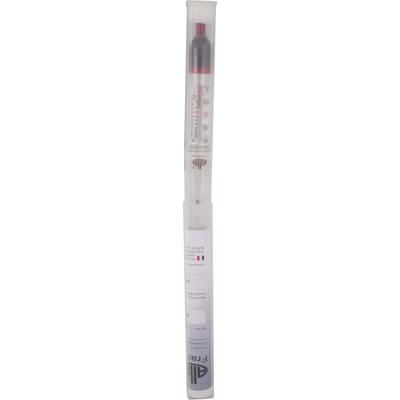
Precise hydrometer for measuring the sugar content and progress of fermentation in wine ferments. Comes with a thermometer/correction scale built-in. Please Note: Due to the large size of this hydrometer, it does not work with our standard 11" or 14" hydrometer jars. We recommend using our 500mL Graduated Cylinder (MT636D) with this hydrometer.
HI7004L is a premium quality pH 4.01 buffer solution.
With lot number and expiration date clearly marked on the label and an air tight, tamper-proof seal to ensure the quality of the solution, Hanna’s line of pH calibration solutions are an easy way to get great pH measurements every time.
Air tight bottle with tamper-proof seal for quality.
Color coded label for easy identification of pH buffer values.
Perfect for routine maintenance to ensure accurate readings while extending the life of the electrode.
Our pH Technical Buffer Solutions are dedicated to measurements that require extremely accurate pH monitoring, and come with a certificate of analysis prepared by comparison against NIST standards. Our pH Technical Buffer Solutions are dedicated to measurements that require extremely accurate pH monitoring, and come with a certificate of analysis prepared by comparison against NIST standards.
Air tight bottle with tamper-proof seal
Ensures quality and freshness of solution
Each bottle marked with lot number and expiration date.
Hanna buffers are specially formulated to have an expiration of 5 years from manufacture for an unopened bottle.
Color coded label for easy pH buffer value identification
Easy to identify different buffer values
Replacement Tube for EasyDens Bluetooth Connected Density and Gravity Meter by Anton Paar
Material: Silicone
ID:3 mm (0.11")
OD:5 mm (0.19")
Length: 1 meter (3.2')
This 45 cm (17.7") long curved glass wine thief if perfect for taking samples of wine from the barrel or carboy for testing.
The curve makes it easier to extract samples if your barrel or carboy happens to be in a tight space.
Precise hydrometer for measuring the sugar content and progress of fermentation in wine ferments. Comes with a thermometer/correction scale built-in. Please Note: Due to the large size of this hydrometer, it does not work with our standard 11" or 14" hydrometer jars. We recommend using our 500mL Graduated Cylinder (MT636D) with this hydrometer.
Precise hydrometer for measuring the sugar content and progress of fermentation in wine ferments. Comes with a thermometer/correction scale built-in. 15" total length. Please Note: Due to the large size of this hydrometer, it does not work with our standard 11" or 14" hydrometer jars. We recommend using our 500mL Graduated Cylinder with this hydrometer.
The HI7041S electrolyte fill solution has been developed for Hanna's polarographic dissolved oxygen probes. Having the correct electrolyte solution is crucial to the performance of your dissolved oxygen probe.
Convenient dropper bottle
Made with reagent grade chemicals
HI7041S is designed to refill the electrolyte solution for polarographic dissolved oxygen probes. Polarographic sensor technology is based on the Ross and Clark polarographic measurement method. An oxygen probe is composed of a platinum electrode and a solid silver electrode. The HI7041S is a concentrated Potassium Chloride solution held in place over the electrode by a PTFE (Polytetrafluoroethylene) membrane. With polarographic technology, an external voltage is applied to the platinum cathode, silver anode, electrolyte solution and gas-permeable membrane to establish a current that is proportional to the concentration of oxygen in a solution.
The Milwaukee MW151 MAX 3-in-1 PRO pH/ORP/Temp Bench Logging Meter is preferred by people testing all types of samples viscus or not, in a variety of applications that cause other pH meters and electrodes to fail. The logging feature allows log-on-demand and log-on-stability features that ensure all readings are accurate and not entered incorrectly. The MA917B/1 Milwaukee double junction electode is refillable and easy to clean. From brewers and wine makers to hydroponic growers, labs and water treatment, the MW151 MAX is your Bench Logging Meter for fast, accurate readings.
Accuracy
People choose the MW151 MAX 3-in-1 PRO pH/ORP/Temp Portable Logging Meter to improve the accuracy of their testing program. With up to 5 point calibration and 7 standard buffer choices (2 custom buffers also), the meter can be quickly calibrated to a higher accuracy compared with one or two point calibration. The MW151 MAX meter is accurate to ± 0.002 pH. 8 x more accurate than some alternative meters.
The meter comes with a refillable, glass, double junction pH electrode and MA831R temperature sensor allowing the meter to automatically adjust the pH reading for the effect of temperature (ATC).
The meter can also be used as a very accurate thermometer with accuracy +/-0.4°C (+/-0.8°F).
Low Maitenance
The MW151 MAX pH/OPR/Temp Bench Logging Meter comes with the Milwaukee glass, double junction MA917B/1 pH electrode. This is Milwaukee's top selling lab grade electrode for a reason. Designed to be both low maintenance (refillable) and able to withstand more challenging samples (double junction). The MA917B/1 is ideal for use in beer making, winemaking, hydroponics, laboratories and many other applications.
Features:
Fast easy-to-read results with large duel level digital LCD readout.
Extreme accuracy to ±0.002 pH | +/- 1 mV OPR | +/- 0.4°C (+/-0.8°F).
Extended pH range (-2.00 pH to 20.00 pH / -2.000 to 20.000 pH).
Lightweight, sleek design with small benchtop footprint.
Simple easy-to-use logging and USB download functions, manual or on stability up to 1,000 logs.
Electrode diagnostics feature checks and displays the condition of the pH electrode.
Easy measurement: just place the electode and temperature probe in the sample, gently stir and wait for the reading to stabilize.
Simple push button, automatic up to 5 point calibration for increased accuracy.
Up to 7 Standard calibration solutions (1.68, 4.01, 6.86,7.01, 9.18, 10.01 and 12.45) and 2 custom choices.
Refillable, glass, double junction lab grade pH electrode for low maintenance and high performance with a screw on cap to ensure proper storage.
Built-in rechargeable battery with 8 hours battery life (battery included).
Selectable Auto-off feature.
Alphanumeric LCD display messages for friendly, intuitive information, warnings and error messages.
Internal clock date to keep track of different time-dependent functions (calibration, timestamp,calibration time out).
3 feet probe cables for extra flexibility when testing.
Care and Use
pH meters usually start performing poorly because of problems with the probe. The two parts of the pH probe that cause problems are the glass sensing bulb and the reference junction.
Sensing Bulb
The glass bulb loses sensitivity with use and will eventually fail. This is true of all pH probes.
Reference Junction
The reference junction is a small hole that allows the meter to compare the sample to a reference. The reading is generated based on the electrical difference between the sample and reference. If the junction hole gets clogged, the pH electrode will no longer function.
You can extend the life of your pH electrode in the following ways.
Storage
To minimize clogging the pH probe needs to be kept hydrated. Long periods of dry storage will damage the sensitivity of the probe. Allowing the probe to dry out may also result in the junction hole getting clogged.
Storing in pH probe storage solution or pH calibration buffers will help address both these issues. Do not store in tap water and DI water. This will damage the sensitivity of the probe.
The best way to store the probe is with the probe's cap filled with storage solution or calibration buffer and the cap tightened to prevent leakage. It is also recommended that to store the electrode upright to further reduce the potential for leakage.
Cleaning and Maitenance
Residue from the sample can impact the sensitivity of the sensing bulb and clog the junction. This is especially true if the sample has a lot of organic material. We recommend regularly soaking your electrode in cleaning solution. Also:
Inspect the electotrode for damage or scratches, if present replace the electrode.
Inspect the cable. The connection cable and insulation must be intact.
Connectors should be clean and dry.
Rinse off salt deposits with water or DI water.
Calibration
The pH sensing bulbs become less sensitive over time so make sure that you are calibrating regularly to keep your PRO Plus pH meter accurate. Also, calibrate after cleaning or a long period of storage.
Specifications:
pH Range: -2.00 to 20.00 pH / -2.000 to 20.000 pH
ORP Range: ±2000.0 mV
Temp. Range: -20.0 to 120.00°C (-4.0 to 248.0°F)
Resolution: 0.01 pH / .001 pH
Resolution: 0.1mV
Resolution: 0.1°C / 0.1°F)
Accuracy: ±0.01 pH / ±0.002 pH @ 25°C / 77°F
Accuracy: ±1mV
Accuracy: ±0.4°C |±0.8°F
pH Calibration: up to 5 point automatic pH calibration | 7 standard buffers (pH 1.68, 4.01, 6.86, 7.01, 9.18, 10.01, 12.45) and two custom buffers
Temperature Compensation: Automatic, -20.0 to 120.0°C (-4.0 to 248.0°F) or manual
pH electrode: MA917B/1 glass, double junction pH electrode (supplied)
Temperature probe: MA831R (included)
Logging: Maximum 1,000 samples (stored in up to 100 lots) / on demand, 200 samples on stability, 200 samples/ Interval logging, 1000 logs
PC Connectivity: 1 USB Port, 1 micro USB port
Power supply: 12VDC, 5 VDC USB Adapter (included)
Battery life: Approx. 8 hours of use
Auto-off: Selectable 5, 10, 30, 60 min. or off
Environment: 0 to 50°C / 32 to 122°F; max RH 95%
Dimensions: 230 x 160 x 95 mm (9.0 x 6.3 x 3.7 inches)
Weight: 0.9 kg / 2.0 lbs.
Due to high demand, this item is currently out of stock. Be the first to receive your items by placing a pre-order today. We will automatically ship this item to you when we receive more in mid October.
You asked for it, you got it. Vinmetrica took their best accessories and combined them with the SC-300 SO2 and pH/TA Wine analyzer to improve on one of the best total wine analysis kits out there! The Vinmetrica SC-300 SO2 and pH/TA analyzer has been paired up with the following accessories:
The Lab Support Stand
Vinmetrica Electrode Holder
The Double Burette Clamp
Magnetic Stirrer
Rinse Bottle
A Small Tube of Burette Detergent
25 mL Glass Burette.
Now you can measure SO2 and pH/TA quickly and easily so you can focus on what matters, making high quality wines!
One lean, mean wine analyzing machine. The SC-300 combines the SO2 detection of the SC-100A and the pH/TA analysis of the SC-200 into one power-packed instrument.
It’s built on the same hardware and software as our other two analyzers, so the accuracy is superb. And it’s just as easy to use – The audible buzzer and visual stop light will automatically let you know when you’re tests are done!
Because it does not rely on a color change, the SC-300 eliminates the guesswork in Ripper sulfite tests, especially in red wines!
Why Choose Vinmetrica’s SC-300?
Where else will you find a single, compact instrument that can measure sulfite (SO2), pH and TA (Titratable Acidity) levels throughout the fermentation and aging process? Even in Red Wines!
It’s Accurate:
SO2: ± 2 ppm Free SO2.
TA: ± 0.2 g/L Tartaric acid
pH: better than ± 0.02 pH units
Quick! – Less than 2 minutes per test!
Affordable – About a $1 per test!*
Easy to Use – No mystery solutions, pumps or tubing.
*SO2 (Sulfite) Tests cost approximately 70¢ / Test (the cost of the reagents per test). If you do a combined pH and TA analysis, the cost of reagents for the pH/TA test is approximately $1.12 / Test.
Complete Wine Testing Kit – Includes Everything Needed to Analyze Sulfite (SO2), pH and TA (Titratable Acidity) levels in Your Wines & Musts:
SO2 reagents
pH/TA reagents
Two titration beakers
Two 5 mL syringes
Two transfer pipettes
SO2 electrode
pH electrode
25 mL sampling pipette (for SO2)
5 mL sampling pipette (for pH/TA)
The SC-300 Operating Manual
The SC-300 analyzer gives accurate SO2, pH and TA values. Kit includes everything to perform about 50 sulfite tests and 30 TA tests: both electrodes, all reagents, pipettes, syringe and beaker.
A Quick Overview – Wine Analysis Procedures with the SC-300:
Easy SO2 Test
Attach SO2 electrode, press the power button, change to SO2 mode and press enter.
Draw up 5 mL of titrant into the syringe and place 25 mL of wine in beaker.
Add ~2 mL of the acidifier and ~2 mL of the reactant to wine.
Place and hold the SO2 electrode in the wine sample and swirl beaker.
Add titrant from syringe dropwise until 15 second long endpoint signal reached.
Multiply the titration volume by 20, the SO2 conversion factor, results in ppm Free SO2.
Simple pH Test
Attach the pH electrode, set aside storage solution, rinse with DI water and blot gently with a paper towel.
Press the power button then press the ‘Mode’ button and switch the SC-200 into ‘Cal’ mode.
Calibrate using the pH 4 and pH 7 reference standards provided. Put the SC-200 in pH mode.
Take 5 mL sample of wine, place in a beaker. Take a pH reading.
Accurate TA Test
For TA test, withdraw 5 mL of the TA Titrant with the syringe.
Take 5 mL wine sample and add ~15 mL of deionized water.
Put SC-200 into TA mode, place clean pH electrode gently in solution.
Add TA Titrant from the syringe dropwise until the endpoint is reached indicated with the visual and audible signals. Record the volume (in mL) of titrant used.
Multiply the titrantion volume by 2, the TA conversion factor, results in g/L Tartaric Acid.
Vinmetrica Troubleshooting Guide
The HI84500-62 are packets of stabilizer reagent required for determination of sulfur dioxide in wine using the HI84500 Sulfur Dioxide Mini Titrator for Wine Analysis. The HI84500 mini titrator uses two different titrant solutions that contain different concentrations of potassium iodate to measure a wide range of sulfur dioxide concentration in wine. Both low and high range measurements require the addition of HI84500-62 stabilizer powder to convert iodate into iodine, which in turn reacts with sulfur dioxide. The HI84500-62 powder is packaged into single use packets that are emptied into the sample prior to performing the titration.
Pre-measured packets
Clearly marked expiration date and lot number
The HI84500-62 stabilizer powder packets are necessary to convert the iodate titrant into iodine. The iodine then reacts with sulfur dioxide and the HI3148B ORP electrode is used to detect the endpoint for both the low (1.0 to 40.0 ppm of SO2) and high (30 to 400 ppm of SO2) ranges. The decision by Hanna to use the HI84500-62 stabilizer powder packets and iodate titrant in place of a iodine titrant is due to shelf stability. Iodate offers much greater shelf stability than iodine. By using stabilizer packets the titrant solutions remain stable for longer periods of time.The HI84500 can be used with all wines, including red, which are difficult to test using traditional methods due to the difficulty to observe a distinctive color change when the endpoint is reached.
The HI84500 determines the free and total sulfur dioxide concentration in wine using the Ripper method. Excess iodide is added to the wine sample and reacts with the iodate titrant to produce iodine:
IO3- + 5I- + 6H+ → 3I2 + 3H2O
The iodine produced reacts with sulfur dioxide in the wine according to the redox reaction below:
H2SO3 + I2 → H2SO4 + 2HI
Replacement reagents required to operate the HI84500 include:
Low Range - 1.0 to 40.0 ppm of SO2
High Range - 30 to 400 ppm of SO2
Pump calibration standard
HI84500-55
HI84500-55
Titrant solution
HI84500-50
HI84500-51
Acid reagent
HI84500-60
HI84500-60
Alkaline reagent (Total SO2)
HI84500-61
HI84500-61
Stabilizer powder packets
HI84500-62
HI84500-62
The Milwaukee Waterproof pH55 PRO pH/Temp. Tester is one of our most accurate cost effective, well rounded, rugged and reliable testers in the market featuring dual level LCD readouts, easily replaceable probe and extended pH ranges to meet almost any application. It's simple 1 or 2 point automatic calibration is simple-to-use and offers TWO sets of memorized buffers to select. Ideal for use in aquariums, hydroponics, horticulture, education, pools, beer and many other applications.
The Milwaukee Waterproof pH55 pH/temp. tester offers:
Accuracy
The Waterproof pH55 PRO tester is accurate to ±0.1 pH & ±0.5°C (+/-1°F) and is easy to read.
With easy 2 point automatic calibration, this pH tester is quickly calibrated to an accuracy of much more expensive meters. Simple design and rugged, it brings great value for any application. Why guess at your readings using litmus paper when you can have guaranteed accurate, digital LCD results.
Long life
The tester comes with a replaceable pH probe with a double junction probe designed for longer life.
Fast response
The probe is double junction allowing quick, accurate pH readings and respose times.
Waterproof construction
No more worries about dropping your tester while measuring. The pH55 PRO is waterproof to IP65.
Light weight
At just 3.5 ounces, the pH55 PRO is easy to handle at up to half the weight of other testers.
Ease-of-use
A large Dual Level LCD screen with easy-to-read graphic symbols, makes it easy while calibrating or reading your measurement. This takes the takes the guess work out of litmus paper.
Design features
Fast easy to read results with large digital LCD readout.
Extreme pH accuracy to ±0.1 pH with an extended pH range (-2.0 pH to 16.0 pH).
Resolution to 0.1 pH.
Lightweight and portable.
Easy measurement: just place the probe in the sample, gently stir, wait for the stability indication to show a stable reading and then freeze the reading.
Is fully compensated for temperature (ATC).
Simple Automatic one or two-point calibration.
Acid Based calibrations, cleaning & storage solutions use PH-START add MA9010 (10.01 cal. buffer) or M10010B if Basic cal. required.
2 Sets of pre-memorized buffers. (pH 4.01, 7.01, 10.01 or 4.01, 6.86, 9.18)
Gel-filled, double junction pH electrode for low maintenance and high performance.
Over 300 hours of battery life (batteries included).
Fully waterproof to IP65.
Replaceable pH electrode Mi56P.
pH Range:-2.0 – 16.0 pH
Resolution:0.1 pH
Accuracy:±0.1 pH
Calibration:Automatic 1 or 2 point with 2 sets of pre-memorized buffers (pH 4.01, 7.01, 10.01) or (pH 4.01, 6.86, 9.18)
Care and Use
All pH sensors have a limited life and response time gets longer with age. Properly maintaining your pH pen tester will give you fast, accurate results for longer. So, be sure to order the Milwaukee pH Maintenance Kit code PH-Main at checkout time! This will be needed to help clean and condition the pH electrode before use!
Store the pH probe in storage solution MA9015. Only use tap water short-term if MA9015 is not immediately available and NEVER store in distilled Water (DI) or Reverse Osmosis (RO) water. This will damage the sensitivity of the probe.
Here are our top four tips.
Always store upright with the cap full of MA9015 Storage solution for BEST RESULTS.
Clean your Tester regularly by soaking in cleaning solution MA9016. Cleaning Solution for about 20 minutes.
Calibrate after cleaning and/or storage before testing to adjust for changes in the pH sensor.
Gently stir the Tester in the sample for a faster result.
Precise hydrometer for measuring the sugar content and progress of fermentation in wine ferments. Comes with a thermometer/correction scale built-in. Please Note: Due to the large size of this hydrometer, it does not work with our standard 11" or 14" hydrometer jars. We recommend using our 500mL Graduated Cylinder with this hydrometer.
Test for the amount of alcohol in your wine, beer, mead, cider, or any distilled spirits using this simple kit. Test results are available in 1 - 24 hours (depending on sample type). This test gives you accurate and reliable results without having to send anything to a lab. The kits comes with a 10 mL burette setup.
Features:
Accuracy - 0.3%
Sensitivity - Below 1% ABV
Less than $3 per test
Kit comes with materials for 25 tests
Includes:
Oxidant (0.062M potassium dichromate/2M sulfuric acid) (PN: SC-60-3)
ABV Titrant (0.2M sodium thiosulfate) (PN: SC-60-4)
ABV Developer solution (PN: SC-60-5)
Starch Indicator solution (PN: SC-60-6)
Reaction bottle with cap assembly (2) (PN: SC-60-8)
5.0 mL volumetric pipette (PN: SC-60-9)
Pipetting safety bulb (PN: SC-300-16)
Calcium hydroxide ( Ca(OH)2, neutralizer and sequestrant) (PN: SC-60-7)
Transfer (“Squeeze-bulb”) pipettes (2) PN: SC-60-10)
100 µL Pipettor (PN: SC-60-11)
100 µL Pipette tips (25) (PN: SC-60-11-2)
10 mL burette with Lab Support Stand and Double Burette Clamp
HI5003 is a premium quality pH 3.00 technical calibration buffer that is NIST traceable and supplied with a Certificate of Analysis. Hanna calibration buffers have the lot number and expiration date clearly marked on the label and are air tight with a tamper-proof seal to ensure the quality of the solution. Hanna's line of technical calibration buffers have been specially formulated to have an expiration of 5 years from the date of manufacture for an unopened bottle.
Supplied with Certificate of Analysis
Accuracy of +/- 0.01 pH @ 25°C
Temperature chart of the actual pH value at various temperatures printed on each bottle
HI5003 is a premium quality pH 3.00 technical calibration buffer produced in accordance with ISO 3696/BS3978 standards, using high purity salts, deionized water, certified weight-checked balances, and Class A glassware in a temperature controlled environment monitored with certified thermometers. Reported values are accurate to +/- 0.01 pH @ 25°C and are traceable to NIST Standard Reference Materials (SRM).
The HI5003 is supplied with certificate of Analysis
Product code
Lot number
Mean lot value
SRM’s that were used
Manufacturing date
Expiration date
Color coded label for easy pH buffer value identification
Easy to identify different buffer values
Solution does not contain any dyes that may stain the reference cell of a pH electrode.
Premium quality pH 3.00 technical calibration buffer that is NIST traceable and supplied with a COA
Accuracy of +/- 0.01 pH @ 25C
Temperature chart of the actual pH value at various temperatures printed on each bottle
Solution does not contain any dyes that may stain the reference cell of a pH electrode
Thousands of food and beverage professionals and hobbyists have moved from less accurate and less precise optical refractometers to digital Brix measurement. Milwaukee’s MA871 is the ideal tool for winemakers, brewers, fruit and vegetable growers, maple syrup producers, and food producers.
The MA871 is fast and easy-to-use with a response time under 2 seconds. Maintenance is a breeze with an easy-to-clean sealed flint glass prism and stainless steel well. The measurement technique and temperature compensation employ methodology recommended in the ICUMSA Methods Book (internationally recognized body for sugar analysis).
Summary
The Milwaukee digital BRIX refractometer is temperature compensated with a 0 to 85 percent BRIX range and ±0.2 percent accuracy. It is easy to use with simple two button operation and fast with a response time under 2 seconds. Maintenance is a breeze also with an easy-to-clean sealed flint glass prism and stainless steel well.
Design Features
Fast, accurate results with digital dual level LCD readout
Easy measurement with just 2-3 drops of sample needed
Results in less than 2 seconds
Simple one-point calibration using distilled or deionized water
Easy-to-clean stainless steel sample well
Meter rated to IP65 as “dust tight” and protected against water jets
Battery percent level indicator with automatic shut-off (batteries included)
Automatic Temp. Compensation (ATC)
Hard plastic case sold separate: MA800.
Range:0 to 85% Brix
Resolution:0.1% | 0.1°C (0.1°F)
Accuracy:±0.2% Brix | ±0.3°C | ±0.5°F
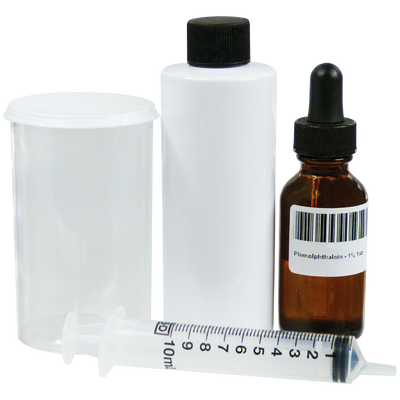
Proper acid adjustments rely on accurate measurements. This advanced set-up for total acidity testing will have you running acid tests fast and accurately. Comes ready-to-use, complete with our own set of directions. Equipment set includes support stand with metal base, double buret holder, self-zeroing buret made from break-proof polycarbonate, a 150mL beaker, and a 5ml pipet and bulb for measuring your test sample. Also comes included with a 4oz bottle of 0.1 normal sodium hydroxide and a vial of phenolphthalein. Most customers who buy this set also pick up a stir plate (Y700) to faciliate constant mixing of the sample being tested. Click here for the MoreWine! Guide to Advanced Acid Testing.
Replacement pH electrode for the SC-300 Analyzers that have a manufacturing date after February 2016. Includes the pH Electrode Storage solution. The pH electrode should be properly stored in its electrode storage solution. With proper care and storage, this electrode will have a 2-3 year lifespan beginning with first use. Vinmetrica Troubleshooting Guide
Double Junction, refillable glass electrode with BNC connector and 1m cable. Replacement for the electrode that is included with the Milwaukee MW151 MAX pH/ORP/Temp Logging Bench Meter. The electrode is the consumable portion of the pH meter which actually makes the measurement. All pH electrodes wear out over time and must be replaced. If your meter is having trouble calibrating or the reading drifts then a bad electrode is the likely culprit.
Milwaukee Part Number: MA917B/1
Probe calibration is a simple procedure for optimal performance and should be done any time your readings become suspect. Calibration should be performed at least once a month.
MA9007 is a lab grade pH 7.01 buffer solution certified to meet the standard to an accuracy of ±0.01 pH removing the inaccuracies involved with mixing buffers.
Milwaukee solutions are designed to help you achieve reliable and repeatable pH measurements while extending the life of your electrode.
Design Features
pH 7.01 Calibration Buffer Solution (230 mL)
Fundamental for the correct use of electrodes and for obtaining the most accurate and reproducible readings
Sealed against light with air tight, tamper proof cap
Ideal for fast accurate calibration
Simply open, pour into a beaker or container and insert the tester or electrode to start the calibration process.
Probe calibration is a simple procedure for optimal performance and should be done any time your readings become suspect. Calibration should be performed at least once a month.
MA9004 is a lab grade pH 4.01 buffer solution certified to meet the standard to an accuracy of ±0.01 pH removing the inaccuracies involved with mixing buffers.
Milwaukee solutions are designed to help you achieve reliable and repeatable pH measurements while extending the life of your electrode.
Design Features
pH 4.01 Calibration Buffer Solution (230 mL)
Fundamental for the correct use of electrodes and for obtaining the most accurate and reproducible readings
Sealed against light with air tight, tamper proof cap
Ideal for fast calibration
Simply open, pour into a beaker or container and insert the tester or electrode to start the calibration process.
The HI84500-55 is a 120 mL bottle of pump calibration standard that is used to calibrate the dosing system of the HI84500 Sulfur Dioxide Mini Titrator for Wine Analysis. A calibrated dosing pump allows for the accurate determination of the amount of titrant used when performing a titration. The amount of volume dosed along with the concentration of the titrant is used by the pre-programmed formula within the HI84500 in determining the exact concentration of sulfur dioxide. The pump calibration procedure should be performed anytime the titrant or ORP electrode is replaced.
Standardized solution
Clearly marked expiration date and lot number
Air tight bottle with tamper-proof seal to ensure quality
Analysis of sulfur dioxide in wine, as performed on the HI84500 mini titrator, utilizes a simple sample preparation, a high quality titrant dosing pump, potentiometric endpoint detector, and automatic computations. To maintain the high precision of the titrator, a simple pump calibration procedure is performed with HI84500-55 pump calibration solution. The pump calibration procedure involves the analysis of a known volume of a known solution. The pump calibration procedure should be performed anytime the titrant, syringe, tubing or ORP electrode is replaced. Periodic calibrations should be performed in order to accurately determine the free and total
sulfur dioxide levels in wine.
The HI84500 determines the free and total sulfur dioxide concentration in wine using the Ripper method. Excess iodide is added to the wine sample and reacts with the iodate titrant to produce iodine:
IO3- + 5I- + 6H+ → 3I2 + 3H2O
The iodine produced reacts with sulfur dioxide in the wine according to the redox reaction below:
H2SO3 + I2 → H2SO4 + 2HI
Replacement reagents required to operate the HI84500 include:
Low Range - 1.0 to 40.0 ppm SO2
High Range - 30 to 400 ppm SO2
Pump calibration standard
HI84500-55
HI84500-55
Titrant solution
HI84500-50
HI84500-51
Acid reagent
HI84500-60
HI84500-60
Alkaline reagent (Total SO2)
HI84500-61
HI84500-61
Stabilizer powder packets
HI84500-62
HI84500-62
.30M KCl (potassium chloride) solution for refillable pH/ORP electrodes. Fresh electrolyte solution ensures accurate calibration and measurement with your pH meter. For best results, electrolyte should be replenished or completely replaced every 3-6 months.
To Use:
Wearing Gloves, Drain existing electrolyte solution from the electrode by shaking upside down over the sink. You may need to use the tip of a small pipette or a syringe to break the surface tension of the liquid. Using the same pipette or syringe, replace the solution you just drained with a fresh lot from the bottle.
Store capped and refrigerated and out of the reach of children.
The Vinmetrica SC-50 MLF Analyzer gives accurate and reliable malic acid concentration levels in wine for detecting the end of malolactic fermentation (MLF). The new SC-55 Does the same job, but is now sold as a standalone unit that does not require any additional equipment.
The accuracy of the SC Series devices carries over into the functionality and reliability of the MLF Analyzer. With its easy to use vial insertion assembly, the MLF Analyzer gives you fool-proof readings down to 0.1g/L accuracy. Because it does not require any fancy, expensive lab equipment and eliminates the need for paper chromatography, the SC-55 MLF gives you professional readings while saving you time and money!
Includes everything needed to measure malic acid levels in your fermenting wines:
Vinmetrica SC-55 MLF Analyzer Unit
Malic Reagent Set
One vial of Biopressure Agent (enough for 5 tests)
5 Empty Reaction Vials with Septa Caps
One plastic measuring scoop
One “check” vial
10mL serological pipette
Plastic beaker
15mL conical tube
Two plastic pipettes
MLF Analyzer Manual
The Vinmetrica SC-55 MLF Analyzer measures the pressure given off by the same MLF reaction that you use in your wine. When malic acid is present, carbon dioxide (CO2) is evolved and detected as pressure.
Why buy the Vinmetrica MLF Analyzer?
Accurately assesses end of MLF at 0.4 g/L malic acid. Capable of detecting 0.1 g/L malic acid
Affordable: About $3 per test or less.
Easy, safe to Use: No toxic chemicals or noxious odors.
Fast: results in 15 – 30 minutes. Able to run multiple tests at once
Please Note: This is now a stand alone unit, and does not require any additional equipment.
HI740036P is a set of plastic beakers that are supplied with some of the Hanna test kits, photometers, and meters. Each set comes with 10 beakers that have graduated markings and are used for measuring (up to 100 mL) or for sample analysis.
Durable plastic
Graduated volume markings
10 piece set
The HI740036P is a set of 10 replacement plastic beakers used with Hanna test kits and various meters. While Hanna offers rugged plastic beakers in several different sizes, the HI740036P are the 100 mL graduated beaker version.
The Milwaukee MW600 PRO Portable Dissolved Oxygen meter is one of Milwaukee's most popular meters with its reliable and fast operation as well as its accuracy.
The Milwaukee PRO DO Meter is preferred by people looking for lab level accuracy without the cost. The Milwaukee DO Meter is popular with everyone from field biologists and educators to fish farmers and koi pond owners.
Design Features
Fast, easy-to-read results with large digital LCD readout.
Repeatable, accuracy to ±1.5% FS.
Lightweight and portable.
Simple 2 point open air calibration (see video below).
Uses MA840 reinforced polarographic probe (ABS plastic construction), with an oxygen-permeable polytetrafluroethylene (PTFE) membrane sensor MA841.
5 o-rings, membranes and one protective cap included.
Electrolyte Solution MA9071.
10 feet probe cable for extra flexibility when testing
70 hours of battery life with continuous use (battery included) with low battery warning
Care and Use
“Open Air” Calibration Procedure
1. Remove the membrane
Take the membrane off the end of the probe and dry the diode off.
2. Zero out the display
Connect the probe to the base unit and turn the unit on. Your display should read 0.0. If it does not, go to the position “0” screw on the front of the unit with the screw driver provided and through the access hole make the unit display read 0.0.
3. Fill the membrane
Go to the membrane and put the “O” ring inside the membrane on the shoulder at the base of the threads. Fill the membrane to just short of the “O” ring with MA9071 electrolyte solution. Be sure that there are no bubbles inside the membrane. (Air bubbles are the main cause of calibration failure)
4. Attach the membrane
Screw the membrane on to the probe.
5. Let stablize
Turn the meter on and hang the probe off the end of a table pointing down and let the unit display stabilize (this may take 5 to 15 minutes)
6. Adjust
Push down and hold the “Cal” button on the front face of the meter and with the screwdriver go to the front Cal position “100%” and make the display read 100.
You are now calibrated.
Extra tips
Watch for the membrane having wrinkles or stretch marks. If you see wrinkles, replace with a new membrane.
Always use fresh electrolyte solution (MA9071).
The HI1048B is a glass body, refillable, sleeve junction pH electrode with a BNC connector. This electrode features a double junction reference, Hanna's Clogging Prevention System (CPS) technology and spherical glass sensing bulb made with general purpose glass. This pH electrode is ideal for wine must and juice due to their high solids content that would clog a standard general purpose pH electrode.
Clogging Prevention System (CPS™) Technology
Refillable Electrode
Double Junction Design
Hanna Instruments offers a wide variety of pH electrodes that are designed for many different applications. The type of glass used for sensing pH, bulb shape, body material, type of junction, type of reference and electrolyte used are just some of the design considerations.
The HI1048B uses general purpose (GP) glass, spherical bulb, glass body, sleeve junction with CPS™ technology, double junction and is refillable with 3.5M KCl, making it ideal for wine must, juice, and other samples with a high solids content.
General Purpose Glass Formulation
General Purpose (GP) glass, as the name implies, is a standard glass formulation that is used for general use. A pH electrode with GP glass will have a resistance of 100 megaohms at 25°C and is suited for measuring the pH of samples that are at ambient temperatures. The HI1048B is suitable to use with samples that measure from 0 to 80°C.
Spherical Glass Tip
The spherical shaped tip design allows for a wide area of contact with the measured sample. This permits a faster electrode response with a higher degree of stability.
CPS Sleeve Junction
Clogging Prevention System (CPS) technology is an innovation in for the improvement of pH measurements in samples that have a high solids content. Conventional pH electrodes use ceramic junctions that can clog quickly when used in samples that have a high solids content such as wine must or juice. When the junction is clogged, the electrode does not function. CPS technology utilizes the porousness of ground glass coupled with a PTFE sleeve to prevent clogging of the junction. The ground glass allows the proper flow of the liquid, while the PTFE sleeve repels solids. As a result, pH electrodes with CPS technology take up to 20 times longer to be fouled as compared to conventional electrodes.
Double Junction Reference
A double junction electrode has an internal compartment surrounding the reference wire. Silver ions are present in the electrolyte of the internal compartment, which houses the Ag/AgCl reference wire; the electrolyte outside this compartment is silver free. The double junction design means that virtually no silver from the electrode enters the sample. This design allows measurement in applications where silver ions in the sample are undesirable or for samples that contain sulfides that can cause the silver to precipitates and clog the junction. The clogging of the junction will result in drifty and erratic readings.
Refillable
The HI1048B is a refillable probe. Since it is a double junction pH electrode, the fill solution is the HI7082 3.5M KCl. This solution does not contain any silver as with single junction electrode fill solutions.
Glass Electrode Body
The glass body is ideal for laboratory use. The glass is resistant to many harsh chemicals and is easily cleaned. The glass body also allows for a fast transfer of heat to the internal reference electrolyte. The mV generated by the reference cell is temperature
dependent. The faster the equilibrium the steadier the reference potential.
BNC Connector
The HI1048B has a BNC connector. This type of connector is universal in that it can be used on any pH meter that has a female BNC probe input. Other types of connectors include DIN, screw type, T-type, and 3.5mm to name a few. These types of connectors tend to be proprietary for a particular type of meter and are not interchangeable.
Single Junction Versus Double Junction pH Electrodes
Conventional electrodes are normally single junction. As depicted by the figure above, these electrodes have only a single junction between the internal reference wire and the external solution. Under adverse conditions, such as high pressure, high temperature, highly acidic or alkaline solutions, the positive flow of the electrolyte through the junction is often reversed resulting in the ingress of sample solution into the reference compartment. If this is left unchecked, the reference electrode can become contaminated, leading to complete electrode failure. Another potential problem with single junction electrodes is the clogging of the junction due to silver chloride (AgCl) precipitation. Silver can be easily precipitate in samples that contain Tris buffer or heavy metals. When the electrolyte solution makes contact with the sample, some AgCl will precipitate on the external face of the junction. The result is drifty readings obtained from the sensor.
Hanna’s double junction system, as the name implies, has two junctions, only one of which is in contact with the sample as shown in the figure. Under adverse conditions, the same tendency of sample ingress is evident. However, as the reference electrode system is separated physically from the intermediate electrolyte area, the contamination of the electrode is minimized. The likelihood of clogging of the junction is also reduced with a double junction electrode since the outer reference cell uses a fill solution that is “silver-free”. Since there is no silver present, there is no precipitate forming to clog the junction.
Able to measure samples 0-80C
Glass body, refillable sleeve junction
pH electrode with a BNC connector and a 0.5m cable
Clogging Prevention System (CPS) Technology
Refillable Electrode
Double Junction Design
Probe calibration is a simple procedure for optimal performance and should be done any time your readings become suspect. Calibration should be performed at least once a month.
MA9010 is a lab grade pH 10.01 buffer solution certified to meet the standard to an accuracy of ±0.01 pH removing the inaccuracies involved with mixing buffers.
Milwaukee solutions are designed to help you achieve reliable and repeatable pH measurements while extending the life of your electrode.
Design Features
pH 10.01 Calibration Buffer Solution (230 mL)
Fundamental for the correct use of electrodes and for obtaining the most accurate and reproducible readings
Sealed against light with air tight, tamper proof cap
Ideal for fast accurate calibration
Simply open, pour into a beaker or container and insert the tester or electrode to start the calibration process.
The HI700635P is a highly effective cleaning solution that is specially formulated for use with pH electrodes that become coated with wine juice and must deposits. Electrodes can become dirty from use and will produce inaccurate results even as they read correctly in a pH buffer. Hanna's cleaning solutions eliminate impurities and residues that are left on electrode surfaces when immersed in samples during measurement and stored incorrectly. Hanna suggests cleaning the bulb and junction of your electrode on a regular basis to ensure that the probe is always clean and prevent any clogging of the junction. Each sachet has the lot number and expiration date stamped on it and is made of light block foil ensuring freshness each time one is opened. Hanna's line of cleaning solutions have been specially formulated to have an expiration of 5 years from the date of manufacture for an unopened sachet.
Specially formulated cleaning solution to remove wine deposits from a pH electrode
Convenient, one-time use sachets ensure freshness of solution
The most common cause for pH measurement inaccuracies is an unclean or improperly cleaned electrode. This is very important to note, because during calibration, the instrument assumes that the electrode is clean and that the standardization curve created during the calibration process will remain a valid reference until the next calibration. pH meters on the market today will allow an offset voltage of approximately ±60 mV. The deviation from 0 mV is not unusual but ideally should be no greater than ±30 mV. The calibration process compensates for the change in offset voltage. If the mV offset continues to deviate and the meter is calibrated with a dirty electrode then inaccurate readings will result.
The Cleaning Solution Series ensures maximum efficiency and accuracy of your sensors when used for it’s designated application. Cleaning is a fast and effective routine that should be performed on a regular basis as a preventative measure against using a dirty electrode and to ensure that the junction is not clogged. The HI700635P is a cleaning solution made specifically for the wine industry, where electrodes can become coated with wine particulates and deposits found in juice and must.and must.
Light block foil packaging
• Light-tight packet helps to prevent against degradation by UV light
One-time use sachet packets
• Ensures quality and freshness of solution
Each sachet marked with lot number and expiration date
• Hanna cleaning solutions are specially formulated to have an expiration of 5 years from manufacture for an unopened sachet.
Specially formulated cleaning solution to remove wine deposits from a pH electrode
Convenient one-time use sachets ensure freshness of solution
Light-tight packet helps to prevent against degradation by UV light
The HI83749 Portable Turbidity and Bentonite Check Meter ensures protein stability before bottling for great quality wine. The HI83749 measures turbidity of samples from 0.00 to 1200 NTU (Nephelometric Turbidity Units) and is USEPA compliant.
Log and transfer up to 200 measurements.
GLP (Good Laboratory Practice) feature for traceability of the calibration conditions.
Great for small & medium wineries and advanced hobbyists.
The HI83749 Portable Turbidity and Bentocheck Meter is specially designed for measurement of turbidity in wine. The instrument is based on a state-of-the-art optical system which guarantees accurate results, assures long term stability, and minimizes stray light and color interferences. It also compensates for variations in intensity of the lamp, although proper calibration ensures measurements are fully validated, comparable, and in compliance with regulatory requirements. The 25 mm round cuvettes composed of special optical glass guarantee the repeatability of turbidity measurements.
Features at-a-glance
AMCO AEPA-1 Primary Turbidity Standard - The AMCO AEPA-1 supplied standards are recognized as a primary standard by the USEPA. These non-toxic standards are made of styrene divinylbenzene polymer spheres that are uniform in size and density. The standards are reusable and stable with a long shelf life.
Calibration – A two, three, or four-point turbidity calibration can be performed by using the supplied (<0.1, 10, 100, and 500 NTU) standards. Calibration points can be modified if user-prepared standards are used.
Fast Tracker™ - For users taking measurements throughout the winemaking process, the HI83749 is equipped with Fast Tracker™ - Tag Identification System (T.I.S.) that makes data collecting and management simpler than ever. Fast Tracker™ allows winemakers to record the time and location of a specific measurement or series of measurements using iButton™ tags on specific tanks for quick and easy readings. Each iButton® tag contains a computer chip with a unique identication code encased in stainless steel.
GLP Data – The HI83749 features complete GLP (Good Laboratory Practice) functions that allow traceability of the calibration conditions. Data includes calibration points, date, and time.
Data Logging – Up to 200 measurements can be stored in the internal memory and recalled at any time.
Data Transfer – For further storage or analysis options, logged data can be downloaded to a Windows compatible PC using the RS232 or USB port and the HI92000 software.
Backlit Display – A backlit LCD display provides an easy to understand, user-friendly interface. Displayed codes guide the user step-by-step through routine operation and calibration.
Significance of Use
Unrefined wine is quite turbid and hazy from suspended solids produced during fermentation. The unrefined wine is treated with fining agents to reduce cloudiness. This cloudiness is what winemakers refer to as protein haze, or haze for short. Thaumatin-like proteins (TLPs) and chitinases are the primary grape proteins responsible for haze formation. These positively charged proteins degenerate and stick together, resulting in undesirable flocculent clouds and visible haziness.
The prevention of protein haze or deposit in bottled white wines is a universal concern and often a wine needs to be stabilized before bottling. One commonly used stabilization agent is bentonite. Bentonite is a volcanic clay earth type fining agent (like kaolin) that acts as a wine stabilizer. It improves the clarity of wine but has also negative aspects because of the volume of lees formed, reduction of tannin and color. Since there are different types and qualities of bentonite with different capacity of protein removal, it is important to make laboratory trials with the same lot and wetting degree of the bentonite as that will be used in the cellar.
Protein stabilization is normally not a problem in bottled red wines because of the relatively high concentration of phenols that binds and precipitates with the unstable proteins before bottling. Often bentonite is added to red wines at a level of about 12 g/hL (1 lb/1000 gal), reducing colloidal suspended particles thus improving membrane filterability.
Wines with low phenols contents, such as rose, light reds and whites should be checked for protein stability before bottling. Hanna offers a rapid test to verify the risk of future protein haze formation. If protein instability is detected, a next test can help defining the right amount of bentonite to be added for improving protein stability. It is important not to overdose bentonite, avoiding stripping wine flavour, body, and significant loss of color, especially in young red wines. Moreover, adding only the necessary amount of bentonite to obtain the desired protein stability results in a reduction of costs.
Winemakers can determine the initial turbidity of the unrefined wine with the HI83749 turbidity measurement instrument. After taking a turbidity reading the pre-made HI83749-20 Bentocheck Solution is added to the wine sample. A second turbidity measurement is taken. If the second turbidity reading is less than the initial turbidity reading plus 2 NTU, the wine can be considered stable. Otherwise a fining trial can be performed to determine the amount of bentonite that must be added to stabilize the wine.
Principal of Operation
To measure turbidity the HI83749 passes a light beam through the sample that is scattered in all directions. The intensity and pattern of the scattered light is affected by many variables, such as wavelength of the incident light, particle size and shape, refractive index, and color. The optical system of the HI83749 includes a tungsten filament lamp, a scattered light detector (90°) and a transmitted light detector (180°).
The HI83749 features a powerful microprocessor that calculates the NTU value from the signals that reach the two detectors. An effective algorithm is used to correct and compensate for any color interferences. The optical system and measuring technique also compensate for fluctuations in lamp intensity, minimizing the need for frequent calibration.
The HI83749-11 AMCO AEPA-1 standards ensure that measurements are traceable to primary reference materials. These standards are used for calibration and performance verification of the turbidity meter.
Supplied with Certificate of Analysis
• Lot number
• Expiration date
• Standard value @ 25 °C
• Reference meter NIST traceable
Provided storage containers
• Light tight
• Protects from accidental breakage
Can log and transfer up to 200 measurements and is equipped with Fast Tracker
Tag Identification System (TIS) that makes data collecting and management simple by recording time and location with the touch of a button, a two, three, or four- point turbidity calibration can be performed using the supplied standards, features a backlit LCD display with a user-friendly interface which has user step by step help through routine use and calibration
The HI84502-55 is a 120 mL bottle of pump calibration standard that is used to calibrate the dosing system of the HI84502 TItratable Acidity Mini Titrator for Wine Analysis. With 4 mL of solution required per pump calibration, there is enough standard to perform approximately 30 pump calibrations. A calibrated dosing pump allows for the accurate determination of the amount of titrant used when performing a titration. The amount of volume dosed along with the concentration of the titrant is used by the pre-programmed formula within the HI84502 in determining the exact titratable acidity. The pump calibration procedure should be performed anytime the titrant or pH electrode is replaced. Routine calibration is recommended to ensure the highest of accuracy when performing a titration.
Pre-measured solution
Clearly marked expiration date and lot number
Air tight bottle with tamper-proof seal to ensure quality
Analysis of titratable acidity in wine, as performed on the HI84502 mini titrator, utilizes a simple sample preparation, a high-quality titrant dosing pump, potentiometric endpoint detector, and automatic computations. As the titrant comes pre-standardized, it is important to determine the amount of titrant delivered by the dosing pump by performing a pump calibration procedure. In this procedure, the analysis of a known volume of a known solution is titrated with to the pH 8.2 endpoint determined by the HI1048B pH electrode. The same pump calibration solution is used for both the low and high ranges. The pump calibration procedure should be performed anytime the titrant, syringe, tubing or pH electrode is replaced. It is recommended to do a pump calibration every time a new set of titrations are to be performed.
Replacement reagents required to operate the HI84502 include:
Low Range - 0.1 to 5.0 g/L of tartaric acid
High Range - 4.0 to 25.0 g/L of tartaric acid
Pump calibration standard
HI84502-55
Titrant solution
HI84502-50
Used to calibrate the dosing system of the HI84502 TA Mini Titrator for Wine Analysis with one bottle allowing for appx 30 (4mL) pump calibrations
Clearly marked expiration date and lot number, Air tight bottle with tamper-proof seal to ensure quality.
The MA911B/2 probe is lab grade, gel-filled pH probe for use with Milwaukee Monitors and Controllers.
Top Design Features:
Double Junction
The double junction junction design reduces the risk of clogging.
Spherical Glass Tip
The spherical glass tip provide the largest possible surface area for faster results.
Resin Body
The Polypropylene Resin body is tough to withstand accidental knocks and also protects the glass sensing bulb. It's high chemical resistance properties makes it ideal for Industrial applications, in-line applications and strong acids and bases.
Extended cable
Offers a 6.6' cable for increased flexibility in measuring.
Use and Care
pH meters usually start performing poorly because of problems with the probe. The two parts of the pH probe that cause problems are the glass sensing bulb and the reference junction.
Sensing bulb
The glass bulb loses sensitivity with use and will eventually fail. This is true of all pH probes.
Reference junction
The reference junction is a small hole that allows the meter to compare the sample to a reference. The reading is generated based on the electrical difference between the sample and reference. If the junction hole gets clogged, the pH probe will no longer function.
You can extend the life of your pH electrode in the following ways:
Storage
The pH probe needs to be kept hydrated. Long periods of dry storage will damage the sensitivity of the probe. Allowing the probe to dry out may also result in the junction hole getting clogged.
Storing in pH probe storage solution or pH calibration buffers will help address both these issues. Do not store in tap water or DI water. This will damage the sensitivity of the probe.
The best way to store the probe is with the probe's cap filled with storage solution or calibiration buffer and the cap tightened to prevent leakage. It is also recommended that to store the electrode upright to further reduce the potential for leakage.
Cleaning
Residue from the sample can impact the sensitivity of the sensing bulb and block the junction. This is especially true if the sample has a lot of organic material. We recommend regularly soaking your electrode in cleaning solution.
Calibration
The pH sensing bulbs become less sensitive over time so make sure that you are calibrating regularly to keep your PRO pH meter accurate. Also, calibrate after cleaning or a long period of storage.
Probe calibration is a simple procedure for optimal performance and should be done any time your readings become suspect. Calibration should be performed at least once a month.
M10007B is a lab grade pH 7.01 calibration solution certified to meet the standard with an accuracy of ±0.01 pH removing the inaccuracies involved with mixing solutions from powder.
Sachet packaging means that you get fresh solution every time. Ideal for infrequent or field use. No risk of using an expired calibration solution.
Milwaukee solutions are designed to help you achieve reliable and repeatable pH measurements while extending the life of your electrode.
Design Features
pH 7.01 Calibration Buffer Solution - 20 mL (box of 25)
Fundamental for the correct use of electrodes and for obtaining the most accurate and reproducible readings
Sealed against light and air
Ideal for on-the-spot calibration
Simply open, insert the tester or electrode into the sachet and calibrate
Formulated with a 5 year expiry
Color coded for easy identification
M10004B is a lab grade pH 4.01 buffer solution certified to meet the standard to an accuracy of ±0.01 pH removing the inaccuracies involved with mixing calibration solutions from powder.
Sachet packaging means that you get fresh solution every time. Ideal for infrequent or field use. No risk of using expired calibration solution.
Milwaukee solutions are designed to help you achieve reliable and repeatable pH measurements while extending the life of your electrode.
Design Features
pH 4.01 Calibration Buffer Solution - 20 mL (box of 25)
Fundamental for the correct use of electrodes and for obtaining the most accurate and reproducible readings
Sealed against light and air
Ideal for on-the-spot calibration
Simply open, insert the tester or electrode into the sachet and calibrate
Formulated with a 5 year expiry
Color coded for easy identification
Accurate. Simple. Reliable. 24/7 pH/EC/Temp Monitoring.
Why Guard when you can Monitor! The Milwaukee MC811 MAX pH/EC/Temp Monitor lets you monitor your pH/EC/Temp levels 24/7 automatically.
Summary
The MC811 MAX Monitor automatically monitors and displays pH/EC/Temp levels. Just calibrate the parameters and let the Milwaukee MAX Monitor do the rest.
The Milwaukee MC811 MAX pH/EC/Temp Monitor is preferred by people looking to know 24/7 what their pH and nutrient levels are on an ongoing basis. Common uses are nutrient tanks, Hydroponics and aquariums.
The Milwaukee MAX pH/EC/Temp Monitor offers:
Accuracy
The Milwaukee MAX Monitor offers an accuracy to ± 0.2 pH with two point manual calibration, EC accuracy of ±2% Full Scale and ±0.5 °F (0.3 °C) temperature accuracy.
Automation
Just calibrate the parameters and begin to monitor 24/7!
Easy installation
The MC811 MAX pH/EC/Temp Monitor comes with with two complete probe mounting kits.
Design features
Fast, easy-to-read current results with 3 large digital backlit LCD readouts.
Simple two-point pH calibration and one-point EC, for increased accuracy with manual trimmers for easy adjustment
Gel-filled, double junction, lab grade pH electrode for low maintenance and high performance
Low maintenance fixed EC probe
6.5’ probe cables for extra flexibility when testing
12 VDC power supply
Mount above the sample to be tested or rest on a flat surface next to the sample
Compact size of only 6.3” x 4.3” x 1.4”
Weighs only 1.2 lbs
Range:0.0 - 12.0 pH | 0.00 to 5.00 mS/cm | 14.0°F to 140.0°F
Resolution:0.1 pH | 0.01 mS/cm | 0.1°F / 0.1°C
Accuracy:± 0.2 ph | ± 2% Full Scale | ±0.5°F (±0.3°C)
Calibration:pH Manual, 2 Point (trimmer) | EC, Manual 1 point | Temp. Factory Calibrated
Use and Care
pH meters usually start performing poorly because of problems with the probe. The two parts of the pH probe that cause problems are the glass sensing bulb and the reference junction.
Sensing bulb
The glass bulb loses sensitivity with use and will eventually fail. This is true of all pH probes.
Reference junction
The reference junction is a small hole that allows the meter to compare the sample to a reference. The reading is generated based on the electrical difference between the sample and reference. If the junction hole gets clogged, the pH probe will no longer function.
You can extend the life of your pH electrode in the following ways.
Storage
The pH probe needs to be kept hydrated. Long periods of dry storage will damage the sensitivity of the probe. Allowing the probe to dry out may also result in the junction hole getting clogged.
Store the pH probe in storage solution MA9015. Only use tap water short-term if MA9015 is not immediately available and NEVER store in distilled Water (DI) or Reverse Osmosis (RO) water. This will damage the sensitivity of the probe.
This best way to store the probe is with the probe's cap filled with MA9015 Storage Solution and the cap tightened to prevent leakage. It is also recommended that to store the electrode upright to further reduce the potential for leakage.
Cleaning
Residue from the sample can impact the sensitivity of the sensing bulb and block the junction. This is especially true if the sample has a lot of organic material. We recommend regularly soaking the probe in MA9016 Cleaning Solution for about 20 minutes.
Calibration
The pH sensing bulbs become less sensitive over time so make sure that you are calibrating reguarly to keep your PRO pH controller accurate. Also, calibrate after cleaning or a long period of storage.
The Milwaukee MW803 MAX Waterproof Low Range 4-in-1 pH/EC/TDS/Temp Tester is designed as an all-in-one solution for growers.
The Milwaukee MW803 MAX Waterproof 4-in-1 Tester offers:
Accuracy
The MW803 MAX 4-in-1 tester is accurate to ±0.05 pH, EC/TDS to 2% Full Scale and ±0.5°C / ±1°F for temperature.
With automatic calibration and 5 memorized calibration points, the tester can be quickly and easily be calibrated to a higher accuracy compared with manual calibration.
Long life
The tester comes with a replaceable pH probe with a double junction probe design for longer life.
Fast response
An exposed temperature probe is located close to the pH probe for fast temperature compensation.
Waterproof construction
No more worries about dropping your tester while measuring. The MW803 is fully waterproof to IP65.
Light weight
At just 3.5 ounces, the MW803 MAX is easy to handle at up to half the weight of other testers.
Ease-of-use
A large dual level LCD screen makes reading results easy while a stability indicator and hold function that freezes the display takes the guess work out.
Design features
Fast easy to read results with large digital dual LCD readout.
Extreme accuracy to ±0.05 pH, EC / TDS 2% Full Scale and Temperature ±0.5 °C / ±1 °F.
Range 0.00 – 14.00 pH | EC 0 to 3999 µS/cm | TDS 0 - 2000 ppm | Temperature: 0.0 to 50.0 °C / 32.0 to 122.0 °F.
Lightweight and portable at just 3.5 ounces.
Easy measurement: just place the probe in the sample, gently stir, wait for the stability indication to show a stable reading and then freeze the reading.
Simple push button, automatic 1 or 2 point pH calibration with 5 saved calibration points and simple 1 point EC calibration.
Acid Based calibrations, cleaning & storage solutions use PH-START add MA9010 (10.01 cal. buffer) or M10010B if Basic cal. required.
For EC calibration USE MA9061 1413 µS/cm or M10031B µS/cm.
Gel-filled, double junction pH electrode for low maintenance and high performance with exposed temp. sensor for fast readings.
Auto shut off after 8 minutes of non-use.
Mi60P Replaceable pH electrode.
Fully waterproof to IP65.
Battery life approx. 100 hour of continuous use (batteries included).
Care and Use
The MW803 PRO Tester includes both a pH and EC electrode. Both need maintenance.
All pH sensors have a limited life and response time gets longer with age. Properly maintaining your pH pen tester will give you fast, accurate results for longer. So, be sure to order the Milwaukee pH Maintenance Kit code PH-Main at checkout time! This will be needed to help clean and condition the pH electrode before use!
EC sensors are more robust but can still be affected by residue build up.
Store the pH probe in storage solution MA9015. Only use tap water short-term if MA9015 is not immediately available and NEVER store in distilled Water (DI) or Reverse Osmosis (RO) water. This will damage the sensitivity of the probe.
Here are our top four tips.
Always store upright with the cap full of MA9015 Storage solution for BEST RESULTS.
Clean your Tester regularly by soaking in cleaning solution MA9016. Cleaning Solution for about 20 minutes.
Calibrate after cleaning and/or storage before testing to adjust for changes in the pH sensor.
Gently stir the Tester in the sample for a faster result.
Lab Grade. Accurate. Simple. Automated.
The Milwaukee MI456US PRO TA Mini-Titrator is preferred by wine makers seeking results faster with lower costs and simple operation. The instrument comes with a preprogrammed analysis method designed for Total Titratable Acidity measurements on wine. The MI456US uses a piston-driven pump for accurate dynamic dosing, a built-in magnetic stirrer for a faster reaction and lab grade pH electrode. The MI456US automatically dispenses the titrant, determines the endpoint, and completes the calculations in a fraction of the time needed for a manual titration. The MI456US uses a preprogrammed method and lab grade pH electrode combined with an algorithm to determine the end of the titration reaction.
Summary
The Milwaukee MI456 PRO TA Mini Titrator is preferred by wine makers seeking results faster with lower costs and simple operation.
The Milwaukee PRO TA Mini Titrator offers:
Accuracy
The MI456 PRO Mini Titrator is accurate to 5% of the reading with a resolution of 0.1 g/L with a range of 0.0 to 25.0 g/L of tartaric acid. The titrator uses piston-driven pump for accurate dynamic dosing, a built-in magnetic stirrer for a faster reaction and lab grade pH electrode.
Simplicity
The MI456 PRO Mini-Titrator is designed to for simple one button operation with pre-standardized titrant and pre-measured reagents for easy set up.
Automated Operation
The MI456 PRO Mini-Titrator uses a precision piston style dosing pump that dynamically adjusts the dosing volume as the voltage changes. With the MI456 PRO Mini-Titrator, you get a faster result with no need for manual intervention or calculation.
Design Features
Easy measurement: just measure the wine sample, add the reagents as directed, prepare pH probe and pump, add the stabilizer and start the titration by pressing the start button.
Refillable, double junction lab grade pH electrode.
Automatic temperature compensation.
Range: 0.0 to 25.0 g/L of tartaric acid
Accuracy: 5% of reading
Method: Acid-base titration
700 rpm built-in stirrer.
Simple and reliable peristaltic pump that ensure high dosing repeatability.
Compact 8.2 x 8.4” footprint.
Built-in algorithm to analyze the shape of the electrode response and to determine the reaction completion that automatically completes the analysis, makes all necessary calculations and assures a user friendly interface.
Replacement Kit: Mi556-KIT. Individual Reagent Bottles.
Replacement pH electrode: MA919B/1.
Care and Use
pH electrodes usually start performing poorly because of problems with the probe. The two parts of the pH probe that cause problems are the glass sensing bulb and the reference junction.
Sensing Bulb
The glass bulb loses sensitivity with use and will eventually fail. This is true of all pH probes.
Reference Junction
The reference junction is a small hole that allows the meter to compare the sample to a reference. The reading is generated based on the electrical difference between the sample and reference. If the junction hole gets clogged, the pH electrode will no longer function.
You can extend the life of your pH electrode in the following ways.
Cleaning and Storage
All pH sensors have a limited life and response time gets longer with age. Properly maintaining your pH electrode will give you fast, accurate results for longer. So, be sure to order the Milwaukee Maintenance Kit code PH-Main at checkout time! This will be needed to help clean and condition the pH electrode before use!
Storage
To minimize clogging the pH probe needs to be kept hydrated. Long periods of dry storage will damage the sensitivity of the probe. Allowing the probe to dry out may also result in the junction hole getting clogged.
Storing in pH probe storage solution MA9015 or pH calibration buffers will help address both these issues. Do not store in tap water or DI water. This will damage the sensitivity of the probe.
The best way to store the probe is with the probe's cap filled with storage solution or calibration buffer and the cap tightened to prevent leakage. It is also recommended that to store the electrode upright to further reduce the potential for leakage.
Cleaning an Maintenance
Residue from the sample can impact the sensitivity of the sensing bulb and clog the junction. This is especially true if the sample has a lot of organic material. We recommend regularly soaking your electrode in cleaning solution MA9016. Also:
Inspect the electrode for damage or scratches, if present replace the electrode.
Inspect the cable. The connection cable and insulation must be intact.
Connectors should be clean and dry.
Rinse off salt deposits with water or DI water.
Calibration
The pH sensing bulbs become less sensitive over time so make sure that you are calibrating regularly to keep your MI456 Mini-Titrator readings accurate. Also, calibrate after cleaning or a long period of storage.