Creating your own beer in your own home brewery can sometimes require special beer making ingredients and bags, and you can find an assortment of them at MoreBeer!, which sells hop bags and grain steeping bags, brewing clarifiers, brewing water modifiers, beer foam control products and pectic enzyme. Grain bags give the home brewer an easier method for steeping grains or whole hops and remove them easily. Clarifiers are employed to help keep the final product clear instead of cloudy. Modifiers can change the softness or focus of the hops and malt in your finished beer. Check with MoreBeer! and visit the website for useful tips on how to use the whole array of special ingredients and bags. MoreBeer! offers fast shipping on orders, and many orders will qualify for free shipping, as well.
The BrewLab Pro kit is made to order. The manufacturer's lead time is 40-60 days from when the order is placed.
Nail down your water adjustments with the Lamotte BrewLab Pro water analysis kit. Developed with pro brewers in mind, this kit measures 11 of the most important factors in the brewing process. Knowing what's in your water and how to adjust the mineral profile will take your brews to the next level. After all, water is the main ingredient in beer!
Test for 11 Essential Factors
Chloride
Sulfate
Alkalinity
Total Hardness
Calcium Hardness
Magnesium Hardness
Sodium
pH
Temperature
Total Dissolved Solids
Dissolved Oxygen
This kit was developed in cooperation with John Palmer, author of Water, A Comprehensive Guide for Brewers. Check out Palmer's Brewing Water Adjustment App, currently available for iOS devices and coming soon to Android.
Alkalinity:
Alkalinity is generally a problem in brewing water. Alkalinity is the carbonate and bicarbonate content of the water, and acts to raise the pH of the mash and beer. Water hardness can offset the alkalinity, and for that reason both parameters are typically measured as “Calcium Carbonate” in order to determine the net effect.
Chloride:
The chloride ion acts to bring out the sweetness and fullness of the malt flavor, much like table salt does for food. Craft brewers often add calcium chloride to brewing water for Pilsner and other lagers.
Dissolved Oxygen:
Dissolved oxygen can have both a positive and negative impact on beer, depending on the brewing stage. While fermentation itself is an anaerobic process (occurs in the absence of air), yeast cells do require oxygen for growth. Excessive DO can lead to rapid fermentations and excessive yeast growth, resulting in higher ester production, giving fruitier flavors. It can also lead to permanent chill haze, increased beer astringency, and an increase in color intensity, largely due to the oxidation of polyphenols.
Hardness:
Water hardness is a brewer’s friend because calcium and magnesium are important ions in many biochemical reactions during mashing and fermentation.
Calcium: Helps prevent enzymes from denaturing and extends their activity in the mash, promoting clarity, flavor, and stability in the finished beer.
Magnesium: In small amounts Mg is an important yeast nutrient. The better the “yeast ferment”, the cleaner the alcohol produced.
pH:
The chemistry of brewing and cooking is complex, and while knowing the mineral content of the water is a critical first step to predicting the impact of the water to the beer, the best way is to measure it, and that is where pH comes into the picture. The mineral content of the water directly affects the pH of the mash, and the pH of the mash affects the entire brewing process—both in process performance and beer flavor. In order to consistently brew great beer, the pH of the mash, wort, and beer should be monitored at every step.
Sodium:
Sodium acts in concert with chloride to enhance the sweetness and fullness of the malt, but just as in food and cooking, too much can oversalt the beer and result in salty or metallic flavors. Sodium is ubiquitous in water supplies and mineral additions, so it is important for the brewer to know how much the water has before any treatments are planned. Sodium can be easily determined by calculation from the results of the other tests.
Sulfate:
Sulfate and chloride ions in water affect the flavor balance of the beer, from hoppy to malty. The sulfate ion acts to accentuate the hoppiness and dryness of the beer, making it more crisp tasting. Craft brewers often add calcium sulfate to their brewing water for pale ales and IPAs.
Total Dissolved Solids:
The measurement of total dissolved solids allows the brewer to quickly determine if there has been a shift or change in a water source or brewing process by measuring all solids in solution. It can also provide a valuable quality assurance check on demineralization processes and waste treatment effectiveness.
Used to lower mash pH.
Please note: Intended for commercial use. Due to DOT HAZMAT shipping restrictions, orders for multiple 1-gallon or 5-gallon units will require freight shipping. HAZMAT items are not able to be returned.
The Smart Brew® Starter Kit comes prefigured with exactly what's needed to start testing your water for the perfect brew! Each kit includes the eXact iDip® 525 photometer with the following eXact® Strips: Total Hardness, Calcium Hardness, Total Alkalinity, pH, Chloride, and Sulfate. Each kit is packed in a rugged and durable plastic case with secure fasteners and padded compartments. The eXact iDip® app is available to download for Free on Apple App Store and on Google Play app store on Android. Compatible with iPhone, iPad, and iPod touch with the minimum iOS system version 9.0 and Android version 5.0 with Bluetooth® 4.0.
Details:
Standard navy blue plastic carrying case w/ Foam includes
eXact iDip® 525 Photometer
Cleaning brush
Instruction manual
25 tests of each
pH-II, High Range Total Hardness, Calcium Hardness, Total Alkalinity, Chloride III, Sulfate
Free downloadable app with pre-installed tests: pH, Free Chlorine, Total Chlorine, Total Alkalinity. Additional test parameters will need to be purchased and downloaded in-app at $4.99 each or as a bundle (Smart Brew® Bundle) for $18.99
Non-silicone, antifoam agent best used in blow-off buckets.
Use as a rate of 1 oz per BBL. This will provide foam surpression for up to 14 days
Use at a rate no greater than 1 oz per 5 BBL
With blow-off buckets, add as needed. Generally 1 oz. per 30 gallons of foam
Boost body and mouthfeel in your beer, resulting in a smoother, more drinkable final product with AB Vickers ISY Enhance™
Combat harsh hop flavors and astringency while enhancing overall flavor perception for a balanced and clean taste
Specifically designed to increase complexity and body in low and non-alcoholic beers, as well as improving mouthfeel in any style
AB Vickers ISY Enhance™ is an inactivated specific yeast autolysate designed to increase body, mouthfeel, and drinkability in beer. The resulting product is smooth and clean with enhanced flavor perception. Applications include, but are not limited to:
Reducing harsh hop flavors and balancing flavors in hoppy styles
Increasing body and complexity in low alcohol, non-alcoholic beer styles, and other light beer styles
Increasing mouthfeel and drinkability in any beer style
Principle:
AB Vickers ISY Enhance™ is rich in polysaccharides and oligosaccharides that bind to polyphenols to reduce harsh bitterness or astringent flavors. The presence of mannoproteins in ISY Enhance™ will increase body and mouthfeel.
As an inactivated specific yeast, ISY Enhance™ is composed of 100% yeast derived ingredients and is balanced for optimal flavor and body when added during fermentation.
AB Vickers ISY Enhance™ is gluten-free.
Benefits:
Improved mouthfeel and drinkability in any beer style
Reduced harsh flavors and astringency
Increased body and complexity in lighter beer styles, including
Low alcohol and non-alcoholic beer
Greater balance and improved flavor perception
The eXact iDip® Professional Test Kit is the latest generation test kit that combines two state of the art water quality test instruments. The first is the revolutionary Level 1 NSF/ANSI-50 Certified eXact iDip® Smart Photometer System® which integrates patented 2–way wireless communication with any compatible iOS or Android smart device and has the potential to test over 40 water parameters. The second is the NEW eXact® pH+ Meter system which capitalizes on electrochemistry technology combined with Bluetooth connectivity.
Preconfigured kit comes with exactly what's needed to start testing (excluding app software). Packed in a rugged and durable plastic case with secure fasteners and padded compartments. Compatible with iPhone, iPad, and iPod touch with the minimum iOS system version 9.0 and Android version 5.0 with Bluetooth® 4.0.
Details:
Standard navy blue plastic carrying case w/ Foam includes
eXact iDip® 525 Photometer
Cleaning brush
Instruction manual
25 tests of each
High Range Total Hardness, Calcium Hardness, Total Alkalinity, Chloride III, Sulfate
eXact® pH+ Meter System
pH, TDS, Salinity, Conductivity, and Temperature
Free downloadable app with pre-installed tests: pH, Free Chlorine, Total Chlorine, Total Alkalinity. Additional test parameters will need to be purchased and downloaded in-app at $4.99 each or as a bundle (Smart Brew® Bundle) for $18.99
Unlock a more diverse and complex hop aroma profile in your beer by liberating hidden terpene compounds during fermentation
Enhance the drinkability of your beer and reduce harsh bitterness while potentially using less hops or more accessible varieties
Aromazyme™ not only boosts hop flavor complexity but can also slightly improve wort fermentability for added brewing efficiency
Aromazyme™ is a food-grade enzyme preparation with a strong glycosidase activity derived from a selected strain of Aspergillus niger. It is composed of β-glucosidase enzymes that are capable of hydrolyzing the glycosidic bonds, liberating monoterpene alcohol compounds, and glucose. It has been developed to increase the complexity of the hop aroma and flavor profile in beer. The application of Aromazyme™ during fermentation provides brewers with the opportunity to improve their hop utilization by releasing additional volatile aroma compounds, thereby decreasing overall hop quantities or using less sophisticated hop varieties.
Benefits:
Increases the diversity of hop flavors and aroma by changing the ratio
of specific terpene compounds
Enhances the beer mouthfeel and drinkability by reducing unpleasant,
harsh bitterness
Slightly increases wort fermentability
Expresses more character from less sophisticated hop varieties
Achieve rapid and complete fermentation in high-sugar beverages like hard seltzer with balanced, 100% yeast-derived nutrition
Formulated to prevent sluggish fermentations and off-flavors, YeastLife O™ promotes clean, consistent results and improved mouthfeel
This OMRI-listed, gluten-free nutrient provides natural and bioavailable nourishment, ensuring optimal yeast health without the use of inorganic additives
AB Vickers YeastLife O™ is the result of an intensive Research & Development work on brewing process with attention to the yeast nutritional aspect of high sugar/low nutrient based fermented beverages including hard seltzer. On top of solving nutritional requirement to avoid sluggish and stuck fermentation, YeastLife O™ has been formulated to avoid off-flavor and improve mouthfeel.
YeastLife O™ is OMRI listed. For market specific organic compliance, please contact your organic certification organization.
Principle:
Since pure sugar lacks the nutrients required for a healthy fermentation, hard seltzer fermentations require supplementation with a balanced nutrient high in nitrogen, vitamins and minerals. Failure to provide adequate nutrition can result in slow or stuck fermentations, reduced attenuation and off-flavors.
AB Vickers YeastLife O™ is composed of 100% yeast derived ingredients, so nutrients are balanced and bioavailable for yeast metabolism. It does not contain mineral salts or inorganic sources of vitamins or nitrogen (such as DAP or urea). Organic nutrition from AB Vickers YeastLife O™ promotes cleaner fermentations compared to inorganic nutrition that may lead to off-flavors due to rapid yeast growth.
AB Vickers YeastLife O™ is gluten-free.
Benefits:
Complete nutrition for pure sugar fermentations.
Ensures rapid fermentation with high attenuation.
Natural, 100% yeast derived nutrition is balanced and bioavailable for yeast.
Clean and consistent fermentations.
Reduced off-flavors compared to inorganic nutrient supplementation.
Ensure consistently clean and fresh-tasting lagers by preventing diacetyl formation right from the start of fermentation
Optimize your brewery operations by reducing tank turnaround times and energy consumption associated with traditional diacetyl rests
Simplify your brewing process with easy addition at the start of fermentation, providing confidence in consistent flavor quality batch after batch
Do you want to produce clean-tasting lager consistently? Do you want to decrease your tank turn-round time, save energy costs, and reduce your carbon footprint? Discover what ALDC can do for you.
Diacetyl is the rancid buttery flavor commonly associated with lagers due to their colder fermentation temperatures.
α-acetolactate is excreted by the yeast when synthesizing valine, an essential amino acid required for yeast biosynthesis. It is broken down into diacetyl, which is then reabsorbed by the yeast. This final step is governed by time and temperature.
The addition of ALDC at the start of fermentation allows the direct breakdown (decarboxylation) of α-acetolactate into flavorless acetoin and prevents the formation and normal metabolism of diacetyl by the yeast cell.
Let ALDC help you to produce clean, fresh-tasting lager again and again.
Benefits:
Prevents hop creep (if pH conditions are optimum)
Consistent clean flavor lager production
Reduces energy (cold maturation / warm diacetyl stands)
Increases tank turnaround times it will not remove diacetyl
Why use ALDC?
Using ALDC will prevent the off-flavor diacetyl forming, negating the need for a diacetyl rest, reducing your conditioning time and your energy consumption, giving you brew after brew confidence in flavor quality.
How to use ALDC?
Easily dose in the fermenter at the start of fermentation.
What is the ideal amount to use of ALDC?
The ideal amount of ALDC to add is 1.6ml/hl. Underdosing will reduce the effectiveness. If you overdose you there will be no impact on beer quality, it will just cost you more!
How to store ALDC?
ALDC must be stored cold in the fridge- do not freeze.
What other process aids can I use to complement my brewing process with ALDC?
Diacetyl flavor can also be formed from bacterial infection and poor yeast health. Ensure you are using a well balance yeast food (such as yeast life extra) and keeping the plant clean.
Does ALDC work on fermented beer?
ALDC is pH dependent and at low beer pH’s ALDC will not work as effectively therefore needing a higher dose rate.
Achieve faster, more consistent fermentations and reduce the risk of off-flavors, even when brewing high-gravity or with adjuncts
Formulated with essential nitrogen, amino acids, minerals like zinc, and vitamins to ensure robust yeast vitality and prevent sluggish fermentation
Simple to use, just add at the end of the boil to support healthy yeast and balanced fermentation across all beer styles
Are you looking to improve your fermentation speed, flavor, and yeast vitality, even under stressful brewing conditions? Yeast Life Extra™ can help you achieve consistent quality and prevent off-flavors, even for challenging wort conditions.
Yeast Life Extra™ is a yeast nutrient formulated with easily accessible nitrogen sources and essential amino acids, minerals, including zinc and vitamins. Designed to support healthy yeast and promote balanced fermentation. It is suitable for all types of brewing, particularly high-gravity and adjunct brewing, where yeast health can be significantly compromised.
Principle:
The two main requirements for consistent, predictable fermentations are healthy yeast and a nutrient balanced wort. It is generally recognized that only wort produced from a well modified, all malt grist approaches these needs, and even this requires supplementation with oxygen and zinc.
The common practice of high gravity, adjunct brewing has introduced two fermentation problems: nutrient deficiency and conditions of high stress for yeast.
Yeast generated under these difficult conditions typically show symptoms of reduced vigor, which can be compounded at each regeneration.
Problems associated with reduced vigor include slow or sticking fermentation, off-flavors associated with sulphur containing compounds, slow diacetyl reduction, and autolysis.
Benefits:
Faster and Consistent Fermentation
Reduces off flavors
Supports high gravity brewing
How do I use Yeast Life Extra™?
Yeast Life Extra™ is added at the end of the boil, making it a versatile addition to any brewing process.
What is the ideal amount of Yeast Life Extra™ to use?
The ideal amount of Yeast Life Extra™ depends on your specific brewing application. Always refer to the product guidelines for the best results tailored to your fermentation needs.
How to store Yeast Life Extra™?
To maintain its effectiveness, store Yeast Life Extra™ in a dry environment at room temperature. Proper storage ensures that the nutrient retains its quality and potency for optimal brewing performance.
Will Yeast Life Extra™ affect the flavor of my beer?
No, Yeast Life Extra™ will not impact the flavor of your beer, provided you stay within the recommended addition rates. This ensures your brew maintains its intended taste profile while benefiting from improved yeast health.
Can Yeast Life Extra™ be combined with other process aids in my brew?
Absolutely! Yeast Life Extra™ can be used alongside other processing aids. Just be sure not to exceed the recommended dosage and avoid combining it with other nutrients that contain zinc to ensure optimal yeast performance.
Contains refill bottles of each test for quick ordering.
Box includes 1 bottle each of:
Total Alkalinity(100 tests)
pH (100 tests)
HR Total Hardness (50 tests)
Calcium Hardness (50 tests)
Chloride (25 tests)
Sulfate (50 tests).
Unleash the full potential of your starch-based materials, achieving maximum fermentable sugar yields
Experience significantly reduced residual carbohydrates in your final product, leading to a cleaner profile
Achieve a high degree of attenuation, precisely controlling the final sugar content for your desired outcome
Glucoamylase™ 400 is a GMO-free food grade saccharifying glucoamylase or amyloglucosidase enzyme derived from a selected strain of Apergillus niger. It is an exoglucosidase capable of hydrolyzing both the α-1,6 and α-1,4 glucosidic linkages of starch, liberating single glucose units.
Benefits:
Maximizes the conversion of starch containing substrates to fermentable sugars
Minimizes residual carbohydrates
Provides a high degree of attenuation
Maximize your brew length and reduce messy boilovers and fermentation foam with Foamsol™
Foamsol™ enhances brewing efficiency, leading to increased fill capacity and improved hop utilization for better beer quality
Simplify your brewing process and cut down on cleaning costs by effectively managing foam with thermostable Foamsol™
Are you looking to increase your brew length without worrying about over boil in the wort kettle or the hassle of excessive foam in the fermentation vessel? Discover how Foamsol™ can help you achieve this. Foamsol™ is a thermostable silicon-based antifoam designed to manage foam throughout your brewing process effectively.
Benefits:
Increased fill capacity in wort kettle and fermentation vessel
Improved hop utilization and preservation of head positive proteins
Improves beer quality and brewing efficiency
Reduced cleaning costs
Reduced foam in CIP sets
Mode of Action
Foamsol™ reduces the surface tension of the liquid film, preventing over-foaming in the fermentation vessel or wort kettle, increasing brew capacity by up to 20% and alpha acid usage by up to 15%.
Foamsol™ offers a simple and economical approach to boosting your brewing efficiency and productivity. Keep your foam where it belongs in the fermenter, not on the floor.
Why use Foamsol™?
Excessive foaming can cause significant loss of foam-positive proteins and alpha acids, as they adhere to vessel walls or spill onto the floor. Foamsol™ helps improve foam potential and increases alpha acid usage by up to 15%. By preventing the overfoaming
How to use Foamsol™?
Add Foamsol™ during the transfer to the wort kettle, into whirlpool enroute to the fermentation vessel or directly into the fermentation vessel.
Dilute 1 part in 10 before addition to increase the efficiency.
Will the use of Foamsol™ affect the flavor of my beer?
No, Foamsol™ only improves alpha acid utilization without affecting the flavor.
Can I re-pitch my yeast?
Yes. A low addition rate in relation to the yeast biomass yield at the end of fermentation ensures no effect on yeast for re–pitiching.
What is the ideal amount to use of Foamsol™?
Wort Kettle: 2-10ml/hl
Fermentation Vessel: 0.5-5ml/hl
Cross Flow Filtration: Keep addition rates below 2ml/hl
How to store Foamsol™?
Store at ambient temperatures. Do not freeze.
Will Foamsol™ have a negative impact on beer foam?
No, Foamsol™ is effectively removed by adhering to the yeast cell wall, or with the trub in the wort kettle, ensuring no negative impact on beer foam.
Prevents Off-Flavors: ALDC from CellarScience helps prevent the production of Diacetyl, a butter-like off-flavor, ensuring a cleaner-tasting beer.
Reduces Conditioning Time: By limiting Diacetyl production during dry hopping or fermentation, ALDC reduces the time needed before your beer is ready for bottling or kegging.
Versatile Use: ALDC can be added during yeast pitching or dry hopping, benefiting any beer style, especially those with heavy dry hopping, by controlling hop creep.
Stop hop creep before it happens with ALDC from CellarScience. As modern beer styles call for increasing amounts of dry hops, a new risk for off-flavor in the finished beer arises. Hop creep is the result of yeast beginning a new fermentation when dry hops with trace amounts of fermentable sugars are introduced to the finished beer. This results in further production of Diacetyl and, if yeast are not given enough time to clean up after themselves, can lead to higher levels of Diacetyl in the finished beer. Diacetyl is often referred to as a butter or butterscotch like flavor and is not desirable in most styles, especially at high levels. ALDC, or alpha acetolactate decarboxylase, is a helpful enzyme that can be added at yeast pitching or along with your dry hops to limit the production of Diacetyl to protect your finished beer from off-flavors and reduce the conditioning time needed before its ready to bottle or keg.
Use:
Available in 1 oz dropper bottle or 8 oz bettix bottle. Add to fermenter at time of yeast pitching or dry hopping at a rate of 1 dropper full per 5 gallons. 1 oz contains approximately 35 doses.
Additional Notes:
Although commonly added to heavily dry hopped beers, using ALDC during fermentation can benefit any beer style by reducing Diacetyl production. Brewing hops all contain the naturally occurring enzyme AMG or amyloglucosidase which breaks down long chain sugars into simple sugars that yeast can ferment. The reason hop creep is a relatively new phenomenon is due to the changing ways in which hops are dried and processed. As brewers started to demand more aromatics from their hops, growers began to lower the kilning temperatures to preserve volatile oils. This led to higher levels of AMG left on the hops as well, where they were previously denatured at the higher kilning temperatures. With more AMG present on the hops, dry hopping now leads to more fermentation activity and higher levels of Diacetyl produced after the primary fermentation is complete. Although the simplest remedy to hop creep is time—waiting for the yeast to naturally clean up the extra Diacetyl—ALDC is a great way to reduce conditioning time and the risk of off-flavors in your finished beer.
The recommended shelf life is 12 months from the date the package is opened.
Simplify your brewing process and reduce costs with Clarizyme™, the innovative solution that shortens maturation and prevents chill haze without compromising beer quality
Brew for a wider market by effortlessly producing gluten-reduced or gluten-free beer while maintaining the desired taste, aroma, and mouthfeel, all with minimal investment
Clarizyme™'s targeted enzyme action ensures haze stability and gluten reduction, offering a versatile and efficient solution compatible with various malts and adjuncts
Introducing Clarizyme™, an innovative beer stabilization technology that offers a convenient and cost-effective solution for breweries all over the world. Clarizyme™ will simplify and shorten your maturation process, reducing your energy costs and shrinking your carbon footprint. Clarizyme™ is a highly specific self-cloned enzyme, that targets haze-sensitive polypeptides at the carboxyl end of the amino acid proline, preventing chill haze in beer without affecting other beer quality aspects, specifically foam. It contains a specific fungal endopeptidase enzyme that breaks down haze-sensitive polypeptides, inhibiting precipitation with polyphenols. This same process also degrades gluten into peptides reducing gluten into undetectable amounts.
With Clarizyme™, you can both reduce gluten and stabilize haze without affecting the taste, flavor, body, or mouthfeel of your beer.
Benefits:
Little-to-no investment or equipment needed
Increases maturation production capacity
Shortens processing time
Prevents chill haze in beer keeping and ensuring quality
Can be used with all kinds of malts and other raw materials, making it a versatile brewing enzyme
Enables the production of gluten-free/gluten-reduced beer from barley malt depending on the legislation of each country
Is Clarizyme™ a genetically modified organism?
Clarizyme™ does not contain any genetically modified material. The host organism is self-cloned which may or may not be considered a GMO depending on the legislation of each country.
How is Clarizyme™ used in the brewing process?
Clarizyme™ can be used with all kinds of malts and other raw materials. Simply add to the cooled wort at the beginning of fermentation. Please check our TDS / best practice for dosage guidelines when using alternative adjuncts to barley.
Can Clarizyme™ be used to make gluten-free beer?
Yes, Clarizyme™ can be used to make gluten-reduced/gluten-free beer from barley malt, so no need to use expensive gluten-free adjuncts. Our product degrades gluten into peptides. Please note, gluten-free declarations are dependent on local regulations.
Can Clarizyme™ negatively affect beer flavor or quality?
No, Clarizyme™ specifically targets the carboxyl end of the amino acid proline, which is omnipresent in haze-sensitive proteins and gluten. Our product does not impact foam, taste, flavor, body, or mouthfeel.
Extend your beer's shelf life by effectively preventing the formation of unsightly colloidal haze
Specifically targets and removes haze-active polyphenols, ensuring only the necessary components are filtered out
As an insoluble processing aid, Alphaclar S is easily removed through filtration and doesn't require labeling on your final product
Alphaclar S is a single-use cross linked polyvinylpyrroidone (PVPP). It is a colloidal haze stabilizer which can increase the shelf life of beer. Alphaclar S absorbs the haze-active polyphenols which would otherwise react with haze-active proteins in filtered beer to form colloidal haze during storage.
Principle:
Beer contains polyphenols which are derived from hops and malt. The smallest (haze active) polyphenol molecules and the smallest (haze-active) protein molecules will pass through the filter. At first the beer may be bright but gradually the polyphenols with polymerize due to oxidation. Once they reach a certain size they can react with the haze-active proteins to form colloidal haze which is measurable and visible. Eventually the colloids can become large enough for them to sediment. Alphaclar S absorbs the polyphenols via hydrogen bonding. As PVPP is insoluble, beer filtration will remove the haze-active polyphenols which have been absorbed onto the PVPP. This takes away one side of the equation in colloidal haze formation, thereby improving the stability of beer.
Benefits:
Increases beer shelf-life due to preventing colloidal haze formation
Only the specific haze-active polyphenols are removed
PVPP is insoluble so it’s removed by filtration and therefore is a processing aid, which is no required to be listed on labels
Vicant SBX provides comprehensive protection against beer oxidation by targeting key biochemical reactions that lead to flavor deterioration, haze, and color changes
This innovative anti-oxidant effectively inhibits LOX activity, chelates metal ions, and binds with thiol proteins to ensure superior organoleptic stability in packaged beer
Beyond flavor protection, Vicant SBX also prevents unwanted color development, improves wort filtration, and guards against haze formation, offering multiple benefits for beer quality
Vicant SBX is a new generation of highly effective, multi-component beer anti-oxidant designed to give maximum protection against the oxidative deterioration of beer in package. It is a beige powder which is soluble in water.
Principle:
Recent research has highlighted the importance of controlling oxidation during the initial stages of the brewing process as these reactions can result in oxidative deterioration in final packaged beer. An understanding of the biochemical reactions involved in the formation of the precursors of molecules involved in the oxidative deterioration (flavor, haze, color) of beer has allowed Lallemand Brewing scientists to formulate a new product that specifically targets the biochemical reactions that result in the production of these harmful precursors. Vicant SBX acts by:
Inhibiting LOX activity, minimizing the production of staling aldehydes
Chelating metal ions (Fe/Cu) which catalyze the production of reactive oxygen
species (ROS) so reducing non-enzymatic autoxidation of unsaturated fatty acids
Binding with thiol (-SH) proteins
Preventing Maillard reactions in wort and in final beer to eliminate color change
Benefits:
Improved organoleptic stability
Protection against color development/browning
Improved wort filtration
Protection against haze formation
Achieve crystal-clear beer faster with Protofine™, a natural, plant-based solution that effectively precipitates yeast and protein during cold storage
This vegan-friendly fining agent rivals traditional methods like isinglass while enhancing filtration and beer stability
Reduce cold storage time and improve beer haze. Protofine™ is a natural and widely trusted food-grade formulation designed for optimal flocculation
Protofine™ is a food grade product designed to promote the flocculation and precipitation of yeast and protein complexes during cold storage of beer.
Principle:
Protofine is a natural, plant-derived formulation with application potential in a wide range of alcoholic beverage applications. The active components of Protofine have been widely used throughout the food industry for many decades.
Protofine is comparable to traditional fining products (isinglass) in performance.
Benefits:
Vegan friendly
Natural, plant-derived product
Improved filtration performance
Reduced cold storage time
Improves beer haze and stability
Achieve noticeably clearer beer and reduce your cold storage needs with the powerful protein and yeast removal of Protosol™
Optimize your brewery's efficiency and increase vessel utilization thanks to Protosol's ability to significantly shorten maturation times
Brew with confidence knowing Protosol™ is a vegan-friendly solution that enhances both the clarity and colloidal stability of your beer
Are you looking to improve the clarity of your beer and reduce maturation time? Discover what Protosol™ can do for you.
Protosol™ is a silica-sol based fining agent which can be used in the brewhouse to remove protein from wort, and at the end of fermentation to promote the sedimentation of yeast and protein particles, resulting in clearer, brighter beer.
Benefits:
Reduces cold storage time
Improves beer haze and colloidal stability
Vegan friendly
Shortens maturation times
Increases vessel utilization
Mode of Action
Protosol™ when added to beer crosslinks and traps haze-forming particles, allowing for faster sedimentation and quicker clarification. Effective at low addition rates, it boosts brewery throughput without investing in extra tank or filtration capacity, reduces energy consumption, shortens maturation times, and increases vessel utilization.
Protosol™ offers a straightforward and economical solution to refine your brewing process, delivering consistently clear beer while optimizing your production efficiency
Why Use Protosol™?
With Protosol™, you’re improving clarity and optimizing the brewing process to achieve consistent, quality and increase efficiency.
How does Protosol™ works?
Protosol™ complexes with haze-causing particles increasing their size, leading to faster sedimentation and quicker clarification.
This specialized colloidal silica sol works effectively even at low addition rates, allowing you to boost your brewery’s throughput without investing in additional tank or filtration capacity.
How to store Protosol™?
Protosol ™ should be stored at cool ambient temperatures. It should not be stored colder than 39°F.
When should I add Protosol™ to my brewing process?
For wort clarification it should be added at the start of whirlpooling or on transfer to the whirlpool. For beer clarification, Protosol™ should be added at the end of fermentation
What is the ideal amount of Protosol™ to use?
Each beer and brewing process is unique. Please click here for our optimization best practice.
Does Protosol™ affect the flavor of my beer?
No Protosol™ won’t affect the flavor of the beer when recommended addition rates are adhered to.
Compac CG, derived from the Eucheuma cottonii seaweed, harnesses the power of semi-refined kappa carrageenan to enhance your brewing process
By effectively binding with haze-forming proteins during the boil, Compac CG contributes to clearer wort and ultimately, a more stable beer
Experience benefits with Compac CG, from improved hot break to enhanced yeast vitality and filtration efficiency
Compac CG contains semi refined kappa carrageenan from the seaweed species Eucheuma cottonii.
Principle:
The species Eucheuma cottonii is rich in the kappa isomer of carrageenan.
When added to boiling wort, kappa carrageenan reacts strongly with soluble proteins, notably the proline-rich haze precursor fraction. When the wort is cooled the carrageenan-protein complex becomes unstable and precipitates out of solution. The clear wort that results produces a beer with enhanced processing characteristics.
Benefits:
Improved hot break compaction in the whirlpool
Improved yeast vitality during fermentation
Improved filtration – longer filter runs
Improved beer haze and colloidal stability
Achieve noticeably clearer wort and enhanced beer stability by effectively removing haze-forming proteins during the brewing process
Experience improved whirlpool efficiency with Compac CG™, leading to better hot break compaction and increased wort extraction
Compac CG™'s concentrated granular form ensures optimal performance and potentially longer filter runs, saving you time and resources
Do you need an easy solution for improving filtration and haze stability? Is your whirlpool trub not compact and contributing to haze in your beer? See what Compac CG™ can do for you.
Compac CG™ is a semi-refined, granulated form of the seaweed species Eucheuma cottonii. The species Eucheuma cottonii is rich in the kappa isomer of carrageenan.
Added 5 minutes before the end of kettle boil or upon whirlpool transfer. When added to boiling wort kappa carrageenan reacts with soluble proteins, notably the proline-rich fraction which can cause haze. Once the wort is cooled, the carrageenan-protein complex becomes unstable and precipitates out of solution. The resulting clear wort produces a beer with enhanced processing characteristics.
Benefits:
Improved hot break compaction in the whirlpool leading to higher wort extraction
High cold break precipitation resulting in a clearer wort
Reduced final haze with enhanced colloidal stability
Why use Compac CG™?
Compac CG™ gives brewers better hot break compaction meaning more extraction of wort (less waste)
Improves cold break compaction leading to clearer wort which gives longer filter runs improving your usage of your filter materials
Improves turnaround time so beer is processed faster
Improves final haze and colloidal stability as the problematic sensitive proteins which can bind to polyphenols from hop products are reduced
How do I use Compac CG™?
By weighing the optimal amount then adding into the wort kettle 5-10 mins before the end of wort boil. Alternatively, into the whirlpool as it is being filled. If using a dosing system, program to dose into the wort during the final stage of the boil.
How do I know I am using the right amount?
Copper finings are an easy way to make a big improvement in your beer clarity and filterability. To check you are using the right amount you can do two things:
Carry out an optimization check (see the optimization video below) this ensures correct additions even if there are raw materials or process changes.
Take a cold wort sample at cast, post heat exchanger and allow it to settle overnight. Cloudy wort indicates you are not adding enough. Bright wort with high sediment levels (over 5%) means you are adding too much – optimize.
Why is Compac available in granules, tablets and powder, and which one is right for me?
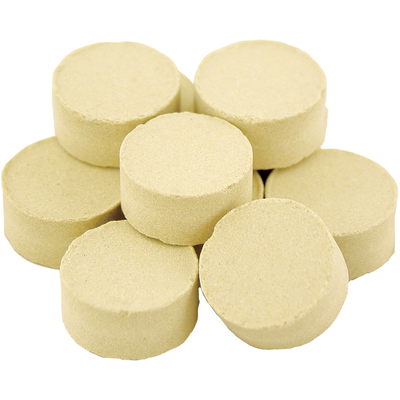
Compac CG™ is a Pure Granular form which means the active ingredients are at the highest concentration and lower dose rates are required to achieve the best results. Compac CG™ Tablets are useful for smaller breweries to allow easy consistent addition without having to measure each time. The tablets are mixed with a dispersant to allow for better mixing.
Powder, is for automatic dosing systems.
How do I store Compac CG™?
Store Compac CG™ in a dry location at room temperature.
What other process aids can I use to complement my brewing process with Compac CG™?
With regards to Finings, it is common to combine copper fining use with cellar finings, such as silica sol or isinglass, which are added post fermentation and reduce haze contributed by yeast during fermentation.
What is the difference between kettle finings, copper finings and Irish moss?
Kettle and copper finings are the same thing and refer to the addition point which is in the brewhouse on the hot side. Irish moss is another type of kettle fining from the Chrondrus Chrispus species of seaweed. It has a lower concentration of the active ingredient kappa carrageenan than in Euchema cottonii which is used for Compac CG™ . It is therefore less effective at removing the haze forming proteins.