Replenishes the SO2 Titrant provided with the SC-100 and SC-300. Good for up to 50 tests. Guaranteed for 6 months. To avoid cross-contamination with other reagents, use a dedicated pipette to dispense the acid reagent. Store reagents in a dark, cool place with the bottle tightly sealed to maximize shelf life.
The ideal bottle filler for large-scale home winemakers or smaller commercial wineries Vacuum draws liquid from up to 12 feet below the filler with minimum oxygen exposure Fill up to 600 bottles per hour Adjustable max fill level Use with wine or uncarbonated cider and beer A commercial version of the Enolmatic filler that features four filling heads and allows you to fill up to 600 bottles per hour. This is the best bottle filler for the large-scale home winemaker or a small commercial operation. Through the use of a vacuum, the Enolmaster filler automatically starts a siphon, sucks the air out of your wine bottles to preserve freshness, and automatically shuts off when each bottle is filled to the perfect height every time. Not only does the entire process take place in a nearly oxygen-free environment, preserving the freshness of your wine, the rate of fill is extremely fast allowing you to bottle up to 600 bottles per hour. The Enolmaster creates a vacuum that sucks the wine directly from your fermenter, storage tank, or barrel, which can be located up to 12 feet below the Enolmaster. No need to start a siphon or to have to pump or move your wine above your filling machine. The vacuum simultaneously sucks the air out of your bottle allowing you to fill in a nearly oxygen-free bottle. This quality-first process helps to ensure that the delicate flavors of your wine, the flavors you worked so hard to get, are not lost in an open-air bottling process. Additionally, there are no moving parts in contact with the wine ensuring the gentlest handling possible. Fill speed can be adjusted allowing you to bottle at your preferred pace. While the filler is in operation, wine is not allowed back into the storage tank or barrel due to a one-way valve located in the supply line. The small amount of excess wine runs into a collection reservoir. The fill height can be adjusted and can be used with any size or type of bottle. The Enolmaster is a commercial product designed for a small winery. It has a continuous duty cycle, meaning it can run non-stop and is constructed entirely from food-grade materials. The frame is made of stainless steel as are the filling heads. Simply run water through the system to clean out the lines. The reservoir for excess overfill can be rinsed out or ran through the dishwasher. To filter your wine and bottle fill at the same time, add the optional in-line Tandem Professional Filter Housing and Filter Cartridges. Base and frame made from 304 stainless steel Fill nozzels made from 316 stainless steel Fill up to 600 x 750ml bottles per hour Made in Italy by Tenco Dimensions: 650m x 460mm x 450m Weight: 25 kg (55 lbs) Power: 110V / 60hz / 120W Fill bottles from 180 - 350 mm (7" - 13.75") in height Fits bottles with inner neck diameters of 16 - 28 mm (5/8"- 1.1")
Originating in the Burgundy region of France, in such famous appellations as Montrachet, Meursault, Poilly-Fuisse and Chablis, Chardonnay is now the most popular white wine style in the world. Chardonnay thrives in a wide range of soils and weather climates from France to Australia. Winemakers love Chardonnay because it produces such a wide range of complex, flavorful wines. From fruit forward and crisp, to lean and minerally, to hedonistic, rich, and oaky, no wine sparks as much stylistic debate as Chardonnay. Chardonnay is the most popular white grape in Australia and third most popular grape overall. Its ability to grow well in both warmer and cooler climates allow Australian Chardonnay to offer a wide range of regional expressions. The cooler climate of Yarra Valley or the Limestone Coast produce reserved, clean white wines while the warmer climate of Barossa Valley or McClaren Vale boast riper fruit that results in more rich, tropical fruit-forward wines. As with many New World examples of Chardonnay, the wine from Australia is generally characterized as being more ripe, round, and fruit forward than those you might find from France. Our Australia Chardonnay is fruit forward and features flavors of tropical fruit, ripe peach, and toasted vanilla. With an alcohol level of 13% this is a Chardonnay with a dry finish and a medium body. Fermented with medium toast oak chips. Medium toast oak is the perfect choice to impart body and mouthfeel along with a hint of oakiness. Easy to drink and appreciated by nearly every wine lover. The VineCo Estate Chardonnay is the perfect everyday wine to unwind with after work. There is something calming about a glass of this shimmering gold liquid resting on your kitchen counter while you make dinner. Or pull a cork at the next weekend BBQ and share with friends. It’s always time for Chardonnay. Chardonnay, Australia Tropical fruit, ripe peach and toasted vanilla Sweetness: Dry Oak: Medium Body: Medium ABV: 13% Kit Volume: 10 L Approximate Yield: 23 L Ready to bottle in 6 weeks Bottle Labels sold separately
Clean, crisp, and slightly fruity, this wine is full of fruit flavor with an intense and pleasing aroma
Light-bodied and dry, 11.6% ABV
Works well with Thai and Chinese take-out, pork tenderloin and light seafood fare
Yields 6 gallons (2 cases) of finished wine in approximately 5 weeks
Bronze Medal Winner of the WineMaker International Amateur Wine Competition 2024
WineMaker Top 100 Wine Kits of 2024
Clean, crisp, and slightly fruity, this wine is full of fruit flavor with an intense and pleasing aroma. You will want to savor through to the last sip.
Food Pairings
Works well with Thai and Chinese take-out, pork tenderloin and light seafood fare.
Riesling, Germany
Sweetness: Dry
Oak: Unoaked
Body: Light
ABV: 11.6%
Kit Volume: 8L
Approximate Yield: 23L
Ready to bottle in 5 Weeks
WineStix are a new form of oak integration for wine, designed to give new barrel flavors with an extraction time similar to cubes. The combination of Short and Long grains result in amazing gradience of flavor similar to barrels, while extracting significantly quicker! These are Dark toast French Oak staves, and depending on the wine, will impart flavors of dark coffee, some carmelized sweetness, and a roasty smokey character that will compliment big blockbuster varietals. This is a two pack of WineStix, sized specifically for a 5-6 gallon carboy of wine. WineStix will easily fit through the mouth of a glass carboy, and can be attached to a string via the drilled hole for easy removal!
One carboy Winestix will treat 5-6 gallons of wine.
The VineCo Niagara Mist lineup offers a crisp, easy-drinking alternative to more traditional winemaking kits. These fruit-forward wine kits are all about capturing the refreshing essence of juicy ripe fruit. Light and crisp and offered in a full assortment of reds, whites, and rosés. Niagara Mist wines are easily enjoyed on their own, but also work well as the base for punches or wine spritzers.
No need for a green thumb in order to experience brilliantly bright flavors of fresh picked sweet red strawberries. Just pour a glass of Niagara Mist Strawberry, a light-bodied, sweet rosé with an alcohol level of 6% by volume.
Strawberry
Sweet red strawberry
Sweetness: Sweet
Oak: None
Body: Light
ABV: 6%
Kit Volume: 6 L
Approximate Yield: 23 L
Ready to bottle in 4 weeks
The Estate Series Primo Rosso a delightfully mysterious blend of Italian red grape juices that result in a brilliantly full-bodied wine with a captivating symphony of ripe, dark fruit flavors with an undertone of subtle spice. This dry red blend has a moderate oak presence and a stout alcohol level of 13.5% by volume. The Primo Rosso kit includes medium toast French oak chips. Medium toast French oak is subtle and provides refined flavors of custard, chocolate, and spice. French oak in general is often used by winemakers when they want to increase the mouthfeel and complexity of a wine without stepping on or suppressing the fruit. Primo Rosso, Italy Ripe, dark fruit flavors and subtle spice. Sweetness: Dry Oak: Medium Body: Full ABV: 13.5% Kit Volume: 10 L Approximate Yield: 23 L Ready to bottle in 6 weeks Bottle Labels sold separately
If wines were personified by movie characters, Pinot Noir would be your Mrs. Robinson—mature and seductive. No wine evokes more sultry descriptions as Pinot Noir, often characterized as having a supple, silky texture and arousing earthy aroma. Sensual summarizations aside, Pinot Noir is considered one of the “founder varieties”. Its exact origins are unknown, but modern genetic study has revealed Pinot to be the parent of countless grape varieties including Chardonnay and Corvina, as well as hundreds of mutations of itself, including Pinot Gris and Pinot Blanc. Flavors and aromas are overwhelmingly fruit-forward—raspberry, plum, rhubarb, pomegranate, and strawberry—with subtle notes of earth and damp leaves. Burgundy, France enjoys the highest acclaim for its Pinot Noir, but this grape is no less renowned in Oregon and California in the U.S. and New Zealand in the southern hemisphere.
Of all the wines produced in Chile, Pinot Noir is perhaps the most celebrated within and without the country. The temperate climate and rich soil produce grapes that are more acidic and remarkably fresh, in turn making wine known for fruity notes, high acidity, and delicate tannins.
Our Chile Pinot Noir is dominated by red fruit flavors of strawberry and raspberry and underpinned by a slight vegetal character. A dry red wine with a medium body matched by a medium oak character with an alcohol content of 13% by volume. The Estate Pinot includes a single dose of blended origin, medium toast oak chips. Pinots are known for being complex with subtle oak. This blend adds mouthfeel and very subdued hints of spice.
The VineCo Estate Pinot Noir demands that it be sipped and savored. Do not drink it down like you might a common table wine. Approach with a subtle assuredness like you might if an attractive stranger caught your eye from across the room. Enjoy the deep, captivating flavors as if you’re getting to know this wine for the first time. For a dance at the dinner table, pair off with something that has a touch of spice like Kerala duck curry or Char siu pork.
Pinot Noir, Chile
Strawberry, raspberry with vegetal character
Sweetness: Dry
Oak: Medium
Body: Medium
ABV: 13%
Kit Volume: 10 L
Approximate Yield: 23 L
Ready to bottle in 6 weeks
Bottle Labels sold separately
Oak Chips offer a quick and affordable way to impart complex, barrel-aged flavors
These screened oak chips have been sifted to remove smaller particles, resulting in more uniform pieces
Light toast imparts flavors of fresh oak, coconut, and clove
Ideal for short-term aging
Crafted from premium American oak, these chips offer a swift and economical path to complex, barrel-aged flavors. With a variety of toast levels, you can achieve your desired depth of character, from delicate vanilla to robust toasted notes. Enjoy significant time and cost savings without compromising on richness.
These screened oak chips have been sifted to remove smaller particles, resulting in more uniform pieces that provide a consistent and controlled release of flavors during aging.
Light toast imparts flavors of fresh oak, coconut, and clove.
Oak Chips Inc. (OCI) specializes in providing premium oak alternatives, such as chips, cubes, and staves, for enhancing the flavor and aging process of wine, spirits, and beer. They source their oak from sustainable forests and offer various toast levels to help beverage makers achieve desired flavor profiles.
Enological tannins offer the winemaker the possibility to add refined, highly-bindable tannin to your wine at any stage during the process. Benefits can include increased structure and mouthfeel, color stabilization, stability, anti-oxidative qualities, and overall complexity. Tannins can reduce vegetal/herbaceous characteristics and perceived astringency.
New Liquid Oak Tannins produced by Toasted Oak Inc. are water based, French Oak Tannin concentrates, designed to easily integrate smooth and flavorful oak character into a wine, without the cost or hassle of traditional oak barrels. While powdered tannins are similarly cost effective, there will be some loss of flavor and texture due to the high temperatures necessary to evaporate all liquid out. Liquid Oak Tannins are the perfect balance of oak barrel flavor, and pure tannin cost.
Aside from the beneficial flavor impact of these products, they are also easier to add to the wine and assure even dilution. These Liquid Oak Tannins are for red and white wines. Please do bench trials carefully when considering their use in white wines. Additions may cause filterability(and stability) changes. Do not exceed 30% of normal red wine dosing for white wines.
Mocha has 10 g of tannin / liter of concentrate. It brings out the character of a heavy toast barrel, slightly smoky with chocolate-coffee undertones
A 4 oz bottle of Mocha Liquid Tannin will treat 47 gallons of wine with a low dosage, or 32 gallons at a high dosage. Please see the Documents tab above for additional information as well as Bench Trial procedure.
Bottle Sealing Wax is a sealing wax for any type of wine, liquor or bottled liquid. In all applications, Bottle Sealing Wax provides a tough, moisture resistant coating, which preserves freshness, flavor and fragrance. Bottle Sealing Wax adheres on both natural and synthetic corks. It provides tamper evident protection for your product. Bottle Sealing Wax can be applied by capping the top of the recessed cork or by dipping the corked bottle into the wax. Wax beads are easier to measure and melt than wax blocks.
Sold in 1 pound bags and 50 pound boxes. 1 pound will cover approximately 30 bottles, depending on usage.
DIPPING INSTRUCTIONS: The wax should be melted in a double boiled or crock pot. Maintain wax temperature at 180°F to 190°F. The ideal temperature may vary, depending on ambient temperature and humidity as well as the temperature of the bottle and cork.
Invert the bottle and carefully lower the cork end into the melted wax to the desired depth. Leave the top immersed for 10 to 15 seconds. Carefully lift bottle straight up and allow the excess wax to run off the inverted bottle top. When excess wax slows or stops, turn bottle upright and allow to cool.
VIN13 is the go-to choice for winemakers seeking to produce fresh, aromatic white wines and vibrant rosés with expressive fruit character
Whether crafting a tropical Sauvignon Blanc, a crisp Pinot Grigio, or a sparkling wine with clean fruit expression, VIN13 delivers unmatched clarity and aromatic intensity
Elevate aromatic whites and Rosés with intense tropical expression
VIN13 is a robust hybrid yeast strain developed by the Institute for Wine Biotechnology at Stellenbosch University, South Africa. Renowned for its ability to enhance volatile thiol and ester production, VIN13 is ideal for crafting aromatic white and rosé wines with vibrant tropical and citrus profiles. Its strong fermentation kinetics and low nutrient requirements make it suitable for challenging winemaking conditions and musts lacking aromatic complexity.
Aromatic Enhancement: Releases high levels of volatile thiols (passion fruit, guava, gooseberry, grapefruit) and esters (pineapple, banana, floral) for intense fruit-forward wines.
Fermentation Performance: Fast fermenter with low volatile acidity (<0.3 g/L) and minimal SO₂ production, ensuring clean, crisp wines.
Alcohol Tolerance: Effective up to 17% ABV, allowing complete fermentation in high-sugar musts.
Temperature Range: Optimal performance between 54°F (12°C) and 61°F (16°C); cold fermentation is advised to preserve aromatics.
Low Nutrient Requirement: Performs well in musts with limited nitrogen availability.
Killer Factor: Positive, providing competitive advantage over wild yeast strains.
Applications:
Aromatic White Wines: Sauvignon Blanc, Chenin Blanc, Chardonnay, Gewürztraminer, Muscat, Albariño.
Rosé Wines: Enhances berry and citrus notes, contributing to a fresh, lively profile.
Sparkling Wines: Suitable for Charmat and Traditional Method sparkling wines, ensuring clean, crisp aromatics.
Fruit Wines and Ciders: Ideal for apple, pear, and tropical fruit wines, delivering expressive aromatics.
Flavor Profile:
Tropical Fruits: Prominent expressions of passion fruit, guava, pineapple, and banana.
Citrus & Floral Notes: Highlights of grapefruit, lemon zest, and floral undertones.
Bright Acidity: Maintains crisp, clean acidity for a refreshing finish.
Pure Fruit Expression: Low volatile acidity keeps the fruit character vivid and fresh.
Usage:
Rehydration: Rehydrate in 10 times its weight of chlorine-free water at 95°F (35°C) for 15–20 minutes. Stir gently to prevent clumping.
Pitch Rate: Use 1–1.5 grams per gallon (0.25–0.4 grams per liter) for optimal fermentation and flavor development.
Nutrient Addition: Supplement with yeast nutrient to enhance fermentation strength, particularly in low-nitrogen musts.
Fermentation Temperature: Maintain between 54°F and 61°F to optimize ester production and aromatic clarity.
Cold Fermentation: Ideal for cool fermentation to preserve fresh aromatics and bright acidity.
The VineCo Niagara Mist lineup offers a crisp, easy-drinking alternative to more traditional winemaking kits. These fruit-forward wine kits are all about capturing the refreshing essence of juicy ripe fruit. Light and crisp and offered in a full assortment of reds, whites, and rosés. Niagara Mist wines are easily enjoyed on their own, but also work well as the base for punches or wine spritzers.
White Pear is a cheerful combination of juicy pears and a splash of lemon, wrapped up with notes of custard and white flowers. A light-bodied, sweet white wine with an alcohol level of 6% by volume.
White Pear
Pear, lemon, custard, white flowers
Sweetness: Sweet
Oak: None
Body: Light
ABV: 6%
Kit Volume: 6 L
Approximate Yield: 23 L
Ready to bottle in 4 weeks
The Vineco Estate Mystic is a delicious blend of juices from Californian Cabernet Sauvignon, Merlot, and Syrah. This medium-bodied red wine is dripping with flavors of smooth black cherry, vanilla, and mocha that combine perfectly with a moderate oaking. Off-dry with a warming alcohol level of 13% by volume. The Mystic blends stays mysterious with its unique addition of lightly toasted oak. Lightly toasted oak retains more lactones and tannins. The lactones feature woody oak flavors along with subtle coconut. The tannins add a little extra body and mouthfeel. Mystical oak in a mystical blend... perfect!
Mystic, California
Black cherry, vanilla and mocha.
Sweetness: Off-Dry
Oak: Medium
Body: Medium-Full
ABV: 13%
Kit Volume: 10 L
Approximate Yield: 23 L
Ready to bottle in 6 weeks
Bottle Labels sold separately
Crisp and light, with intense flavors of grapefruit peel, freshly cut grass, and light oak on the finish
Medium-bodied and dry, 13% ABV
Pairs well with fresh seafood such as oysters and scallops or goat cheese
Yields 6 gallons (2 cases) of finished wine in approximately 6 weeks
Silver Medal Winner of the WineMaker International Amateur Wine Competition 2023
WineMaker Top 100 Wine Kits of 2023
This renowned New Zealand wine presents soft hues in the glass. It is crisp and light, with intense flavors of grapefruit peel, freshly cut grass, and light oak on the finish.
Food Pairings
Pairs well with fresh seafood such as oysters and scallops or goat cheese.
Sauvignon Blanc, New Zealand
Sweetness: Dry
Oak: Light
Body: Medium
ABV: 13%
Kit Volume: 12L
Approximate Yield: 23L
Ready to bottle in 6 Weeks
Precise hydrometer for measuring the sugar content and progress of fermentation in wine ferments. Comes with a thermometer/correction scale built-in. 15" total length. Please Note: Due to the large size of this hydrometer, it does not work with our standard 11" or 14" hydrometer jars. We recommend using our 500mL Graduated Cylinder with this hydrometer.
Large format Magnum wine bottle with the same capacity as 2 standard bottles of wine
Champagne style bottle made from thicker glass designed to hold highly carbonated sparkling wines
Antique green glass color offers superior light protection compared to light green or clear bottles
Farro Glass offers a full lineup of the most essential and commonly used bottles in winemaking
Thicker and heavier than your standard wine bottle, these champagne style bottles are designed to hold high pressure beverages like sparkling wine. They are both corkable and cappable with a 29 mm crown cap.
This large format 1.5 liter bottle holds the equivalent volume of 2 standard bottles of wine.
Volume: 1.5L
Style: Champagne / Sparkling
Use: Sparkling Wine
Color: Antique Green
Finish: Cork / Crown Cap
Neck Opening: 17.5
Bottom: Punted
Case QTY: 6
Pallet QTY: 83 cases
Our Farro Glass Wine Bottles offers a full lineup of the most essential and commonly used bottles in winemaking. We scoured the world to find a bottle source that could provide a quality product consistently and at a fair price that we can pass on to our customers. If you've been searching for reasonably priced bottles that are reliably in stock, look no further.
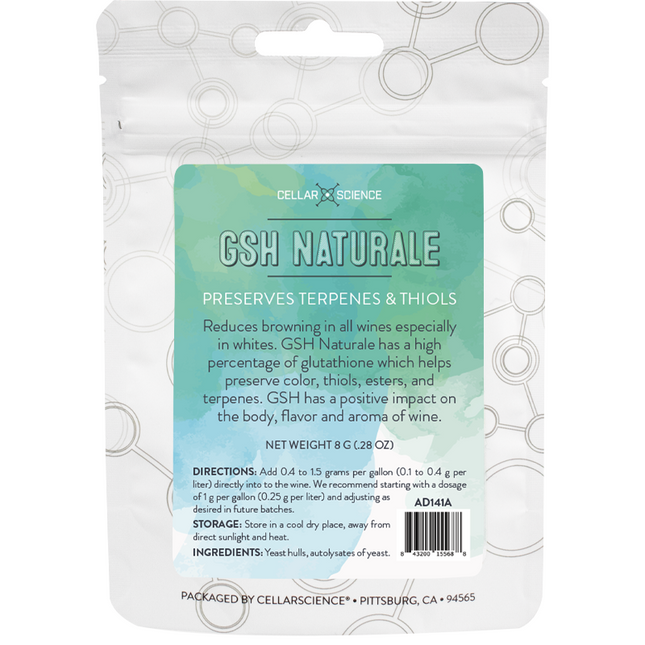
Protects against oxidation
Preserves Terpenes, Esters, and Thiols (3MH, 3MHA) during aging
Reduces need for SO2
Improves color stability
CellarScience GSH Naturale was designed for winemakers who want to take advantage of the benefits of Glutathione. Glutathione reduces browning in all wines but is especially useful in whites. In whites with higher levels of terpenes and thiols (e.g. Sauvignon Blanc and Viognier) GSH helps preserve fruity/floral aromas. It is also particularly helpful to produce natural wines or wines with less SO2.
How it Works:
Quinones are a class of compounds that can degrade wine by causing oxidizing reactions that lead to browning and the loss of desirable varietal flavors. Terpenes and Thiols are particularly prone to interact with Quinones. Instead GSH reacts with Quiniones creating a stable compound that does not lead to browning and a loss of flavor and aroma. GSH is a natural compound found in yeast cells and acts as a natural anti-oxidant that can be used in conjunction with SO2 or by itself in the case where the winemaker chooses to use low or zero quantities of SO2.
GSH Naturale contains a high percentage of tripeptide glutathione along with other polysaccharides that have a positive impact on body, flavor, aroma. Usually used in conjunction with SO2 as an additional natural inhibitor of browning, GSH Naturale will have positive impact on color, wine, thiol, esters and terpene content throughout the aging process.
Use:
Add 0.4 to 1.5 grams per gallon (0.1 to 0.4 g per liter) directly into the wine. We recommend starting with a dosage of 1 g per gallon (0.25 g per liter) and adjusting as desired in future batches.
The HI7041S electrolyte fill solution has been developed for Hanna's polarographic dissolved oxygen probes. Having the correct electrolyte solution is crucial to the performance of your dissolved oxygen probe.
Convenient dropper bottle
Made with reagent grade chemicals
HI7041S is designed to refill the electrolyte solution for polarographic dissolved oxygen probes. Polarographic sensor technology is based on the Ross and Clark polarographic measurement method. An oxygen probe is composed of a platinum electrode and a solid silver electrode. The HI7041S is a concentrated Potassium Chloride solution held in place over the electrode by a PTFE (Polytetrafluoroethylene) membrane. With polarographic technology, an external voltage is applied to the platinum cathode, silver anode, electrolyte solution and gas-permeable membrane to establish a current that is proportional to the concentration of oxygen in a solution.
Although this jug is not intended for carbonating or holding pressure, it’s a beautiful way to hold wine or a smaller non-carbonated beverage.
5 liters / 1.3 gallons. Finger grip molded into the glass. Swing top sold separately.
Liebfraumilch is a semi-sweet style of white wine first produced in Germany, which is predominantly composed of Riesling, Silvaner, and Muller-Thurgau grapes. Literally translating to “milk of Our Blessed Lady'', the first iteration of this style is believed to have been made many centuries ago outside of Worms, Germany where the vineyards surround a Liebfraukirche or “Church of Our Blessed Lady”.
The VineCo Original Liebfraumilch Style is a delightfully off-dry white wine with light-medium body and flavors of citrus and peach. Refreshing and easily enjoyed glass after glass with an alcohol content of 11.5% by volume.
Liebfraumilch Style
Citrus and peach
Sweetness: Off-Dry
Oak: None
Body: Light-Medium
ABV: 11.5%
Kit Volume: 7.5 L
Approximate Yield: 23 L
Ready to bottle in 4 weeks
Due to high demand, this item is currently out of stock. Be the first to receive your items by placing a pre-order today. We will automatically ship this to you when we receive more inventory.
Efficient juice extraction with higher yield
Large capacity, presses up to 15 lbs of fruit at once
Versatile for various fruits, including apples, grapes, and honeycomb
Retains natural flavors with minimal fruit core damage
The KegLand basket press features a simple screw mechanism design with an extended hand shank, making it easy to operate with minimal effort. The thickened press plate and large surface area allow for a more thorough press, resulting in a higher juice yield. The press can handle up to 15 lbs of fruit at once, making it an efficient choice for home enthusiasts.
Designed for versatility, the press can handle a wide range of fruits such as apples, grapes, and even honeycomb, ensuring natural, pure juice extraction. For optimal results, fruits must be crushed or mashed before pressing. Apples should be crushed into a fine pulp and grapes or other soft fruit must be gently crushed to break the skins before they are further processed with the basket press.
See instructions below for assembly step-by-step guide.
Basket Volume: 4.75 Gal (18 L)
Dimensions: 14.5" x 14.5" x 21"
Empty Weight: 23 lbs
Filter bag included
KegLand Part Number: KL38119
Malbec traces its origins, like so many others, to the Bordeaux region of France, where it descended from two enigmatic French grapes—Magdeleine Noire des Charentes and Prunelard. It is one of the five red grapes that can be blended to produce red Bordeaux, but in modern times it’s percentage in the blend has significantly decreased and sometimes commonly omitted entirely. This is due to the vine’s sensitivity to frost, which is not ideal in Bordeaux’s maritime climate. In its native region, Malbec plantings have been steadily declining for some time now. Varietal Malbec is celebrated for its soft mouthfeel, rich plum and earthy flavors, and alluring inky, dark color. Thank Dionysus that Malbec has taken root in another part of the world where it has absolutely thrived. Brought over to Argentina in the mid-19th century, the vines have flourished in the dry, sunny vineyards high in the Andes mountains. It is now the most widely cultivated wine grape in the country, and most often used to produce varietal wines rather used to make blends like in France and California. Argentine Malbec is known for its velvety texture, deep color, and exceptional fruity flavors. Our Argentina Malbec is full-bodied with a prodigious plum flavor, accented with notes of clove and charred wood. A heavy oak presence helps to balance the fruity character. A dry red wine with a firm alcohol content of 13.5% by volume. The oak blend in the Estate Series Malbec is a unique blend of medium plus and heavy toast. Medium plus is known to impart a complex balance of vanillin and spice while the heavy toast brings the bold flavors of caramel, smoke and spice to the party. Medium and Heavy? Maybe the best of both worlds. The VineCo Estate Malbec should be the first thing you grab when the flames on the grill go out. This full-bodied wine is the perfect companion for lean red meat, pork, or dark meat poultry. When you cut into that juicy filet, what better reward for a medium-rare job done well than a not-so-medium pour of Malbec? When you bring the glass up for a sip, the deep inky appearance may fool you into thinking your sunglasses are still on. Sitting back to admire the dark abyss held within your stemware may reveal your future. Hint: it’s probably another glass (or another bottle) of heavenly Malbec. Malbec, Argentina Black plum, clove, charred wood Sweetness: Dry Oak: Heavy Body: Full ABV: 13.5% Kit Volume: 10 L Approximate Yield: 23 L Ready to bottle in 6 weeks Bottle Labels sold separately
Replacement spigots for the maintenance of your cherished wooden aging barrel.
A wooden barrel spigot is something that will need to be replaced from time to time. This wooden barrel spigot features a wooden spout and a plastic valve insert. Spigots are sold individually, with no packaging.
The #5 spigot is approximately 9-7/16" long and 32 mm (1-1/4") at the small end.
If you are looking for oak that produces flavors which are closer to true barrel quality, then these Stave Segments are just right for you. Less end-grain than traditional oak cube means a slower extraction time and a longer contact time, which will lead to a softer, more rounded mouthfeel. Many professional winemakers who have used these segments have said the flavors produced seemed more like those from regular staves in a barrel. The recommended ratio for 100% new barrel flavor is about .5 lb per 5 gallons of wine. Since the exraction is so slow, the minimum contact time is 16 weeks and they can be left on the wine for up to 18 months. Too large for carboys, please check out oak cubes or chips if using a carboy.
All the benefits of Sur Lie aging without the risks
Luxurious, soft mouthfeel
Perfect for your big body whites
Helps reduce browning
Produced from yeast cells and considered an SIY (especially inactivated yeast)
CellarScience Easy Sur Lie offers all the benefits of doing a sur lie aging without the risk. Sur lie aging, often also referred to by the French term Battonage, is the process where wine is left on the original lees. or yeast, at the end of fermentation. Battonage specifically refers to the process of stirring lees back into solution over a few weeks to add body and richness to the wine. Exactly how it is done depends on the winemaker. Some choose to leave the wine on the gross lees while some choose to remove the wine quickly from the gross less and then stir up a clean version of the remaining yeast that settles out. Either way, there is some risk in this process of extracting some flavors you don't want while also potentially adding unwanted oxygen into the wine.
During Sur lie the yeast cells are breaking down, releasing peptides, mannoproteins, and anti-oxidant amino acid proteins, and other yeast cell compounds. These compounds add that luxurious, soft mouthfeel to wine that is so desired. CellarScience Easy Sur Lie adds these compounds into the wine without having to take the risk and time/cost of doing an actual Sur Lie aging and stirring protocol.
Easy Sur Lie also has some extra benefits. It helps prevent the formation of mercaptans, reducing potential sulfur compounds that can mask the full potential of your wine. It also functions as an antioxidant. Yeast at the bottom of naturally carbonated beer bottles is long known as an antioxidant that helps keep packaged beer fresher longer. Easy Sur Lie in your wine works in a similar way, supporting SO2 to help ensure freshness and reduce browning reactions.
Can be added at the end of fermentation and throughout the aging process.
Use:
Mix 1.5 g per gal (0.4 g per liter) for best results. Add at the last stages of fermentation or early in aging for the furthest integration and best results.
The Milwaukee MW151 MAX 3-in-1 PRO pH/ORP/Temp Bench Logging Meter is preferred by people testing all types of samples viscus or not, in a variety of applications that cause other pH meters and electrodes to fail. The logging feature allows log-on-demand and log-on-stability features that ensure all readings are accurate and not entered incorrectly. The MA917B/1 Milwaukee double junction electode is refillable and easy to clean. From brewers and wine makers to hydroponic growers, labs and water treatment, the MW151 MAX is your Bench Logging Meter for fast, accurate readings.
Accuracy
People choose the MW151 MAX 3-in-1 PRO pH/ORP/Temp Portable Logging Meter to improve the accuracy of their testing program. With up to 5 point calibration and 7 standard buffer choices (2 custom buffers also), the meter can be quickly calibrated to a higher accuracy compared with one or two point calibration. The MW151 MAX meter is accurate to ± 0.002 pH. 8 x more accurate than some alternative meters.
The meter comes with a refillable, glass, double junction pH electrode and MA831R temperature sensor allowing the meter to automatically adjust the pH reading for the effect of temperature (ATC).
The meter can also be used as a very accurate thermometer with accuracy +/-0.4°C (+/-0.8°F).
Low Maitenance
The MW151 MAX pH/OPR/Temp Bench Logging Meter comes with the Milwaukee glass, double junction MA917B/1 pH electrode. This is Milwaukee's top selling lab grade electrode for a reason. Designed to be both low maintenance (refillable) and able to withstand more challenging samples (double junction). The MA917B/1 is ideal for use in beer making, winemaking, hydroponics, laboratories and many other applications.
Features:
Fast easy-to-read results with large duel level digital LCD readout.
Extreme accuracy to ±0.002 pH | +/- 1 mV OPR | +/- 0.4°C (+/-0.8°F).
Extended pH range (-2.00 pH to 20.00 pH / -2.000 to 20.000 pH).
Lightweight, sleek design with small benchtop footprint.
Simple easy-to-use logging and USB download functions, manual or on stability up to 1,000 logs.
Electrode diagnostics feature checks and displays the condition of the pH electrode.
Easy measurement: just place the electode and temperature probe in the sample, gently stir and wait for the reading to stabilize.
Simple push button, automatic up to 5 point calibration for increased accuracy.
Up to 7 Standard calibration solutions (1.68, 4.01, 6.86,7.01, 9.18, 10.01 and 12.45) and 2 custom choices.
Refillable, glass, double junction lab grade pH electrode for low maintenance and high performance with a screw on cap to ensure proper storage.
Built-in rechargeable battery with 8 hours battery life (battery included).
Selectable Auto-off feature.
Alphanumeric LCD display messages for friendly, intuitive information, warnings and error messages.
Internal clock date to keep track of different time-dependent functions (calibration, timestamp,calibration time out).
3 feet probe cables for extra flexibility when testing.
Care and Use
pH meters usually start performing poorly because of problems with the probe. The two parts of the pH probe that cause problems are the glass sensing bulb and the reference junction.
Sensing Bulb
The glass bulb loses sensitivity with use and will eventually fail. This is true of all pH probes.
Reference Junction
The reference junction is a small hole that allows the meter to compare the sample to a reference. The reading is generated based on the electrical difference between the sample and reference. If the junction hole gets clogged, the pH electrode will no longer function.
You can extend the life of your pH electrode in the following ways.
Storage
To minimize clogging the pH probe needs to be kept hydrated. Long periods of dry storage will damage the sensitivity of the probe. Allowing the probe to dry out may also result in the junction hole getting clogged.
Storing in pH probe storage solution or pH calibration buffers will help address both these issues. Do not store in tap water and DI water. This will damage the sensitivity of the probe.
The best way to store the probe is with the probe's cap filled with storage solution or calibration buffer and the cap tightened to prevent leakage. It is also recommended that to store the electrode upright to further reduce the potential for leakage.
Cleaning and Maitenance
Residue from the sample can impact the sensitivity of the sensing bulb and clog the junction. This is especially true if the sample has a lot of organic material. We recommend regularly soaking your electrode in cleaning solution. Also:
Inspect the electotrode for damage or scratches, if present replace the electrode.
Inspect the cable. The connection cable and insulation must be intact.
Connectors should be clean and dry.
Rinse off salt deposits with water or DI water.
Calibration
The pH sensing bulbs become less sensitive over time so make sure that you are calibrating regularly to keep your PRO Plus pH meter accurate. Also, calibrate after cleaning or a long period of storage.
Specifications:
pH Range: -2.00 to 20.00 pH / -2.000 to 20.000 pH
ORP Range: ±2000.0 mV
Temp. Range: -20.0 to 120.00°C (-4.0 to 248.0°F)
Resolution: 0.01 pH / .001 pH
Resolution: 0.1mV
Resolution: 0.1°C / 0.1°F)
Accuracy: ±0.01 pH / ±0.002 pH @ 25°C / 77°F
Accuracy: ±1mV
Accuracy: ±0.4°C |±0.8°F
pH Calibration: up to 5 point automatic pH calibration | 7 standard buffers (pH 1.68, 4.01, 6.86, 7.01, 9.18, 10.01, 12.45) and two custom buffers
Temperature Compensation: Automatic, -20.0 to 120.0°C (-4.0 to 248.0°F) or manual
pH electrode: MA917B/1 glass, double junction pH electrode (supplied)
Temperature probe: MA831R (included)
Logging: Maximum 1,000 samples (stored in up to 100 lots) / on demand, 200 samples on stability, 200 samples/ Interval logging, 1000 logs
PC Connectivity: 1 USB Port, 1 micro USB port
Power supply: 12VDC, 5 VDC USB Adapter (included)
Battery life: Approx. 8 hours of use
Auto-off: Selectable 5, 10, 30, 60 min. or off
Environment: 0 to 50°C / 32 to 122°F; max RH 95%
Dimensions: 230 x 160 x 95 mm (9.0 x 6.3 x 3.7 inches)
Weight: 0.9 kg / 2.0 lbs.
The VineCo Niagara Mist lineup offers a crisp, easy-drinking alternative to more traditional winemaking kits. These fruit-forward wine kits are all about capturing the refreshing essence of juicy ripe fruit. Light and crisp and offered in a full assortment of reds, whites, and rosés. Niagara Mist wines are easily enjoyed on their own, but also work well as the base for punches or wine spritzers.
Sweet dragon fruit combined with gently splashes to tangy cool raspberries for an incredibly refreshing fruit wine. A light-bodied, sweet rose with an alcohol level of 6% by volume.
Raspberry Dragon Fruit
Sweet dragon fruit, tangy raspberries
Sweetness: Sweet
Oak: None
Body: Light
ABV: 6%
Kit Volume: 6 L
Approximate Yield: 23 L
Ready to bottle in 4 weeks
Bursting with flavors of ripe black cherries, red berry fruits, and delicate spice notes on the palate superbly balanced with oak
Medium-bodied and dry, 14.3% ABV
Try it with grilled salmon, sweet onions and red bell peppers or wild mushroom bruschetta
Yields 6 gallons (2 cases) of finished wine in approximately 8 weeks
Includes Genuwine Grape Skins to enhance color, flavor profile, and bouquet of the finished wine
Bronze Medal Winner of the WineMaker International Amateur Wine Competition 2023
WineMaker Top 100 Wine Kits of 2023
An elegant wine bursting with flavors of ripe black cherries, red berry fruits, and delicate spice notes on the palate superbly balanced with oak.
Includes 2 liters of Genuwine Crushed Grape Skins. Fermenting your wine on Genuwine Grape Skins will add deep hues, enhanced bouquet, and a lingering finish to our select red wines.
Food Pairings
Try it with grilled salmon, sweet onions and red bell peppers or wild mushroom bruschetta.
Pinot Noir, Australia
Sweetness: Dry
Oak: Medium
Body: Medium
ABV: 14.3%
Kit Volume: 14L
Approximate Yield: 23L
Ready to bottle in 8 Weeks
Used in conjuction with the pH function of either your SC-200 or SC-300 Analyzer, the Yeast Assimilable Nitrogen (YAN) test from Vinmetrica measures the combination of amino acids, ammonium ions, and small peptides. YAN is important as it can contribute to sluggish fermentations and off flavors in your wine.
Specifications:
Measures down to 20 mg/L of available nitrogen with accuracy of 10 mg/L of available nitrogen.
Enough for 25 tests (only $1.28 per test!)
1 year shelf life
Includes:
YAN Reagent (37% Formaldehyde/15% methanol, Part Number SC-200-14-1)
YAN Formaldehyde Neutralizer Powder (Sulfite, Part Number SC-200-14-2)
Three Plastic Transfer Pipettes (SC-100-5)
The VineCo Niagara Mist lineup offers a crisp, easy-drinking alternative to more traditional winemaking kits. These fruit-forward wine kits are all about capturing the refreshing essence of juicy ripe fruit. Light and crisp and offered in a full assortment of reds, whites, and rosés. Niagara Mist wines are easily enjoyed on their own, but also work well as the base for punches or wine spritzers.
Teeming with green apple sweetness and punctuated with a crisp tangy finish, Niagara Mist Green Apple is as thirst-quenching as they come. A light-bodied, sweet white wine with an alcohol level of 6% by volume.
Green Apple
Green apple, tangy finish
Sweetness: Sweet
Oak: None
Body: Light
ABV: 6%
Kit Volume: 6 L
Approximate Yield: 23 L
Ready to bottle in 4 weeks
An enticing deep apple and grapefruit bouquet with apple and citrus notes
Light-bodied and dry, 12.3% ABV
Pairs well with Creole shrimp or Italian orzo risotto
Yields 6 gallons (2 cases) of finished wine in approximately 5 weeks
An enticing deep apple and grapefruit bouquet with apple and citrus notes that follow through to the palate and linger with a dry finish. This Pinot Grigio is made in the true northern Italian style.
Food Pairings
Pairs well with Creole shrimp or Italian orzo risotto.
Pinot Grigio, Italy
Sweetness: Dry
Oak: Unoaked
Body: Light
ABV: 12.3%
Kit Volume: 8L
Approximate Yield: 23L
Ready to bottle in 5 Weeks
Due to high demand, this item is currently out of stock. Be the first to receive your items by placing a pre-order today. We will automatically ship this item to you when we receive more in mid November.
Replacement SO2 probe for the SC-100, SC-100A & SC-300 SO2 Analyzers. Simply rinse with deionized (distilled) water when done with measuring SO2 and let it air dry. The SO2 electrode does not need to be stored in any solution and should last for a long time but be careful not to bend the wires at the end of the electrode.
Vinmetrica Troubleshooting Guide
Note: Model years after 2016 will be a Female BNC to Male BNC connection.
Oak Chips offer a quick and affordable way to impart complex, barrel-aged flavors
These screened oak chips have been sifted to remove smaller particles, resulting in more uniform pieces
Medium Plus toast imparts flavors of vanilla, mocha, toffee, spice, and butterscotch
Ideal for short-term aging
Crafted from premium French oak, these chips offer a swift and economical path to complex, barrel-aged flavors. With a variety of toast levels, you can achieve your desired depth of character, from delicate vanilla to robust toasted notes. Enjoy significant time and cost savings without compromising on richness.
These screened oak chips have been sifted to remove smaller particles, resulting in more uniform pieces that provide a consistent and controlled release of flavors during aging.
Medium Plus toast imparts flavors of vanilla, mocha, toffee, spice, and butterscotch.
Oak Chips Inc. (OCI) specializes in providing premium oak alternatives, such as chips, cubes, and staves, for enhancing the flavor and aging process of wine, spirits, and beer. They source their oak from sustainable forests and offer various toast levels to help beverage makers achieve desired flavor profiles.
This product is a direct replacement for our FIN74 - Ichtyocolle.
Recommended for whites, roses and fruit wines, Cristaline Plus is a blend of isinglass (fish-derived protein) and citric acid stabilized with SO2. Cristaline Plus has a strong positive charge which makes it very effective at improving the clarity of a wine (even those that are made from botrytised grapes). As an added benefit, Cristaline Plus can help improve the filterability of a wine. Cristaline Plus is not sensitive to cold temperatures and may be slow to finish settling. The use of Gelocolle (FIN64) an hour after the addition of Cristaline Plus will help speed the settling process and create a more compact lees.
To Use: Dissolve Cristaline Plus in 150-200 times its weight (75-100 mL) of clean, warm water (59-68 F/15-20 C)
Let mixture swell for 3 hours
If the solution is too viscous add additional warm water
Add the solution quickly into the whole volume of wine to be treated while stirring and mix well to distribute the Cristaline Plus evenly throughout the wine
Rack as soon as the lees are well settled (wait 72 hours before filtering or allow 8-10 days settling before racking)
Dosage Range: 15-30ppm (mg/L)
VintageSeal bottle wax alternative is a pliable, hybrid compound that is applied to the top of your best bottles for an Old World, hand-applied, wax-like appeal. Unlike wax, Vintage Seal bottle wax alternative does not chip and can be easily removed by hand without a knife or tool of any sort! Complete application instructions for our VintageSeal bottle wax alternative can be found here! One Pound of VintageSeal will cover 30-40 bottles. Please note: some users find VintageSeal to be quite odorous. This is normal, and not an indication of defective or expired product.
The SC-300 Pro Kit has everything the normal SC-300 has plus these accessories:
The Lab Support Stand
Vinmetrica Electrode Holder
The Double Burette Clamp
Magnetic Stirrer
Rinse Bottle
A Small Tube of Burette Detergent
25 mL Glass Burette.
One lean, mean wine analyzing machine. The SC-300 combines the SO2 detection of the SC-100A and the pH/TA analysis of the SC-200 into one power-packed instrument.
It’s built on the same hardware and software as our other two analyzers, so the accuracy is superb. And it’s just as easy to use – The audible buzzer and visual stop light will automatically let you know when you’re tests are done!
Because it does not rely on a color change, the SC-300 eliminates the guesswork in Ripper sulfite tests, especially in red wines!
Why Choose Vinmetrica’s SC-300?
Where else will you find a single, compact instrument that can measure sulfite (SO2), pH and TA (Titratable Acidity) levels throughout the fermentation and aging process? Even in Red Wines!
It’s Accurate:
SO2: ± 2 ppm Free SO2.
TA: ± 0.2 g/L Tartaric acid
pH: better than ± 0.02 pH units
Quick! – Less than 2 minutes per test!
Affordable – About a $1 per test!*
Easy to Use – No mystery solutions, pumps or tubing.
*SO2 (Sulfite) Tests cost approximately 70¢ / Test (the cost of the reagents per test). If you do a combined pH and TA analysis, the cost of reagents for the pH/TA test is approximately $1.12 / Test.
Complete Wine Testing Kit – Includes Everything Needed to Analyze Sulfite (SO2), pH and TA (Titratable Acidity) levels in Your Wines & Musts:
SO2 reagents
pH/TA reagents
Two titration beakers
Two 5 mL syringes
Two transfer pipettes
SO2 electrode
pH electrode
25 mL sampling pipette (for SO2)
5 mL sampling pipette (for pH/TA)
The SC-300 Operating Manual
The SC-300 analyzer gives accurate SO2, pH and TA values. Kit includes everything to perform about 50 sulfite tests and 30 TA tests: both electrodes, all reagents, pipettes, syringe and beaker.
A Quick Overview – Wine Analysis Procedures with the SC-300:
Easy SO2 Test
Attach SO2 electrode, press the power button, change to SO2 mode and press enter.
Draw up 5 mL of titrant into the syringe and place 25 mL of wine in beaker.
Add ~2 mL of the acidifier and ~2 mL of the reactant to wine.
Place and hold the SO2 electrode in the wine sample and swirl beaker.
Add titrant from syringe dropwise until 15 second long endpoint signal reached.
Multiply the titration volume by 20, the SO2 conversion factor, results in ppm Free SO2.
Simple pH Test
Attach the pH electrode, set aside storage solution, rinse with DI water and blot gently with a paper towel.
Press the power button then press the ‘Mode’ button and switch the SC-200 into ‘Cal’ mode.
Calibrate using the pH 4 and pH 7 reference standards provided. Put the SC-200 in pH mode.
Take 5 mL sample of wine, place in a beaker. Take a pH reading.
Accurate TA Test
For TA test, withdraw 5 mL of the TA Titrant with the syringe.
Take 5 mL wine sample and add ~15 mL of deionized water.
Put SC-200 into TA mode, place clean pH electrode gently in solution.
Add TA Titrant from the syringe dropwise until the endpoint is reached indicated with the visual and audible signals. Record the volume (in mL) of titrant used.
Multiply the titrantion volume by 2, the TA conversion factor, results in g/L Tartaric Acid.
Vinmetrica Troubleshooting Guide
Often used with isinglass, bentonite, gelatins, and other organically derived fining agents to help compact the lees, Gelocolle is a liquid solution of suspended silica that is used during fining to help improve settling. Gelocolle also helps to limit the risk of over-fining when used in conjuction with other fining agents. Gelocolle can also be used to remove excess protein in both red and white wine, thereby improving their filterability. Gelocolle is completely inert and will not add any flavor or aroma to the wine.
To Use
Add Gelocolle 1 hour after the fining agent. Mix well to ensure homogenization.
Recommended Dosage:
In general, use Gelocolle at a rate of 1 mL Gelocolle per 1 g of the fining agent you are aiding. For protein removal use 5 ml Gelocolle per gallon of wine.
Note: When using Gelocolle with a gelatin fining, use 1.0 mL of Gelocolle to 1.0 mL of gelatin.
Once opened use immediately.
Best stored at 50-68 F (10-20 C). Gelocolle solidifies irreversibly when frozen.
The VineCo Niagara Mist lineup offers a crisp, easy-drinking alternative to more traditional winemaking kits. These fruit-forward wine kits are all about capturing the refreshing essence of juicy ripe fruit. Light and crisp and offered in a full assortment of reds, whites, and rosés. Niagara Mist wines are easily enjoyed on their own, but also work well as the base for punches or wine spritzers.
Escape to the island of Tropical Fruit, bursting with juicy sweet pineapple, mango, kiwi, and subtle citrus notes. A light-bodied, sweet white wine with an alcohol level of 6% by volume.
Tropical Fruit
Sweet pineapple, mango, kiwi, citrus
Sweetness: Sweet
Oak: None
Body: Light
ABV: 6%
Kit Volume: 6 L
Approximate Yield: 23 L
Ready to bottle in 4 weeks
Luxurious flavors of dark plums and chocolate greet the nose, while hints of blackberries, toasted oak, and spices are found on the palate
Medium-bodied and dry, 13.7% ABV
Serve with Italian pastas such as gnocchi or wild mushroom and risotto
Yields 6 gallons (2 cases) of finished wine in approximately 5 weeks
Includes Genuwine Dried Grape Skins to enhance color, flavor profile, and bouquet of the finished wine
Luxurious flavors of dark plums and chocolate greet the nose, while hints of blackberries, toasted oak, and spices are found on the palate of this great Italian classic.
Includes 125 g of Genuwine Dried Grape Skins. Genuwine grape skins are crushed, whole grape skins, gently dried in a proprietary process that preserves their original color and fresh vineyard flavor. Fermentation on Genuwine dried grape skins enhances the color, flavor profile and bouquet of wine. Genuwine grape skins are easy to work with and consistently provide excellent results.
Food Pairings
Serve with Italian pastas such as gnocchi or wild mushroom and risotto.
Nebbiolo, Italy
Sweetness: Dry
Oak: Medium
Body: Medium
ABV: 13.7%
Kit Volume: 8L
Approximate Yield: 23L
Ready to bottle in 5 Weeks
Grape skins included
British Columbia Pinot Noir features aromas of black cherries and fresh strawberries with notes of pepper and spice
Medium-bodied and dry, 13% ABV
Tastes great with Mexican enchiladas or Indian green lentil curry
Yields 6 gallons (2 cases) of finished wine in approximately 5 weeks
2007 & 2011 WineMaker International Award Winner
As one would expect from a British Columbia style Pinot Noir, this wine features aromas of black cherries and fresh strawberries. Silky tannins while subtle notes of pepper and spice round out the palate.
2007 and 2011 WineMaker International Award Winner
Food Pairings
Tastes great with Mexican enchiladas or Indian green lentil curry.
Pino Noir, British Columbia
Sweetness: Dry
Oak: Medium
Body: Medium
ABV: 13%
Kit Volume: 8L
Approximate Yield: 23L
Ready to bottle in 5 Weeks