The VineCo Niagara Mist lineup offers a crisp, easy-drinking alternative to more traditional winemaking kits. These fruit-forward wine kits are all about capturing the refreshing essence of juicy ripe fruit. Light and crisp and offered in a full assortment of reds, whites, and rosés. Niagara Mist wines are easily enjoyed on their own, but also work well as the base for punches or wine spritzers.
White Pear is a cheerful combination of juicy pears and a splash of lemon, wrapped up with notes of custard and white flowers. A light-bodied, sweet white wine with an alcohol level of 6% by volume.
White Pear
Pear, lemon, custard, white flowers
Sweetness: Sweet
Oak: None
Body: Light
ABV: 6%
Kit Volume: 6 L
Approximate Yield: 23 L
Ready to bottle in 4 weeks
The Vineco Estate Mystic is a delicious blend of juices from Californian Cabernet Sauvignon, Merlot, and Syrah. This medium-bodied red wine is dripping with flavors of smooth black cherry, vanilla, and mocha that combine perfectly with a moderate oaking. Off-dry with a warming alcohol level of 13% by volume. The Mystic blends stays mysterious with its unique addition of lightly toasted oak. Lightly toasted oak retains more lactones and tannins. The lactones feature woody oak flavors along with subtle coconut. The tannins add a little extra body and mouthfeel. Mystical oak in a mystical blend... perfect!
Mystic, California
Black cherry, vanilla and mocha.
Sweetness: Off-Dry
Oak: Medium
Body: Medium-Full
ABV: 13%
Kit Volume: 10 L
Approximate Yield: 23 L
Ready to bottle in 6 weeks
Bottle Labels sold separately
Crisp and light, with intense flavors of grapefruit peel, freshly cut grass, and light oak on the finish
Medium-bodied and dry, 13% ABV
Pairs well with fresh seafood such as oysters and scallops or goat cheese
Yields 6 gallons (2 cases) of finished wine in approximately 6 weeks
Silver Medal Winner of the WineMaker International Amateur Wine Competition 2023
WineMaker Top 100 Wine Kits of 2023
This renowned New Zealand wine presents soft hues in the glass. It is crisp and light, with intense flavors of grapefruit peel, freshly cut grass, and light oak on the finish.
Food Pairings
Pairs well with fresh seafood such as oysters and scallops or goat cheese.
Sauvignon Blanc, New Zealand
Sweetness: Dry
Oak: Light
Body: Medium
ABV: 13%
Kit Volume: 12L
Approximate Yield: 23L
Ready to bottle in 6 Weeks
Precise hydrometer for measuring the sugar content and progress of fermentation in wine ferments. Comes with a thermometer/correction scale built-in. 15" total length. Please Note: Due to the large size of this hydrometer, it does not work with our standard 11" or 14" hydrometer jars. We recommend using our 500mL Graduated Cylinder with this hydrometer.
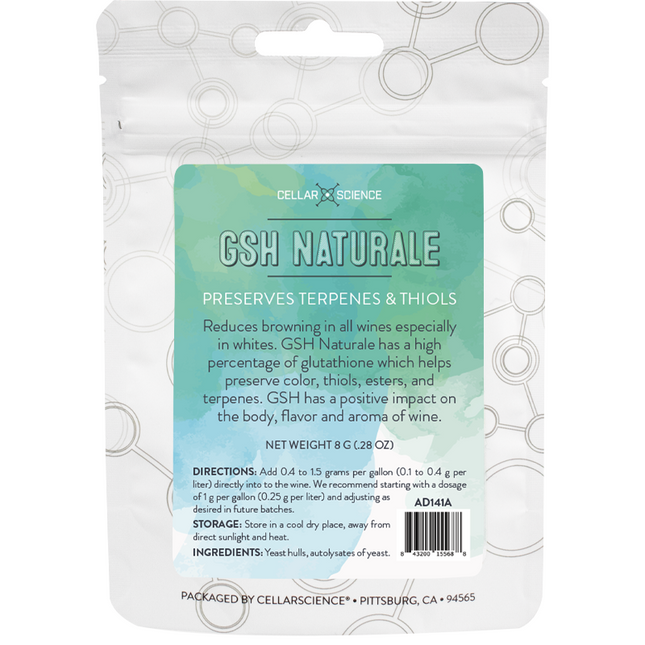
Protects against oxidation
Preserves Terpenes, Esters, and Thiols (3MH, 3MHA) during aging
Reduces need for SO2
Improves color stability
CellarScience GSH Naturale was designed for winemakers who want to take advantage of the benefits of Glutathione. Glutathione reduces browning in all wines but is especially useful in whites. In whites with higher levels of terpenes and thiols (e.g. Sauvignon Blanc and Viognier) GSH helps preserve fruity/floral aromas. It is also particularly helpful to produce natural wines or wines with less SO2.
How it Works:
Quinones are a class of compounds that can degrade wine by causing oxidizing reactions that lead to browning and the loss of desirable varietal flavors. Terpenes and Thiols are particularly prone to interact with Quinones. Instead GSH reacts with Quiniones creating a stable compound that does not lead to browning and a loss of flavor and aroma. GSH is a natural compound found in yeast cells and acts as a natural anti-oxidant that can be used in conjunction with SO2 or by itself in the case where the winemaker chooses to use low or zero quantities of SO2.
GSH Naturale contains a high percentage of tripeptide glutathione along with other polysaccharides that have a positive impact on body, flavor, aroma. Usually used in conjunction with SO2 as an additional natural inhibitor of browning, GSH Naturale will have positive impact on color, wine, thiol, esters and terpene content throughout the aging process.
Use:
Add 0.4 to 1.5 grams per gallon (0.1 to 0.4 g per liter) directly into the wine. We recommend starting with a dosage of 1 g per gallon (0.25 g per liter) and adjusting as desired in future batches.
The HI7041S electrolyte fill solution has been developed for Hanna's polarographic dissolved oxygen probes. Having the correct electrolyte solution is crucial to the performance of your dissolved oxygen probe.
Convenient dropper bottle
Made with reagent grade chemicals
HI7041S is designed to refill the electrolyte solution for polarographic dissolved oxygen probes. Polarographic sensor technology is based on the Ross and Clark polarographic measurement method. An oxygen probe is composed of a platinum electrode and a solid silver electrode. The HI7041S is a concentrated Potassium Chloride solution held in place over the electrode by a PTFE (Polytetrafluoroethylene) membrane. With polarographic technology, an external voltage is applied to the platinum cathode, silver anode, electrolyte solution and gas-permeable membrane to establish a current that is proportional to the concentration of oxygen in a solution.
Although this jug is not intended for carbonating or holding pressure, it’s a beautiful way to hold wine or a smaller non-carbonated beverage.
5 liters / 1.3 gallons. Finger grip molded into the glass. Swing top sold separately.
Liebfraumilch is a semi-sweet style of white wine first produced in Germany, which is predominantly composed of Riesling, Silvaner, and Muller-Thurgau grapes. Literally translating to “milk of Our Blessed Lady'', the first iteration of this style is believed to have been made many centuries ago outside of Worms, Germany where the vineyards surround a Liebfraukirche or “Church of Our Blessed Lady”.
The VineCo Original Liebfraumilch Style is a delightfully off-dry white wine with light-medium body and flavors of citrus and peach. Refreshing and easily enjoyed glass after glass with an alcohol content of 11.5% by volume.
Liebfraumilch Style
Citrus and peach
Sweetness: Off-Dry
Oak: None
Body: Light-Medium
ABV: 11.5%
Kit Volume: 7.5 L
Approximate Yield: 23 L
Ready to bottle in 4 weeks
Due to high demand, this item is currently out of stock. Be the first to receive your items by placing a pre-order today. We will automatically ship this to you when we receive more inventory.
Efficient juice extraction with higher yield
Large capacity, presses up to 15 lbs of fruit at once
Versatile for various fruits, including apples, grapes, and honeycomb
Retains natural flavors with minimal fruit core damage
The KegLand basket press features a simple screw mechanism design with an extended hand shank, making it easy to operate with minimal effort. The thickened press plate and large surface area allow for a more thorough press, resulting in a higher juice yield. The press can handle up to 15 lbs of fruit at once, making it an efficient choice for home enthusiasts.
Designed for versatility, the press can handle a wide range of fruits such as apples, grapes, and even honeycomb, ensuring natural, pure juice extraction. For optimal results, fruits must be crushed or mashed before pressing. Apples should be crushed into a fine pulp and grapes or other soft fruit must be gently crushed to break the skins before they are further processed with the basket press.
See instructions below for assembly step-by-step guide.
Basket Volume: 4.75 Gal (18 L)
Dimensions: 14.5" x 14.5" x 21"
Empty Weight: 23 lbs
Filter bag included
KegLand Part Number: KL38119
The VineCo Niagara Mist lineup offers a crisp, easy-drinking alternative to more traditional winemaking kits. These fruit-forward wine kits are all about capturing the refreshing essence of juicy ripe fruit. Light and crisp and offered in a full assortment of reds, whites, and rosés. Niagara Mist wines are easily enjoyed on their own, but also work well as the base for punches or wine spritzers.
Sweet dragon fruit combined with gently splashes to tangy cool raspberries for an incredibly refreshing fruit wine. A light-bodied, sweet rose with an alcohol level of 6% by volume.
Raspberry Dragon Fruit
Sweet dragon fruit, tangy raspberries
Sweetness: Sweet
Oak: None
Body: Light
ABV: 6%
Kit Volume: 6 L
Approximate Yield: 23 L
Ready to bottle in 4 weeks
Malbec traces its origins, like so many others, to the Bordeaux region of France, where it descended from two enigmatic French grapes—Magdeleine Noire des Charentes and Prunelard. It is one of the five red grapes that can be blended to produce red Bordeaux, but in modern times it’s percentage in the blend has significantly decreased and sometimes commonly omitted entirely. This is due to the vine’s sensitivity to frost, which is not ideal in Bordeaux’s maritime climate. In its native region, Malbec plantings have been steadily declining for some time now. Varietal Malbec is celebrated for its soft mouthfeel, rich plum and earthy flavors, and alluring inky, dark color. Thank Dionysus that Malbec has taken root in another part of the world where it has absolutely thrived. Brought over to Argentina in the mid-19th century, the vines have flourished in the dry, sunny vineyards high in the Andes mountains. It is now the most widely cultivated wine grape in the country, and most often used to produce varietal wines rather used to make blends like in France and California. Argentine Malbec is known for its velvety texture, deep color, and exceptional fruity flavors. Our Argentina Malbec is full-bodied with a prodigious plum flavor, accented with notes of clove and charred wood. A heavy oak presence helps to balance the fruity character. A dry red wine with a firm alcohol content of 13.5% by volume. The oak blend in the Estate Series Malbec is a unique blend of medium plus and heavy toast. Medium plus is known to impart a complex balance of vanillin and spice while the heavy toast brings the bold flavors of caramel, smoke and spice to the party. Medium and Heavy? Maybe the best of both worlds. The VineCo Estate Malbec should be the first thing you grab when the flames on the grill go out. This full-bodied wine is the perfect companion for lean red meat, pork, or dark meat poultry. When you cut into that juicy filet, what better reward for a medium-rare job done well than a not-so-medium pour of Malbec? When you bring the glass up for a sip, the deep inky appearance may fool you into thinking your sunglasses are still on. Sitting back to admire the dark abyss held within your stemware may reveal your future. Hint: it’s probably another glass (or another bottle) of heavenly Malbec. Malbec, Argentina Black plum, clove, charred wood Sweetness: Dry Oak: Heavy Body: Full ABV: 13.5% Kit Volume: 10 L Approximate Yield: 23 L Ready to bottle in 6 weeks Bottle Labels sold separately
Replacement spigots for the maintenance of your cherished wooden aging barrel.
A wooden barrel spigot is something that will need to be replaced from time to time. This wooden barrel spigot features a wooden spout and a plastic valve insert. Spigots are sold individually, with no packaging.
The #5 spigot is approximately 9-7/16" long and 32 mm (1-1/4") at the small end.
If you are looking for oak that produces flavors which are closer to true barrel quality, then these Stave Segments are just right for you. Less end-grain than traditional oak cube means a slower extraction time and a longer contact time, which will lead to a softer, more rounded mouthfeel. Many professional winemakers who have used these segments have said the flavors produced seemed more like those from regular staves in a barrel. The recommended ratio for 100% new barrel flavor is about .5 lb per 5 gallons of wine. Since the exraction is so slow, the minimum contact time is 16 weeks and they can be left on the wine for up to 18 months. Too large for carboys, please check out oak cubes or chips if using a carboy.
All the benefits of Sur Lie aging without the risks
Luxurious, soft mouthfeel
Perfect for your big body whites
Helps reduce browning
Produced from yeast cells and considered an SIY (especially inactivated yeast)
CellarScience Easy Sur Lie offers all the benefits of doing a sur lie aging without the risk. Sur lie aging, often also referred to by the French term Battonage, is the process where wine is left on the original lees. or yeast, at the end of fermentation. Battonage specifically refers to the process of stirring lees back into solution over a few weeks to add body and richness to the wine. Exactly how it is done depends on the winemaker. Some choose to leave the wine on the gross lees while some choose to remove the wine quickly from the gross less and then stir up a clean version of the remaining yeast that settles out. Either way, there is some risk in this process of extracting some flavors you don't want while also potentially adding unwanted oxygen into the wine.
During Sur lie the yeast cells are breaking down, releasing peptides, mannoproteins, and anti-oxidant amino acid proteins, and other yeast cell compounds. These compounds add that luxurious, soft mouthfeel to wine that is so desired. CellarScience Easy Sur Lie adds these compounds into the wine without having to take the risk and time/cost of doing an actual Sur Lie aging and stirring protocol.
Easy Sur Lie also has some extra benefits. It helps prevent the formation of mercaptans, reducing potential sulfur compounds that can mask the full potential of your wine. It also functions as an antioxidant. Yeast at the bottom of naturally carbonated beer bottles is long known as an antioxidant that helps keep packaged beer fresher longer. Easy Sur Lie in your wine works in a similar way, supporting SO2 to help ensure freshness and reduce browning reactions.
Can be added at the end of fermentation and throughout the aging process.
Use:
Mix 1.5 g per gal (0.4 g per liter) for best results. Add at the last stages of fermentation or early in aging for the furthest integration and best results.
The Milwaukee MW151 MAX 3-in-1 PRO pH/ORP/Temp Bench Logging Meter is preferred by people testing all types of samples viscus or not, in a variety of applications that cause other pH meters and electrodes to fail. The logging feature allows log-on-demand and log-on-stability features that ensure all readings are accurate and not entered incorrectly. The MA917B/1 Milwaukee double junction electode is refillable and easy to clean. From brewers and wine makers to hydroponic growers, labs and water treatment, the MW151 MAX is your Bench Logging Meter for fast, accurate readings.
Accuracy
People choose the MW151 MAX 3-in-1 PRO pH/ORP/Temp Portable Logging Meter to improve the accuracy of their testing program. With up to 5 point calibration and 7 standard buffer choices (2 custom buffers also), the meter can be quickly calibrated to a higher accuracy compared with one or two point calibration. The MW151 MAX meter is accurate to ± 0.002 pH. 8 x more accurate than some alternative meters.
The meter comes with a refillable, glass, double junction pH electrode and MA831R temperature sensor allowing the meter to automatically adjust the pH reading for the effect of temperature (ATC).
The meter can also be used as a very accurate thermometer with accuracy +/-0.4°C (+/-0.8°F).
Low Maitenance
The MW151 MAX pH/OPR/Temp Bench Logging Meter comes with the Milwaukee glass, double junction MA917B/1 pH electrode. This is Milwaukee's top selling lab grade electrode for a reason. Designed to be both low maintenance (refillable) and able to withstand more challenging samples (double junction). The MA917B/1 is ideal for use in beer making, winemaking, hydroponics, laboratories and many other applications.
Features:
Fast easy-to-read results with large duel level digital LCD readout.
Extreme accuracy to ±0.002 pH | +/- 1 mV OPR | +/- 0.4°C (+/-0.8°F).
Extended pH range (-2.00 pH to 20.00 pH / -2.000 to 20.000 pH).
Lightweight, sleek design with small benchtop footprint.
Simple easy-to-use logging and USB download functions, manual or on stability up to 1,000 logs.
Electrode diagnostics feature checks and displays the condition of the pH electrode.
Easy measurement: just place the electode and temperature probe in the sample, gently stir and wait for the reading to stabilize.
Simple push button, automatic up to 5 point calibration for increased accuracy.
Up to 7 Standard calibration solutions (1.68, 4.01, 6.86,7.01, 9.18, 10.01 and 12.45) and 2 custom choices.
Refillable, glass, double junction lab grade pH electrode for low maintenance and high performance with a screw on cap to ensure proper storage.
Built-in rechargeable battery with 8 hours battery life (battery included).
Selectable Auto-off feature.
Alphanumeric LCD display messages for friendly, intuitive information, warnings and error messages.
Internal clock date to keep track of different time-dependent functions (calibration, timestamp,calibration time out).
3 feet probe cables for extra flexibility when testing.
Care and Use
pH meters usually start performing poorly because of problems with the probe. The two parts of the pH probe that cause problems are the glass sensing bulb and the reference junction.
Sensing Bulb
The glass bulb loses sensitivity with use and will eventually fail. This is true of all pH probes.
Reference Junction
The reference junction is a small hole that allows the meter to compare the sample to a reference. The reading is generated based on the electrical difference between the sample and reference. If the junction hole gets clogged, the pH electrode will no longer function.
You can extend the life of your pH electrode in the following ways.
Storage
To minimize clogging the pH probe needs to be kept hydrated. Long periods of dry storage will damage the sensitivity of the probe. Allowing the probe to dry out may also result in the junction hole getting clogged.
Storing in pH probe storage solution or pH calibration buffers will help address both these issues. Do not store in tap water and DI water. This will damage the sensitivity of the probe.
The best way to store the probe is with the probe's cap filled with storage solution or calibration buffer and the cap tightened to prevent leakage. It is also recommended that to store the electrode upright to further reduce the potential for leakage.
Cleaning and Maitenance
Residue from the sample can impact the sensitivity of the sensing bulb and clog the junction. This is especially true if the sample has a lot of organic material. We recommend regularly soaking your electrode in cleaning solution. Also:
Inspect the electotrode for damage or scratches, if present replace the electrode.
Inspect the cable. The connection cable and insulation must be intact.
Connectors should be clean and dry.
Rinse off salt deposits with water or DI water.
Calibration
The pH sensing bulbs become less sensitive over time so make sure that you are calibrating regularly to keep your PRO Plus pH meter accurate. Also, calibrate after cleaning or a long period of storage.
Specifications:
pH Range: -2.00 to 20.00 pH / -2.000 to 20.000 pH
ORP Range: ±2000.0 mV
Temp. Range: -20.0 to 120.00°C (-4.0 to 248.0°F)
Resolution: 0.01 pH / .001 pH
Resolution: 0.1mV
Resolution: 0.1°C / 0.1°F)
Accuracy: ±0.01 pH / ±0.002 pH @ 25°C / 77°F
Accuracy: ±1mV
Accuracy: ±0.4°C |±0.8°F
pH Calibration: up to 5 point automatic pH calibration | 7 standard buffers (pH 1.68, 4.01, 6.86, 7.01, 9.18, 10.01, 12.45) and two custom buffers
Temperature Compensation: Automatic, -20.0 to 120.0°C (-4.0 to 248.0°F) or manual
pH electrode: MA917B/1 glass, double junction pH electrode (supplied)
Temperature probe: MA831R (included)
Logging: Maximum 1,000 samples (stored in up to 100 lots) / on demand, 200 samples on stability, 200 samples/ Interval logging, 1000 logs
PC Connectivity: 1 USB Port, 1 micro USB port
Power supply: 12VDC, 5 VDC USB Adapter (included)
Battery life: Approx. 8 hours of use
Auto-off: Selectable 5, 10, 30, 60 min. or off
Environment: 0 to 50°C / 32 to 122°F; max RH 95%
Dimensions: 230 x 160 x 95 mm (9.0 x 6.3 x 3.7 inches)
Weight: 0.9 kg / 2.0 lbs.
Bursting with flavors of ripe black cherries, red berry fruits, and delicate spice notes on the palate superbly balanced with oak
Medium-bodied and dry, 14.3% ABV
Try it with grilled salmon, sweet onions and red bell peppers or wild mushroom bruschetta
Yields 6 gallons (2 cases) of finished wine in approximately 8 weeks
Includes Genuwine Grape Skins to enhance color, flavor profile, and bouquet of the finished wine
Bronze Medal Winner of the WineMaker International Amateur Wine Competition 2023
WineMaker Top 100 Wine Kits of 2023
An elegant wine bursting with flavors of ripe black cherries, red berry fruits, and delicate spice notes on the palate superbly balanced with oak.
Includes 2 liters of Genuwine Crushed Grape Skins. Fermenting your wine on Genuwine Grape Skins will add deep hues, enhanced bouquet, and a lingering finish to our select red wines.
Food Pairings
Try it with grilled salmon, sweet onions and red bell peppers or wild mushroom bruschetta.
Pinot Noir, Australia
Sweetness: Dry
Oak: Medium
Body: Medium
ABV: 14.3%
Kit Volume: 14L
Approximate Yield: 23L
Ready to bottle in 8 Weeks
Used in conjuction with the pH function of either your SC-200 or SC-300 Analyzer, the Yeast Assimilable Nitrogen (YAN) test from Vinmetrica measures the combination of amino acids, ammonium ions, and small peptides. YAN is important as it can contribute to sluggish fermentations and off flavors in your wine.
Specifications:
Measures down to 20 mg/L of available nitrogen with accuracy of 10 mg/L of available nitrogen.
Enough for 25 tests (only $1.28 per test!)
1 year shelf life
Includes:
YAN Reagent (37% Formaldehyde/15% methanol, Part Number SC-200-14-1)
YAN Formaldehyde Neutralizer Powder (Sulfite, Part Number SC-200-14-2)
Three Plastic Transfer Pipettes (SC-100-5)
The VineCo Niagara Mist lineup offers a crisp, easy-drinking alternative to more traditional winemaking kits. These fruit-forward wine kits are all about capturing the refreshing essence of juicy ripe fruit. Light and crisp and offered in a full assortment of reds, whites, and rosés. Niagara Mist wines are easily enjoyed on their own, but also work well as the base for punches or wine spritzers.
Teeming with green apple sweetness and punctuated with a crisp tangy finish, Niagara Mist Green Apple is as thirst-quenching as they come. A light-bodied, sweet white wine with an alcohol level of 6% by volume.
Green Apple
Green apple, tangy finish
Sweetness: Sweet
Oak: None
Body: Light
ABV: 6%
Kit Volume: 6 L
Approximate Yield: 23 L
Ready to bottle in 4 weeks
An enticing deep apple and grapefruit bouquet with apple and citrus notes
Light-bodied and dry, 12.3% ABV
Pairs well with Creole shrimp or Italian orzo risotto
Yields 6 gallons (2 cases) of finished wine in approximately 5 weeks
An enticing deep apple and grapefruit bouquet with apple and citrus notes that follow through to the palate and linger with a dry finish. This Pinot Grigio is made in the true northern Italian style.
Food Pairings
Pairs well with Creole shrimp or Italian orzo risotto.
Pinot Grigio, Italy
Sweetness: Dry
Oak: Unoaked
Body: Light
ABV: 12.3%
Kit Volume: 8L
Approximate Yield: 23L
Ready to bottle in 5 Weeks
Due to high demand, this item is currently out of stock. Be the first to receive your items by placing a pre-order today. We will automatically ship this item to you when we receive more in mid November.
Replacement SO2 probe for the SC-100, SC-100A & SC-300 SO2 Analyzers. Simply rinse with deionized (distilled) water when done with measuring SO2 and let it air dry. The SO2 electrode does not need to be stored in any solution and should last for a long time but be careful not to bend the wires at the end of the electrode.
Vinmetrica Troubleshooting Guide
Note: Model years after 2016 will be a Female BNC to Male BNC connection.
Oak Chips offer a quick and affordable way to impart complex, barrel-aged flavors
These screened oak chips have been sifted to remove smaller particles, resulting in more uniform pieces
Medium Plus toast imparts flavors of vanilla, mocha, toffee, spice, and butterscotch
Ideal for short-term aging
Crafted from premium French oak, these chips offer a swift and economical path to complex, barrel-aged flavors. With a variety of toast levels, you can achieve your desired depth of character, from delicate vanilla to robust toasted notes. Enjoy significant time and cost savings without compromising on richness.
These screened oak chips have been sifted to remove smaller particles, resulting in more uniform pieces that provide a consistent and controlled release of flavors during aging.
Medium Plus toast imparts flavors of vanilla, mocha, toffee, spice, and butterscotch.
Oak Chips Inc. (OCI) specializes in providing premium oak alternatives, such as chips, cubes, and staves, for enhancing the flavor and aging process of wine, spirits, and beer. They source their oak from sustainable forests and offer various toast levels to help beverage makers achieve desired flavor profiles.
This product is a direct replacement for our FIN74 - Ichtyocolle.
Recommended for whites, roses and fruit wines, Cristaline Plus is a blend of isinglass (fish-derived protein) and citric acid stabilized with SO2. Cristaline Plus has a strong positive charge which makes it very effective at improving the clarity of a wine (even those that are made from botrytised grapes). As an added benefit, Cristaline Plus can help improve the filterability of a wine. Cristaline Plus is not sensitive to cold temperatures and may be slow to finish settling. The use of Gelocolle (FIN64) an hour after the addition of Cristaline Plus will help speed the settling process and create a more compact lees.
To Use: Dissolve Cristaline Plus in 150-200 times its weight (75-100 mL) of clean, warm water (59-68 F/15-20 C)
Let mixture swell for 3 hours
If the solution is too viscous add additional warm water
Add the solution quickly into the whole volume of wine to be treated while stirring and mix well to distribute the Cristaline Plus evenly throughout the wine
Rack as soon as the lees are well settled (wait 72 hours before filtering or allow 8-10 days settling before racking)
Dosage Range: 15-30ppm (mg/L)
VintageSeal bottle wax alternative is a pliable, hybrid compound that is applied to the top of your best bottles for an Old World, hand-applied, wax-like appeal. Unlike wax, Vintage Seal bottle wax alternative does not chip and can be easily removed by hand without a knife or tool of any sort! Complete application instructions for our VintageSeal bottle wax alternative can be found here! One Pound of VintageSeal will cover 30-40 bottles. Please note: some users find VintageSeal to be quite odorous. This is normal, and not an indication of defective or expired product.
The SC-300 Pro Kit has everything the normal SC-300 has plus these accessories:
The Lab Support Stand
Vinmetrica Electrode Holder
The Double Burette Clamp
Magnetic Stirrer
Rinse Bottle
A Small Tube of Burette Detergent
25 mL Glass Burette.
One lean, mean wine analyzing machine. The SC-300 combines the SO2 detection of the SC-100A and the pH/TA analysis of the SC-200 into one power-packed instrument.
It’s built on the same hardware and software as our other two analyzers, so the accuracy is superb. And it’s just as easy to use – The audible buzzer and visual stop light will automatically let you know when you’re tests are done!
Because it does not rely on a color change, the SC-300 eliminates the guesswork in Ripper sulfite tests, especially in red wines!
Why Choose Vinmetrica’s SC-300?
Where else will you find a single, compact instrument that can measure sulfite (SO2), pH and TA (Titratable Acidity) levels throughout the fermentation and aging process? Even in Red Wines!
It’s Accurate:
SO2: ± 2 ppm Free SO2.
TA: ± 0.2 g/L Tartaric acid
pH: better than ± 0.02 pH units
Quick! – Less than 2 minutes per test!
Affordable – About a $1 per test!*
Easy to Use – No mystery solutions, pumps or tubing.
*SO2 (Sulfite) Tests cost approximately 70¢ / Test (the cost of the reagents per test). If you do a combined pH and TA analysis, the cost of reagents for the pH/TA test is approximately $1.12 / Test.
Complete Wine Testing Kit – Includes Everything Needed to Analyze Sulfite (SO2), pH and TA (Titratable Acidity) levels in Your Wines & Musts:
SO2 reagents
pH/TA reagents
Two titration beakers
Two 5 mL syringes
Two transfer pipettes
SO2 electrode
pH electrode
25 mL sampling pipette (for SO2)
5 mL sampling pipette (for pH/TA)
The SC-300 Operating Manual
The SC-300 analyzer gives accurate SO2, pH and TA values. Kit includes everything to perform about 50 sulfite tests and 30 TA tests: both electrodes, all reagents, pipettes, syringe and beaker.
A Quick Overview – Wine Analysis Procedures with the SC-300:
Easy SO2 Test
Attach SO2 electrode, press the power button, change to SO2 mode and press enter.
Draw up 5 mL of titrant into the syringe and place 25 mL of wine in beaker.
Add ~2 mL of the acidifier and ~2 mL of the reactant to wine.
Place and hold the SO2 electrode in the wine sample and swirl beaker.
Add titrant from syringe dropwise until 15 second long endpoint signal reached.
Multiply the titration volume by 20, the SO2 conversion factor, results in ppm Free SO2.
Simple pH Test
Attach the pH electrode, set aside storage solution, rinse with DI water and blot gently with a paper towel.
Press the power button then press the ‘Mode’ button and switch the SC-200 into ‘Cal’ mode.
Calibrate using the pH 4 and pH 7 reference standards provided. Put the SC-200 in pH mode.
Take 5 mL sample of wine, place in a beaker. Take a pH reading.
Accurate TA Test
For TA test, withdraw 5 mL of the TA Titrant with the syringe.
Take 5 mL wine sample and add ~15 mL of deionized water.
Put SC-200 into TA mode, place clean pH electrode gently in solution.
Add TA Titrant from the syringe dropwise until the endpoint is reached indicated with the visual and audible signals. Record the volume (in mL) of titrant used.
Multiply the titrantion volume by 2, the TA conversion factor, results in g/L Tartaric Acid.
Vinmetrica Troubleshooting Guide
Luxurious flavors of dark plums and chocolate greet the nose, while hints of blackberries, toasted oak, and spices are found on the palate
Medium-bodied and dry, 13.7% ABV
Serve with Italian pastas such as gnocchi or wild mushroom and risotto
Yields 6 gallons (2 cases) of finished wine in approximately 5 weeks
Includes Genuwine Dried Grape Skins to enhance color, flavor profile, and bouquet of the finished wine
Luxurious flavors of dark plums and chocolate greet the nose, while hints of blackberries, toasted oak, and spices are found on the palate of this great Italian classic.
Includes 125 g of Genuwine Dried Grape Skins. Genuwine grape skins are crushed, whole grape skins, gently dried in a proprietary process that preserves their original color and fresh vineyard flavor. Fermentation on Genuwine dried grape skins enhances the color, flavor profile and bouquet of wine. Genuwine grape skins are easy to work with and consistently provide excellent results.
Food Pairings
Serve with Italian pastas such as gnocchi or wild mushroom and risotto.
Nebbiolo, Italy
Sweetness: Dry
Oak: Medium
Body: Medium
ABV: 13.7%
Kit Volume: 8L
Approximate Yield: 23L
Ready to bottle in 5 Weeks
Grape skins included
Often used with isinglass, bentonite, gelatins, and other organically derived fining agents to help compact the lees, Gelocolle is a liquid solution of suspended silica that is used during fining to help improve settling. Gelocolle also helps to limit the risk of over-fining when used in conjuction with other fining agents. Gelocolle can also be used to remove excess protein in both red and white wine, thereby improving their filterability. Gelocolle is completely inert and will not add any flavor or aroma to the wine.
To Use
Add Gelocolle 1 hour after the fining agent. Mix well to ensure homogenization.
Recommended Dosage:
In general, use Gelocolle at a rate of 1 mL Gelocolle per 1 g of the fining agent you are aiding. For protein removal use 5 ml Gelocolle per gallon of wine.
Note: When using Gelocolle with a gelatin fining, use 1.0 mL of Gelocolle to 1.0 mL of gelatin.
Once opened use immediately.
Best stored at 50-68 F (10-20 C). Gelocolle solidifies irreversibly when frozen.
The VineCo Niagara Mist lineup offers a crisp, easy-drinking alternative to more traditional winemaking kits. These fruit-forward wine kits are all about capturing the refreshing essence of juicy ripe fruit. Light and crisp and offered in a full assortment of reds, whites, and rosés. Niagara Mist wines are easily enjoyed on their own, but also work well as the base for punches or wine spritzers.
Escape to the island of Tropical Fruit, bursting with juicy sweet pineapple, mango, kiwi, and subtle citrus notes. A light-bodied, sweet white wine with an alcohol level of 6% by volume.
Tropical Fruit
Sweet pineapple, mango, kiwi, citrus
Sweetness: Sweet
Oak: None
Body: Light
ABV: 6%
Kit Volume: 6 L
Approximate Yield: 23 L
Ready to bottle in 4 weeks
British Columbia Pinot Noir features aromas of black cherries and fresh strawberries with notes of pepper and spice
Medium-bodied and dry, 13% ABV
Tastes great with Mexican enchiladas or Indian green lentil curry
Yields 6 gallons (2 cases) of finished wine in approximately 5 weeks
2007 & 2011 WineMaker International Award Winner
As one would expect from a British Columbia style Pinot Noir, this wine features aromas of black cherries and fresh strawberries. Silky tannins while subtle notes of pepper and spice round out the palate.
2007 and 2011 WineMaker International Award Winner
Food Pairings
Tastes great with Mexican enchiladas or Indian green lentil curry.
Pino Noir, British Columbia
Sweetness: Dry
Oak: Medium
Body: Medium
ABV: 13%
Kit Volume: 8L
Approximate Yield: 23L
Ready to bottle in 5 Weeks
Oak Cubes allow for a more controlled and gradual infusion of flavors into your beverage during the aging process
Cubes offer a more rapid oak infusion than full barrels due to their increased surface area relative to their volume
Medium Plus toast imparts flavors of vanilla, mocha, toffee, spice, and butterscotch
Ideal for long-term aging
Oak cubes provide a nuanced and gradual release of their aromatic compounds, allowing for precise control over the development of your beverage's flavor. Their generous surface area promotes a deliberate and harmonious aging process, fostering the emergence of intricate flavors and enticing aromas over time.
Medium Plus toast imparts flavors of vanilla, mocha, toffee, spice, and butterscotch.
Oak Chips Inc. (OCI) specializes in providing premium oak alternatives, such as chips, cubes, and staves, for enhancing the flavor and aging process of wine, spirits, and beer. They source their oak from sustainable forests and offer various toast levels to help beverage makers achieve desired flavor profiles.
Due to high demand, the 500 g is currently out of stock. Be the first to receive your items by placing a pre-order today. We will automatically ship this to you when we receive more inventory.
Prevent volatile acidity in fermentation before it happens
Add at first signs of a problematic ferment to help limit the production of volatile acidity
Avoid a malolactic fermentation (MLF) in White Wines
Use as an insurance policy during barrel aging of Red Wines to reduce the risk of volatile acidity
CellarScience Killazyme is a lysozyme that is used to control and inhibit gram-positive lactic acid producing bacteria including Oenoccoccus, Pediococcus, and Lactobacillus. This is a tool winemakers can use throughout the winemaking process to limit bacteria contamination and the production of volatile acidity. Killazyme does not affect gram-negative Acetic Acid bacteria nor yeast.
Don’t Use Killazyme If You Are Coinoculating Yeast and ML
When performing a “secondary” malolactic fermentation (MLF) we want lactic acid Bacteria to convert the harsher malic acid into lactic acid. Mostly MLF fermentations are done sequentially with the sugar fermentation being completed first followed by the MLF fermentation second. If you are doing a co-inoculation of yeast and lactic acid bacteria during the primary ferment, do not use Killazyme.
Use Killazyme to Prevent Volatile Acidity in Fermentation
Killazyme can be added at the start of fermentation to limit lactic acid bacteria before it happens. Under certain situations lactic acid can use sugar or citric acid which it converts into acetic acid and volatile acidity.
Killazyme is effectively used at the start of fermentation when you know or suspect a slow to start fermentation. This might be a result of a cold soak or those ferments relying on native yeast. Once your yeast starts to rip, the potential action of lactic acid bacteria is greatly suppressed and the need for Killazyme is reduced.
At the back end of fermentation, slow, struggling fermentations caused by various reasons, such as temperature or high sugar, can cause bacteria to consume sugar and citric to produce acetic acid and volatile acidity. Additionally, if lactic acid bacteria fully converts the available malic acid the bacteria can pivot to sugar and citric product volatile acidity. In a problem ferment where the yeast are already struggling, volatile acidity acts as a double whammy suppressing yeast activity even further. If you suspect a problem finish, based on past experience or current conditions, Killazyme is a great tool to add at the start of fermentation
Use Killazyme at First Signs of Problem Finish
Killazyme can also be added at the first signs of a problematic ferment to help limit the production of volatile acidity. This reactive addition requires a heavier dosage than a preemptive addition as there is most likely volatile acidity already present.
Use Killazyme to Avoid MLF in White Wines
When fresh, crisp white wines are desired, Killazyme can be added at the start of a white wine fermentation, or at any point in tank or barrel, to block lactic acid activity and prevent MLF. We still always recommend a sterile filtration for commercial whites before bottling to prevent a later MLF in the bottle. . Killazyme is also great if you are going to be blending whites where one white went through and MLF and the other white did not.
Barrel Storage Protection of Reds
After MLF is complete and you storing wines in barrel Killazyme is a great insurance policy to reduce the risk of volatile acidity.
Use:
To Delay Malolactic Fermentation: Red Wine - add to grapes at 100 - 200 ppm, or 0.38 - 0.76 grams per gallon. White Wine - Add to must at 200 - 300 ppm, or 0.76 - 1.14 grams per gallon.
To Block Malolactic Fermentation: White Wine - Add to must or wine at 300 - 500 ppm, or 1.14 - 1.90 grams per gallon.
Stabilizing Wine After MLF is Complete: Add to barrel during storage at 250 - 500 ppm, or 0.95 - 1.90 grams per gallon.
When Blending Partial and Complete MLF Wines: Add immediately after blending at 300 - 500 ppm, or 1.14 - 1.90 grams per gallon, to reduce the risk of further malolactic fermentation (MLF). Within several days any lactic should expire.
For Sluggish or Stuck Yeast Fermentation: Red Wine - Add at 150 - 400 ppm, or 0.57 - 1.52 grams per gallon. White Wine - add at 300 - 500 ppm, or 1.14 - 1.90 grams per gallon.
You can make a 10% solution of Killazyme in water (100 grams per liter of water). However, we find the easiest method is to add the desired dry weight of Killazyme in 5x its weight of warm (tepid) water. Mix for one minute, allow this mixture to stand for 45 minutes and add to must, juice or wine while mixing well. Allow 24 - 48 hours for reaction to complete.
Due to high demand, some of these items are currently out of stock but available for pre-order. Please check status notes below when selecting a size option to see if it is In Stock or tagged as PreBook. We will automatically ship this to you when we receive more inventory.
Large format Bordeaux Jeroboam wine bottle with the capacity of approximately 6 and a half standard bottles of wine
Originating from the Bordeaux region of France, this is the most popular wine bottle shape in the world
Antique green glass color is often preferred for red wines to protect them from light during long term storage
Farro Glass offers a full lineup of the most essential and commonly used bottles in winemaking
The most popular wine bottle in the world. As the name suggests, the Bordeaux bottle (also known as a Claret bottle) originates from the Bordeaux region of France. Easily identified by its wide shoulders and straight body, this bottle style comes in a variety of colors and is suitable for a myriad of wine styles. Brown and dark green are commonly used for reds to protect them from light during long storage periods, while light green and flint are most often used only for white wines that will be consumed much sooner after bottling.
This large format 5 liter bottle holds the equivalent volume of 6.6 standard bottles of wine. With a 27 mm neck opening, they require a larger cork than standard wine bottles (W891). We recommend corking these large format wine bottles with the ZEUS Special 75 Floor Corker.
Volume: 5L
Style: Bordeaux / Claret
Use: Sangiovese, Tempranillo, Merlot
Color: Antique Green
Finish: Cork
Neck Opening: 27 mm
Bottom: Punted
Case QTY: 4
Pallet QTY: 50 Cases
Our Farro Glass Wine Bottles offers a full lineup of the most essential and commonly used bottles in winemaking. We scoured the world to find a bottle source that could provide a quality product consistently and at a fair price that we can pass on to our customers. If you've been searching for reasonably priced bottles that are reliably in stock, look no further.
VintageSeal bottle wax alternative is a pliable, hybrid compound that is applied to the top of your best bottles for an Old World, hand-applied, wax-like appeal. Unlike wax, Vintage Seal bottle wax alternative does not chip and can be easily removed by hand without a knife or tool of any sort! Complete application instructions for our VintageSeal bottle wax alternative can be found here! One Pound of Vintage Seal will cover 30-40 bottles. Please note: some users find VintageSeal to be quite odorous. This is normal, and not an indication of defective or expired product.
Stand-Up Design: The bladder's thick, rigid material allows it to stand upright, making it easy to fill with your favorite drinks and dispense them effortlessly
Keeps Beverages Fresh: A durable, multilayer film with an oxygen-blocking foil layer and a PE interior prevents oxidation and moisture loss, preserving the freshness and flavor of your beverages
Versatile for Many Drinks: The KegLand bladder is designed to hold a variety of non-carbonated beverages, from wine and spirits to coffee and cocktails, offering a simple solution for serving any of your favorite drinks
Serve your favorite non-carbonated drinks effortlessly with the KegLand 5L Stand Up Bladder. This versatile bladder is perfect for dispensing a wide range of beverages, including:
Wine
Spirits and Liqueurs
Coffee
Non-carbonated cocktails
This bladder is made from a durable, multilayer film. The interior layer of PE and an exterior foil (Mylar) layer work together to completely block oxygen and prevent moisture loss, keeping your drinks fresh. The material is also thick and rigid, allowing the bladder to stand upright on its own for easy filling and dispensing.
Please Note: This product is not suitable for beverages with an alcohol by volume (ABV) higher than 22%. A different, higher-density PE internal liner is required for higher ABV products.
KegLand Part Number: KL41287
ProElif QA23 is a double encapsulated yeast product developed by Proenol for secondary fermentations. The yeast cells are double encapsulated in an alginate bead. The beads can be directly inoculated into the bottle (eliminating the need to prepare a starter culture). This helps ensure control of the number of cells per bottle. Upon fermentation completion, the beads have a greater density than the wine and will quickly drop to the neck of the bottle when inverted. The beads accumulate more tightly than traditional riddling, therefore less wine is lost during disgorging. Traditional freezing and disgorging methods are used to finish the process. The use of ProElif QA23 results in a fresh sparkling wine. If greater yeast character is desired, you may make changes to the base wine with this in mind. For example, ProElif QA23 has been used with Opti-WHITE treated base wine with good results.
The base wine must be stable to avoid agglomeration of the beads which could cause subsequent difficulty during disgorging. All of these parameters act in synergy with one another. It is critical to manage them together. If one parameter is over the limit, try to compensate with the others or ferment at a higher temperature.
Use at a rate of 2g/L. For full directions see the handout in the documents tab above.
FOR PROELIF QA23 TO BE SUCCESSFUL, THE BASE WINE SHOULD FALL WITHIN THESE PARAMETERS:
Alcohol
≤
11.5% (v/v)
Free SO2
≤
15 mg/L
pH
≥
3.0
Free Assimilable Nitrogen
≥
100 mg/L
Calcium
≤
80 mg/L
Protein Stability
=
stable
Tartrate Stability
=
stable
Fermentation Temperature
>
12°C(54°F)
Recommended Dosage
1.5-2 g/L
1.0-1.5g/750 mL bottle
The VineCo Original Matador Red embodies the traditional Chilean red blend with juices of Merlot and Carmenere. With a medium-full body and heavy oak presence, this wine is replete with flavors of ripe berries and jammy spicy notes. A dry red blend with an alcohol level of 13% by volume. The Matador is one of the only VineCo kits to feature heavy toast oak chips. The unique heavy toast is not timid! Heavy toast oak is known to impart bold flavors of caramel, smoke and spice.
Matador Red
Ripe berries, jammy spice
Sweetness: Dry
Oak: Heavy
Body: Medium-Full
ABV: 13%
Kit Volume: 7.5 L
Approximate Yield: 23 L
Ready to bottle in 4 weeks
Replenishes the SO2 Acid Reagent for the SC-100 and SC-300 kits. Good for up to 50 tests. Guaranteed for 6 months. To avoid cross-contamination with other reagents, use a dedicated pipette to dispense the acid reagent. Store reagents in a dark, cool place with the bottle tightly sealed to maximize shelf life.
Note: The Acid Solution is not available for International Customers because it is treated as a Hazardous Material (it is possible to ship to Canada but it is nearly a US$ 70 extra shipping charge). Vinmetrica has distributors in Europe and in Canada. We recommend that international customers contact Vinmetrica directly for assistance finding a local distributor.
Breathe new life into old barrels! There’s no need to spend big money on new barrels when you can use an inexpensive and readily available neutral barrel, along with this Oak Infusion Tube to get the same results.
The Oak Cube Infusion Tube is simple to use and versatile. With it, you have complete control over the specific blend and intensity of oak flavor you want to add to your beer. You simply load the tube with oak cubes and lower it into the barrel. Leave it to steep until you are satisfied with the level of oak infusion.
The Infusion Tube has a silicone bung at the top and bottom of the tube. This way you can completely submerge it into your barrel & secure it, to ensure you keep an airtight seal. It also allows for easy emptying after you are done with the cubes.
Loading Instructions: Remove the bottom silicone bung; fill the Infusion Tube with one bag of Cubes; replace the bottom bung firmly; insert the loaded tube into the carboy and secure the top bung tightly.
The tube accommodates 8 oz of Oak Cubes at a time. 24" L x 1 3/4"D with a 5" stem.
About the Oak Cubes: Each new 8 oz load of Stavin Oak Cubes (the brand that we sell) has an effective extraction time of two-three months, providing 33 percent of new barrel extraction. This means you can adjust your use of these cubes to achieve the level of oak flavor you desire. All Stavin cubes are fire toasted in the traditional method, a crucial stage in the processing of these cubes. These really are the highest quality oak cubes on the market. We have tested other, less expensive, cubes and they are not even comparable.
Bentolact S is a proprietary IOC blend of soluble casein and bentonite. It is most effective when used early (during cold settling). This fining agent is formulated for the preventative treatment of must prone to oxidation. It will help prevent the formation of undesirable off-characters. Using this with whites, roses, and light fruit wines will help prevent any negative characters from forming as a result of oxidation during processing.
Juice - Applied at a rate of 2.25 g / gal.
Wine - Applied at a rate of 6 g / gal.
Dissolve in 10 times its weight in cold water and mix vigorously to dissolve any clumps. Allow the mixture to stand for 3 hours. Add to the juice or wine during a pump-over or a good mixing. Depending upon the wine, a Bentolact S addition may take up to 7 days to settle.
Please Note: For best results, Bentolact S should be mixed in the juice or wine during a pump-over or tank mixing.
This product replaces our FIN73 - Polylact
Polycacel can be used both curatively and preventatively against browning and pinking in white juice or in wine under long term storage conditions. Polycacel helps improve wine color and overall organoleptic properties. A is a blend of polyvinylpolypyrolidone (PVPP), soluble postassium casein and micropulverized cellulose. This specific blend allows for more complete action on phenolic compounds while avoiding over-stripping the wine.
To Use:
Slowly mix Polycacel in 20 times its weight in cold water (do not use juice or wine). Allow the mixture to stand for 2 hours. For enhanced homogenization, gradually add the Polycacel to the wine container while mixing.
Dosages:
To protect from oxidation, add to wine and mix thoroughly: 150-300 ppm
To treat oxidized juice, add during cold settling: 300-700 ppm
Designed to streamline your labeling process, saving you time and effort. Apply self-adhesive labels quickly and efficiently.
Adapts to various sizes and shapes, making it suitable for labeling bottles, cans, jars, or other containers
Accurate and Precise: Achieve professional-looking results every time with consistent label placement and adherence
For some homebrewers, the most satisfying aspects of the brewing process is when you hand someone a bottle or can of your latest creation. At this point, presentation is everything, and that begins with a beautifully packaged beer. Using a 3rd party, you can design your very own adhesive labels for bottles or cans, then apply them with perfection using KegLand's Semi-Auto Label Applicator.
This semi-automated compact label applicator machine is suitable for bottles, jars or cans of up to 160mm diameter and is fully adjustable for labeling any cylindrical container. Apply self-adhesive labels to your beer, wine or spirits quickly and easily.
Specifications:
Power: 110V 60Hz
Min Label Thickness: 5μm (0.005 mm)
Max Label Height: 150 mm (5.9")
Max Label Length/Width: 300 mm (11.8")
Max Label Roll Diameter: 280mm (11.02")
Max Label Roll Inside Diameter: 76mm (2.99")
Max Vessel Diameter: 160 mm (6.2")
Label Applicator Speed: 1–3 seconds (varies by label length)
Approx. Dimensions: 21.6" L x 9.8" W x 13.7" H
KegLand Part Number: KL18326
Montrachet is the ideal choice for winemakers aiming to craft clean, crisp wines with bright fruit expression and balanced acidity
Whether perfecting a fresh Chardonnay, producing a structured Merlot, or refining a fruit-forward Zinfandel, Montrachet delivers consistency, clarity, and exceptional flavor development in every batch
Versatile fermentation for balanced red and white wines
Montrachet is a robust and adaptable strain, selected for its consistent fermentation performance and ability to enhance varietal expression in both red and white wines. Known for its clean profile, it is ideal for winemakers aiming to highlight natural fruit character while maintaining balanced acidity and smooth mouthfeel.
Clean Fermentation Profile: Maintains varietal character while enhancing natural fruit notes.
Balanced Flavor Development: Highlights apple, pear, and citrus notes in white wines; berry and stone fruit undertones in reds.
Alcohol Tolerance: Capable of fermenting up to 13% ABV.
Temperature Range: Optimally ferments between 68°F (20°C) and 86°F (30°C).
Nitrogen Needs: Low nitrogen requirements, facilitating fermentation in musts with moderate nutrient levels.
Sensory Contribution: Generally neutral, allowing the grape's natural flavors to shine.
Applications:
Chardonnay & Sauvignon Blanc: Enhances fruit expression and maintains crisp acidity.
Merlot & Cabernet Sauvignon: Promotes clean, structured profiles with smooth tannin integration.
Zinfandel & Syrah: Brings forward rich berry notes and balanced spice characteristics.
Fruit Wines & Ciders: Perfect for meads, apple wines, and berry wines with a clean, bright finish.
Flavor Profile:
Crisp Fruits: Elevates apple, pear, and light citrus in white wines.
Berry and Stone Fruits: Highlights cherry, plum, and blackberry in reds.
Subtle Spice and Floral Notes: Contributes gentle esters for aromatic complexity.
Balanced Acidity: Preserves natural acidity while delivering a smooth mouthfeel.
Usage:
Rehydration: Rehydrate in 10 times its weight of chlorine-free water at 95°F (35°C) for 15–20 minutes. Stir gently to prevent clumping.
Pitch Rate: Use 1–1.5 grams per gallon (0.25–0.4 grams per liter) for optimal fermentation and flavor expression.
Nutrient Addition: Add yeast nutrients in low-nitrogen musts to enhance fermentation strength.
Fermentation Temperature: Maintain between 68°F and 86°F to optimize fruit expression and fermentation efficiency.