Detecting your location...
MoreBeer Category Header
Premium Fermentation Equipment

Elevate Your Homebrew with Pro-Grade Fermenters

Start your next batch off right with top-tier conical fermenters, glass carboys, and precise temperature control gear from leading brands like BrewBuilt.

  • Professional Performance: Stainless steel conicals built to last a lifetime and mimic commercial brewery setups.
  • Scratch-Free Cleaning: 1 to 6-gallon glass carboys and jugs that make sanitation a breeze.
  • Complete Temp Control: Dial in your fermentation environment for the perfect flavor profile every time.
  • Unmatched Quality: Access commercial-grade brewing capabilities at the most affordable prices.
Learn More About Fermentation ↓
1

Sanitize & Prep

Thoroughly clean your chosen fermenter to ensure a flawless, bacteria-free environment for your chilled wort.

2

Pitch & Ferment

Add your yeast and use temperature control accessories to maintain the perfect brewing climate.

3

Keg & Enjoy

Once fermentation is complete, easily transfer your clear, professional-quality beer to serve and enjoy.

Shop by collection
418 products

  • Rubber Stopper - #6 With Hole

    Rubber Stopper - #6 With Hole

    11 reviews

    #6 stopper - with 3/8 inch hole. Top diameter 1.25 inches (32 mm), bottom diameter 1.03 inches (26 mm), length 1 inch (25 mm). BPA-free stopper made of food grade materials. Injection molded TPE for superior consistency throughout. Perfect for use with carboys, as the material sticks well to glass and PET, even when wet. For use with our 1 gallon glass jars (FE300). To create a solid stopper, simply use a #000 solid stopper (FE400) to plug the hole. Max. Temperature Rating: 158 °F (70 °C).

    $1.79

  • FermZilla - Pressure Kit for 27L & 55L (Plastic Caps) FermZilla - Pressure Kit for 27L & 55L (Plastic Caps)

    Plastic Pressure Kit for FermZilla

    14 reviews

    With the FermZilla Pressure Kit you can ferment under pressure, carbonate, and serve without ever needing to move your beer out of the fermenter. The kit inlcudes two plastic female threaded ball lock fittings with barbs, which thread onto the existing openings atop the FermZilla's lid. For the beverage out, you'll have a silicone dip tube with stainless steel float, allowing you to always draw from the clearest beer at the top of the tank. Pick up the Pressure Kit and turn your FermZilla into a true unitank! Includes one red and one yellow ball lock cap to help differentiate which one is being used for liquid and which one for gas. Either color can be used for either function. The silicone dip tube is 31" long. It will work perfectly as is for the 55L FermZilla. For the 27L model we recommend cutting the dip tube shorter to remove unwanted slack. With the optional Floating Dip Tube Filter, you can prevent hop material and other solids from ever entering the dip tube. Especially handy when you're pulling samples mid-fermentation! Fermenting Under Pressure: The pressure kit allows for fermenting under pressure, which will reduce esters and fusel alcohol production. This means you can ferment at warmer temperatures than you normally would, even making lagers at room temperature. Most commerical beer is fermented under pressure simply due to the size of commercial tanks and the pressure that is created by the column of beer. It is one of the distinct differences between homebrewing and brewing on a commercial scale. The FermZilla's lid already comes with a built-in pressure relief valve that will blow at 35 psi; the pressure kit simply allows you to add CO2 through the ball lock fitting. We strongly recommend that you also purchase an adjustable pressure relief valve, or spunding valve, which allows you to set a lower pressure. It's always a good idea to have two relief valves on the FermZilla anytime the unit is under pressure. Carbonating, Transferring, and Serving: When you are fermenting under pressure the beer is already carbonated when you are done fermenting. You can control the level of carbonation by using a spunding valve. This means you can eliminate kegging and serve directly from the fermenter. We love this idea but there will probably still be times that you want to keg. Attach a beer line from the FermZilla's bev out to your keg and enjoy the easiest kegging experience ever. You can also choose to send carbonated beer through a beer filter on the way to your keg. When applying pressure with a CO2 tank also make sure that you have a functional relief valve on your CO2 regulator. Eliminate Oxidation: Since the beer always has a CO2 blanket through fermentation and during any transfers out, oxidation is eliminated. When you cold crash you won't be sucking air back in through an airlock. Key Features: Ferment beer under pressure to reduce ester and fusel alcohol production Always draw clear beer with the floating dip tube Keg beer that has already been carbonated Use CO2 to push beer into a keg or through a filter into a keg Eliminate kegging altogether by carbonating and serving directly from the FermZilla Installation Note: For best performance, ensure there is not an excess amount of slack when the silicone dip tube is installed and shorten it if needed. With the floating dip tube installed on your empty FermZilla, you ideally want the dip tube to hang freely with just enough length for the end of the dup tube to touch the bottom of the tank. Please note: pressure kit does not include the lid pictured in the example photo. The ball locks and floating dip tube are installed on the FermZilla's existing lid.

    $24.49

  • Digital Mini Pressure Gauge - 0-90 psi Digital Mini Pressure Gauge - 0-90 psi

    Digital Mini Pressure Gauge (0-90 psi)

    29 reviews

    Get instant pressure reads with the back illuminated Digital Mini Pressure Gauge from KegLand. Swap out the analog pressure gauge on your Core 360 Mini CO2 Regulator, BlowTie 2 Spunding Valve, or Duotight In-Line Regulator. With a 0-90 psi pressure range, the Digital Mini Gauge is suitable for a wide range of applications. KegLand has developed the world's most compact mini digital gauge with backlight illumination. This very compact design retains high accuracy while still meeting the desirable small form factor. This meets the growing need as mini keg systems, mini regulators and other more compact keg dispensing solutions are required. Traditional analog gauges require a small capillary mechanism where a small pipe expands and unravels under pressure. This in turn drives a mechanical cog to rotate the gauge needle. This age-old technique works quite well especially in large gauges but as this mechanism is manufactured smaller and smaller a tradeoff between accuracy and size becomes the issue. With very small gauges such as a 27mm x 27mm Mini Gauge, it's difficult to make them better than 10% accuracy due to the physical constraints of the mechanical components. Compatible With: BlowTie 2 Spunding Valve Duotight In-Line Regulator w/ Gauge Core 360 Mini CO2 Regulator Specifications: Backlight Illumination: Hold yellow button for 3-5 seconds Battery Life: More than 2 years (using the mini gauge once a day) Battery Type: CR2032 Auto Battery Saver: automatically turns off after 15 sec Size: 27mm x 27mm (1" x 1") Radial O-ring Stem: 7.8mm Bore KegLand Part Number: KL1838 Please note: This gauge is not suitable for measuring pressure of liquids. It is only for measuring gas pressure. If liquid gets into the pressure transducer it will damage the gauge. For analog pressure gauges that are compatible with liquid, see below: Mini Gauge 0-15psi Mini Gauge 0-30psi Mini Gauge 0-60psi Mini Gauge 0-150psi KegLand Part Number: KL1838

    $16.99

  • FerMonster 7 Gallon Carboy FerMonster 7 Gallon Carboy

    FerMonster Carboy - 7 gal.

    27 reviews

    Smooth, ribless design prevents yeast and bacteria buildup, making sanitation a breeze Punted bottom and conical top promote sediment collection and reduce oxidation during storage Extra-wide 4" mouth opening simplifies filling, additions, and cleaning Constructed from heavy-duty, virgin PET plastic without plasticizers Made with food-grade and BPA-free materials The Fermonster is a brand new fermenter designed specifically for fermentation. MoreBeer! gave product feedback for over 2 years of development and we think they nailed the design. The large lid allows for easy filling and makes hop or oak additions a breeze. The smooth sides are fantastic for sanitization - no ribs or texture to collect yeast or bacteria. The large 7 gallon size was designed to provide ample space for fermentation and you'll find the molded in volume markers super handy for accurate filling. The punted bottom allows sediment to collect to the sides so that you can siphon liquid from the center. Because they are made from virgin PET plastic they nearly unbreakable and a lot safer than similar glass carboys. Also notice the conical top which reduces surface area if you plan to store beer or wine long term. Made from heavy PET plastic, the same material used in 2 L soda bottles, which is nearly impermeable to oxygen penetration. Due to the thickness of the material and the overall geometry the Fermonster does not require ribs or dimples for stability. That results in a super smooth interior surface that reduces yeast and sediment buildup making it the easiest to clean, most sanitary PET carboy on the market. The huge 4" opening makes filling a breeze, and cleanup is as easy as wiping down the inside. The 7 gallon volume is a monster of a fermenter, reducing blowoff issues seen with standard 5 and 6 gallon carboys. Fermonsters are easily moved by hand or consider using our Carboy Carrier for even greater ease of use. These fermentors are completely air-tight and the lids sealed tight with an O-Ring. Additional O-Rings and Lids both with and without holes are available for purchase, see our You Might Also Need items below. Features: 4" inner diameter wide mouth carboy - easy to clean! Food grade PET plastic construction is nearly impermeable to oxygen penetration No hard to clean dimples or ribs Volume Markers at 5, 6, and 7 Gallons Punted bottom O-Ring and Lid with one hole is included (Fits #10 Stopper) Additional O-Rings and Lids available Weight: 1.5 lbs Temperature Limit: 140° F Height: 20.9 inches Diameter: 11.3 inches Completely taste and odor free Perfect for Beer, Wine, Cider, Mead, Kombucha or any other fermented beverage! Thick walls for better oxygen barrier.

    $44.99

  • Carboy Hood w/ White Caps- (3, 5, 6, 6.5 Gallon smooth neck) Carboy Hood w/ White Caps- (3, 5, 6, 6.5 Gallon smooth neck)

    Carboy Blow Off Hood (Smooth Neck Carboy Cap)

    84 reviews

    So much easier than a bung!   Rubber Carboy Blow Off Hood with two attachments for vinyl blow off hoses (3/8" or 1/2"). Fits our 3, 5, 6, or 6.5 gallon glass carboys with smooth necks. Can also be used on 5 and 6 gallon plastic carboys.   TIP: Carboy hoods are exceptionally useful for blowoff tubes. Just add 3' of 1/2" racking tubing into a bucket of water as your airlock.

    $4.49

  • Inkbird Dual Stage Digital Temperature Controller (WiFi Enabled) Inkbird Dual Stage Digital Temperature Controller (WiFi Enabled)

    Inkbird Digital Temperature Controller (WiFi Enabled)

    32 reviews

    With the WiFi enabled Inkbird controller you can monitor your fermentation temperature from virtually anywhere with an internet connection. Adjust settings with your mobile device and receive push notifications from the free companion app, InkbirdSmart, available for both iOS and Android. The app also collects data from the controller and displays the information as a daily graph of your fermentation's temperature activity. Please note the controller will only work with 2.4 GHz WiFi routers. The Inkbird dual stage temperature controller is an easy to use and economical controller that is perfect for home brewing. Inkbird controllers allow you to control both heating and cooling, and set independent differentials for each to keep the exact temperature you need. The Inkbird ITC-308 WiFi controller performs many of the same functions as the Ranco or Johnson but at a more affordable price, making it a great alternative for temperature control.  Aside from brewing uses, this is a great dual relay output temperature controller for cooking (use in a smoker or BBQ), home growing (heat mats for seedlings, climate control), or any other DIY project you come up with! Features: WiFi Enabled - requires 2.4 GHz router Free companion app available for iOS and Android devices Simple plug and play design with user friendly LED interface Dual stage ITC-308 - control both heating and cooling Adjustable Heating/Cooling differential 1000W max power Celsius or Fahrenheit High and low temperature and sensor fault alarms Can control temperatures of -58° F through 210° F (-50° C - 99° C) Body Dimensions: 5.5 in x 2.7 in x 1.3 in Power Cord - 4.5 ft. Temp Probe Cord - 6 ft.  

    $54.99

  • 7 gal | Brew Bucket Fermenter 7 gal | Brew Bucket Fermenter

    7 gal | Brew Bucket Classic | Ss Brewtech

    136 reviews

    Upgrade your home brewery with an innovative, Stainless Steel, 7 Gallon Brew Bucket™ Fermenter!  You will enjoy many of the benefits of a stainless conical fermenter but at a fraction of the cost and you are going to love how easy it is to use!  Made by Ss Brewing Technologies from polished 304 Stainless Steel, the Brew Bucket™ fermentor is not only functional it is downright beautiful. At MoreBeer!  we know brewing equipment and we truly believe this is a piece of equipment you are going to enjoy using every brew day. We inspected and used the Brew Bucket™ and one of the most unique features that stood out is that the Brew Bucket can be stacked during fermentation, even with an airlock attached. We also like the conical bottom that allows trub to settle out in a concentrated space that minimizes the surface area of the trub that is in contact with your beer.  The included Patent Pending Rotating Racking Valve is also a brilliantly simple design allowing you to rotate the racking arm inside the Brew Bucket down during fermentation to minimize trub, and later up to get clear beer when racking!   Etched Volume Markers on the inside were super handy when filling and display in both Liters and Gallons. The build quality is really amazing for the price. Welds are clean. The lid is strong and the spring loaded lid hatches are solid.  The lid includes a removable, molded silicone gasket that ensures an airtight seal.  We love an airtight seal so that we can be sure to see the airlock working.  The welded on stainless handles make the BrewBucket fermentor super easy to move.  Overall: Very functional, easy-to-use, will last a lifetime, and looks amazing. Lets make some beer! Features: Certified Food Grade 304 Stainless Steel Construction Patent Pending Stainless Rotating Racking Valve 6.95 gal Max Capacity 40° Conical Bottom for Trub Trapping Nests for Storage, Stacks for Ferment! Molded Silicone Lid Gasket Spring Loaded Lid Clamps for Airtight Lid Seal Offset Airlock Hole includes Silicone Stopper Gallon & Liter Markers inside for visual volume assessment Stainless construction resists damage and is easy to clean 21” Height x 13” Width 10 lbs Note: 1/2" Silicone fits into the lid hole for use as a blowoff.  3/8" ID tubing is perfect for racking beer from the BrewBucket's valve.

    $149.95

  • Lid For Bucket (Without Stopper Hole) - (For FE340/FE345/FE341N/FE342N) Lid For Bucket (Without Stopper Hole) - (For FE340/FE345/FE341N/FE342N)

    Lid for Plastic Bucket (Without Hole)

    5 reviews

    For modifying yourself when making a fermenter or a lid for a grain storage container. Note: This lid is not an air tight seal. There is no gasket in this lid.

    $4.99

  • FerMonster - Lid with Hole FerMonster - Lid with Hole

    FerMonster Carboy - Lid With Hole

    24 reviews

    Replacement Lid with hole for all sizes of Fermonster Plastic Carboys. The lid was recently redesigned and reinforced to be stronger and prevent cracking issues reported by customers. The design was also updated to improve how the o-ring sits in the lid. Does not include o-ring.

    $5.99

  • CellarScience - Propylene Glycol - 1 gal CellarScience - Propylene Glycol - 1 gal

    Food Grade Propylene Glycol 100% | One Gallon | CellarScience®

    6 reviews

    Certified Food-Grade Propylene Glycol Inhibited Coolant 100% Concentrate for use in Glycol Cooling Systems in any Food Service application. Dilute with distilled water to the ratio specified in the instructions for your chiller. NSF Certified, food-grade inhibited propylene glycol fluid which is intended for use in antifreeze and heat transfer applications where contact with food may occur, such as wineries, micro-breweries, meatpackers, and other food-related industries.  Formulated with propylene glycol and an inhibitor system which is effective at preventing rust and corrosion in aluminum, brass, cast iron, copper, solder and steel-containing systems.  Operating Range: -50°F to 325°F (-46°C to 163°C) Application: HVAC system freeze/burst/corrosion protection Immersion freezing Cooling liquid foods Packaging carbonated beverages Fermentation cooling Refrigeration coil defrosting Cold room dehumidifying Conveyor roller defrosting Process cooling Process heating Waste heat recovery PLEASE NOTE: While Propylene Glycol is considered food grade this is not meant to suggest that it is safe for consumption. Always test your heat exchangers with water to check for pinhole leaks. In case of consumption please contact your local Poison Control Center immediately.  

    $54.99

  • Blowtie 2 Diaphragm Spunding Valve Complete Kit w/ Duotight Ball Lock Quick Disconnect (QD) - 8mm Duotight

    Duotight BlowTie 2 | Complete Kit | Diaphragm Spunding Valve | Built-In Pressure Gauge | 0-15 PSI | 8 mm Duotight | Duotight Ball Lock Quick Disconnect (QD)

    8 reviews

    Automatically release pressure inside your fermenter during pressure fermentations Regulate beer flow during pressurized transfers from fermenter to keg Built-in pressure gauge for easy reference when adjusting the spunding valve Pressure gauge is interchangeable—swap to different pressure ranges that better suit your application Diaphragm spunding valves offer higher accuracy compared to spring & poppet spunding valves Comes complete with Duotight ball lock QD and rigid joiner With this complete kit you'll be ready to use the BlowTie 2 Spunding Valve right out of the box. The BlowTie is used to release excess pressure on a pressurized fermenter or from a receiving keg during pressure transfers. This diaphragm spunding valve is much more accurate than the spring and poppet style, and works much better at lower pressures. This version of the Spunding Valve Kit includes the Duotight Ball Lock QD which allows you to attach the BlowTie directly to the QD via the 8 mm rigid joiner. The BlowTie 2 can also be upgraded with a Digital Mini Pressure Gauge. Pressure Fermentation Pressure fermentation is becoming more and more popular at the homebrew level, but in order to do it safely and accurately, you need a way to release excess pressure. You'll pressurize your vessel to your desired psi, but once fermentation begins and those hungry, active yeast start creating CO2, the pressure inside the vessel will increase. Attach a spunding valve and set it to your desired pressure, and it will blow off when the pressure gets to high and close up again when it's back to your desired psi. Pressure Transfers Even if you don't have a pressurizable fermenter, you may have done pressure transfers from keg to keg during filtering or after fining. During pressure transfers, it's a good idea to have a bit of head pressure in the receiving keg, especially if you're transferring beer that is already carbonated. Having a spunding valve in place will allow you to consistently control the head pressure and give you more consistent results, without losing carbonation in the process. Diaphragm vs. Poppet With the poppet style spunding valve, a spring pushes against a poppet to keep the valve closed. When the poppet lifts up to open, the surface area the gas pushes against becomes larger, and the spring has to work harder to push the poppet down and reseal the valve. This can lead to more gas being released than intended, and the remaining pressure in your vessel may be at a lower psi than your spunding valve’s set psi. Instead of a poppet, the spring inside the BlowTie pushes against a diaphragm, which has an immensely larger surface area. This means the surface area that the gas pushes against while the diaphragm is closed is significantly closer to the surface area it pushes against when the diaphragm is open. This leads to higher accuracy, and the remaining pressure after excess gas is released will be much closer to your set blow off pressure. Kit Includes: BlowTie 2 w/ Integrated Pressure Gauge (0-15 psi) 8 mm Duotight Gray Ball Lock Disconnect 8 mm OD Rigid Plastic Joiner

    $28.99

  • Mini Gauge for Duotight In-Line Regulator & Blowtie G2 - 0-15 psi

    Mini Pressure Gauge (0-15 psi)

    8 reviews

    This mini pressure gauge is compatible with the BlowTie 2 spunding valve, Duotight in-line regulator, and KegLand mini regulator. We recommend using the gauge with a range closest to your desired pressure setting. If you'd prefer a digital instant read gauge, check out the Digital Mini Pressure Gauge (for gas applications only). Pressure Range: 0-15 psi (0-1 bar) Body Dimensions: 26mm x 26mm x 15mm Probe Diameter: 8mm WARNING: Do not exceed gauge pressure. Exceeding the pressure range will damage the gauge. Note: These gauges are accurate to 10% of the whole pressure range. (ie the 0-30psi Gauge is accurate to +/- 3psi). Kegland Part number: KL14984

    $7.69

  • FermZilla All Rounder Stand Harness - 30L/60L FermZilla All Rounder Stand Harness - 30L/60L

    FermZilla All Rounder Stand Harness

    30 reviews

    This handy little strap will make cleaning and transporting your FermZilla All Rounder 30L or 60L an absolute breeze. Instead of picking up the tank with one hand and the stand with the other every time you need to move it, this harness will strap the tank and stand together so they can be moved together as one piece. Simply attach through both sections of the base in the orientation you wish. Slide up and out of the little buckle pieces making sure that the buckle is facing towards you, then strap in and strap down! Please note that the harness does not include handles. The harness is meant to be used alongside the All Rounder's included stainless handle. The Strap is long enough for the 60L and 30L All Rounder. We recommend rolling up the excess strap and paper clipping or cutting to suit the 30L. Stainless handles not included with the carrier harness. Kegland Part number: KL13567  

    $10.99

  • Two Hole #10 Brewmaster Silicone Stopper Two Hole #10 Brewmaster Silicone Stopper

    Two Hole #10 Brewmaster Silicone Stopper

    20 reviews

    This stopper has two holes and we use it in the production of our #10 stopper thermowell. It features one 3/8" hole and one 1/4" hole. A racking tube or stainless tube can be inserted into the 1/4" hole with the aid of some lubrifilm, forming an airtight seal, and the 3/8" hole fits an airlock. Even after you wedge all these fittings into it, it still fits a plastic carboy neck! Use this in any configuration you can think of, it'll fit: Airlocks, Thermowells, Racking Canes, and anything else you can imagine!

    $5.99

  • Push In Pressure Gauge - 8mm 5/16 in (0-40 psi) Push In Pressure Gauge - 8mm 5/16 in (0-40 psi)

    Push-In Pressure Gauge (0-40 psi)

    6 reviews

    The Push-In Pressure Gauge is the ideal companion for the BlowTie spunding valve (FE960). It comes with an 8 mm (5/16 in.) barb, specifically designed to be compatible with 8 mm Duotight fittings. By pairing this pressure gauge with the BlowTie, you'll be able to easily set your blow off pressure when using the BlowTie for pressure fermentations or pressure transfers. The dial face is triple-scaled to read in psi, bar, and kPa. 8 mm (5/16") push-in barb Rubber coated to protect gauge 0-40 psi / 0-2.5 bar / 0-250 kPa Kegland Part number: KL07696

    $9.89

  • FerMonster 3 Gallon Carboy FerMonster 3 Gallon Carboy

    Fermonster Carboy - 3 gal.

    41 reviews

    Smooth, ribless design prevents yeast and bacteria buildup, making sanitation a breeze Punted bottom and conical top promote sediment collection and reduce oxidation during storage Extra-wide 4" mouth opening simplifies filling, additions, and cleaning Constructed from heavy-duty, virgin PET plastic without plasticizers Made with food-grade and BPA-free materials The Fermonster is a brand new fermenter designed specifically for fermentation. MoreBeer! gave product feedback for over 2 years of development and we think they nailed the design. The large lid allows for easy filling and makes hop or oak additions a breeze. The smooth sides are fantastic for sanitization - no ribs or texture to collect yeast or bacteria. The punted bottom allows sediment to collect to the sides so that you can siphon liquid from the center. Because they are made from virgin PET plastic they nearly unbreakable and a lot safer than similar glass carboys. Also notice the conical top which reduces surface area if you plan to store beer or wine long term. Made from heavy PET plastic, the same material used in 2 L soda bottles, which is nearly impermeable to oxygen penetration. Due to the thickness of the material and the overall geometry the Fermonster does not require ribs or dimples for stability. That results in a super smooth interior surface that reduces yeast and sediment buildup making it the easiest to clean, most sanitary PET carboy on the market. The huge 4" opening makes filling a breeze, and cleanup is as easy as wiping down the inside. These fermentors are completely air-tight and the lids sealed tight with an O-Ring. Additional O-Rings and Lids both with and without holes are available for purchase, see our You Might Also Need items below. Features: 4" inner diameter wide mouth carboy - easy to clean! Food grade PET plastic construction is nearly impermeable to oxygen penetration No hard to clean dimples or ribs Punted bottom O-Ring and Lid with one hole is included (Fits #10 Stopper) Additional O-Rings and Lids available Weight: 1.5 lbs Temperature Limit: 140° F Height: 14.6 inches Diameter: 9 inches Completely taste and odor free Perfect for Beer, Wine, Cider, Mead, Kombucha or any other fermented beverage! Thick walls for better oxygen barrier. Please note: the pictured #10 Stopper (FE470VS) and three piece airlock (FE370) are not included.

    $38.99

  • Low stock! The OxyWand Oxygenation Kit (0.5 Micron) The OxyWand Oxygenation Kit (0.5 Micron)

    The OxyWand™ Wort Oxygenation Kit - 0.5 Micron

    83 reviews

    Oxygenate your wort like the pros with the OxyWand Oxygenation kit! Insert the oxygenation wand into your fermenter and pump in thousands of microscopic oxygen bubbles for 1-2 minutes to improve the health of your yeast. Healthy yeast produce amazing flavors and have the stamina to completely finish fermentation. That is not the only reason yeast love the OxyWand™. Yeast hate to compete with bacteria and you hate to drink them. Sintered stainless stones are made of tightly compressed stainless steel powder to create a porous block through which oxygen can flow. This micro maze is also the perfect environment for bacteria to live in after the stone has been used once in wort. That is why we love to boil our stones prior to use. The stone on the OxyWand™ is connected via a 1/4" flare fitting and can easily be removed and cleaned after use and then boiled before your next brew day. This OxyWand™ Oxygenation kit comes complete with adjustable brass oxygen regulator, Sanitary air filter, 4 ft of tubing, Instructions, and a 26" long 0.5 Micron OxyWand™. The advantage of using compressed oxygen to oxygenate is speed - you can oxygenate your wort in 60 seconds as opposed to 30-120 minutes with aeration. This .5 micron stone can only be used with compressed oxygen because an aeration pump does not supply enough pressure. If you are looking for an Oxywand to use with aeration pumps please see the 2 micron version.

    $59.99

  • Blowtie Diaphragm Spunding Valve - Adjustable PRV - 8mm Duotight Blowtie Diaphragm Spunding Valve - Adjustable PRV - 8mm Duotight

    Duotight BlowTie | Diaphragm Spunding Valve | 0-40 PSI | 8 mm Duotight

    16 reviews

    Automatically release pressure inside your fermenter during pressure fermentations Regulate beer flow during pressurized transfers from fermenter to keg Diaphragm spunding valves offer higher accuracy compared to spring & poppet spunding valves 8 mm Duotight inlet/outlet for use with 8 mm OD EVABarrier tubing or 8 mm Rigid Joiners The Blow Tie Spunding Valve is used to release excess pressure on a pressurized fermenter or from a receiving keg during pressure transfers. This diaphragm spunding valve is much more accurate than the spring and poppet style, and works much better at lower pressures. Pressure Fermentation Pressure fermentation is becoming more and more popular at the homebrew level, but in order to do it safely and accurately you need a way to release excess pressure. You'll pressurize your vessel to your desired psi, but once fermentation begins and those hungry, active yeast start creating CO2, the pressure inside the vessel will increase. Attach a spunding valve and set it to your desired pressure, and it will blow off when the pressure gets too high and close up again when it's back to your desired psi. Pressure Transfers Even if you don't have a pressurizable fermenter, you may have done pressure transfers from keg to keg during filtering or after fining. During pressure transfers, it's a good idea to have a bit of head pressure in the receiving keg, especially if you're transferring beer that is already carbonated. Having a spunding valve in place will allow you to consistently control the head pressure and give you more consistent results, without losing carbonation in the process. Diaphragm vs. Poppet With the poppet style spunding valve, a spring pushes against a poppet to keep the valve closed. When the poppet lifts up to open, the surface area the gas pushes against becomes larger, and the spring has to work harder to push the poppet down and reseal the valve. This can lead to more gas being released than intended, and the remaining pressure in your vessel may be at a lower psi than your spunding valve’s set psi. Instead of a poppet, the spring inside the BlowTie pushes against a diaphragm, which has an immensely larger surface area. This means the surface area that the gas pushes against while the diaphragm is closed is significantly closer to the surface area it pushes against when the diaphragm is open. This leads to higher accuracy, and the remaining pressure after excess gas is released will be much closer to your set blow off pressure. Set Up The BlowTie spunding valve comes with 8 mm Duotight fittings on the inlet and outlet, and we recommend using it with EVABarrier 8 mm OD tubing (D1717 or D1718). You'll also need the flare Duotight fitting (DUO106) in order to attach it to a ball lock or pin lock disconnect. Dialing in your desired pressure is very simple. Although you would ideally use the BlowTie with the Push-In Pressure Gauge (D1160) and Duotight Tee Fitting (DUO109), as seen in the example photo, you can easily set the blow off pressure without it. To do this, simply pressurize an empty keg to your desired psi using your CO2 regulator. Before attaching the BlowTie to the gas post, be sure to turn the dial clockwise until it is fully closed. Once attached, slowly turn the dial counterclockwise until gas starts coming out, then slightly turn the dial back to stop the gas flow. The BlowTie is now set to your desired pressure. Specifications: Made from food grade acetal Stainless screws Easily disassembles for cleaning 8mm (5/16") Duotight fittings at both ends 0-40 psi pressure rating Please note: the BlowTie does not come with the pictured accessories. Please see "You Might Also Need" below for the other products shown in the example photo. Kegland Part number: KL03643

    $16.49

  • Carboy Handle Orange - (Smooth Neck) Carboy Handle Orange - (Smooth Neck)

    Carboy Handle - Smooth Neck Carboys

    63 reviews

    Make moving your carboy safer and easier with these Orange Smooth-Neck Carboy Handles!   For one handed lifting of empty Smooth Necked (not threads) glass carboys. Fits 3, 5, 6, 6.5 gallon smooth neck carboys.

    $8.99

  • Farro Glass - Wide Mouth Glass Carboy - Ported w/ Barbed Spigot - PLACEHOLDER Farro Glass - Wide Mouth Glass Carboy - Ported w/ Barbed Spigot - PLACEHOLDER

    Farro Glass | Glass Carboy | Wide Mouth | Carrying Harness | Ported w/ Spigot

    5 reviews

    Wide mouth carboys are the easiest glass fermenter to clean with plenty of room to get your arm inside to scrub Add bagged flavoring additions and remove them freely when finished—this can be nearly impossible with traditional narrow neck glass carboys Watch fermentation activity as it's happening! The ultimate advantage of translucent glass or plastic fermenters Ported lid with removable cap sized for a #5 stopper & airlock Carrying harness included for easier handling Glass carboys have been a staple of the brewing and winemaking world for generations, but traditional tight neck carboys aren't without their limitations. Standard glass carboys can be difficult to clean after fermentation and require a siphon or racking cane to transfer liquid out. The wide mouth carboy is extremely easy to clean—simply removing the lid allows you to get your hand or arm all the way inside to scrub away stubborn sediment. And with a convenient spigot at the bottom, you can transfer liquid out of the vessel with ease. Each carboy comes with a carrying harness. See below for optional stainless steel spigots. Features: Gasketed lid for tight seal Included carrying harness Ported lid ready for #5 stopper & airlock Plastic spigot with 3/8" OD barb (tapers from 10-12mm) 20mm (0.78") diameter spigot hole 165mm (6.5") lid opening Continuous thread, 5mm pitch Please note: The carrying harness should not be used to move the vessel when full. The airlock lid is primarily recommended for short fermentations.

    $26.99 - $69.99

  • 15" Thermowell (No Stopper) 15" Thermowell (No Stopper)

    Thermowell - 15 in.

    15 reviews

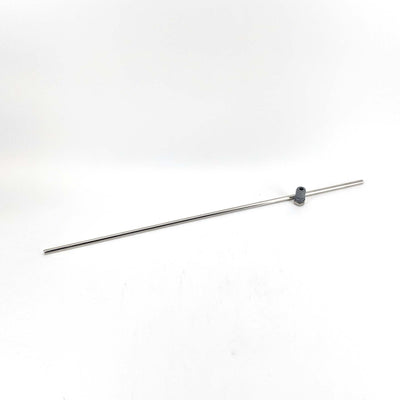
    This stainless steel thermowell is the same one used with many of the hood and stopper thermowells we sell, such as the FE625 and FE624B. It is also a direct replacement for the thermowell used with the BrewBuilt CoolStix™ for Carboy fermenters. Specifications: 15" long 1/4" inner diameter 5/16" outer diameter Made from 304 stainless steel Will not work with Johnson Temperature Controllers (FE60 or FE61) because the probes are too large.

    $21.99

  • FermZilla - Collection Container w/ Lid, Caps, O-ring FermZilla - Collection Container w/ Lid, Caps, O-ring

    FermZilla Collection Container | 34 oz | 1,000 mL

    7 reviews

    If you're a FermZilla owner, we highly recommend picking up an additional collection container or two. Use one to harvest and store your yeast, and then a second for your dry hop additions. Or harvest and store multiple yeast cultures in multiple collection containers. The collection container features threaded ports that are compatible with the KG500 Ball Lock Cap. Attaching the ball lock cap will allow you to purge the container of oxygen before dry hopping. Or attach a small length of tubing with a diffusion stone and you'll be able to oxygenate your wort or carbonate your finished beer from the bottom up. The container is made from Tritan and the lid from HDPE. Kegland Part number: KL11365  

    $21.99

  • FermZilla - 27L Conical & 60L All Rounder Jacket FermZilla - 27L Conical & 60L All Rounder Jacket

    Insulating Jacket for FermZilla 27L Conical or 60L All Rounder

    31 reviews

    Use this insulating jacket to regulate the fermentation temperature in your 27L FermZilla Conical or 60L FermZilla All Rounder. The jacket alone will help keep your fermenter warm in the colder months, or you can add a FermWrap heater if the heat fermentation isn't enough to maintain temp. Conversely, you can freeze bottles of water and put them inside the jacket to keep the temperature from getting too hot. If you're feeling extra fancy, use frozen water bottles and a FermWrap plugged into a temperature controller. The frozen water bottles will provide constant cooling, and if the controller detects that the temperature has dropped too far, it will kick on the FermWrap to heat your fermenter back up to your target temp. The jacket has the added benefit of protecting your fermenting beer from harmful UV light. Features a single sided zipper and draw string bottom. Kegland Part number: KL1148

    $49.99

  • FermZilla Tri-Conical - 27 L - Gen 3.2 FermZilla Tri-Conical - 27 L - Gen 3.2

    FermZilla Tri-Conical Fermenter | Gen 3.2 | 3 in. T.C. Collection Container | 27L | 7.1G

    9 reviews

    The ultimate plastic pressurized conical A best seller for a reason! Tons of features at an incredible cost Crystal Clear super smooth PET makes fermenting and cleaning super easy 3" Butterfly valve at bottom makes removing yeast/trub easy with the 600mL collection jar. Pressurizable (with accessories) for fermentation and closed transfer to your keg The Gen 3.2 FermZilla Tri-Conical features a newly designed collection container with top & bottom PCO1881 ports. The collection container has a 3" T.C. opening and installs on the Conical with a 3" T.C. butterfly valve. The molded 3" T.C. ferrule on the tank is a huge improvement over the Gen 2 model—eliminating the complicated dump valve design and simplifying the collection container connection. Brew with confidence on the new Tri-Clover FermZilla! Out of the box, the FermZilla Conical is an amazing fermenter that will immediately step up your game on the cold side of the brewing process. But what we love most about this unit is how easily it is to upgrade as you go—adding more functionality and gaining more precise control over your fermentation with each new accessory. Below are some of our favorite add-ons for the FermZilla Tri-Conical Fermenter. Pressure Kit The FermZilla is the perfect option for brewers that want all the advantages of a conical fermenter without the price tag of a full blown stainless steel unit. It allows you to dump trub, harvest yeast, and with the addition of the FermZilla Pressure Kit, you can carbonate and serve – all in one vessel! The clear PET tank allows you to visually monitor fermentation activity and is pressure rated to 2.4 Bar (34.8 psi), which means you can ferment under pressure, reducing ester and fusel alcohols in your finished beer. This also gives the ability to perform pressure transfers. If you prefer to move your finished beer to a keg or other vessel, you can do so with little to no oxygen exposure. Tri-Clamp Pressure Lid Add a 2" T.C. port to your fermenter by replacing the standard lid with the FermZilla Tri-Clamp Pressure Lid. This will give you an opening to add dry hops or other additions without needing to remove the entire lid, or you can upgrade down the road with a Hop Bong sight glass in order to add CO2 and purge your hop charge of oxygen. PCO1881 threaded ports are still there for Ball Lock Caps, as well as undrilled ports for an optional Thermowell and Temp Twister cooling coil. Hop Bong Pressure Pack The ultimate upgrade kit! The Hop Bong Pressure Pack has all of the parts included with the Pressure Kit and Tri-Clamp Pressure Lid but fully parted out to remove the guess work. If the Tri-Conical is your first FermZilla fermenter, this accessory kit is for you. Load up the Hop Bong, flush it with CO2, purge out oxygen with the handy PRV on top, then simply open the Butterfly Valve to inject your beer with a 6 oz payload of dry hops. FermZilla Gen 3 vs Gen 3.2: 3" x 3" T.C. butterfly dump valve 3" T.C. compatible collection container 600 mL collection container w/ top & bottom PCO1881 threaded ports What's Included: FermZilla 27L Tank with 3" T.C. Bottom Port 3" T.C. Butterfly Valve 600 mL Collection Container with 3" T.C. Connection Stainless Steel Stand with Swing Handles Stainless Steel Handle Assembly Top Lid with PRV (35 psi) 3" tri-clamp with gaskets 3-Piece Airlock Graduation Sticker Adhesive Thermometer Spare Seals Specs: 27 L (7.1 gal) Total Volume Pressure Rated to 2.4 Bar (34.8 psi) Height in Stand - 29.5" Height w/ Airlock - 33.7" Tank Diameter - 13.9" Diameter in Stand - 15.3" Lid & Collection Container Ports - 28 mm PCO 1881 threads Temperature Rating: When not under pressure, do not expose to liquids above 131°F When under pressure, do not expose to any temperatures above 95°F* *Please note that the temperature rating for the FermZilla tank is lower when using it under pressure. When not under pressure, it is perfectly safe to transfer wort into the tank below 131°F or to use hot liquids below this temp for cleaning. When under pressure, make sure to keep your fermentation temperature below 95°F and keep the fermenter in an environment that is below 95°F ambient. This is especially important when fermenting with kveik yeast. These strains are known to ferment hot if no temperature control is being used. Exceeding the temperature rating may compromise the tank, leading to a shorter life span or sudden failure to maintain pressure. Even with proper use, we recommend replacing the tank every two years. Please note: when using the FermZilla under pressure, you must perform a water pressure check to ensure your connections are leak proof. To do this, fill your FermZilla up with water, apply at least 15 psi pressure, and check for leaks around all caps and threads. Pressure Stress If you use the FermZilla to ferment under pressure, or you use CO2 to pressure transfer or force carbonate your finished beer, it is very important that you conduct semi-annual inspections of your tank. Even with perfect care, the FermZilla tank may show signs of wear from pressure stress over time. We recommend visually inspecting your tank for stress creases or other signs of wear once or twice a year. A hydro test should be conducted every two years, even if no signs of wear are found. The process is simple: Fill the tank to the brim with water Replace the Red PRV with a Green PRV rated to 4.5 BAR or higher Pressurize the tank to 4 BAR (58 psi) Check for leaks, then replace the Red PRV when finished If leaks or potential points of failure are found, replace the tank before you continue using pressure with your FermZilla. General Care Taking good care of your FermZilla begins with cleaning and sanitizing the unit before and after use. The tank is made from food-grade PET, which is beautifully clear, but can be sensitive to long soaks in cleaners and acid-based sanitizers. In general, we do not recommend leaving products like PBW or StarSan soaking in the tank for more than an hour. Extended soaks have the potential to degrade the PET material and shorten the lifespan of the tank. KegLand Part number: KL25898 NOTE: FermZilla tanks are marked with a manufacturer’s “expiry date”. This does not indicate that the tank is bad after this date; it simply indicates that a hydro test may be in order. 2 years after production and every 2 years after first use, it is recommended that the tank be hydro tested to ensure the tank is holding pressure. Hydro test instructions are available here. You will also need the D1072 Green PRV to perform the test. If you do not plan to pressurize the fermenter, the test is not necessary.

    $169.99

  • FermZilla - Flat Twister Lid w/ O-ring - 3-hole for Temp Twister and Thermowell FermZilla - Flat Twister Lid w/ O-ring - 3-hole for Temp Twister and Thermowell

    FermZilla Flat Twister Lid

    4 reviews

    The Flat Twister Lid comes with 3 pre-drilled holes perfectly sized for the Duotight bulkheads that come with the Temp Twister Cooling Coil and FermZilla Thermowell. Lid o-ring included. This lid is only recommended for FermZilla users that will be using the Temp Twister and the Thermowell together. Kegland Part number: KL15059

    $10.99

  • Thermowell - 15" Long w/ #10 Silicone Stopper Thermowell - 15" Long w/ #10 Silicone Stopper

    #10 Silicone Stopper Thermowell

    36 reviews

    This carboy thermowell is used in conjunction with the Digital Controller, FE601A, FE610A, or FE602, to more accurately regulate internal temperature during fermentation. It is exceptionally useful during the start of fermentation when the lag between ambient temperature in the refrigerator and actual temperature in the carboy can vary greatly. Now you can keep your beer or wine within one degree of the set point on your digital controller. Designed to fit either 3, 5 or 6 gallon PLASTIC carboys or any other similarly sized opening hole. The unit comes with a 15" stainless steel thermowell and a #10 silicone stopper that will accommodate our sanitary filter, FIL90, as well. It can be used in any container with a stopper opening of this size where you need to accurately monitor and control liquid temperature. Will not work with Johnson Temperature Controllers (FE60 or FE61) because the probes are too large. Need a thermowell for a glass carboy? See related product. Inner Diameter of Thermowell: .255" Works with new 2016 Rancos

    $27.49

  • Rubber Stopper - #2 With Hole

    Rubber Stopper - #2 With Hole

    6 reviews

    Stopper #2 - with 3/8 inch hole. Top diameter 0.83 inches (21 mm), bottom diameter 0.63 inches (15.8 mm), length 1 inch (25 mm). BPA-free stopper made of food grade materials. Injection molded TPE for superior consistency throughout. Perfect for use with carboys, as the material sticks well to glass and PET, even when wet. To create a solid stopper, simply use a #000 solid stopper (FE400) to plug the hole. Max. Temperature Rating: 158 °F (70 °C).

    $0.99

  • Airlock - 3 Piece Polypropylene (PP) Anti Shatter

    Shatter Resistant Airlock - 3 Piece

    4 reviews

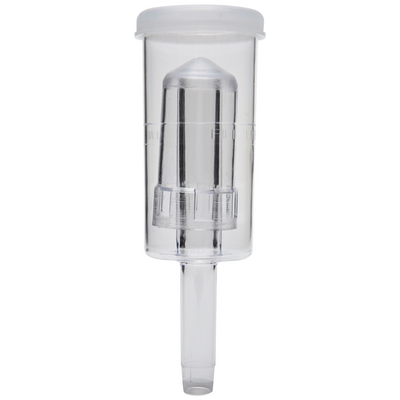
    This airlock made from polypropylene is much less rigid and less likely to crack compared to standard three-piece airlocks. Toss it into a bucket of sanitizer with your other equipment and don't worry about it breaking. Airlocks are another one of those necessary pieces of equipment for every homebrewer. If you ferment in a carboy or bucket this 3 piece airlock is a must! It’s a popular alternative to the triple ripple type of airlock because it can be taken apart and cleaned, and is easy to fill. (However we do sell the triple ripple type (FE371) in case you are used to that type and would like to stay with it.) While a simple device not all airlocks are the same. Some other designs have only a couple holes in the plastic lid and this can cause the airlock to pop out during an active fermentation. Our design features multiple holes that allow CO2 to escape easily. Additionally, some other airlocks have a cross hatch design on the bottom. We have found this more easily leads to Krausen clogs and the airlock being pushed out of the fermenter. Ours is open, allowing Krausen foam to enter the airlock if necessary. Better to clean your airlock out than to find it laying on the floor next to your fermenter 3 days later. Another cool feature of this 3-piece airlock is that 1/2" ID Silicone tubing will fit onto the center post for use as a blowoff. In the cases where you are using a yeast known to produce lots of Krausen (WLP002 from White Labs or 1968 from Wyeast for example) remove the top cover, remove the plastic 'hat', and install the silicone tubing. Run the silicone tubing into a jar or bucket of water. When fermentation dies back down remove the tubing and replace the hat and cover. Please Note: Airlock only - stopper not included. KegLand Part Number: KL01595

    $3.89

  • Premium Breathable Silicone Bung for Barrels and Variable Volume Tanks

    Premium Breathable Silicone Bung for Barrels and Variable Volume Tanks

    26 reviews

    We recently discovered this premium breathable silicone barrel bung and were immediately impressed with its robust design and features. To start with, the built in tabs really help make bung removal effortless. But where the bung really shines is in its two-piece design. When set to the open position, the bung acts as an airlock and allows the release of CO2 while maintaining a seal against oxygen coming in. This makes the bung ideal for alcoholic or malolactic fermentation in barrels or tanks. When fermentation is over and you no longer want the bung to "breathe" out, you just push the center cap into the bung to create a firm seal and the FE497 becomes a solid stopper! Fits most 30 and 60 gallon barrels as well as the hole in the lid of most Variable Volume tanks! tapers from 1 7/8" to 2 1/4" diameter

    $11.99

  • FermZilla Floating Dip Tube - Stainless Float + 80cm Silicone Dip Tube

    Replacement Floating Dip Tube for FermZilla

    14 reviews

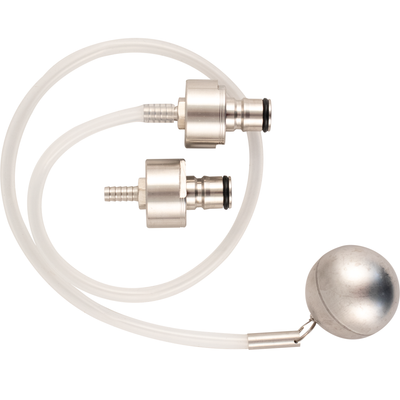
    Direct replacement of the 31" floating dip tube included with the FermZilla Pressure Kits. If you're looking for a floating dip tube to use with your homebrew keg, we recommend the Torpedo Buoy™, which includes an appropriately sized metal dip tube and features a higher quality silicone tubing. Kegland Part number: KL14076

    $16.49

  • Blichmann Oxygen Flow Regulator Blichmann Oxygen Flow Regulator

    Blichmann Oxygen Flow Regulator

    28 reviews

    Most oxygen regulators only regulate pressure but the Blichmann Oxygen Flow Regulator allows you to dial in the actual rate of flow. Turn the dial to your preferred flow rate, measured in liters of oxygen per minute, and you can feel confident in knowing precisely how much oxygen is being introduced into your wort. It is important to know the flow of oxygen because depending on your downstream restriction the actual flow can vary a lot. Remove the guess work with the Oxygen Flow Regulator from Blichmann. Measuring your dissolved oxygen usually would run you $300 or more but with the Oxygen Flow Regulator you can know exactly how much oxygen was put into your wort for less than $50.

    $49.49

  • Fermentation Heating Wrap Belt - With Velcro Strap (30watts) 110-120V Fermentation Heating Wrap Belt - With Velcro Strap (30watts) 110-120V

    Fermentation Heating Wrap Belt w/ Velcro Strap

    2 reviews

    This heating wrap provides excellent coverage for your FermZilla Conical, All Rounder, glass carboy, or PET fermenter. The large surface area ensures that heat is applied evenly to your fermenting beer. The 30-watt goes even further when paired with insulation and will lead to less temperature swings. It will provide plenty of heat while still being perfectly safe to use with plastic fermenters. And it features a convenient Velcro strap to hold itself in place—no need for electrician's tape that will leave gunky residue behind! For the ultimate temperature control with your FermZilla, pair the heat wrap belt with the Temp Twister Cooling Rod and control both heating & cooling with an Inkbird Temperature Controller. 110V plug. Approx. 39" x 9.75" KegLand Part Number: KL26048

    $38.49

  • 2 Gallon Bucket 2 Gallon Bucket

    2 Gallon Bucket Fermenter

    13 reviews

    A perfect size, food-grade, bucket that is a perfect fermenter for doing 1 gallon fermentations. Ideal for your next small batch of homebrew or fruit wine. Also a great container to store grain in. Wide opening allows for easy cleaning.  Lid sold separately. 9-1/4" H x 9-1/2" D (without lid) 9-7/16" H x 9-15/16" D (with lid)

    $8.49

  • Airlock - S-Shaped and Stopper Kit (Pack of 2) Airlock - S-Shaped and Stopper Kit (Pack of 2)

    S-Shaped Airlock & Stopper Kit (Pack of 2)

    2 reviews

    Pick up two airlock and stopper combos for a lower price! Includes two S-Shaped airlocks and two Universal Stoppers. Fits a 2.8, 3, 5, 6, or 6.5 gallon glass carboy, as well as 500ml Erlenmeyer flask. Please Note: This stopper will not fit in plastic carboys, Better Bottles or Speidel Plastic Fermenters.  

    $3.99

  • CoolBot - Walk-In Cooler Controller for window air conditioner CoolBot - Walk-In Cooler Controller for window air conditioner

    CoolBot Walk-In Cooler Controller | DIY Indoor Cooler | Fermentation Locker | Keg Storage | Wine Cellar

    40 reviews

    Build your own walk-in cooler with a standard A/C unit from any hardware or appliance store! The CoolBot enables A/C units to cool below their standard setting of 60°F, allowing you to use them as a low-cost refrigeration alternative Installs quickly with no tools or electrical know-how required—see the videos below! Perfect for turning rooms or storage sheds into a fermentation locker, keg room, wine cellar, food larder, and More! A CoolBot allows a standard air conditioner to cool a room or space down to 35 degrees F. Installs with no tools or electrical knowledge required. Standard A/C units available from any hardware or appliance store have lots of power but they are electronically limited so that they cannot go below 60 degrees F. This is because they would freeze up. Commercial refrigeration for walk in coolers combat freeze with increased surface area on the fins as well as fans. Instead the Cool bot technology uses multiple sensors, a heating element and programmed micro-controller to control your air conditioner in such a way that the unit can go below 60F and not freeze up. The Coolbot cannot give you 100% of the btus listed on your air conditioner nor is suitable for large brewery or winery walk ins. It is perfect for wine cellars, beer storage, fermentation, etc. Easy to install within 30 minutes with no tools or electrical knowleged required. While we can't tell you exactly what size space you can cool because of ambient temperatures and insulation factors, we recommend you google Coolbot. They have sold over 50,000 of these so there are lots of reviews and actual installs out there. We offer free shipping on this unit, ship fast from both coasts, and have great customer service. This type of system is also very efficient. Most commercial systems are power hogs with large fans that are always running. Residential A/C units are made for efficiency. The Coolbot will also shut down the compressor for short time when the unit is running at its highest level of inneficiency, as it nears freeze up. Dims of the CoolBot are 6.5x3.5x1.5 in. Product Introduction DIY Indoor Cooler Mobile Walk In Cooler For the WiFi-enabled model, see the CoolBot Pro.

    $374.00

  • Fermenter - Plastic Beer Stein w/lid - 11 L (2.9 Gal) for 9.5 L (2.5 Gal) Batches Fermenter - Plastic Beer Stein w/lid - 11 L (2.9 Gal) for 9.5 L (2.5 Gal) Batches

    2.5 Gallon Fermenter With Lid & Spigot

    59 reviews

    This awesome little fermenter is ideal for any fermentation, up to 2.5 gallons.  The unit is designed to be an all in one fermenter and bottling bucket.  The bowl shape at the base of the fermentor allows sediment to settle prior to bottling.  The wide opening on top allows for easy cleaning, large direct additions of fruit, hops or other products and overall easier access. Cool beer stein styling makes this the freshest fermentor on the market! Great for splitting 5 gallon batches into two separate fermentation to test yeast, different dry hops, add oak to one, etc.   Use this fermenter for your next batch of fruit wine, half batch of beer or any other fermentation!  Holds roughly 2.9 gallons total; recommended for 2.5 gallon fermentations.

    $24.49

Frequently Asked Questions

Fermenting Equipment Collection Article +

Fermentation: A Play in Three Acts By John Palmer The fermentation of malt sugars into beer is a complicated biochemical process. Although the conversion of sugar into alcohol can be regarded as yeast’s primary function, fermentation is much more. Total fermentation is a composite of three phases: the lag (or adaptation) phase, the attenuative (or primary) phase, and the conditioning (or secondary) phase. Yeast does not end the second phase before beginning the third; rather, the processes occur in parallel. Yeast’s early gusto for wort sugars is gradually phased out as the concentration of remaining easy food (simple sugars) in the wort decreases relative to the amount of complex sugars and yeast by-products. The conditioning process occurs more slowly than the attenuative process, however, which is why beer (and wine) will improve with age, to a degree, as long as they are in contact with the yeast. The accompanying box below summarizes the key factors required for a good fermentation: Pitch plenty of yeast, make sure the cells have the nutrients they need to multiply, and let them do their thing at the right temperature. Act I —the adaptation phase: Immediately after pitching, yeast spends some time adjusting to the wort conditions and indulging in a period of high growth. During this time, yeast takes stock of the sugars, free amino nitrogen (FAN), and other nutrients present in the wort and figures out what enzymes and other attributes it needs to adapt to the environment. This delay between the pitching of the yeast and the formation of the foamy head in the fermentor is referred to as the adaptive phase, or lag time. This initial phase is critical in setting the stage for a good fermentation. During the adaptation phase, yeast cells use their own glycogen reserves, lipids, and any dissolved oxygen from the wort to synthesize sterols. Sterols are critical for the development of healthy, permeable cell membranes, which makes wort sugars and other wort nutrients available to the yeast. Strong cell membranes will also protect the yeast from premature death due to rising alcohol levels as the fermentation progresses. Yeast can also synthesize sterols under oxygen-poor conditions from the fatty acids found in wort trub, but that method is less efficient and less reliable for the brewer. With healthy, permeable cell membranes, yeast can start metabolizing its food — free amino nitrogen (FAN) and sugars in the wort. Like every animal, yeast cells live to reproduce, which they do asexually by “budding,” a process in which daughter cells split off from the parent cell. Reproduction takes a lot of energy, and the process works more efficiently when oxygen is present (that is, under aerobic conditions). Thus, an oxygen-rich wort shortens the adaptation phase and allows yeast to quickly reproduce to levels that will ensure a good fermentation. Once the oxygen is used up, the yeast cells switch metabolic pathways and begin what brewers regard as fermentation: the anaerobic metabolism of sugar to alcohol. The key to a good fermentation is lots of strong healthy yeast cells that can get the job done before depleted resources, rising alcohol levels, and old age render them dormant. As noted, the rate of reproduction is slower in the absence of oxygen. At some point in the fermentation cycle of the beer, the rate of yeast reproduction will fall behind the rate of yeast dormancy. By providing optimum conditions for yeast growth and reproduction in the wort initially, we can ensure that this rate transition will not occur until after the beer has become fully attenuated. Worts that are underpitched or poorly aerated will have insufficient quantities of viable yeast, leading to slow or incomplete fermentations. Experienced brewers make a great point about wort aeration and building up a yeast starter because these practices guarantee a large enough population of yeast to do the job well. Under nominal conditions, yeast should proceed through the adaptation phase and begin primary fermentation within 12 hours. If 24 hours pass without apparent activity, then a new batch of yeast should probably be pitched. Lag time is a common benchmark that brewers use to gauge the health of yeast and the vigor of fermentation. It is possible, however, to overemphasize the significance of lag time, on its own, as a meaningful indicator. A very short lag time, for example, does not necessarily mean that your yeast has gotten off to a phenomenal start and just can’t wait to ferment. It could well mean just the opposite — that a low supply of nutrients and oxygen in the wort gave the yeast no recourse but to begin converting sugar to alcohol in order to survive. The latter stages of fermentation may also appear to finish more quickly when in fact the process was not super-efficient, but rather, incomplete. The point is that speed does not necessarily correlate with quality. Under optimal conditions, of course, the process will generally be more efficient and thus will take less time. But it’s better to pay attention to getting the process right than to focus on a rigid time schedule. Check out our yeast starter kits and accessories to improve fermentation! Act II — the attenuative phase: The attenuative, or primary, phase is a time of vigorous, robust fermentation during which the gravity of the beer drops by two-thirds to three-quarters of the original gravity. The primary phase will last anywhere from 2 to 6 days for ales or 4 to 10 days for lagers, depending on the yeast and on the fermentation conditions. A head of foamy kräusen will form on the beer as the sugar is converted to alcohol and the beer attenuates. The foam will be a light creamy color with islands of green-brown gunk that will tend to collect and adhere to the sides of the fermentor. The gunk is made up of extraneous wort protein, hop resins, and dead yeast. These compounds are very bitter and will contribute harsh aftertastes to the beer if allowed to mix back into the wort. Fortunately these compounds are relatively insoluble and will separate themselves from the wort, sticking to the sides of the fermentor as the kräusen subsides; they can also be removed by racking (transferring) to another, or secondary, vessel. Alternatively, they can be removed using the blow-off method, whereby a tube is attached to the fermentor at one end and submerged in water (makeshift sanitary airlock) at the other. Pressure in the fermentor forces the material on the surface of the wort out of the fermentor through the tube and into the water at the other end. As this primary phase winds down, a majority of the yeast cells start settling out and the kräusen begins to subside. If you are going to transfer the beer off of the trub and primary yeast cake, this is the proper time to do so. Take care to avoid aerating the beer during the transfer. At this point in the fermentation process, any exposure to oxygen will only contribute to staling reactions in the beer or worse, expose it to contamination. Click here to browse our fermenting equipment, fermenters and accessories! Key Factors for a Good Fermentation Yeast-Based Factors Pitch plenty of yeast: The first step to achieving a good fermentation is to pitch enough yeast. Yeast can be grown using yeast starters or it can be harvested from previous fermentations. When recycling yeast, use yeast that has proven itself through good fermentations in the past. Harvest from the middle layer of the primary yeast cake, where you are most likely to find healthy cells from the most active period of the fermentation. This yeast will have the optimum characteristics for repitching: It will have good glycogen reserves and will readily adapt to the new wort. With nominal levels of aeration and nutrients, the yeast will quickly multiply to the levels necessary for an exemplary fermentation. Yeast can also be taken from the secondary, but it may be less inclined to flocculate. However you obtain your yeast, plan to pitch at least 1/3 cup (75 mL) of yeast slurry for a typical 5-gallon batch of ale, or 2/3 cup (150 mL) of slurry for lagers. For stronger beers (O.G. >1.050 [12.34 °P]), pitch more yeast to ensure optimum fermentations. For very strong beers such as Doppelbocks and barleywines, pitch at least 1 cup (225 mL) of slurry. Wort-Based Factors Three issues must be considered to ensure that the wort has been properly prepared to support a good fermentation. Aeration: The first issue is the infusion of oxygen into the wort through aeration. Yeast will use up any available oxygen in the wort during the lag time to synthesize sterols for growth and cell membrane development. Strong cell membranes enable the yeast to absorb nutrients and protect it from rising ethanol levels later in the fermentation. FAN content: The second issue is the level of amino acid nutrients in the wort, specifically referred to as free amino nitrogen (FAN). Malted barley normally supplies all of the FAN that yeast needs to grow and adapt to the fermentation environment. If the recipe incorporates large amounts of adjuncts (refined sugar, corn, unmalted wheat, or unmalted barley, for example), however, then the wort may not have the minimum levels of nutrients necessary for yeast to build strong cells. In extract brewing, it is always advisable to add some yeast nutrient powder to worts made exclusively from light-colored extracts because these extracts are often thinned with corn sugar. Avoid refined sugars: Be aware also that in worts that contain a high percentage of refined sugar (about 50% or more), yeast will sometimes lose the ability to secrete the enzymes that allow it to ferment maltose. Temperature Factors Yeast cells are greatly affected by temperature — too cold and they go dormant; too warm (more than 10 °F [6 °C] above the nominal range, which varies from strain to stain) and they indulge in an orgy of fermentation resulting in by-products that often cannot be cleaned up by conditioning. High temperatures also encourage the production of fusel alcohols — heavier-than-average alcohols that can have harsh solvent-like flavors. Many of these fusels esterify during secondary fermentation, but in large amounts these esters can dominate the beer’s flavor. Excessive “banana” flavors are a common consequence of high-temperature fermentation. High temperatures can also lead to excessive levels of diacetyl. A common problem among home brewers is to pitch the yeast when the wort is too warm. If the yeast is pitched when the wort is 90 °F (32 °C), for example, and slowly cools to room temperature during primary fermentation, the early stages will produce more diacetyl than the yeast can reabsorb during the secondary stage. Furthermore, primary fermentation is an exothermic process. Yeast activity can raise the internal temperature of the fermentor as much as 10 °F (6 °C) above ambient conditions, but as long as this higher temperature is within the optimal range for the yeast, the beer will be fine, even if the yeast is warmer than its surroundings. The point is that if it is midsummer in Florida, you might want to find a way to keep the fermentor cool or just consider waiting until the weather turns cooler. Beer fermented too warm will not be drinkable. Keep the Yeast Happy Fermentation is the most important part — the purpose, in fact — of the whole process of brewing. Careful attention to the factors that affect fermentation will help to ensure that your labor of love lives up to your expectations. Many canned kits and even brewing texts advise bottling the beer after one week or after the kräusen has subsided. Don’t. The beer has not yet gone through the conditioning phase. The flavor of unconditioned beer reveals rough edges such as yeasty, buttery, or green apple flavors that will disappear after a few weeks of conditioning. Take your time — it will be worth the wait! The final act — the conditioning phase: The reactions that take place during conditioning are primarily a function of the yeast. The vigorous, primary stage is over, the majority of the wort sugars have been converted to alcohol, and a lot of the yeast cells are going dormant — but some are still active. Flavor effects. During the earlier phases, the yeast produced many compounds in addition to ethanol and carbon dioxide (acetaldehyde, esters, amino acids, ketones-diacetyl, pentanedione, and dimethyl sulfide, for example). By the time the kräusen has subsided, the yeast has eaten the easy food and now turns its attention toward the heavier sugars such as maltotriose and dextrins, as well as to the reprocessing of its own undesirable by-products. Diacetyl and pentanedione are two ketones that have buttery and honey-like flavors. These flavors are considered flaws when present in large amounts, and the compounds responsible cause flavor stability problems during storage. The compound acetaldehyde is a specific aldehyde that has a pronounced green apple smell and taste. It is an intermediate compound in the production of ethanol, and is reduced during the later stages of fermentation. Primary fermentation also produces an array of fusel alcohols that often give harsh solvent-like tastes to beer. During secondary fermentation, yeast converts many fusel alcohols to more pleasant-tasting fruity esters. Natural filtration. Conditioned beer is not only better tasting, but naturally clearer. Toward the end of secondary fermentation, a majority of the suspended yeast cells flocculate (settle out). Tannin and phenol compounds will bind with high molecular weight proteins and also settle out, greatly smoothing the taste of the beer. This process can be helped along by chilling the beer, very much like one might do in lagering. In reference to ales, this process is referred to as cold conditioning and is a popular practice at most brewpubs and microbreweries. Depending on the yeast strain, cold conditioning for a week will often clear the beer without the use of finings.* *Fining agents such as isinglass and gelatin are added to the secondary fermentor to help speed the flocculation process and to promote the settling of haze-forming proteins and tannins. While finings are most often used to drop unflocculant yeast strains and to combat chill haze, their real benefit is to improve the taste and stability of the beer. Conditioning times. How long you choose to condition will depend on your recipe and your preference. Different beer styles benefit from different amounts of conditioning time. Generally, the higher the original gravity, the longer the conditioning time needed for a beer to reach peak flavor. Small beers such as 1.035 O.G. (8.76 °P) pale ales will need less than two weeks. Stronger, more complex ales such as porters may require a month or more. Very strong beers such as Doppelbocks and barleywines can take six months to a year before they condition to their peak flavor. The downside. Unfortunately, yeast may also consume some of the proteins and other compounds in the trub, the “fermentation” of which can produce any of several off-flavors. In addition, the dormant yeast on the bottom of the fermentor begins excreting more amino and fatty acids. If the postprimary beer is left on the trub and yeast cake for too long (more than about two weeks), soapy off-flavors may become evident. The longer the yeast cells are left in contact with the beer, the more likely it is that they will begin to secrete enzymes that allow them to feed on each other (autolysis), which produces rubbery, sulfury tastes and smells. For these reasons, it can be important to remove the trub and dormant yeast from the beer during the conditioning phase. Conditioning Fundamentals Conditioning can take place in either the primary fermentor, a secondary fermentor, or the bottle, but each method produces different results. Debates over the benefits of each abound within the home brewing community. For and against bottle conditioning: Beer bottled immediately after completion of the primary fermentation will condition in the bottle, and this is the method of choice for many brewers. Many seasoned home brewers declare, for example, that racking to a secondary fermentor offers no real taste benefit and that the dangers of contamination and the cost in additional time are not worth what little benefit may be gained. I agree that for a new brewer’s first low-gravity pale beer, the risks probably outweigh the benefits, and I advise keeping it simple until you have gained some experience with racking and sanitization. If you are concerned about the risks of racking and want to bottle without using a secondary fermentation phase, you can leave an ale in the primary fermentor for a total of two weeks instead of just one, which will give the conditioning reactions time to improve the final beer. The extra time will also let more sediment settle out before bottling and result in a clearer beer and easier pouring. Just remember not to leave the beer on the yeast for more than two weeks. For most beer styles, however, conditioning before bottling makes the most sense, partly because the larger yeast mass in the fermentor is more effective at conditioning than the smaller amount of yeast suspended in the bottle. Priming and bottling right after the primary can create some other unwelcome problems as well. Studies have shown that bottle-conditioned beer actually goes through another mini-primary fermentation, making use of some of the headspace air. Unfortunately, though, only about 30% of that oxygen is used for reproduction; the rest slowly diffuses into the beer as it ages, contributing to staling reactions. Furthermore, a bottle-conditioned beer is stuck with the job of dealing with all of the usual intermediary compounds and by-products of fermentation, including aldehydes, diacetyl, fusels, and esters, that are produced during this short fermentation process on top of any byproducts left over from primary fermentation. Thus, to avoid these problems and get the most of conditioning, the beer should be given time in a secondary fermentor before priming and bottling. This is as true for homemade beer as it is for commercial “bottle-conditioned” beers. Even if the yeast has flocculated and the beer has cleared at bottling time, enough active yeast will still be in suspension to ferment the priming sugar and carbonate the beer. Bottle conditioning is not, however, always bad or inefficient. Bottle conditioning simply results in different ester profiles than those that are normally produced in the main fermentor. In fact, in some styles, for instance Belgian strong ale and Hefeweizen, bottle conditioning and the resultant flavors are the cornerstones of the style. These styles cannot be produced with the same hallmark flavors if they are immediately kegged (draft style). Click here to check out our bottles, caps, and other bottling equipment! The case for secondary fermentation: Secondary fermentation is beneficial to all beer styles if you have a good understanding of fermentation processes and can complete the transfer carefully. The key is in mastering some of the simple facts of racking. Dos and don’ts of racking. Racking from the primary can occur any time after primary fermentation has more or less finished, when the bubbling rate drops off dramatically to about 1–5 per minute. This will be about 2–6 days after pitching for ales, 4–10 days for lagers (though if it has been more than two weeks for ales you may as well just bottle). The kräusen will have started to settle back into the beer. Use a sanitized siphon to rack the beer off the trub into another sanitized fermentor and affix an airlock. The beer should still be fairly cloudy with suspended yeast. Although oxygen is a desirable commodity very early in the critical adaptation phase, it is absolutely not wanted in the later stages of fermentation. Racking at any time exposes the beer to the potential risks of exposure to oxygen and bacterial contaminants. Also, racking the beer before the primary fermentation phase is completed can result in a stuck or incomplete fermentation. Most brewers will notice a brief increase in activity after racking which is due not to additional primary fermentation, but simply to dissolved carbon dioxide coming out of solution because of the disturbance. Fermentation (conditioning) does continue after racking, so just leave it alone for awhile. A minimum useful time in the secondary fermentor is two weeks. Leaving the beer in the secondary for too long (more than six weeks for ales) may require the addition of fresh yeast at bottling time to achieve good carbonation. (Always use the same strain as the original.) Keep liquid notes. No matter which method you choose for fermenting and packaging your beer, it is always a good idea to set aside a six-pack in the corner of the basement and leave it for a good long time. It can be enlightening to compare a home-brewed beer after three months of bottle conditioning to the batch as it initially tasted. Browse our selection of equipment for racking and siphoning your homebrew! Rave Reviews Can Be Yours Fermenting a beer without allowing time for the conditioning phase is like raising the house lights and leaving the show before the final act has played out. Something will be missing from the total experience, and you deprive yourself of the full value of the show you paid for. Giving the beer time to condition smoothes and refines the beer’s flavor. Conditioning reduces diacetyl levels, vents dimethyl sulfide, and esterifies fusel alcohols. Yeast is given time to consume the remaining fermentables without also consuming the junk food in the trub. The low concentration of dormant yeast cells also prevents off-flavors caused by fatty acid excretion and autolysis. Finally, secondary fermentation allows time for more yeast and haze to settle out before bottling. The result is better beer. With a little patience, you can see the process through to the end and discover the full rewards of the grand finale. Fermentation FAQ What is fermentation? Fermentation is any process where bacteria or fungus change one thing into antoher. Lots of foods are fermented too!: Sauerkrautt, kimchi, soy sauce, and more! What is yeast and what does it do? Yeast is a single celled fungus that eats sugar and poops ethanol. What is the primary role of yeast? To transform our sugars into alcohols. Do you need to rehydrate dry yeast? why or why not? Strongly recommended but not necessary, if you do not hydrate you could experience a long lag time until your fermentation takes off. Do you want a constant temperature for fermentation? Absolutely!  This is extremely important.  Fluctuations in temperature can have a large impact on the final flavor outcome. What is a carboy? A carboy is a container with a typical capacity of 3 to 6.5 gallons and is used for transporting liquids.  They are used as both fermenters and storage containers for beer, wine and other fermented beverages.  Many people have seen them used as water jugs for businesses to have water on tap. What is a hydrometer? A hydrometer is a measuring tool used to detect the density of liquid.  It is used in brewing to determine the sugar content in wort. How do I read my Hydrometer? After filling your hydrometer jar with wort, you’ll carefully drop the hydrometer in.  Allow the wort to reach the appropriate temperature (some hydrometers will have a temperature correction scale, but not all will).  Once at the correct temperature find where the liquid comes up to on the hydrometer (meniscus) and read that number.  It will generally be a “1.0XX” number - the higher the XX, the more sugar in solution. What is specific gravity? The measure of the density of a liquid specifically grams of sugar per liter of water. A gravity of 1.040 means 40 grams of sugar per liter. "Specific" refers to "this sample right now". What is gravity and what is brix? how are they related? Gravity refers to the specific gravity or the relative density compared to water.  Gravity describes the concentration of malt sugar in the wort.  Brix describes the amount of available extract as a weight percentage of cane sugar in solution.  Both are used to describe the amount of potential alcohol and can be used to determine the amount alcohol in a beer or wine. How do you measure brix and how to you convert to gravity? Brix is measured by using a refractometer and you can convert by multiplying the number you get by 4 and  then putting “1.0” in front of that number and you will get your gravity.  This is a loose calculation and is okay at lower gravities but the higher your starting gravity goes the less accurate the conversion is.  So for example you get a brix reading of 12 which would be a 1.048 in specific gravity. What is original gravity? The gravity of the substrate before it was fermented. Usually called OG. Tells you the potential alcohol of a wort. What is final gravity? The gravity of the beer after it has fermented. Also called Terminal Gravity. How do I calculate ABV? (OG - FG) x 0.131 = ABV Using the SG and FG, how do you determine ABV? (SG - FG) * 131 = ABV (Starting gravity minus final gravity multiplied by 131 = Alcohol by volume)

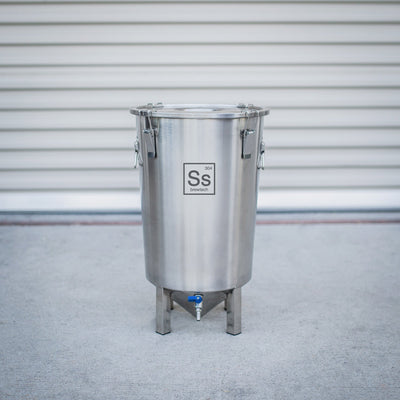
There is a small localized spot or area of rust on my kettle / fermenter that I bought recently. I thought stainless steel can't rust? +

Stainless steel itself shouldn't rust, you are right there. Especially a high grade 304 Ss like we use on all of our products. But what can rust are surface particles of iron that are sometimes left residual from the manufacturing process and the tools used to grind and polish the interiors and exteriors of Ss Brewtech's various vessels. This is one reason why proper cleaning and care prior to first use (or even exposure to water) is important. We have detailed documentation both in the box and on our website on all the product pages. The main thing here is cleaning and conditioning the stainless the first time prior to exposure to beer, water, whatever… In any case, if you do see a localized spot(s) of surface rust - simply get yourself a WHITE (NOT green type pad if you can avoid it) Scotchbrite pad, dab some Starsan onto the pad, and then GENTLY brush over the area in question until the surface rust has broken up and the area looks consistent with the surrounding areas of stainless. Then just rinse off, dry it with a paper towel, and the area will be good to go and free of the surface layer iron particles that were causing the issue to begin with.

Is my beer finished fermenting? +

If you have waited two weeks for an ale, or four weeks for a lager, or you're just curious. Most veteran homebrewers will tell you the beer is done once the airlock stops bubbling but this isn't a sure thing that fermentation is complete. This is where a hydrometer is sometimes worth its weight in gold. If you call our advice line and ask "Is my beer finished fermenting?" the first question will be, "Have you taken a hydrometer reading?" A hydrometer reading at the end of fermentation is called a final gravity reading, often abbreviated "FG". This tells you the amount of sugar left in the beer. Most yeast strains consume 65-75% of sugar in solution, this is called "attenuation." Here's an example gravity: OG: 1.050 your Goal FG would be: 1.010-1.015. If you are more than a few points above your estimated FG you will need to wait a couple more days. After a few days take another reading to see if the FG has dropped. If the FG has not dropped you will either need to consult us on our advice line at 925-671-4958. We will ask you some questions about the recipe, the yeast strain, and the fermentation temperatures your beer was exposed to. Sometimes we have some insightful comments on why fermentation is acting strangely, and other times only the beer Gods know.

My beer started fermenting, then stopped, and then started again? +

This usually happens when the beer goes through temperature changes. The yeast stops fermenting when it gets cold as the metabolic activity of the yeast slows down. It then proceeds to start up again when the fermenter warms up. If your fermentation gets stuck warm up the beer to the desired temperature range for your yeast. Sometimes it helps to give the carboy a swirl. DO NOT add oxygen. If there is one step you do as a homebrewer, investing in temperature control equipment will be the best thing you ever do for your beer.

Login

Forgot your password?

Don't have an account yet?
Create account