Detecting your location...
FREE FERMZILLA with every BrewZilla Gen 4.1 Dads & Grads · Ends in 7 days · No code needed
Shop the Bundle
MoreBeer Category Header
Premium Fermentation Equipment

Elevate Your Homebrew with Pro-Grade Fermenters

Start your next batch off right with top-tier conical fermenters, glass carboys, and precise temperature control gear from leading brands like BrewBuilt.

  • Professional Performance: Stainless steel conicals built to last a lifetime and mimic commercial brewery setups.
  • Scratch-Free Cleaning: 1 to 6-gallon glass carboys and jugs that make sanitation a breeze.
  • Complete Temp Control: Dial in your fermentation environment for the perfect flavor profile every time.
  • Unmatched Quality: Access commercial-grade brewing capabilities at the most affordable prices.
Learn More About Fermentation ↓
1

Sanitize & Prep

Thoroughly clean your chosen fermenter to ensure a flawless, bacteria-free environment for your chilled wort.

2

Pitch & Ferment

Add your yeast and use temperature control accessories to maintain the perfect brewing climate.

3

Keg & Enjoy

Once fermentation is complete, easily transfer your clear, professional-quality beer to serve and enjoy.

Shop by collection
415 products

  • RAPT Temperature Controller - 110-120V RAPT Temperature Controller - 110-120V

    RAPT Digital Temperature Controller | WiFi/Bluetooth Enabled | RAPT Portal Compatible

    3 reviews

    Monitor and adjust your fermentation temp settings remotely via internet connection Set customized temperature profiles that will run automatically Access the RAPT portal to review previous fermentation temperature logs Red & Blue power sockets to clearly identify your heating and cooling outlets For untethered probe readings, switch the temp reference to the RAPT Bluetooth Thermometer Mobile RAPT app available of iPhone and Android The RAPT WiFi-enabled temperature controller allows you to monitor, track and control heating and cooling devices remotely via any internet connection. Log in to the RAPT portal from any web browser, or download the RAPT app from the Apple App Store for iPhone or Google Play for Android. From the portal, set up your own complex temperature profiles and the RAPT controller will make the temperatures adjustments automatically according to your schedule. The color screen clearly displays temperature, graph of future and past temperature settings and makes it much easier to perform profile temperature steps. This plug and play temperature controller has two clearly marked blue and red power sockets for heating and cooling so you can control a fridge or heating device at the same time to completely monitor and control the temperature. Each 110V power outlet is rated to 10 amps (1200 watts max). PID Included This temp controller box comes with PID heating function often used for higher powered devices. This greatly reduces the chance of scorching and will deliver better temperature control with less fluctuation. Temperature Range The temperature range of this device will enable you to control devices from -4°F to 248°F (-20°C to 120°C). Various Mounting Options This innovative design enables you to panel mount this controller, mount to a hanging point or hook, mount on top of a fridge or brew system. Simply unscrew the mounting plate and switch the mounting to your preferred orientation. A mounting plate is included with controller, and you can even adjust the routing of the cords to come out the back of the controller, allowing you to stand up the controller and set it on a table or benchtop. RAPT WiFi Compatible This product will connect with the RAPT portal. This portal will enable you to monitor, control and log past temperatures, and also show a future projection of temperature profiles that you might have running. What is RAPT? RAPT is a dedicated Internet of Things (IOT) Hub for fermentation logging and control. It's a free service whereby any RAPT-enabled product can both log and store data to the hub where you can conveniently access it. The RAPT hub can also allow you to control your devices remotely giving you absolute control of the device irrespective of where you are. The RAPT portal enables you to make complex temperature profiles that involve different temperature settings over time meaning you can start/run a temp profile giving you a set and forget experience. The RAPT portal also controls the alert/notification process for you so you can receive email notifications in the off chance that something doesn't go to plan. Specs: WiFi & Bluetooth Enabled Free companion app available for iOS or Android devices Customize temp profiles and view logged data from the RAPT portal via web browser Simple plug and play design with LCD display Adjustable heating/cooling differentials Temp Range: -4–248°F (-20–120°C). Probe Relay Length: 6.5 ft. (2 m) Probe Diameter: 0.15" (4 mm) 110-120V 15A KegLand Part Number: KL2605 RAPT Temperature Controller User Manual

    $137.99

  • Italian Glass Carboy (5 Gallon)

    Italian Glass Carboy | Fermenter | Narrow Mouth | 18.9L | 5 Gallon

    3 reviews

    Made in Italy, these are premium glass carboys are set apart from others because the glass has a more uniform thickness with less inclusions. Inclusions, or internal defects, occur when the glass is not cooled slowly over a longer period of time. This 5 gallon size works great as a secondary fermenter and for fermenting meads/wine. Our top recommendation for glass carboys.    Specifications: Weight: 12.4 pounds each Dimensions: 20.0"H x 11.0"w x 11.0"d Country of origin: Italy

    $54.99

  • Rubber Stopper - #2 Solid

    Rubber Stopper - #2 Solid

    1 review

    #2 stopper - solid. Top diameter 0.83 inches (21 mm), bottom diameter 0.63 inches (15.8 mm), length 1 inch (25 mm). BPA-free stopper made of food grade materials. Injection molded TPE for superior consistency throughout. Perfect for use with carboys, as the material sticks well to glass and PET, even when wet.  Max. Temperature Rating: 158 °F (70 °C).

    $0.99

  • Sale -15% Replacement 4 in. T.C. Kegmenter Ball Lock Lid for FE581/FE582 Replacement 4 in. T.C. Kegmenter Ball Lock Lid for FE581/FE582

    4 in. Tri-Clamp Lid with Ball Lock Posts, PRV & Floating Dip Tube

    1 review

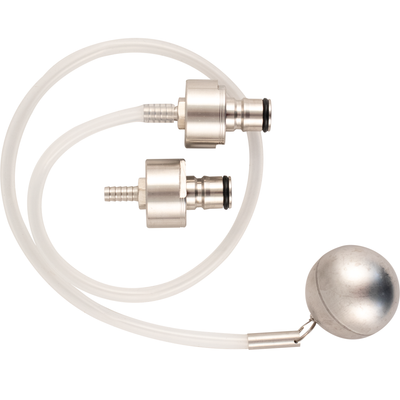
    This stainless 4" tri-clover ball lock lid is a direct replacement to the lid that comes on our kegmenters.  Installation Note: For best performance, ensure there is not an excess amount of slack when the silicone dip tube is installed and shorten it if needed. With the floating dip tube installed on your empty Kegmenter, you ideally want the dip tube to hang freely with just enough length for the end of the dup tube to touch the bottom of the keg.

    $60.99 $51.84

  • Spigot Wrench for VS Ported carboys Spigot Wrench for VS Ported carboys

    Spigot Wrench For Plastic Carboys

    9 reviews

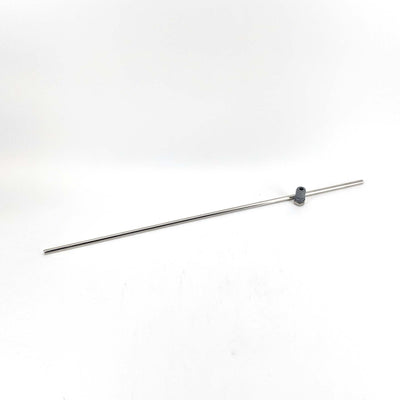
    The ported plastic carboys are pretty cool in that you can eliminate having to rack out of them.  However, you need this tool to attach the nut onto a plastic ported carboy from the inside.   The wrench has a specially molded hex nut to hold the 5/16 inch barbed (FE347) or 1/2 inch barbed (FE347A) spigot nut, and a long handle so you can reach to the bottom of the carboy. The spigot wrench can be reused, you only need it during the installation and/or removal of the spigots.

    $12.99

  • Low stock! BrewBuilt X-Series Uni Conical - Hop Bong Pressure Pack BrewBuilt X-Series Uni Conical - Hop Bong Pressure Pack

    BrewBuilt® X-Series Uni Conical | Hop Bong Pressure Pack | Oxygen-Free Dry Hopping Kit

    1 review

    Add dry hops without introducing oxygen to your fermenting or finished beer! Load hops into the Hop Bong, fill it with CO2 via the ball lock cap, and pull the PRV to release oxygen This is the perfect accessory to protect your finished beer from oxygen ingress when it's still in the fermenter 6 oz capacity per "hop drop"—easily repeat the process if you just gotta have More! Compatible with all BrewBuilt X-Series fermenters and any stainless conical with 1.5" T.C. top port The Hop Bong is a versatile pressurizable tri-clamp accessory that is perfect for purging oxygen from your dry hops before dropping them into your fermenter. Load up the Hop Bong, flush it with CO2, purge out oxygen with the handy PRV on top, then simply open the Butterfly Valve to inject your beer with a 6 oz payload of dry hops. This kit is specifically adapted for use with the BrewBuilt X-Series conical fermenters and can be used with any stainless fermenter with 1.5" tri-clamp top port. The 2" T.C. Hop Bong attaches to a stainless 2" butterfly valve that then connects to a 2" x 1.5" T.C. reducer. This allows the largest capacity Hop Bong to be used with any of the 1.5" T.C. accessory ports on the BrewBuilt Conical's lid. Hop Pellet Capacity: 150–180g (5.2–6.3 oz) Kit Includes: 2" Hop Bong Stainless Ball Lock Cap Red PRV & PCO1881 Cap Combo 2" BrewBuilt Butterfly Valve 2" x 1.5" Tri-Clamp Reducer (3) 2" Tri-Clamps (3) 2" T.C. Gaskets Warning: Always depressurize your system COMPLETELY before removing fittings from your fermenter.

    $229.99

  • Sale -15% Wort Aerator - Air Pump Kit Wort Aerator - Air Pump Kit

    Wort Aerator | Air Pump Kit | Aeration System w/ Filter & Diffusion Stone

    Aerate your wort automatically with this complete aeration system. Includes compact air pump, air filter, diffusion stone, and EVABarrier tubing. This aeration system diffuses oxygen into your wort using the air around you, so there's no need to buy pure oxygen cylinders again and again. The down side is that aeration takes longer than oxygenation. Because the atmosphere is only about 20% oxygen, the diffusion stone must be left running in the wort for approximately 30–120 minutes (but even 5 minutes of aeration is better than shaking the carboy). The sterile filter will prevent contamination during this period, but you will need to monitor the fermenter periodically for possible over foaming. To clean your stainless stone, we recommend boiling it for several minutes and storing it in a zip lock bag between uses. It can clog easily with the oil in your fingers, so use gloves when attaching it to the tubing. NOTE: You will need to use hot water to soften the 4 mm x 8 mm EVABarrier tubing when attaching the stone. Needle nose pliers can help to widen the tubing, if necessary. Hose clamps won't be required once it's attached. You will also need to cut a short piece of tubing to bridge the connection from the air pump to the air filter and the air filter to the diffusion stone. You do not want the air filter to get wet or be inserted into your fermenter, so keep the air filter close to the pump. The sanitary air filter can last up to 1 year, but should be replaced if there are any signs of discoloration. Includes: CE Air Pump 15 micron sintered stainless stone with barb 0.2 micron autoclavable air filter Approximately 5 ft. of EVABarrier tubing (4mm ID x 8mm OD) KegLand Part Number: KL03926

    $27.49 $23.37

  • 1 Gallon Glass Jar Fermenter Kit - Lug Finish - S-Shaped Airlock 1 Gallon Glass Jar Fermenter Kit - Lug Finish - S-Shaped Airlock

    Glass Jar Fermenter Kit | 1 Gallon | Lug Finish Metal Lid | Airlock

    1 review

    Perfect for fermenting small batches of beer, kombucha, wine, cider, mead, and more! Clear glass allows you to monitor fermentation activity as it happens Comes with a metal lid that won't crack like plastic and offers a much better seal Includes S-shaped airlock and airlock grommet This fermenter kit is great for those small one gallon batches. Whether you enjoy brewing small batches or want to test things on a small scale this is a great glass fermenter.  This is also a great fermentation setup for making homemade kombucha! This unit features a lug-finish glass jar with metal lid. Metal lids won't crack or break like plastic lids, and they provide a much better seal thanks to the thin foam liner underneath. Similar to mason jar lids, the metal lid will show signs of rust over time and need to be replaced, but this won't happen for some time with proper cleaning practices.  Includes: Glass 1 gallon jar Screw top lid with hole and airlock grommet S-Shaped airlock

    $12.99

  • Universal Stopper #10 - Solid - Each (Medium) Universal Stopper #10 - Solid - Each (Medium)

    Universal Rubber Stopper - Size #10 (Solid)

    2 reviews

    Universal stoppers have a longer taper to help produce a better fit and a snug seal, and a lip which prevents them from falling into your container. Available with a 3/8 inch hole for an airlock, or solid with no hole. #10 size is recommended for PET carboys.

    $3.99

  • 1 Gallon Glass Widemouth Jar - No Lid - Each (Lug Finish) 1 Gallon Glass Widemouth Jar - No Lid - Each (Lug Finish)

    Glass Fermentation Jar | 1 Gallon | No Lid | 100mm Lug Finish

    2 reviews

    Wide mouth jar for small batch fermentations or storing pickled food items Large 3.9" diameter opening 100-2055 Lug Finish neck (lid not included) 128 oz (1 Gal) capacity Widemouth glass jars are great for fermenting small batches of fruit wines, beer, vinegars, lacto fermented foods, and more. The 100 mm (3.9") wide opening is large enough to add product, and to reach your hand in for cleaning. Lids are not included, see our 100 mm lug finish metal lids: FE309A. 1 gallon widemouth jars are sold individually, and come packed 4 to a case. We suggest buying a case quantity of 4 to reduce the chance of breakage in transit. Please note: the example image shows a unit with continuous threads. These jars have a lug finish.

    $4.99

  • Sale -35% Stopper - #5.5 - With Hole

    Rubber Stopper - #5-1/2 With Hole

    #5 1/2 natural latex rubber stopper with 3/8 inch hole. Also called a size 5.5.   Size: 0.94 - 1.1 inches To create a solid stopper, simply use a #000 solid stopper (FE400) to plug the hole.

    $0.99 $0.64

  • 1/2 Gallon Flint/Clear Glass Jug with Handle - PLACEHOLDER

    Glass Jug w/ Screw Top Finish | Finger Grip Handle | Clear | 1/2 Gallon | 64 oz

    5 reviews

    Half gallon clear glass jug with finger handle molded into glass. Uses 38mm screw tops (sold separately). Bottle Specifications: Capacity: 64 fl Oz Height: 10.4 inches Outside Diameter: 4.8 inches Case QTY: 6 Pallet QTY:  54 cases

    $5.99 - $1,349.99

  • BrewBuilt® X3 Jacketed Uni Conical Fermenter BrewBuilt - X3 Jacketed Conical - PLACEHOLDER

    BrewBuilt® X3 Jacketed Uni Conical Fermenter

    3 reviews

    No Need to Upgrade Later, The X3 Comes Fully Loaded: Built-in external cooling jacket with 1.5" TC Ports Neoprene jacket for insulation Pressure Pack lid with floating dip tube, draft style QD connections for sampling/serving, and an extra 1.5" TC for hop bongs. The Clear Flex Chamber Bottom Dump allows you to see fermentation, collect and remove trub, and has added ports for purging, oxygenating, carbing and more... so flexible. Highest quality mirror polish finish inside and out Welded, ground and polished interior welds are the very highest quality and the ultimate for sanitation New Features: Professional 8” Tri-Clamp lid replaces the need for a complicated band clamp to attach the lid Four crossbar reinforced legs, that flare out, create the most stable base and more access to the front fittings and dump system Horizontal ports on the cone, just like pro tanks, allowing your racking arm, carbstone, and thermometer to have a horizontal placement in your tank. This allows for smaller minimum batch sizes, better carbonation, and more 3" oversized bottom port and Butterfly Valve with 3” tri-clamp Flex Chamber collection vessel The new X3 from BrewBuilt sets the new standard for quality. We guarantee that you will love the fit and finish of the X3 Uni Jacketed Conical. Made entirely of 304 stainless steel, with flawless welds and a dazzling mirror-polish finish inside and out that is simply the best. The BrewBuilt X3 Uni is easy to sanitize and even easier on the eyes. It is definitely Instagram worthy! #BrewBuilt External Cooling Jacket When it comes to temperature control for a homebrew conical fermenter the holy grail has been an external cooling jacket. Internal cooling coils have long been the answer and while they are simpler to make and relatively inexpensive, they are harder to clean and have issues cold crashing in warm environments. The BrewBuilt X3 Jacketed Conical offers maximum cooling power without any compromise of sanitation. 8” Tri-Clamp Top Port New to the X3, the 8” Tri-Clamp lid is rock solid and easy to use. The 8” opening allows plenty of space to still get in and clean the inside of the conical by hand if desired. A unique 8”, three-piece, tri-clamp is used to make sealing the top very easy and very secure. Extra Large 3” T.C. Dump Valve The largest in the industry. Dry hop to your heart's desire. Try as they might, hopheads will have a hard time clogging this conical. With an oversized 3" bottom port, you’ll have all the clearance you need (and even more than some pro brewers) to drop out your dry hop additions with ease. The slick mirror-polish finish on the inside allows flocculating yeast to collect neatly at the bottom of the cone as they slide right down the smooth interior walls. The butterfly dump valve integrates perfectly with the optional Flex Chamber Collection Jar and Yeast Harvester. Reinforced Four-Leg Foundation There’s a common complaint about the tippiness of three-legged units. Three legs may be fine when the fermenter is sitting still on an even surface, but users are often forced to purchase a bracing shelf for more stability if they add casters or leg extensions. A conical is only as worthy as its foundation, so BrewBuilt modeled the X3 after professional-level brewery tanks with a four-leg, reinforced base. This seemingly small design feature is more expensive to produce, but it's what makes the X3 conical exceedingly stable when compared to other models. When you fill up your fermenter with delicious fresh wort, you want to trust the vessel that’s holding your latest creation. Brewers shouted from the mountaintops that they wanted stronger, sturdier legs right out of the box that doesn’t require an additional bracing shelf. The four-leg, welded-bar reinforced system is absolutely rock solid. This is an especially critical feature if you plan to add rolling casters so you can easily glide the fermenter around your brewery. The reinforced four-leg design not only increased the stability and strength of the conical but also allows the unit to stand taller, thereby eliminating the need for extensions in almost every situation. An elbow, a sight glass, or the Flex Chamber can be mounted under the unit with room to spare. Adjustable Feet The X3 Jacketed Conical comes standard with reinforced thread-in adjustable feet. If your home brewery has uneven flooring, you can quickly and easily level out the fermenter. The feet can be swapped out with high-quality casters at any time. Flex Chamber Collection Jar - Trub Separator & Yeast Harvester Working in collaboration with KegLand, we developed the pressurizable Flex Chamber Collection Jar. It attaches directly to the butterfly dump valve and can be used for removing trub, harvesting yeast, and many other tasks. Since it's made from crystal clear Triton, you'll be able to visually monitor fermentation activity just as you would with a sight glass. Ball lock adapters can be attached to the threaded ports on either side, allowing you to connect oxygenation or carbonation stones, or flush the Flex Chamber with CO2 and use it to inject hops or other ingredients into your conical. Also, a great option for storing yeast! Simply attach a 3" T.C. end cap or PRV and store your harvested yeast in the fridge for your next fermentation. Pressure Pack with Clear Float Technology Adding pressure capability will allow you to ferment, carbonate, and even serve all in one vessel. The Pressure Pack features the unique Clear Float Technology racking tube that can be used for taking samples, transferring to keg, or serving finished beer. This innovative feature draws beer from the top down, which means you’re always pulling the clearest, most sediment-free beer possible. Using pressure to draw a sample from the floating dip tube will also eliminate the tiny bit of oxygen that would be injected into your beer every time the traditional sample valve is opened. Pressure transferring from fermenter to keg is the best way to protect your beer from oxygen when it’s at its most vulnerable state. Kegging could be considered the final hurdle in the brewing process, where limiting oxygen exposure is critical. This could mean the difference between your beer tasting great for months or tasting great for a week. Don’t take any chances. Use the Pressure Pack to keg from the top down and leave sediment behind. Other Features You’ll Love: Downward-facing Blowoff U Barb prevents blow off tubing from kinking and is much easier to remove and clean than a fixed stainless blow off Stainless steel lid clamp with single-piece molded silicone gasket In our GEN 3 redesign, we've added two more 1.5" T.C. ports to the cone and body for additional flexibility with current and upcoming product add-ons X3 Accessories: BrewBuilt Kit for Fermenting Under Pressure (Required to ferment or seal/cap an X3 with an active fermentation) The Pressure Relief Valve (PRV) that comes with the conical is not sufficient for fermentation as it can become clogged with Krausen. To ferment or seal/cap an active fermentation requires the use and safety of the Pressure Fermentation Kit. This no-compromises kit includes the same hardware you will find on a commercial unitank, including a dedicated pro level spunding valve, a sealed pressure gauge, and a dedicated commercial PRV. Read more about these key hardware features in the kit copy. Also included is liquid Foam-Axe which helps reduce Krausen. Please read and follow all special instructions that come with the kit as well as your instruction manual. Hop Bong Oxygen-Free Dry Hopping Device The Hop Bong is a versatile pressurizable tri-clamp accessory that is perfect for purging oxygen from your dry hops before dropping them into your fermenter. Load up the Hop Bong, flush it with CO2, purge out oxygen with the handy PRV on top, then simply open the Butterfly Valve to inject your beer with a 6 oz payload of dry hops. High Roller Caster Set Go mobile with this heavy-duty caster set. Your fermenter moves around the brewery a lot, so why not give it some glide? Roll from sanitizing to kettle transfer to keg transfer to cleaning with minimal effort. Moving a stainless conical around can be taxing. Give your back a break and upgrade your conical with a set of rolling casters. IceMaster Max 2 Built to pair perfectly with the IceMaster Max 2 glycol chiller. Easily and efficiently control your fermentation temperature and cold crash for conditioning and clarifying. Pair with our BrewBuilt Insulated Tubing Kit that comes complete with premium quick disconnects with shutoff valves that provide a “dry break” when they’re disconnected. Immersion Heater The X3's cone features a 2" tri-clamp port specifically for installing an Immersion Heater. The low watt density heating element gently warms your fermenting beer without scorching. A must-have for brewers living in colder climates or if you want the peace of mind that your temperature will never drop too low for your ale or kveik strains regardless of the time of year. Full List of X3 Conical Features: External Cooling Jacket with 1.5" Tri-Clamp connections Pressure Pack with Clear Float, a floating dip tube that draws beer from the top down. Flex Chamber Collection Jar, a clear, pressure capable bottom jar that allows you to see fermentation, remove trub, and connect additional accessories Neoprene insulation sleeve Wide base with 4 legs for stability 304 stainless steel construction Mirror polish finish Interior welds are the best in the business - uniquely ground and polished (1) 2“ TC port for direct immersion heaters (3) Horizontal welded cone ports (1) 8" Lid Cap Opening with 8” TC Clamp (5) 1.5" TC Lid Openings 3" TC bottom dump with 3" TC butterfly valve 1.5" Thermowell for inserting thermal probe (4) Adjustable feet Silicone tube for blow off Stainless 8” Three Piece Tri Clamp & one piece molded gasket Built-in 15 psi PRV (Not sufficient for fermentation - optional Pressure Fermentation Kit required for pressure fermentations) For volume and dimensional specs, Download the PDF. Installation Note: The Pressure Pack's Clear Float floating dip tube is sized to fit all models of the BrewBuilt Conical. Depending on the size of your fermenter, you may need to shorten the silicone tube for better performance. When installed on your empty fermenter, you ideally want the dip tube to hang freely with just enough length for the end of the dip tube to touch the bottom of the tank.

    $1,249.99 - $1,999.99

  • Italian Glass Carboy (3 Gallon)

    Italian Glass Carboy | Fermenter | Narrow Mouth | 11.3L | 3 Gallon

    Made in Italy, these are premium glass carboys are set apart from others because the glass has a more uniform thickness with less inclusions. Inclusions, or internal defects, occur when the glass is not cooled slowly over a longer period of time. This 3-gallon size works great for splitting up batches, making mead, and topping off wine. Our top recommendation for glass carboys.  Fits a #6.5 rubber stopper.  It can also accommodate a #6 rubber stopper or a #6–7 universal stopper/medium carboy hood. Specifications: Weight: 9.0 lbs Dimensions: 17.0"H x 9.5"W x 9.5"D Made in Italy

    $43.99

  • Kegmenter - 58 L (4 in T.C. Lid w/ Ball Lock Posts, Floating Dip Tube) Kegmenter - 58 L (4 in T.C. Lid w/ Ball Lock Posts, Floating Dip Tube)

    Kegmenter Fermentation Keg - 15.3 gal.

    7 reviews

    Want an easy-to-use, stainless vessel that ferments and carbonates? This 58L/15.3 Gallon keg has been modified to allow you to do both! The top is fitted with a large 4 inch tri-clamp lid with two ball lock posts and a pressure relief valve. You can use this vessel to ferment, carbonate, serve, or push the beer through a filter. The posts are recessed which allows you to stack these kegs up to 4 high. A 4" T.C. end cap with pre drilled hole is also available (H691), which can be paired with a #3 stopper and airlock. Also consider the Kegmenter Hop Bong Pressure Pack which allows for oxygen-free dry hopping and also features ball lock posts for Gas & Liquid. Depending on how long it will take to consume the finished beer, we recommend using two kegmenters, one for fermentation and one for carbonating and serving. After fermentation, there will be a large trub cake at the bottom of the vessel. Leaving finished beer on the trub for too long (2-3 weeks) may eventually lead to off-flavors. Check out our ball lock jumper line (KEG575) to easily transfer from one kegmenter to the other. Also consider our beer filter kit (FIL40), which will allow you to filter the beer during transfer. Features: Rated up to 2.5 BAR (36 psi) 4" T.C. lid with ball lock posts Floating dip tube Stainless steel 1.8 mm thick Use: As a stainless steel fermenter that is easy to clean Great choice for 10 gallon fermentations Easy to pressurize the kegmenter after fermentation to push through a filter and into another keg Fermenting under pressure, allowing CO2 to exit via the relief valve, reduces esters and fusel alcohol production allowing you to ferment at warmer temperatures Distillation - with the addition of a T.C. reducer and condenser (H701 / DS120 / DS130) As a cellar keg for topping up barrels   Warning: Always depressurize keg before removing lid. Does not come with spunding valve show in example photo. See FIL42A. Kegland Part number: KL04572

    $364.99

  • Sale -35% 30 Watt Fermentation Heating Belt 30 Watt Fermentation Heating Belt

    Heating Belt Fermentation Heater

    2 reviews

    This 30W Heating Belt will gently warm your fermenter without creating major hot spots. Heating belts are often chosen over heating pads for the simplicity of adjusting the height of the belt on your fermenter to increase or decrease the heat transfer. And they're especially useful for smaller vessels where a heating pad would be simply too large. For the best results, pair the Heating Belt with a temperature controller so that heating is only provided when your fermentation drops below your set point. If you're using a fermentation chamber or other form of chilling, the temperature controller will be able to switch between heating and cooling as needed. Comes with a standard 2-prong US style 110V plug. Please disregard the example photo that shows an AU style plug. KegLand Part Number: KL01953

    $21.99 $14.29

  • MiniMesh - Mesh Strainer for Vintage Shop Plastic Carboy MiniMesh - Mesh Strainer for Vintage Shop Plastic Carboy

    MiniMesh Strainer for Vintage Shop PET Carboys & FerMonsters

    1 review

    The MiniMesh is perfect for adding dry hops to your beer! Keep your dry hopping on a precise schedule by adding them to this mesh sleeve inside the PET Carboy, then easily pull them out after the desired contact time. This mesh sleeve is custom made for the Vintage Shop PET Carboy. The plastic ring sits inside the neck of the fermenter with room for a #10 stopper to be inserted for an airtight seal. The ring actually holds onto the neck of the carboy so there's no risk of the mesh sleeve falling into the carboy. Made from food grade materials, the #50 mesh will not affect the flavor of the beer or wine, and is temperature rated to 122°F. Designed for multiple uses, the MiniMesh can be cleaned in the dishwasher and sanitized with the sanitizer of your choice. For FerMonster users, the MiniMesh and MonsterMesh can be used simultaneously. The MonsterMesh will sit on the neck of the carboy, and the MiniMesh can be inserted through the stopper hole in the lid. This way you can have two different infusions starting or stopping at different times.

    $7.69

  • Sale -15% Dual Gauge Oxygen Regulator - For Disposable Tanks Dual Gauge Oxygen Regulator - For Disposable Tanks

    Dual Gauge Oxygen Regulator for Disposable Tanks

    Infusing your wort with pure oxygen immediately before pitching yeast is the best way to get your fermentation started faster and finished cleaner. This dual gauge oxygen regulator is compatible with standard disposable O2 tanks and provides a higher level of control when pumping oxygen into your wort. Using the adjustment knob, you can dial in the psi of the gas leaving the tank, leading to more consistent results. We recommend oxygenating wort using a 0.5 micron diffusion stone. Instructions:  Attach the regulator to your oxygen tank Turn the pressure up to 10-20 psi Immerse diffusion stone in wort for 1-2 minutes Please note: your wort must be chilled to yeast pitching temperature before adding oxygen. It is much more difficult for oxygen to dissolve into solution when the wort is still warm. Kegland Part number: KL02165

    $43.99 $37.39

  • Silicone Airlock for Mason Jars Silicone Airlock for Mason Jars

    Silicone Fermentation Airlock for Mason Jars

    2 reviews

    Perfect for mason jar food fermentations. The one-way silicone airlock allows gas from fermentation activity to escape without letting oxygen in. No need to burp the jar or mess with water-filled cup airlocks. Fits most wide-mouth mason jars, and can be used with the standard metal locking ring for the lid.  

    $3.99

  • Airlock - Compact Medium (2 Piece)

    Compact Airlock - 2 Piece | For Fermentations up to 13 Gallons

    3 reviews

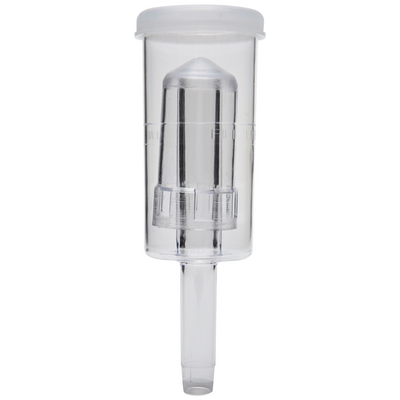
    Our mini and medium 2-piece airlocks are a great option when a single inch could make or break fitting your carboy into a fermentation chamber. The airlock breaks down into 2-pieces for easy cleaning. Instead of a floating center piece, like standard 3-piece airlocks, the center piece is molded into the lid. One less piece to clean and misplace! Another cool feature of this 2-piece airlock is that 1/2" ID tubing will fit onto the center post for use as a blowoff.  This can be handy if you have a really active ferment that is blowing out the top of your fermenter. Holds approximately 0.67 fl oz (20 ml) Chamber - 1-5/8" tall x 1-3/4" diameter Stem - 1-1/4" long Stopper not included

    $2.79

  • FermZilla Tri-Conical - Butterfly Valve - 2 in. x 2 in. T.C. FermZilla Tri-Conical - Butterfly Valve - 2 in. x 2 in. T.C.

    FermZilla Tri-Conical Butterfly Valve - 2 in. x 2 in. T.C.

    Due to high demand, this item is currently out of stock. Be the first to receive your items by placing a pre-order today. We will automatically ship this to you when we receive more inventory. Compatible with the 27L and 55L FermZilla Tri-Conical Series or any 2" T.C. fittings. Primarily designed to be used with the FermZilla T.C. Pressure Lid and 2" Hop Bong for oxygen-free dry hopping. If you're planning on putting your FermZilla Tri-Conical or All Rounder in a Fermentation Chamber, you will want to allow for 420 mm (16.5") of clearance measured from the base of the ring collar to a comfortable level below the chamber ceiling so you can pull the PRV to purge oxygen from the hop bong. KegLand Part Number: KL27564

    $43.99

  • 1 Gallon Glass Widemouth Jar - No Lid - Each

    Glass Fermentation Jar | 1 Gallon | No Lid | 110mm Continuous Thread

    4 reviews

    Wide mouth jar for small batch fermentations or storing pickled food items Large 4.3" diameter opening 110 mm continuous thread neck (lid not included) 128 oz (1 Gal) capacity Widemouth glass jars are great for fermenting small batches of fruit wines, beer, vinegars, lacto fermented foods, and more. The 110 mm (4-3/8") wide opening is large enough to add product, and to reach your hand in for cleaning. Lids are not included, see our 110 mm plastic lid: JAR01A. 1 gallon widemouth jars are sold individually, and come packed 4 to a case.  We suggest buying a case quantity of 4 to reduce the chance of breakage in transit.  

    $7.99

  • Carboy Cleaner - Replacement Pads

    The Carboy Cleaner - Replacement Pads

    6 reviews

    You love your Carboy Cleaner so much that you’ve worn out the cleaning pads!   A set of replacement pads and washers for The Carboy Cleaner™. The ease and convenience of the Carboy Cleaner can’t be overstated. After you’ve used it to clean enough carboys and kegs, you will need to replace the cleaning pads.   Set of 2 replacement pads and 4 washers for The Carboy Cleaner™.

    $13.99

  • Sale -35% Mini Gauge for Duotight In-Line Regulator & Blowtie G2 - 0-60 psi

    Mini Pressure Gauge (0-60 psi)

    This mini pressure gauge is compatible with the BlowTie 2 spunding valve, Duotight in-line regulator, and KegLand mini regulator. We recommend using the gauge with a range closest to your desired pressure setting. If you'd prefer a digital instant read gauge, check out the Digital Mini Pressure Gauge (for gas applications only). Pressure Range: 0-60 psi (0-4 bar) Body Dimensions: 26mm x 26mm x 15mm Probe Diameter: 8mm WARNING: Do not exceed gauge pressure. Exceeding the pressure range will damage the gauge. Kegland Part number: KL15004

    $7.69 $5.00

  • CoolStix 3-Hole Silicone Stopper - #10 CoolStix 3-Hole Silicone Stopper - #10

    BrewBuilt® CoolStix™ Stopper for Fermonster & PET Carboys

    4 reviews

    Please note: This stopper was designed for use with the BrewBuilt CoolStix which has been discontinued. Two of the holes are for an airlock and thermowell, but the third 1/2" hole was intended for the CoolStix and you will need to plug it or utilize it how you see fit. This #10 3-hole silicone stopper is used alongside the BrewBuilt CoolStix for Carboys. The holes are for a 1/2" CoolStix, an airlock, and a thermowell. The holes measure 0.500", 0.413", & 0.375" Compatible with Fermonsters and our Plastic PET Carboys listed below under "You Might Also Need".

    $8.79

  • Push In Pressure Gauge - 8mm 5/16 in (0-15 psi) Push In Pressure Gauge - 8mm 5/16 in (0-15 psi)

    Push-In Pressure Gauge (0-15 psi)

    The Push-In Pressure Gauge is the ideal companion for the BlowTie spunding valve (FE960). It comes with an 8 mm (5/16 in.) barb, specifically designed to be compatible with 8 mm Duotight fittings. By pairing this pressure gauge with the BlowTie, you'll be able to easily set your blow off pressure when using the BlowTie for pressure fermentations or pressure transfers. The dial face is triple-scaled to read in psi, bar, and kPa. 8 mm (5/16") push-in barb Rubber coated to protect gauge 0-15 psi / 0-1.0 bar / 0-100 kPa Kegland Part number: KL14186

    $9.89

  • Blichmann Spunding Valve - T.C. Blichmann Spunding Valve - T.C.

    Blichmann Spunding Valve - Tri-Clamp

    5 reviews

    The Blichmann Engineering™ Spunding Valve is purpose-built for pressure fermentation. With exacting precision, you’ll turn out lager-like beer at ale temperatures in no time! Pressurized fermentation is a great option for creating lager-like flavor profiles at room temperature, without the hassle of temperature control. And you’ll complete your fermentations faster and easier. The Blichmann Engineering™ Spunding Valve is purpose built for homebrewers to control your pressures with exacting precision. Research by Blichmann Engineering™ and White Labs shows significant reduction of esters (fruity flavors found in most ales) and low levels of diacetyl, by fermenting under pressure. Key Features: Ferment under pressure to produce clean, low ester, lager-like beers Extremely fine adjustments from 0 to 35 psi, and superb pressure stability Suitable for vessels up to 42 gal (1BBL batch size) Perfect for naturally carbonating your beers Use for counter-pressure transfers Offered in ½” NPT and Tri-clamp models for the ultimate in adaptability Integral blow-off barb fitting adds a visual indication of fermentation if desired Tri-Clamp model is ideal for most pressure fermentors with T.C. fittings Also available in NPT model (BL151)

    $103.49

  • Rubber Stopper - #6.5 Solid

    Rubber Stopper - #6.5 Solid

    2 reviews

    #6.5 stopper - solid. Top diameter 1.34 inches (34 mm), bottom diameter 1.06 inches (27 mm), length 1 inch (25 mm). BPA-free stopper made of food grade materials. Injection molded TPE for superior consistency throughout. Perfect for use with carboys, as the material sticks well to glass and PET, even when wet. Max. Temperature Rating: 158 °F (70 °C).

    $1.99

  • Plastic Carboy - 3 Gallon - Vintage Shop (Solid)

    Plastic PET Carboy - 3 Gallon

    3 reviews

    Your days of lugging heavy glass carboys around are over thanks to these plastic carboys! Our Plastic Carboys are made from 100% Virgin PET plastic, which is far more resistant to oxygen than regular plastic. They’re much lighter and safer than glass, which is good if you need to move your fermenter around the house to find the right temperature. Full carboys can be heavy and hard to maneuver and glass can break resulting in possible injury. In addition to being safer to handle, they’re more economical than glass as well. With no ribs on the sides, there’s no place for yeast and sediment to collect, making cleaning a breeze. We suggest cleaning them with an overnight PBW soak, shake, rinse, and sanitize. You’ll want to avoid vigorous scrubbing during cleaning to avoid scratches.   Two special features we love about our PET Carboys are the punted base and extra head space. The punted base makes the carboy easier to hold while carrying or pouring, and prevents sediment disturbance during transfers. The extra head space is a huge plus to make sure you have enough room for when your fermentation gets going.   Specifications: Uses a #10 stopper or a 5 Gallon Carboy Hood. Weighs 1.0 lbs Rated to 140 degrees F Height: 16 inches Diameter: 9 inches Completely taste and odor free  Carboys can withstand up to 15 psi of pressure with no deformation Punted base to prevent sediment disturbances during transfer    

    $28.99

  • The OxyWand Oxygenation Kit (2 Micron) The OxyWand Oxygenation Kit (2 Micron)

    The OxyWand™ Oxygenation Kit - 2 Micron

    2 reviews

    Oxygenate your wort like the pros with the OxyWand Oxygenation kit! Insert the oxygenation wand into your fermenter and pump in thousands of microscopic oxygen bubbles for 1-2 minutes to improve the health of your yeast. Healthy yeast produce amazing flavors and have the stamina to completely finish fermentation.  That is not the only reason yeast love the OxyWand™.  Yeast hate to compete with bacteria and you hate to drink them.  Sintered stainless stones are made of tightly compressed stainless steel powder to create a porous block through which oxygen can flow. This micro maze is also the perfect environment for bacteria to live in after the stone has been used once in wort. That is why we love to boil our stones prior to use.  The stone on the OxyWand™ is connected via a 1/4" flare fitting and can easily be removed and cleaned after use and then boiled before your next brew day.   This OxyWand™ Oxygenation kit comes complete with adjustable brass oxygen regulator, Sanitary air filter, 4 ft of tubing, Instructions, and a 26" long 2 Micron OxyWand™. The advantage of using compressed oxygen to oxygenate is speed - you can oxygenate your wort in a couple minutes as opposed to 30-120 minutes with aeration. The 2 micron stone has the advantage of being less prone to clogging due to its larger pores. We recommend 2 minutes of oxygenation with the 2 micron stone (for mid to low gravity wort).

    $59.99

  • Rubber Hood - Fit 3, 5 & 6 Gallon Carboy

    Rubber Carboy Hood

    6 reviews

    A great carboy hood for a real snug fit. Fits our 3, 5, and 6 gallon glass carboys. Will also fit over our 5 and 6 gallon plastic carboys. Ideal to use if you have a real active fermentation. Add 3' of 1/2" racking tubing to your 3-piece airlock. Take out the bubbler piece to assemble into a blow-off setup.

    $4.99

  • GrainFather Conical - Pro Edition

    Grainfather GF30 Conical Fermenter | 7 gal.

    5 reviews

    PLEASE NOTE: The supplier of this product has temporarily halted shipments to addresses within the state of California. If you are a CA resident, please note your order will not be fulfilled and will ultimately be canceled. We hope to have this issue resolved with the supplier as soon as possible. The Grainfather GF30 Conical Fermenter has built-in wireless control, so you can control and monitor fermentation from anywhere!  The GF30 Conical Fermenter gives brewers more flexibility and freedom during fermentation than ever before! Connect the built-in wireless controller to the internet and the Grainfather App, add fermentation tracking devices and control/monitor fermentation from anywhere!   The GF30 Conical Fermenter allows you to dump yeast, take samples and transfer your wort via our innovative, dual function, valve design. Partner it with the Grainfather GC4 Glycol Chiller and get full control over the heating and cooling of your unit. Features: Double Walled: A stainless steel double walled skin is filled with a thick layer of polyurethane foam for insulation. This is what keeps the wort at a constant stable temperature with minimal influence from any external environmental temperature changes, providing insulation for your fermentation that a standard jacket cannot achieve. Integrated Gentle Heating: In the cavity of the fermenter between the outer body and cone sits a 30 Watt, 12V heating element. Unlike standard heating elements/sources that directly heat the liquid, this heat source is designed to heat the environment in between the walls of the fermenter, which in turn heats the liquid. It is similar to controlling the temperature in a temperature-controlled room. The fermenter acts as an artificial environment that can be heated, meaning the temperature is raised in an even and controlled manner which is much better for the yeast.  Integrated Cooling Sleeve: In between the two stainless steel walls sits a cooling sleeve (also made of stainless steel). This cooling sleeve is welded onto the inner wall of the fermenter and can be hooked up to the additionally purchased Glycol Chiller. Temperature is dialed into the Temperature Controller and as the cooling liquid travels through this sleeve, it cools the stainless steel which in turn evenly cools the beer in the fermenter. The cooling sleeve never comes into contact with the beer, it is completely concealed, built into the fermenter, and never needs cleaning or sanitizing - a true innovation for a fermenter of this scale. Easy Access to the Interior for Hassle-Free Cleaning: The Grainfather Conical Fermenter has a smooth interior with no additions such as cooling coils or additional sampling valves meaning it is easy to clean and minimizes the risk of infection. Golden Angle Conical: The conical shape of the fermenter is typical for professional breweries. Our conical has been designed with the 'Golden Angle' of 60º. This is the optimum angle for yeast and sediment to drop down to the bottom of the cone without getting stuck to the sides, allowing you to transfer from above the sediment line, resulting in clearer beer. The conical shape also allows for better mixing during fermentation due to the path of convention currents that it enables to occur.  Dual Valve Tap: Make the yeast dumping, transferring and sampling process more professional with this innovative all in one valve. Sampling and transferring is done through an inlet above the sediment line, allowing for clear, sediment-free beer. Easily collect your yeast from below the sediment line with the same unique valve for recultivating and pitching. The innovative design of the valve allows for this dual functionality and less cleaning for you. Support: The Grainfather Conical Fermenter is fully supported around the world by a fantastic support team who love brewing just as much as you do. Our support team is here for any technical inquiries on brewing or how the Conical Fermenter works, as well as general customer service inquiries. All Grainfather Conical Fermenters come with a 24-month warranty. Includes: Conical Fermenter  Fermenter Lid Rubber Bung Bubbler Airlock Cone Plug Cone Plug Seal 5 cm (2") Tri-Clamp Digital Temperature Display Power Adapter and Wall Plug 2 m (6.5 ft) M12 3-Pin Power Cord Dual Valve Tap Wi-Fi Capable Wireless Temperature Controller Specifications: 304 Stainless Steel Body (polished inner and brushed outer) 30 L (8 US Gal) capacity (volume markings on inner body up to 25 L (7 US Gal) 30 W, 12 V heating power 3.8 cm (1.5") ferrule on lid (for pressure transfer attachments) 5 cm (2") ferrule on bottom of cone Dual Valve Tap with 110 mm (4.3") inlet Dimensions of the GF30 Conical Fermenter:  Diameter with handles: 360 mm (14.17") Height (without airlock): 910 mm (35.82") Height with bubbler airlock: 1090 mm (42.91")  

    $694.98

  • Low stock! Thermowell - 15" Long w/ Hood for Smooth Neck Carboys

    Hood Thermowell For Smooth Neck Carboys - 15 in.

    5 reviews

    This carboy thermowell is used in conjunction with a Digital Controller, FE601, FE601A, FE602, or FE611, to more accurately regulate internal temperature during fermentation. It is exceptionally useful during the start of fermentation when the lag between ambient temperature in the refrigerator and actual temperature in the carboy can vary greatly. Now you can keep your beer or wine within one degree of the set point on your digital controller. Designed to fit 3, 5,6, and 6.5 gallon glass smooth neck carboys, as well as 5 and 6 gallon plastic carboys, the unit comes with a 15" stainless steel thermowell and a carboy hood that will accommodate a standard airlock or 1/2 inch blow off tubing. Will not work with the Analog Johnson Temperature Controller (FE600) because the probe is too large.  This unit has been redesigned to work with 2016 Ranco Probes. TIP: Carboy hoods are exceptionally useful for blowoff tubes. Just add 3' of 1/2" racking tubing into a bucket of water as your airlock. Inner Diameter of Thermowell: Slightly larger than 1/4"

    $29.99

  • Sale -35% Kegland - 0.2 Micron Air Filter - Airlock or Aeration Kegland - 0.2 Micron Air Filter - Airlock or Aeration

    Compact Sanitary Filter

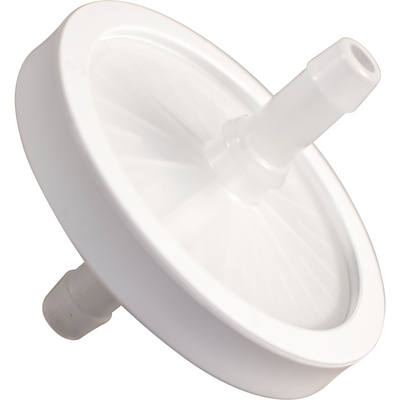
    These 0.2 Micron Air Filters have a fine enough filter membrane that they can filter out microbes and bacteria. They can be used with any oil free air compressor such as a pond pump, or other type of pump. They can also be used as an airlock in the top of your fermenter or used to filter air going back into a cask when dispensing real ale.  This filter is not suitable for liquids and should be discarded if it gets wet. Compatible with 4 mm ID EVABarrier tubing. You will need to heat up the tubing and use needle nose pliars to widen the inner diameter. No hose clamp required. Specs: 0.2 Micron Pore Size PE Membrane Suitable for 3/16" ID tubing KegLand Part Number: KL08587    

    $4.39 $2.85

  • Johnson A421 Digital Temperature Controller (Wired)

    Johnson Digital Temperature Controller - Wired

    7 reviews

    The Johnson digital temperature controller is used to control the temperature of a refrigerator, or similar cooling or heating device. Enter your desired temperature, called set point, and how tightly you want your temperature maintained, called differential, and let the controller do the rest. Ranco Vrs. Johnson  This Johnson digital temperature controller is very similar to our popular Ranco brand controller (FE610) in application and appearance. The advantage of the Ranco is being able to switch between cooling and and heating from the digital interface, while with the Johnson you have to take the cover off and physically remove a jumper. The advantage of the Johnson is the very attractive price. For technical aficionados the Johnson does have a feature called Anti-Short Cycle Delay. Cycling is the rapid turning off and on of an electrical device. Over time cycling can harm your appliance. The Johnson controller allows you to set a time interval, in minutes, that keeps the controller from turning on right after it shuts off no matter what the temperature reading is. This can be very useful when you are using a 1 degree of differential setting for tight control but want your compressor or power supply to have a minimum time period of rest before it turns back on. Temperature Range of -40 to 212F.

    $169.99

  • TC Pressure Relief Valve w/ Pressure Gauge - 1.5 in. T.C. TC Pressure Relief Valve w/ Pressure Gauge - 1.5 in. T.C.

    Tri-Clamp Pressure Relief Valve - 1.5 in.

    1 review

    Use this tri-clamp gauge with adjustable PRV to read and release pressure. 1.5 tri-clamp Gauge reads from 0-15 psi Hand adjustable PRV  

    $54.99

  • Rubber Stopper - #9.5 With Hole

    Rubber Stopper - #9.5 With Hole

    1 review

    #9.5 stopper - with 3/8 inch hole. Top diameter 1.8 inches (46 mm), bottom diameter 1.5 inches (38 mm), length 1 inch (25 mm). BPA-free stopper made of food grade materials. Injection molded TPE for superior consistency throughout. Perfect for use with carboys, as the material sticks well to glass and PET, even when wet. To create a solid stopper, simply use a #000 solid stopper (FE400) to plug the hole. Max. Temperature Rating: 158 °F (70 °C).

    $3.49

  • The Barrel Bubbler - Small

    Barrel Airlock

    1 review

    An oversized airlock, designed to keep your barrels safe. This will fit bung holes w/ openings from 1.5 - 2 in.  

    $14.49

  • Farro Glass - Wide Mouth Glass Carboy - Replacement Lid Farro Glass - Wide Mouth Glass Carboy - Replacement Lid

    Farro Glass Wide Mouth Glass Carboys | Replacement Lid

    1 review

    Replacement lid for Farro Glass wide mouth glass carboys. Screw cap covers a 1" hole which will accept a #5 stopper for installing an airlock. Made from polypropylene.

    $4.99

  • Sale -15% Stainless Ball Valve - PCO 1881 x 3/4 in. Female BSP Stainless Ball Valve - PCO 1881 x 3/4 in. Female BSP

    Stainless Ball Valve for FermZilla - PCO 1881 x 3/4 in. Female BSP

    This stainless ball valve has a PCO 1881 female thread on one side for attaching to the male thread on the FermZilla lid or collection container and a 3/4" BSP Female thread on the other side for attaching other fittings. The 20mm bore (approx.) makes it possible to perform low oxygen dry hopping through the ball valve.  

    $17.99 $15.29

  • Stopper - #2 Solid Stopper - #2 Solid

    Rubber Stopper - #2 Solid

    #2 natural latex rubber stopper - solid. Top diameter 20 mm, bottom diameter 16 mm, length 25 mm. 67 stoppers per pound.

    $0.79

  • BrewZilla Ultimate Grain to Glass Combo Pack - 35L Gen 4.1 BrewZilla 110V - 27L FermZilla Tri-Conical Easy-Grip

    BrewZilla Ultimate Grain to Glass Combo Pack | Gen 4.1 BrewZilla All Grain Brewing System (110V) | WiFi/Bluetooth/RAPT Enabled | Neoprene Jacket & Hop Spider Included | FermZilla Tri-Conical Fermenter | Pressure Kit & Blowtie 2 Spunding Valve Included

    The Ultimate Grain to Glass Combo Pack! Get the Gen 4 BrewZilla & FermZilla Easy-Grip Tri-Conical with all the best accessories at an unbeatable price! Brew extract or all grain batches on the BrewZilla; ferment, carbonate, and serve from the FermZilla. Everything you need from Grain to Glass! Comes with all of the most highly recommended accessories for the BrewZilla, including the Neoprene Jacket to speed up heating times, Hop Spider to keep vegetal matter out of your wort, and Chilling Connection kit so you're ready to use the Immersion Chiller out of the box Includes some of our favorite accessories for the FermZilla, such as the Pressure Kit with Floating Dip Tube so you're always racking the clearest beer and the Duotight BlowTie 2 for pressure fermentations and flow control keg transfers Over $100 savings when purchasing this kit bundle compared to buying everything piece-by-piece! Also available in 220V (AG582) You can search high and low, but you won't find a better deal than the BrewZilla Ultimate Grain to Glass Combo Pack! Combo Pack Includes: BrewZilla Brewing System | Gen 4.1 | 9.25G | 110V Neoprene Jacket Hop Spider Wort Chiller Connection Kit FermZilla Tri-Conical Fermenter | Gen 3.2 | 7.1G Plastic Pressure Kit w/ Floating Dip Tube Duotight BlowTie 2 Spunding Valve Insulating Jacket Gen 4 BrewZilla All-in-One Brewing System WiFi / Bluetooth enabled RAPT Controller tracks your brewday and automatically uploads detailed information to the RAPT portal The top mounted RAPT Controller can be tilted upward for easy viewing, or detached from the unit to mount it on the wall or placed on your bench Mirror polished dome shaped bottom with center drain — get every last bit of wort into your fermenter while the perforated bottom screen filters out 95% of hot break and hop matter Make larger batches or higher gravity beers! BrewZilla offers the largest malt pipe capacity for units in its size range, and the Gen 4 unit has a 30% larger malt pipe compared to the previous generation Perforated bottom on the newly designed malt pipe allows for improved mash recirculation flow without sacrificing efficiency Element power percentage can be adjusted via the RAPT Controller. Go full power to heat up quickly, or dial it down so you don’t overshoot your strike water temp The built-in pump is plumbed to both the recirculation and arm and the bottom ball valve. Recirculate wort during your mash, then close the recirculation valve and pump wort to your fermenter via the bottom valve Pair with the RAPT-enabled Bluetooth Thermometer, allowing your BrewZilla to calculate a core mash temperature reading and more accurately control temperatures and mash steps More RAPT-enabled accessories are coming, and future firmware updates can be downloaded to the RAPT Controller itself over the internet WiFi/Bluetooth Enabled RAPT Controller The RAPT Controller is mounted to the top of the boiler body, allowing for easy operation when you have the unit set on the ground. The controller can be tilted upwards to give you an even better view, or it can be removed from the BrewZilla entirely if you’d prefer to mount the controller on your wall or lay it down on a workbench. From the controller, you’ll orchestrate your entire brew day. Program mash steps, dial in element power, and operate the integrated pump all from one screen. But the RAPT Controller is much more than a beautiful, full-color display switch board. Once synced to the RAPT Portal, you’ll be able to track, record and monitor your brews online. No need for handwriting notes or punching brew day details into your phone – all of the data from your brew is automatically logged to your portal profile. This information doesn’t just include your mash profile; it also captures detailed information about your element power and pump activity, opening the door for very precise repeatability. And the RAPT Portal isn’t just a digital archive for your brew days. With your BrewZilla powered on, you can control your brewery from virtually anywhere using your phone’s web browser. Not sure when you’ll be home from work or your kid’s ball game going into extra innings? No problem! Before you head out, simply log into the RAPT Portal from your phone and tell the BrewZilla to start heating your strike water. Along with remote control, the portal enables you to program alarms and push notifications for all of your boil additions. We’ve all been caught up with a side task and failed to throw in that yeast nutrient or clarifying agent at the end of the boil, but the BrewZilla has the back of even the most forgetful brewer! But wait, there’s more! In addition to WiFi connectivity, the RAPT Controller is also a Bluetooth gateway device. KegLand is currently developing various Bluetooth devices such as the Bluetooth Beacon Thermometer and other sensors which will be compatible with your brewery upon release. The RAPT Controller is able to receive information from Bluetooth Low Energy (BLE) devices, adjusting its processes based on this new stream of information while simultaneously logging it to your RAPT Portal. With the Bluetooth Beacon Thermometer, for example, you’ll be able to feed temperature readings from the top of your mash bed to the controller. The controller will then compare this reading with the main temp probe reading at the base of the kettle and adjust element cycling based on these combined readings. Finally, the RAPT Controller WiFi connectivity allows you to update the controller’s firmware with a single click. Take advantage of new features and accessories as soon as they become available by simply keeping your BrewZilla connected to your local WiFi network. And again, the WiFi is already built-in! No need to come back for an expensive add-on accessory down the road. High Capacity Malt Pipe With an approximately 23.5 lb capacity, the BrewZilla can mash nearly 50% more grain than similar sized models of the Anvil Foundry and Grainfather G30. If you want to fill your fermenter with more than a 5-gallon batch worth of wort, or brew the highest gravity beer recipes, the BrewZilla is the brewhouse for the job. And the included malt pipe is just the beginning. If you want to expand your brewery’s grain capacity even further, KegLand makes Boiler Extension Kits and Extended Malt Pipes for that very purpose. The malt pipe features a perforated section at the bottom which improves mash recirculation flow without sacrificing efficiency. Concave Base with Center Draining Leave no wort behind! The concave base with center drain means you’ll be able to extract every last drop of wort to your fermenter. If you’ve brewed in a traditional flat bottom kettle, this center drain may be a bit perplexing at first. Many brewers are used to whirlpooling after the boil to pull hop matter into the center of the kettle, then transfer out using a pick-up tube that pulls from the kettle wall in order to avoid sucking up the solids. But fear not! One of the key features of the BrewZilla is the false bottom protection screen. This screen avoids the need for doing a whirlpool, filtering wort as it transfers and blocking more than 95% of hops and hot break from getting sucked into the pump. This not only prevents blocked pump issues, it also increases the efficiency of your brewhouse by eliminating kettle loss from wort that may have otherwise been left behind. Ultra Low Watt Density Elements The concave base on the BrewZilla also allowed for larger heating elements with significantly lower watt density than other breweries. When a lot of energy is coming off of a small element, the local temperature near the element can be so high that it scorches the wort and causes caramelization. Lower watt density essentially means you can produce lighter color beers that would otherwise have fallen victim to caramelization effect. It also reduces that chance of boilovers and reduces stress on the elements which extends their life expectancy. Easy Access Built-In Pump The built-in pump allows you to recirculate your wort during the mash for improved efficiency and more even temperature distribution. But it can also be used to transfer your wort from kettle to fermenter rather than relying on a gravity feed, and with the optional CIP Rotar, you can used the pump to clean your BrewZilla (or fermenter) after every use. During your brew day you’ll be able to control the pump from the RAPT Controller with a dedicated button for turning the pump on and off. Another feature you’ll find on the controller is adjusting the pump flow. This doesn’t control the actual volume of the flow (you can do that from the ball valve located on the recirculation arm), but rather cycles the pump on and off automatically based on your setting. At 100%, the pump remains on continuously. But at 80%, the pump will cycle to be on 80% of the time and off 20% of the time. This may not be a feature that every brewer thinks they need, but it’s an excellent way to avoid running the pump dry accidentally, as the time the pump is off allows recirculating wort to filter through the grain bed and back into the pump inlet. If you flip over the boiler, you’ll find the magnetic drive pump and all the plumbing is right at your fingertips. This means you don’t have to disassemble the base in order to access the pump for cleaning or maintenance if required. It also means the plumbing can be changed more easily too. For instance, the unit comes as standard with the plumbing from the pump feeding both the recirculation arm and the transfer valve, but you change this so the tap outlet bypasses the pump if you prefer. MoreBeer!'s Final Word We’ve been selling all-in-one brewing systems ever since they first hit the market, and we have to say that the Gen 4 BrewZilla is not only the most feature-packed unit ever made, it’s also offered at an incredibly competitive price point when compared to other systems. You’ll get all of the cutting edge Bluetooth technology you’d get with the Grainfather and at an exceptionally lower price tag. Plus, you get the WiFi capabilities as standard, rather than as a $100 add-on accessory. When it comes to mash recirculation, that’s yet another built-in feature on the BrewZilla, and the pump can also be used for transferring and CIP cleaning. The Foundry has a great starting price, but if you want to unlock its full potential, you’ll need to spend another $100 for the recirculation pump kit. What’s more, no other system in the same ‘weight class’ has the same grain capacity. And if the standard capacity isn’t quite enough, the BrewZilla can be easily upgraded with a Boiler Body Extension Kit and Extended Malt Pipe. When you purchase the BrewZilla, you can feel confident that you’re investing in a top shelf system and all of the critical features you’re expecting will be included. Perfect for Distillation If you want to expand your lineup of homemade libations to offer Spirits in addition to Ales & Lagers, the BrewZilla makes an excellent pot still! Add the Distillation Lid upgrade and pair it with an AlcoEngine Copper Reflux Condenser or Copper Pot Still Top. AlcoEngine Stills have been selling on the home market for years and offer some of the most affordable, beginner-friendly stills you'll find. Features: Gen 4.1 Stainless steel construction 9 gallon total capacity with a finished beer output of 5-6 gallons WiFi/Bluetooth Enabled RAPT digital temperature controller Automatic step mashing with 6 programmable stages 110-120V power and plug 12.5A Requires 20A circuit Dual heating elements (1000 watts and 500 watts) Stainless steel 1/2" ball valve for gravity draining or transferring via pump Immersion wort chiller included Stainless steel malt pipe/basket Stamped in volume markers Glass lid Adjustable lid clamps (do not use with glass lid in place - see below) Magnetic drive pump for recirculation, transfers, and cleaning Recirculation arm PPSU sight glass Bottom handle for easy lifting and pouring Rubber feet Temperature reads in °F or °C Approximately 32.75" H (with recirculation arm) x 12.5" D Recommended max. grain bill: 23.5 lbs AlcoEngine Still ready with the purchase of a Distillation Lid Pump Specs: Max Capacity: 2.9–3.1 gal/min Max Head: 4.9–6.8 ft. Poles: 2 Voltage: 110–120V-AC Frequency: 50–60Hz Power: 6 watts Current: 60 mA Speed: 2600–3000rpm Duty Cycle: Continuous Capacitor: 2µF Input/Output: 13mm barb Water Resistance: IPX2 Please note: due to patent restrictions in the United States, the malt pipe has been redesigned with one set of bottom feet. This model does not include the "two stage" malt pipe as advertised by KegLand and featured in previous MoreBeer! YouTube videos. Please Note: When removing the malt pipe to drain after mashing, it is important to do so slowly rather than in one swift pull. If the malt pipe is removed all at once when it is full of wort, it is possible for the draining wort to spray out and over the rim of the brewery through the perforated bottom. Remove the malt pipe slowly so that some of the wort can drain out before it is fully removed and set on its bottom feet. This can be done by hand on the 35L unit, but for the 65L and 100L units we highly recommend using the Pulley System for removing the malt pipe. Warning: Do not engage the adjustable lid clamps when brewing with the BrewZilla's standard glass lid. The clamps are only intended to be used with distillation lids or other metal accessories. With too much tension, it is possible for the lid clamps to break the glass lid when engaged. Warning: If you are going to use an extension cord with the BrewZilla, you must ensure that the cord is the correct gauge and properly rated to suit the power requirements of your brewery. See the reference chart below for the recommended gauge based on your unit and the length of cord you wish to use.   35L (110V) 35L (220V) 65L (220V) 100L (220V) 10 ft. 14 Gauge 14 Gauge 12 Gauge 10 Gauge 25 ft. 14 Gauge 14 Gauge 12 Gauge 10 Gauge 50 ft. 12 Gauge 12 Gauge 10 Gauge 8 Gauge     FermZilla Tri-Conical Easy-Grip Fermenter A best seller for a reason! Tons of features at an incredible cost Crystal Clear super smooth PET makes fermenting and cleaning super easy 3" Butterfly valve at bottom makes removing yeast/trub easy with the 600mL collection jar. Pressurizable for fermentation and closed transfer to your keg Includes BlowTie spunding valve kit, red & yellow carbonation caps, and floating dip tube as standard The FermZilla is the perfect option for brewers that want all the advantages of a conical fermenter without the price tag of a full-blown stainless-steel unit. It allows you to dump trub, harvest yeast, and with the addition of CO2 cylinder and regulator, you can carbonate and serve – all in one vessel! The clear PET tank allows you to visually monitor fermentation activity and is pressure rated to 2.4 Bar (34.8 psi), which means you can ferment under pressure, reducing ester and fusel alcohols in your finished beer. This also gives the ability to perform pressure transfers. If you prefer to move your finished beer to a keg or other vessel, you can do so with little to no oxygen exposure. The FermZilla Tri-Conical Easy-Grip model comes packed with accessories so you can take full advantage of this pressurizable fermenter on day one. The new stock standard includes Easy-Grip threaded lid ring, BlowTie spunding valve with integrated pressure gauge, ball lock carbonation caps for the lid and collection container, floating dip tube kit with weighted filter, volume marker graduation sticker, and adhesive thermometer. What's Included: FermZilla 27L Tank with 3" T.C. Bottom Port Easy-Grip Threaded Lid Ring Integrated Gauge BlowTie Kit Spunding Valve (0-15 psi) Silicone Dip Tube Kit with Yellow Weighted Filter and SS Float (2) Yellow Liquid Carbonation Caps (2) Red Gas Carbonation Caps Fermzilla Pressure Lid with Red PRV (35 psi) 3" T.C. Butterfly Valve 600 mL Collection Container with 3" T.C. Connection Stainless Steel Stand with Swing Handles 3" tri-clamp with gasket Graduation Sticker Adhesive Thermometer Specs: 27 L (7.1 gal) Total Volume Pressure Rated to 2.4 Bar (34.8 psi) Height in Stand - 30.2" Tank Diameter - 13.9" Diameter in Stand - 15.3" Lid & Collection Container Ports - 28 mm PCO 1881 threads Temperature Rating: When not under pressure, do not expose to liquids above 131°F When under pressure, do not expose to any temperatures above 95°F* *Please note that the temperature rating for the FermZilla tank is lower when using it under pressure. When not under pressure, it is perfectly safe to transfer wort into the tank below 131°F or to use hot liquids below this temp for cleaning. When under pressure, make sure to keep your fermentation temperature below 95°F and keep the fermenter in an environment that is below 95°F ambient. This is especially important when fermenting with kveik yeast. These strains are known to ferment hot if no temperature control is being used. Exceeding the temperature rating may compromise the tank, leading to a shorter life span or sudden failure to maintain pressure. Even with proper use, we recommend replacing the tank every two years. Please note: when using the FermZilla under pressure, you must perform a water pressure check to ensure your connections are leak proof. To do this, fill your FermZilla up with water, apply at least 15 psi pressure, and check for leaks around all caps and threads. Pressure Stress If you use the FermZilla to ferment under pressure, or you use CO2 to pressure transfer or force carbonate your finished beer, it is very important that you conduct semi-annual inspections of your tank. Even with perfect care, the FermZilla tank may show signs of wear from pressure stress over time. We recommend visually inspecting your tank for stress creases or other signs of wear once or twice a year. A hydro test should be conducted every two years, even if no signs of wear are found. The process is simple: Fill the tank to the brim with water Replace the Red PRV with a Green PRV rated to 4.5 BAR or higher Pressurize the tank to 4 BAR (58 psi) Check for leaks, then replace the Red PRV when finished If leaks or potential points of failure are found, replace the tank before you continue using pressure with your FermZilla. General Care Taking good care of your FermZilla begins with cleaning and sanitizing the unit before and after use. The tank is made from food-grade PET, which is beautifully clear, but can be sensitive to long soaks in cleaners and acid-based sanitizers. In general, we do not recommend leaving products like PBW or StarSan soaking in the tank for more than an hour. Extended soaks have the potential to degrade the PET material and shorten the lifespan of the tank.   KegLand Part number: KL47296 NOTE: FermZilla tanks are marked with a manufacturer’s “expiry date”. This does not indicate that the tank is bad after this date; it simply indicates that a hydro test may be in order. 2 years after production and every 2 years after first use, it is recommended that the tank be hydro tested to ensure the tank is holding pressure. You will also need the D1072 Green PRV to perform the test. If you do not plan to pressurize the fermenter, the test is not necessary.   FermZilla Tri-Conical 27L & 55L | User Guide

    $829.99

  • GrainFather Conical - Cooling Pump Kit

    The Grainfather - Cooling Pump Kit

    5 reviews

    PLEASE NOTE: The supplier of this product has temporarily halted shipments to addresses within the state of California. If you are a CA resident, please note your order will not be fulfilled and will ultimately be canceled. We hope to have this issue resolved with the supplier as soon as possible.   Many factors can be the difference between good and great beer, and temperature control slots in near the top of the list. A stable temperature throughout fermentation keeps the yeast happy, and helps prevent the off flavors produced when they become stressed. In order to cool with the Grainfather Conical Fermenter, you'll also need the Conical Fermenter Temperature Controller (FE233). If your target temperature is below the temperature of the wort in your fermenter, the Cooling Pump Kit will pump ice cold water through the double walled insulated interior, cooling your wort in the process. Connect the included couplers and insulated hoses to the Conical Fermenter, lower the submersible pump into a cooler with cold water (add ice as needed) and pump it through the insulated cooling sleeve of the Conical Fermenter body. Conical Fermenter Cooling Pump (submersible) T-section power connector 2 x brass couplers (with self-sealing hose connections) Rated 12 VDC – 4.8 Watts

    $190.90

  • Blichmann Premium In-Line Oxygenation Kit Blichmann Premium In-Line Oxygenation Kit

    Blichmann Premium Inline Oxygenation Kit

    8 reviews

    Get your yeast started right by providing the perfect amount of dissolved oxygen in your wort. Proper oxygen levels reduce lag time for the yeast to get started and helps prevent off-flavors from stressed yeast.  Features: Stainless steel diffusion stone Two 1/2 in. Blichmann Quick Connectors Oxygen Flow Regulator 5 ft. oxygen hose Easy to clean Does not work with disposable O2 tanks Note: Oxygen tank not included.

    $141.99

  • KegLand - Warming Wizard Wand - 2 in. T.C. Immersion Heater - 125W / 110-120V KegLand - Warming Wizard Wand - 2 in. T.C. Immersion Heater - 125W / 110-120V

    KegLand Warming Wizard Wand | Immersion Heater | 125 Watt | 2" T.C.

    1 review

    Low watt density heating element gently warms your fermenting beer without scorching Keep your fermentation temperature consistent during the colder months or raise the temp on command for diacetyl rests Connect directly to the BrewBuilt X3 Uni Conical via the dedicated 2" tri-clamp port for effective, in-solution heating Smooth, stainless steel construction is easy to clean after use Compatible with all sizes of X3 Uni Conicals Add this Immersion Heater to your BrewBuilt X3 Uni Conical for the ultimate control over your fermentation temperature. Connecting directly to the X3's dedicated 2" T.C. port at the side of the cone, the Immersion Heater will provide gentle, effective heating whenever you need it. A must-have for brewers living in colder climates or if you want the peace of mind that your temperature will never drop too low for your ale or kveik strains regardless of the time of year. Heating your fermenter on command can also come in handy if you need to bring your chilled wort up to temp before pitching, or if you need to perform a diacetyl rest after fermentation is complete. We recommend pairing the Immersion Heater with a temperature controller like the Inkbird so it will only be powered on as needed. If using the heater alongside the IceMaster Max 2 glycol chiller, you can insert the Max 2 temp probe into the X3's thermowell first and then insert the Inkbird's probe behind it. Both probes will be deep enough to get accurate temp readings and heating & cooling will be regulated by independent controllers. Another setup option is using the IceMaster 100 and the BrewBuilt Chiller Pump Kit. The IceMaster 100 does not come with built-in pumps so you can add your own submersible pumps as needed. Each Chiller Pump Kit includes an Inkbird controller and a submersible pump. The heater and pump are then both plugged into the Inkbird so heating & cooling are regulated by a single controller. The element runs at 125 watts when powered with the included IEC x 110V plug adapter (not pictured). Specs: 125W @ 110-120V (500W @ 220-240V) Total Length: 16" Length in Conical: 12" Cord Length: 5 ft. KegLand Part Number: KL35941 Please Note: The Warmking Wizard Wand is only compatible with X3 BrewBuilt Conicals. If interested in heating a previous generation conical, see the BrewBuilt Conical Heaters here.

    $109.99

  • Carboy Bag (6.5 Gallon)

    Carboy Carrier - 6.5 gal.

    10 reviews

    Use this specially made carboy bag to protect yourself and your beer! Carboys can be slippery, especially when wet. Our strong canvas bag allows you to more safely carry a carboy. If it is accidentally dropped the canvas will help contain the broken glass and reduce personal injury. Your beer also benefits as it is protected from light. UV Light interacts with compounds in hops to create skunky off flavor (editor note... I may not be a smart man but I do know skunky flavors in beer aren't good). These are made in the USA from heavy black canvas with strong nylon webbing that is stitched (very strong) to support the carboy when lifting. In the summer, you can help reduce high fermentation temps by placing frozen ice packs in between the canvas and the carboy.

    $46.99

  • BrewBuilt - Ludicrous Coil - PLACEHOLDER BrewBuilt - Ludicrous Coil - PLACEHOLDER

    BrewBuilt® Ludicrous Coil | Temperature Control Coil | Cold Crash Capable

    1 review

    Upgrade standard and Plus model X-Series conicals with increased cooling performance Chill down to cold crashing temps when used with glycol and insulation; compatible with any vessel with a 4" T.C. opening Keg Connects and Floating Racking Buoy enable you to pressure transfer the clearest beer at the top of your fermenter 1.5" tri-clamp ferrule for use with additional T.C. accessories like the Pressure Fermentation Kit or Hop Bong Sanitary all stainless steel construction with 3/8" OD inlet/outlet for glycol connection Upgrade your standard model X-series conical with the ultimate in-solution chilling coil—the BrewBuilt Ludicrous Coil! Temperature control is one of the most important aspects of a healthy, happy fermentation. When your fermenting beer gets too hot, the yeast will likely impart off-flavors that can easily overwhelm the taste of your finished beer. The Ludicrous Coil offers a ludicrous amount of surface area (which means more cooling capacity) compared to other chilling coils you'll find. Not only does it manage your fermentation temperature with ease, the Ludicrous Coil has the capacity to chill beer to cold crashing temperatures when used with glycol and insulation. A truly unparalleled unit when it comes to in-solution chilling. You will also need a cold water source to provide the cooling solution. For maintaining ale temperatures, a cooler or bucker of ice water is sufficient in most cases and this method works well with the BrewBuilt Chiller Pump Kit. For maintaining lager temperatures or cold crashing, we recommend the IceMaster Max 2 Glycol Chiller and the Insulated Tubing Set. Sanitary all stainless steel construction with 3/8" OD inlet/outlet. Compatible with 3/8" ID flexible tubing & hose clamps or 9.5mm Duotight adapter. Specifications: Size Coil Height Float Tubing Length 7/14 Gal 18.5" 24" 27 Gal 24" 30" 38 Gal 33" 39"

    $187.49 - $199.99

  • BrewBuilt Pro Spunding Valve - 1 BAR BrewBuilt Pro Spunding Valve - 1 BAR

    BrewBuilt® Tri-Clamp Spunding Valve | 1 BAR | 0.3–14.5 PSI

    The BrewBuilt T.C. spunding valve will give you the highest level of accuracy when fermenting under pressure. Designed for use with the BrewBuilt X-Series Uni Conical Fermenter, the spunding valve attaches to the lid's 1.5" tri-clamp port where the blow off fitting is normally installed. It can also be used with any pressurizable stainless steel conical with 1.5" T.C. top ports. The polycarbonate cylinder that surrounds the spunding valve can be filled with water or sanitizer to keep your tank 100% sanitary throughout the fermentation process. Adjustable from 0.3–14.5 psi, designed for the X3  Made from 304 stainless steel 11.75" H x 4" Ø   For Your Safety: Never exceed the maximum rated working pressure of your vessel at any time during operation. The fixed-pressure PRV on your conical should always remain in place while using this spunding valve.

    $199.99


You have seen 192 out of 415 products

Frequently Asked Questions

Fermenting Equipment Collection Article +

Fermentation: A Play in Three Acts By John Palmer The fermentation of malt sugars into beer is a complicated biochemical process. Although the conversion of sugar into alcohol can be regarded as yeast’s primary function, fermentation is much more. Total fermentation is a composite of three phases: the lag (or adaptation) phase, the attenuative (or primary) phase, and the conditioning (or secondary) phase. Yeast does not end the second phase before beginning the third; rather, the processes occur in parallel. Yeast’s early gusto for wort sugars is gradually phased out as the concentration of remaining easy food (simple sugars) in the wort decreases relative to the amount of complex sugars and yeast by-products. The conditioning process occurs more slowly than the attenuative process, however, which is why beer (and wine) will improve with age, to a degree, as long as they are in contact with the yeast. The accompanying box below summarizes the key factors required for a good fermentation: Pitch plenty of yeast, make sure the cells have the nutrients they need to multiply, and let them do their thing at the right temperature. Act I —the adaptation phase: Immediately after pitching, yeast spends some time adjusting to the wort conditions and indulging in a period of high growth. During this time, yeast takes stock of the sugars, free amino nitrogen (FAN), and other nutrients present in the wort and figures out what enzymes and other attributes it needs to adapt to the environment. This delay between the pitching of the yeast and the formation of the foamy head in the fermentor is referred to as the adaptive phase, or lag time. This initial phase is critical in setting the stage for a good fermentation. During the adaptation phase, yeast cells use their own glycogen reserves, lipids, and any dissolved oxygen from the wort to synthesize sterols. Sterols are critical for the development of healthy, permeable cell membranes, which makes wort sugars and other wort nutrients available to the yeast. Strong cell membranes will also protect the yeast from premature death due to rising alcohol levels as the fermentation progresses. Yeast can also synthesize sterols under oxygen-poor conditions from the fatty acids found in wort trub, but that method is less efficient and less reliable for the brewer. With healthy, permeable cell membranes, yeast can start metabolizing its food — free amino nitrogen (FAN) and sugars in the wort. Like every animal, yeast cells live to reproduce, which they do asexually by “budding,” a process in which daughter cells split off from the parent cell. Reproduction takes a lot of energy, and the process works more efficiently when oxygen is present (that is, under aerobic conditions). Thus, an oxygen-rich wort shortens the adaptation phase and allows yeast to quickly reproduce to levels that will ensure a good fermentation. Once the oxygen is used up, the yeast cells switch metabolic pathways and begin what brewers regard as fermentation: the anaerobic metabolism of sugar to alcohol. The key to a good fermentation is lots of strong healthy yeast cells that can get the job done before depleted resources, rising alcohol levels, and old age render them dormant. As noted, the rate of reproduction is slower in the absence of oxygen. At some point in the fermentation cycle of the beer, the rate of yeast reproduction will fall behind the rate of yeast dormancy. By providing optimum conditions for yeast growth and reproduction in the wort initially, we can ensure that this rate transition will not occur until after the beer has become fully attenuated. Worts that are underpitched or poorly aerated will have insufficient quantities of viable yeast, leading to slow or incomplete fermentations. Experienced brewers make a great point about wort aeration and building up a yeast starter because these practices guarantee a large enough population of yeast to do the job well. Under nominal conditions, yeast should proceed through the adaptation phase and begin primary fermentation within 12 hours. If 24 hours pass without apparent activity, then a new batch of yeast should probably be pitched. Lag time is a common benchmark that brewers use to gauge the health of yeast and the vigor of fermentation. It is possible, however, to overemphasize the significance of lag time, on its own, as a meaningful indicator. A very short lag time, for example, does not necessarily mean that your yeast has gotten off to a phenomenal start and just can’t wait to ferment. It could well mean just the opposite — that a low supply of nutrients and oxygen in the wort gave the yeast no recourse but to begin converting sugar to alcohol in order to survive. The latter stages of fermentation may also appear to finish more quickly when in fact the process was not super-efficient, but rather, incomplete. The point is that speed does not necessarily correlate with quality. Under optimal conditions, of course, the process will generally be more efficient and thus will take less time. But it’s better to pay attention to getting the process right than to focus on a rigid time schedule. Check out our yeast starter kits and accessories to improve fermentation! Act II — the attenuative phase: The attenuative, or primary, phase is a time of vigorous, robust fermentation during which the gravity of the beer drops by two-thirds to three-quarters of the original gravity. The primary phase will last anywhere from 2 to 6 days for ales or 4 to 10 days for lagers, depending on the yeast and on the fermentation conditions. A head of foamy kräusen will form on the beer as the sugar is converted to alcohol and the beer attenuates. The foam will be a light creamy color with islands of green-brown gunk that will tend to collect and adhere to the sides of the fermentor. The gunk is made up of extraneous wort protein, hop resins, and dead yeast. These compounds are very bitter and will contribute harsh aftertastes to the beer if allowed to mix back into the wort. Fortunately these compounds are relatively insoluble and will separate themselves from the wort, sticking to the sides of the fermentor as the kräusen subsides; they can also be removed by racking (transferring) to another, or secondary, vessel. Alternatively, they can be removed using the blow-off method, whereby a tube is attached to the fermentor at one end and submerged in water (makeshift sanitary airlock) at the other. Pressure in the fermentor forces the material on the surface of the wort out of the fermentor through the tube and into the water at the other end. As this primary phase winds down, a majority of the yeast cells start settling out and the kräusen begins to subside. If you are going to transfer the beer off of the trub and primary yeast cake, this is the proper time to do so. Take care to avoid aerating the beer during the transfer. At this point in the fermentation process, any exposure to oxygen will only contribute to staling reactions in the beer or worse, expose it to contamination. Click here to browse our fermenting equipment, fermenters and accessories! Key Factors for a Good Fermentation Yeast-Based Factors Pitch plenty of yeast: The first step to achieving a good fermentation is to pitch enough yeast. Yeast can be grown using yeast starters or it can be harvested from previous fermentations. When recycling yeast, use yeast that has proven itself through good fermentations in the past. Harvest from the middle layer of the primary yeast cake, where you are most likely to find healthy cells from the most active period of the fermentation. This yeast will have the optimum characteristics for repitching: It will have good glycogen reserves and will readily adapt to the new wort. With nominal levels of aeration and nutrients, the yeast will quickly multiply to the levels necessary for an exemplary fermentation. Yeast can also be taken from the secondary, but it may be less inclined to flocculate. However you obtain your yeast, plan to pitch at least 1/3 cup (75 mL) of yeast slurry for a typical 5-gallon batch of ale, or 2/3 cup (150 mL) of slurry for lagers. For stronger beers (O.G. >1.050 [12.34 °P]), pitch more yeast to ensure optimum fermentations. For very strong beers such as Doppelbocks and barleywines, pitch at least 1 cup (225 mL) of slurry. Wort-Based Factors Three issues must be considered to ensure that the wort has been properly prepared to support a good fermentation. Aeration: The first issue is the infusion of oxygen into the wort through aeration. Yeast will use up any available oxygen in the wort during the lag time to synthesize sterols for growth and cell membrane development. Strong cell membranes enable the yeast to absorb nutrients and protect it from rising ethanol levels later in the fermentation. FAN content: The second issue is the level of amino acid nutrients in the wort, specifically referred to as free amino nitrogen (FAN). Malted barley normally supplies all of the FAN that yeast needs to grow and adapt to the fermentation environment. If the recipe incorporates large amounts of adjuncts (refined sugar, corn, unmalted wheat, or unmalted barley, for example), however, then the wort may not have the minimum levels of nutrients necessary for yeast to build strong cells. In extract brewing, it is always advisable to add some yeast nutrient powder to worts made exclusively from light-colored extracts because these extracts are often thinned with corn sugar. Avoid refined sugars: Be aware also that in worts that contain a high percentage of refined sugar (about 50% or more), yeast will sometimes lose the ability to secrete the enzymes that allow it to ferment maltose. Temperature Factors Yeast cells are greatly affected by temperature — too cold and they go dormant; too warm (more than 10 °F [6 °C] above the nominal range, which varies from strain to stain) and they indulge in an orgy of fermentation resulting in by-products that often cannot be cleaned up by conditioning. High temperatures also encourage the production of fusel alcohols — heavier-than-average alcohols that can have harsh solvent-like flavors. Many of these fusels esterify during secondary fermentation, but in large amounts these esters can dominate the beer’s flavor. Excessive “banana” flavors are a common consequence of high-temperature fermentation. High temperatures can also lead to excessive levels of diacetyl. A common problem among home brewers is to pitch the yeast when the wort is too warm. If the yeast is pitched when the wort is 90 °F (32 °C), for example, and slowly cools to room temperature during primary fermentation, the early stages will produce more diacetyl than the yeast can reabsorb during the secondary stage. Furthermore, primary fermentation is an exothermic process. Yeast activity can raise the internal temperature of the fermentor as much as 10 °F (6 °C) above ambient conditions, but as long as this higher temperature is within the optimal range for the yeast, the beer will be fine, even if the yeast is warmer than its surroundings. The point is that if it is midsummer in Florida, you might want to find a way to keep the fermentor cool or just consider waiting until the weather turns cooler. Beer fermented too warm will not be drinkable. Keep the Yeast Happy Fermentation is the most important part — the purpose, in fact — of the whole process of brewing. Careful attention to the factors that affect fermentation will help to ensure that your labor of love lives up to your expectations. Many canned kits and even brewing texts advise bottling the beer after one week or after the kräusen has subsided. Don’t. The beer has not yet gone through the conditioning phase. The flavor of unconditioned beer reveals rough edges such as yeasty, buttery, or green apple flavors that will disappear after a few weeks of conditioning. Take your time — it will be worth the wait! The final act — the conditioning phase: The reactions that take place during conditioning are primarily a function of the yeast. The vigorous, primary stage is over, the majority of the wort sugars have been converted to alcohol, and a lot of the yeast cells are going dormant — but some are still active. Flavor effects. During the earlier phases, the yeast produced many compounds in addition to ethanol and carbon dioxide (acetaldehyde, esters, amino acids, ketones-diacetyl, pentanedione, and dimethyl sulfide, for example). By the time the kräusen has subsided, the yeast has eaten the easy food and now turns its attention toward the heavier sugars such as maltotriose and dextrins, as well as to the reprocessing of its own undesirable by-products. Diacetyl and pentanedione are two ketones that have buttery and honey-like flavors. These flavors are considered flaws when present in large amounts, and the compounds responsible cause flavor stability problems during storage. The compound acetaldehyde is a specific aldehyde that has a pronounced green apple smell and taste. It is an intermediate compound in the production of ethanol, and is reduced during the later stages of fermentation. Primary fermentation also produces an array of fusel alcohols that often give harsh solvent-like tastes to beer. During secondary fermentation, yeast converts many fusel alcohols to more pleasant-tasting fruity esters. Natural filtration. Conditioned beer is not only better tasting, but naturally clearer. Toward the end of secondary fermentation, a majority of the suspended yeast cells flocculate (settle out). Tannin and phenol compounds will bind with high molecular weight proteins and also settle out, greatly smoothing the taste of the beer. This process can be helped along by chilling the beer, very much like one might do in lagering. In reference to ales, this process is referred to as cold conditioning and is a popular practice at most brewpubs and microbreweries. Depending on the yeast strain, cold conditioning for a week will often clear the beer without the use of finings.* *Fining agents such as isinglass and gelatin are added to the secondary fermentor to help speed the flocculation process and to promote the settling of haze-forming proteins and tannins. While finings are most often used to drop unflocculant yeast strains and to combat chill haze, their real benefit is to improve the taste and stability of the beer. Conditioning times. How long you choose to condition will depend on your recipe and your preference. Different beer styles benefit from different amounts of conditioning time. Generally, the higher the original gravity, the longer the conditioning time needed for a beer to reach peak flavor. Small beers such as 1.035 O.G. (8.76 °P) pale ales will need less than two weeks. Stronger, more complex ales such as porters may require a month or more. Very strong beers such as Doppelbocks and barleywines can take six months to a year before they condition to their peak flavor. The downside. Unfortunately, yeast may also consume some of the proteins and other compounds in the trub, the “fermentation” of which can produce any of several off-flavors. In addition, the dormant yeast on the bottom of the fermentor begins excreting more amino and fatty acids. If the postprimary beer is left on the trub and yeast cake for too long (more than about two weeks), soapy off-flavors may become evident. The longer the yeast cells are left in contact with the beer, the more likely it is that they will begin to secrete enzymes that allow them to feed on each other (autolysis), which produces rubbery, sulfury tastes and smells. For these reasons, it can be important to remove the trub and dormant yeast from the beer during the conditioning phase. Conditioning Fundamentals Conditioning can take place in either the primary fermentor, a secondary fermentor, or the bottle, but each method produces different results. Debates over the benefits of each abound within the home brewing community. For and against bottle conditioning: Beer bottled immediately after completion of the primary fermentation will condition in the bottle, and this is the method of choice for many brewers. Many seasoned home brewers declare, for example, that racking to a secondary fermentor offers no real taste benefit and that the dangers of contamination and the cost in additional time are not worth what little benefit may be gained. I agree that for a new brewer’s first low-gravity pale beer, the risks probably outweigh the benefits, and I advise keeping it simple until you have gained some experience with racking and sanitization. If you are concerned about the risks of racking and want to bottle without using a secondary fermentation phase, you can leave an ale in the primary fermentor for a total of two weeks instead of just one, which will give the conditioning reactions time to improve the final beer. The extra time will also let more sediment settle out before bottling and result in a clearer beer and easier pouring. Just remember not to leave the beer on the yeast for more than two weeks. For most beer styles, however, conditioning before bottling makes the most sense, partly because the larger yeast mass in the fermentor is more effective at conditioning than the smaller amount of yeast suspended in the bottle. Priming and bottling right after the primary can create some other unwelcome problems as well. Studies have shown that bottle-conditioned beer actually goes through another mini-primary fermentation, making use of some of the headspace air. Unfortunately, though, only about 30% of that oxygen is used for reproduction; the rest slowly diffuses into the beer as it ages, contributing to staling reactions. Furthermore, a bottle-conditioned beer is stuck with the job of dealing with all of the usual intermediary compounds and by-products of fermentation, including aldehydes, diacetyl, fusels, and esters, that are produced during this short fermentation process on top of any byproducts left over from primary fermentation. Thus, to avoid these problems and get the most of conditioning, the beer should be given time in a secondary fermentor before priming and bottling. This is as true for homemade beer as it is for commercial “bottle-conditioned” beers. Even if the yeast has flocculated and the beer has cleared at bottling time, enough active yeast will still be in suspension to ferment the priming sugar and carbonate the beer. Bottle conditioning is not, however, always bad or inefficient. Bottle conditioning simply results in different ester profiles than those that are normally produced in the main fermentor. In fact, in some styles, for instance Belgian strong ale and Hefeweizen, bottle conditioning and the resultant flavors are the cornerstones of the style. These styles cannot be produced with the same hallmark flavors if they are immediately kegged (draft style). Click here to check out our bottles, caps, and other bottling equipment! The case for secondary fermentation: Secondary fermentation is beneficial to all beer styles if you have a good understanding of fermentation processes and can complete the transfer carefully. The key is in mastering some of the simple facts of racking. Dos and don’ts of racking. Racking from the primary can occur any time after primary fermentation has more or less finished, when the bubbling rate drops off dramatically to about 1–5 per minute. This will be about 2–6 days after pitching for ales, 4–10 days for lagers (though if it has been more than two weeks for ales you may as well just bottle). The kräusen will have started to settle back into the beer. Use a sanitized siphon to rack the beer off the trub into another sanitized fermentor and affix an airlock. The beer should still be fairly cloudy with suspended yeast. Although oxygen is a desirable commodity very early in the critical adaptation phase, it is absolutely not wanted in the later stages of fermentation. Racking at any time exposes the beer to the potential risks of exposure to oxygen and bacterial contaminants. Also, racking the beer before the primary fermentation phase is completed can result in a stuck or incomplete fermentation. Most brewers will notice a brief increase in activity after racking which is due not to additional primary fermentation, but simply to dissolved carbon dioxide coming out of solution because of the disturbance. Fermentation (conditioning) does continue after racking, so just leave it alone for awhile. A minimum useful time in the secondary fermentor is two weeks. Leaving the beer in the secondary for too long (more than six weeks for ales) may require the addition of fresh yeast at bottling time to achieve good carbonation. (Always use the same strain as the original.) Keep liquid notes. No matter which method you choose for fermenting and packaging your beer, it is always a good idea to set aside a six-pack in the corner of the basement and leave it for a good long time. It can be enlightening to compare a home-brewed beer after three months of bottle conditioning to the batch as it initially tasted. Browse our selection of equipment for racking and siphoning your homebrew! Rave Reviews Can Be Yours Fermenting a beer without allowing time for the conditioning phase is like raising the house lights and leaving the show before the final act has played out. Something will be missing from the total experience, and you deprive yourself of the full value of the show you paid for. Giving the beer time to condition smoothes and refines the beer’s flavor. Conditioning reduces diacetyl levels, vents dimethyl sulfide, and esterifies fusel alcohols. Yeast is given time to consume the remaining fermentables without also consuming the junk food in the trub. The low concentration of dormant yeast cells also prevents off-flavors caused by fatty acid excretion and autolysis. Finally, secondary fermentation allows time for more yeast and haze to settle out before bottling. The result is better beer. With a little patience, you can see the process through to the end and discover the full rewards of the grand finale. Fermentation FAQ What is fermentation? Fermentation is any process where bacteria or fungus change one thing into antoher. Lots of foods are fermented too!: Sauerkrautt, kimchi, soy sauce, and more! What is yeast and what does it do? Yeast is a single celled fungus that eats sugar and poops ethanol. What is the primary role of yeast? To transform our sugars into alcohols. Do you need to rehydrate dry yeast? why or why not? Strongly recommended but not necessary, if you do not hydrate you could experience a long lag time until your fermentation takes off. Do you want a constant temperature for fermentation? Absolutely!  This is extremely important.  Fluctuations in temperature can have a large impact on the final flavor outcome. What is a carboy? A carboy is a container with a typical capacity of 3 to 6.5 gallons and is used for transporting liquids.  They are used as both fermenters and storage containers for beer, wine and other fermented beverages.  Many people have seen them used as water jugs for businesses to have water on tap. What is a hydrometer? A hydrometer is a measuring tool used to detect the density of liquid.  It is used in brewing to determine the sugar content in wort. How do I read my Hydrometer? After filling your hydrometer jar with wort, you’ll carefully drop the hydrometer in.  Allow the wort to reach the appropriate temperature (some hydrometers will have a temperature correction scale, but not all will).  Once at the correct temperature find where the liquid comes up to on the hydrometer (meniscus) and read that number.  It will generally be a “1.0XX” number - the higher the XX, the more sugar in solution. What is specific gravity? The measure of the density of a liquid specifically grams of sugar per liter of water. A gravity of 1.040 means 40 grams of sugar per liter. "Specific" refers to "this sample right now". What is gravity and what is brix? how are they related? Gravity refers to the specific gravity or the relative density compared to water.  Gravity describes the concentration of malt sugar in the wort.  Brix describes the amount of available extract as a weight percentage of cane sugar in solution.  Both are used to describe the amount of potential alcohol and can be used to determine the amount alcohol in a beer or wine. How do you measure brix and how to you convert to gravity? Brix is measured by using a refractometer and you can convert by multiplying the number you get by 4 and  then putting “1.0” in front of that number and you will get your gravity.  This is a loose calculation and is okay at lower gravities but the higher your starting gravity goes the less accurate the conversion is.  So for example you get a brix reading of 12 which would be a 1.048 in specific gravity. What is original gravity? The gravity of the substrate before it was fermented. Usually called OG. Tells you the potential alcohol of a wort. What is final gravity? The gravity of the beer after it has fermented. Also called Terminal Gravity. How do I calculate ABV? (OG - FG) x 0.131 = ABV Using the SG and FG, how do you determine ABV? (SG - FG) * 131 = ABV (Starting gravity minus final gravity multiplied by 131 = Alcohol by volume)

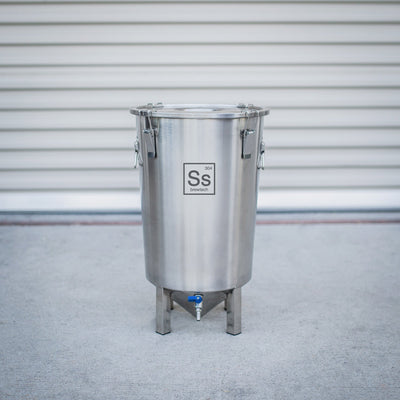
There is a small localized spot or area of rust on my kettle / fermenter that I bought recently. I thought stainless steel can't rust? +

Stainless steel itself shouldn't rust, you are right there. Especially a high grade 304 Ss like we use on all of our products. But what can rust are surface particles of iron that are sometimes left residual from the manufacturing process and the tools used to grind and polish the interiors and exteriors of Ss Brewtech's various vessels. This is one reason why proper cleaning and care prior to first use (or even exposure to water) is important. We have detailed documentation both in the box and on our website on all the product pages. The main thing here is cleaning and conditioning the stainless the first time prior to exposure to beer, water, whatever… In any case, if you do see a localized spot(s) of surface rust - simply get yourself a WHITE (NOT green type pad if you can avoid it) Scotchbrite pad, dab some Starsan onto the pad, and then GENTLY brush over the area in question until the surface rust has broken up and the area looks consistent with the surrounding areas of stainless. Then just rinse off, dry it with a paper towel, and the area will be good to go and free of the surface layer iron particles that were causing the issue to begin with.

Is my beer finished fermenting? +

If you have waited two weeks for an ale, or four weeks for a lager, or you're just curious. Most veteran homebrewers will tell you the beer is done once the airlock stops bubbling but this isn't a sure thing that fermentation is complete. This is where a hydrometer is sometimes worth its weight in gold. If you call our advice line and ask "Is my beer finished fermenting?" the first question will be, "Have you taken a hydrometer reading?" A hydrometer reading at the end of fermentation is called a final gravity reading, often abbreviated "FG". This tells you the amount of sugar left in the beer. Most yeast strains consume 65-75% of sugar in solution, this is called "attenuation." Here's an example gravity: OG: 1.050 your Goal FG would be: 1.010-1.015. If you are more than a few points above your estimated FG you will need to wait a couple more days. After a few days take another reading to see if the FG has dropped. If the FG has not dropped you will either need to consult us on our advice line at 925-671-4958. We will ask you some questions about the recipe, the yeast strain, and the fermentation temperatures your beer was exposed to. Sometimes we have some insightful comments on why fermentation is acting strangely, and other times only the beer Gods know.

My beer started fermenting, then stopped, and then started again? +

This usually happens when the beer goes through temperature changes. The yeast stops fermenting when it gets cold as the metabolic activity of the yeast slows down. It then proceeds to start up again when the fermenter warms up. If your fermentation gets stuck warm up the beer to the desired temperature range for your yeast. Sometimes it helps to give the carboy a swirl. DO NOT add oxygen. If there is one step you do as a homebrewer, investing in temperature control equipment will be the best thing you ever do for your beer.

Login

Forgot your password?

Don't have an account yet?
Create account