Detecting your location...
GET LUCKY: 17% OFF SITEWIDE Use Code GETLUCKY. Ends 3/19
Shop Now

Airlock - 3 Piece (XL)

    Description

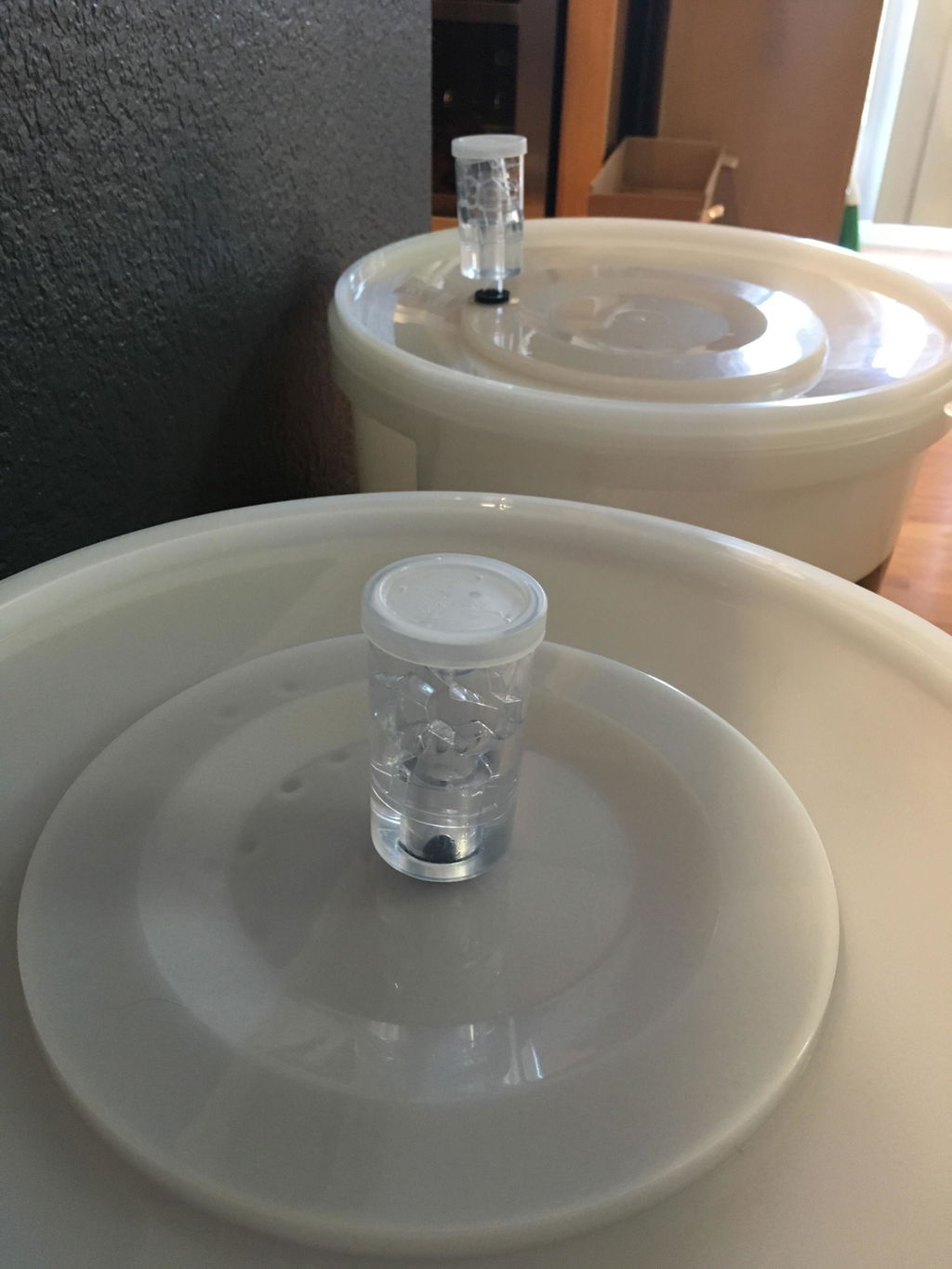
    This oversized 3-piece airlock can hold 50% more water or sanitizer so your airlock is less likely to evaporate dry or get sucked dry. When the temperature drops, your fermenter will suck in solution from the airlock, and if the temperature drop is significant the airlock can be completely emptied. An empty airlock opens the door for airborne spoilants to make their way into your fermenter unchecked. The extra large 3-piece airlock offers your fermenter even more protection, and is especially useful when cold crashing.
     
    While a simple device not all airlocks are the same. Some other designs have only a couple holes in the plastic lid and this can cause the airlock to pop out during an active fermentation.  Just like our normally sized airlock, our design features many holes in the lid that allow CO2 to escape easily.  Additionally some other airlocks have a cross hatch design on the bottom while our is open to allow Krausen foam to enter the airlock if necesary.  Better to clean your airlock out than to find it laying on the floor next to your fermenter 3 days later.  
     
    Another cool feature of this 3-piece airlock is that 1/2" ID tubing will fit onto the center post for use as a blowoff.  This can be handy if you have a really active ferment that is blowing out the top of your fermenter.  
     
    Please Note: Airlock only - stopper not included.

    Airlock - 3 Piece (XL)

      Product form

      SKU: FE370XL

      $3.49

      ✓ In stock - available for quick shipment
        Free Shipping on orders over $79

        Description

        This oversized 3-piece airlock can hold 50% more water or sanitizer so your airlock is less likely to evaporate dry or get sucked dry. When the temperature drops, your fermenter will suck in solution from the airlock, and if the temperature drop is significant the airlock can be completely emptied. An empty airlock opens the door for airborne spoilants to make their way into your fermenter unchecked. The extra large 3-piece airlock offers your fermenter even more protection, and is especially useful when cold crashing.
         
        While a simple device not all airlocks are the same. Some other designs have only a couple holes in the plastic lid and this can cause the airlock to pop out during an active fermentation.  Just like our normally sized airlock, our design features many holes in the lid that allow CO2 to escape easily.  Additionally some other airlocks have a cross hatch design on the bottom while our is open to allow Krausen foam to enter the airlock if necesary.  Better to clean your airlock out than to find it laying on the floor next to your fermenter 3 days later.  
         
        Another cool feature of this 3-piece airlock is that 1/2" ID tubing will fit onto the center post for use as a blowoff.  This can be handy if you have a really active ferment that is blowing out the top of your fermenter.  
         
        Please Note: Airlock only - stopper not included.

        Frequently Asked Questions

        My airlock is not bubbling? +

        I can see my beer fermenting, but there are no bubbles in the airlock - why? Inspeck the airlock for a crack in the stem of the airlock. If that is not the problem make sure that stopper or the lid on your container is seated properly. Bucket lids are particularly problematic to thoroughly seal. If you are brewing in a conical fermenter try adjusting the clamp and/or lid gasket.

        My airlock blew off. What causes a ferment to be so violent? +

        There are usually a few contributing factors to a violent blow off of your airlock. First is the yeast selection. Certain yeast have a greater propensity to create a "big fluffy head". The yeast that are known for big head productions are White Labs Trappist, WLP300 Hefeweizen, and WLP002 English. Certainly the first two are the most infamous. However, once in awhile we will hear of a yeast like the normally calm WLP001 California busting out of a carboy. A second factor is heat. They yeast go wild when they get hot. Fermentation above 73 degrees are candidates. Another factor is starting gravity. Higher gravity beers have more violent ferments. Sometimes a beer will start to ferment and come to a near halt shortly after starting because of a rapid drop in ambient temperature. When it suddenly becomes warm, because the weather heats up or the carboy is moved to a warmer location, it can cause a yeast breakout. If you plan on brewing with actual fruit in the primary (when lots of sugar are left) you should use a blow off that has a tube inner diameter of at least 1/2". As you can see there is no solid rule for when it will happen but there are certain factors that can be avoided. Don't ferment in a 5 gallon carboy with only an airlock as your primary fermenter. Keep an eye on your fermenter when in doubt.

        My airlock blew off during a violent ferment. Is my beer ruined? +

        The beer is fine. When a ferment is going this wildly it is pushing off so much CO2 that no other microrganisms can fall in and contaminate it. Also, the yeast are replicating so fast that if any wild yeast or bacteria fell in most likely it would be consumed by the yeast. Take the airlock and stopper, sanitize and clean them, and reinstall. Have a pint of beer! Trust us you will have many more yeast explosions in your homebrewing career. Something to remember is every yeast ferments differently at unique temperatures.

        With regards to fermenters, which is better - to use a blow off or an airlock? +

        The question is whether it is better to ferment in a 6.5 gallon carboy or bucket where you have an airlock and there is no blow off versus fermenting in a 5 gallon carboy with a tube attached to the top of the carboy that goes into a jar of water that acts as a blowoff and airlock. With the blow off method most of the krausen gets blown out the top. With the non-blow off method the krausen settles back into the beer after fermentation. In the past homebrewers thought that if you blew this gunk off you would profit from cleaner beer. Some people feel that the blow off beers lose some degree of bitterness, as the oils are lost with the krausen, but it might not matter so much in the long run.

        Recently viewed products

          Login

          Forgot your password?

          Don't have an account yet?
          Create account