Due to high demand, this item is currently out of stock. Be the first to receive your items by placing a pre-order today. We will automatically ship this to you when we receive more inventory.
Variable capacity tank well-suited for fermentation, short-term wine storage, kombucha, pickling, and other applications
Floating lid can be positioned as needed to match the volume of the liquid you're working with
Tank & lid are made from 304 stainless steel with a food-grade, clear plastic gasket for the lid
Air pump with pressure gauge, dry airlock, and spigot are included
Made in Italy by Marchisio
Variable Capacity tanks, also called Variable Volume tanks, made in Italy by Marchisio. This style of tank features a ‘floating’ lid with an inflatable gasket that can be positioned at any height in the tank. Use the included air pump to inflate the lid gasket. Whether you position the lid directly on the liquid, just above, or at the top of the tank is up to you. They are used as affordable stainless production tanks for applications ranging from winemaking to pickled foods and Kombucha.
Considerations for Winemaking
When used in winemaking we recommend these tanks for fermentation and short-term storage. If you are considering storing wine in a variable volume tank for longer than a month, we suggest you consider our German-made Speidel Variable Volume Tanks. In addition to other quality features like a mirror polish inside, thicker stainless, and robotically welded seams, Speidel tanks feature a proprietary lid gasket that only fits their tanks. This gasket is made from a very high quality, thick, white, food-grade, material that makes a true seal and resists oxygen transfer. This gasket also does not have the seam line that clear gaskets have. To learn more about the clear gaskets watch our video listed below the product copy. All variable volume tanks other than those from Speidel, including these tanks from Marchisio, feature a standard clear gasket that is sufficient for many applications, but we do not recommend them for long term wine storage.
Marchisio
We have been buying tanks from Marchisio since the 1990’s, so we have a long history of collaboration. Marchisio is a classic Italian tank manufacturer that represents the best value in the industry. Great quality at a very competitive price. All tanks have a classic marbled finish on the outside and a smooth polished finish on the inside. Each tank includes a dry airlock – a style of airlock that has a marble inside to make a seal. We recommend replacing this airlock with a classic water airlock to reduce potential oxidation. Includes 1/2" chrome plated spigot.
Includes:
304 Stainless Tank
304 Stainless Floating Lid
Food-Grade Floating Gasket
Air Pump with pressure gauge
Connection kit for connecting gasket to pump
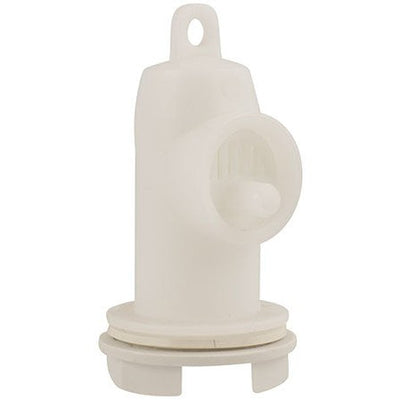
Dry Airlock for tank
Chrome Plated Spigot
100L Specifications:
Nominal volume: 100 Liters (26.4 gallons)
Effective volume: 93 Liters (24.6 gallons)
Diameter: 50 cm (20 inches)
Height: 60 cm (24 inches)
Valve size: 1/2" BSP
Thickness (Bottom X side, in mm): 1.0 X 0.7
*Please Note: Tank may differ slightly from image shown. Stands are sold separately.
In Stock and Ready to Ship!
Speidel’s cuboid tanks are the ideal solution for small spaces. They fit perfectly, have curves that are easy to clean and have flawless weld seams. Both tanks have cooling jackets in L51 Layout with C6 Connection. The 1400L tanks has a 0.7 m² jacket and the 1650L has a 1.1 m² jacket.
In a few words: our rectangular models are always first choice! They allow you the perfect utilisation of space and guarantee Speidel’s top quality! Enjoy optimal fit with best hygiene and easy cleaning.
Standard Accessories:
Tank shell and tank bottom made of AISI 304 stainless steel, surface IIId (2R), marbled outside
Tank top made of AISI 316 stainless steel, surface IIId (2R), marbled outside
With lifting lugs
Base tank from 2,000 mm tank height upwards and stacking tank with ladder safety bow
Vaulted, stable tank top with moulded-on forward up-slope for complete filling and ventilation assuring a very small air contact area
Moulded connection neck with filling and vent neck, 2" T.C.
Free-standing base tank on 4 welded-on stacking legs
Sampling
Weld-on thread NW 10 DIN 11851 with sealing cap (for the installation of sample tap).
Manhole
Stable manhole neck seamlessly moulded from the tank shell, 420 x 320 mm, door with butterfly bow and hand wheel.
Racking Outlet
With welded-on reinforcing plate with 2" tri-clamp connection.
Fill Level
Weld-on thread NW 10 DIN 11851 with sealing cap including fastening points at tank shell (for the installation of fill level indicator).
Bottom Outlet
Vaulted, stable tank bottom with integrally moulded forward down-slope for complete draining with moulded connection neck, inhibiting suction effect with bottom 2" T.C. outlet.
The FO Variable Volume tank is Speidel's flagship Variable Volume tank for storage. Available in 28 different capacities from 1,100L up to over 15,000L. This preconfigured tank comes with: Racking outlet with a 2 in TC connection Bottom outlet with a 2 in. TC connection Floating lid with transparent sealing hose, air pump and pressure gauge Crane with cable for the floating lid Key Features Available in 28 sizes covering 6 different tank diameters from 1,100L to 15,200L (larger tanks available with special shipping arrangements) 1,100L & 1,650L Tanks equipped with 1.5" TC racking and drainage ports. All other tanks equipped with 2" TC. Larger fittings available by request Reinforced racking ports prevent tank wall flex and can support the weight of a tank mixer. All tanks have welded-on mounting points for lid lifting arms. Tanks from 1,650L include a lifting arm; from 2,200L up the arm is winch-operated View the resource for more information on the key features of all Speidel Tanks.
Assembling a Variable Volume Tank Download print friendly version Congratulations on your purchase of a new stainless steel Variable Volume Tank from MoreWine! These instructions will guide you step-by-step through the process of assembling your tank and making it ready for your wine. We sell two brands, Marchisio & Speidel. Click the link above to see a pdf with pictures of each step. See page 2 for images of fully assembled lids. What you will need: Your tank and MoreWine! Hardware Pack A small screwdriver A crescent wrench About 15 minutes Remove the stainless lid and bladder package from the interior of the tank. Open the package and lay it out on the ground to ensure that everything has arrived intact. First we’ll assemble the lid. Remove the bladder from its package. Set the stem of the bladder through the hole in the rim of the tank and ensure that it is centered - like installing a bicycle inner tube. Now stretch the bladder the rest of the way around the lid’s rim. The easiest way to do this is to set the lid vertically on the ground and hold it in place with your foot. Stretch the tubing up around the bottom of the lid with both hands so that the last portion to slide on to the rim is the part that is exactly across from the stem. Next you want to locate the piece of clear vinyl tubing and remove the masking tape. Attach this tubing to the bladder with one of the enclosed hose clamps. If you are having trouble sliding the tubing on to the barb of the bladder, try soaking it in hot water for a few minutes to soften it up. Now attach the tubing to the barb on the pump and secure it with the other hose clamp. This is a great time to make sure that everything is attached correctly and holding pressure. Loosen the black knob next to the gauge on the pump, and inflate the bladder until the pressure gauge is reading somewhere in the green zone. Note what pressure you inflated to, then set the lid aside for now. We’ll want to come back in about 30 minutes to make sure no pressure has been lost. Now it is time to install the airlock in the lid. Remove the locknut from the bottom of the airlock, ensuring that the gasket stays with the upper part of the assembly. Install the airlock through the existing hole in the lid and secure in place with the locknut. Marchisio airlocks are white and Speidel airlocks are orange. If you have a Marchisio Tank attach the rope to the top of the airlock. Now it is time to install the rest of the hardware. Locate your MoreWine! Hardware pack and confirm that it included a 1/2” stainless steel ball valve, nipple and plug. The nipple and plug should be pre-wrapped with teflon tape to ensure a good seal. Thread the plug into the upper of the two ports as far as you can by hand. If you have purchased a thermometer or thermowell to be installed in the tank, then install this instead of the plug. Now thread the nipple into the ball valve, ensuring that the valve’s handle will face away from the tank once installed. Don’t worry if you can’t thread the nipple in very far by hand. Next install the ball valve / nipple assembly into the lower port on the tank. Again, thread it in as far as you can by hand and don’t worry if that is not very far - we will take care of that next. Now it is time to tighten down the plug and valve with the your crescent wrench. This process will not only make sure you have a good, leak free seal, but will also help seat the nipple into the ball valve as well. If you have a Marchisio Tank you will need to remove the white plastic protective liner from the inside of the tank and the clear plastic wrapping from the exterior. Almost finished! We strongly recommend that you take the time now to fill your tank with water and make sure there are no leaks of any kind. If you are dripping from the plug or valve joints, try tightening them further with the crescent wrench. If this does not work, try removing the offending piece and adding 2-3 additional wraps of teflon tape. If you are leaking from anywhere else on the tank please call our Customer Service line immediately (1- 800-823-0010). Assuming all is well and there are no leaks when the tank is water-tested, go back to the lid assembly and check to see you have not lost any pressure since you first pumped up the bladder. If you have, double check that the hose clamps are tight, but not so tight that they have cut into the tubing that runs from the bladder to the pump. Also check to be sure that the black knob at the top of the pump is tightened all the way. If you are still leaking, try applying a light spray of soapy water to each of the junctions and to the bladder itself to try to locate the leak. If the leak is endemic to a component of the system, give us a call to have a replacement sent out to you.