Detecting your location...
FREE FERMZILLA with every BrewZilla Gen 4.1 Dads & Grads · Ends in 7 days · No code needed
Shop the Bundle

Homebrew Hardware

Brew Hardware & Fittings

Setting up a home brewery can require a lot brewing hardware.  Luckily, we have brewery hardware and fittings for practically every configuration!  Whether you're shopping for ball valves, stainless steel barbs or couplers, high temperature silicone tubing, or stainless steel quick disconnects, you will find all of the brew hardware and fittings you'll need here at MoreBeer!

Interested in Welding and Brazing Stainless Steel? Click here, to read our article on the subject!

Shop by collection
445 products

  • Stainless - 1.5 in T.C. x 1.5 in Barb (1.5 in. Short Stem)

    1.5 in. TC x 1.5 in. Barb (Short Stem)

    Convert 1.5" Tri-Clamp to 1.5" Barb for connection of 1.5" ID tubing. 304-type stainless steel. 1.5" long stem.

    $21.99

  • Quick Swivel Connector - O-rings - High Temp Silicone - 10 Pack Quick Swivel Connector - O-rings - High Temp Silicone - 10 Pack

    KegLand Quick Swivel Connector | Replacement O-rings | 10-Pack

    Replacement O-rings for the 1/2" KegLand Quick Swivel Connectors. Made from high temp silicone. Comes in a pack of 10. These come in brown silicone only. Refrain from using undiluted acidic / heavy strength alkaline substances or the Silicone may change in color. KegLand Part Number: KL31592

    $2.19

  • Sale -35% Stainless - 3/4 in. BSPP Male x 20 mm Hose Barb Stainless - 3/4 in. BSPP Male x 20 mm Hose Barb

    Stainless Barb - 3/4 in. Male BSPP x 3/4 in.

    1 review

    This Stainless Steel BSPP barb will connect any tubing with a 3/4" ID line to any fitting with a 3/4" Female BSPP connection. The barb is slightly oversized at 20mm (0.78") compared to 3/4" (0.75") which will give you a tighter connection with your tubing. BSP vs. BSPP BSP (or BSPT) fittings have a tapered thread and require teflon tape to form a seal between the male and female fitting. BSP fittings are generally intended to be used with their counterpart of the same thread type. ONLY 1/2" BSP fittings are compatible with US-standard NPT fittings of the same size. BSPP fittings, on the other hand, have a straight thread, require a gasket seated inside the female fitting to form a seal, and are not compatible with NPT. KegLand Part Number: KL06668  

    $5.49 $3.57

  • Sale -35% Stainless - 1/2 in. BSPT Elbow - Male to Female Stainless - 1/2 in. BSPT Elbow - Male to Female

    Stainless Elbow - 1/2 in. Male BSP x 1/2 in. Female BSP

    Male to female elbow. 1/2" BSP. Made from 304 grade stainless steel. BSP vs. BSPP BSP (or BSPT) fittings have a tapered thread and require teflon tape to form a seal between the male and female fitting. BSP fittings are generally intended to be used with their counterpart of the same thread type. ONLY 1/2" BSP fittings are compatible with US-standard NPT fittings of the same size. BSPP fittings, on the other hand, have a straight thread, require a gasket seated inside the female fitting to form a seal, and are not compatible with NPT. KegLand Part Number: KL06620  

    $5.49 $3.57

  • Stainless - 1/2 in. BSP Washer Stainless - 1/2 in. BSP Washer

    Stainless BSP Washer- 1/2 in.

    Stainless steel 1/2" BSP washer. KegLand Part Number: KL03698  

    $2.79

  • Stainless - 1.5 in. T.C. x 1 in. BSPT Female Stainless - 1.5 in. T.C. x 1 in. BSPT Female

    Stainless Tri-Clamp | 1.5" T.C. x 1" BSP Female

    Convert 1" BSP fittings to 1.5" tri-clamp. Made from 304 stainless steel. BSP vs. BSPP BSP (or BSPT) fittings have a tapered thread and require teflon tape to form a seal between the male and female fitting. BSP fittings are generally intended to be used with their counterpart of the same thread type. ONLY 1/2" BSP fittings are compatible with US-standard NPT fittings of the same size. BSPP fittings, on the other hand, have a straight thread, require a gasket seated inside the female fitting to form a seal, and are not compatible with NPT. Kegland Part Number: KL23443

    $16.49

  • ForgeFit - 2.5 in. T.C. Clamp Gasket (EPDM)

    ForgeFit® Tri-Clamp Gasket | EPDM | 2.5"

    EPDM gaskets have a more narrow temperature range than silicone gaskets, but they are more resistant to acids and caustic chemicals. For 2.5" tri-clamp fittings Made from Silicone Temperature rated from -30°F to 300°F ForgeFit® is a brand of rugged, high-quality fittings made from certified 304 stainless steel. Each fitting is backed by our 60-day no-hassle return policy and a one-year warranty from MoreBeer!.  

    $1.49

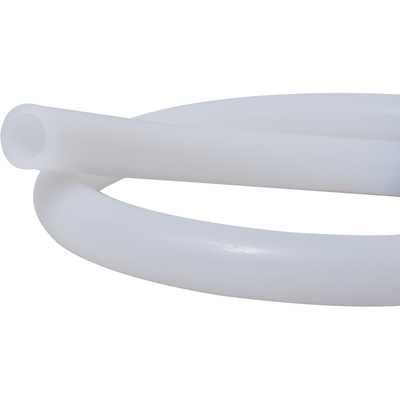
  • Tubing - Silicone (3/16 in. ID) - PLACEHOLDER

    High Temp Silicone Tubing - 3/16 in.

    1 review

    This is our preferred tubing for use in Barrel Topping Systems. Because of its high elasticity this tubing is easy to attach to/detach from barbed fittings without having to cut the tubing to remove it or use hose clamps to install it (in low pressure applications). This feature allows the user to disassemble the tubing set used to deliver the top-up wine for both sanitation as well as cleaning after use. Cleans up easily and does not get stiff at low temperatures. OD is approximately 3/8" Specs: Working Pressure - 20 psi Burst Pressure - 60 psi Platinum Cured

    $5.89 - $106.99

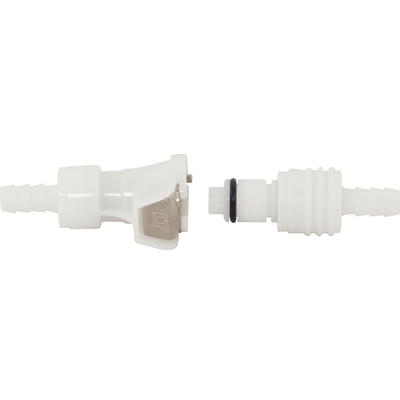
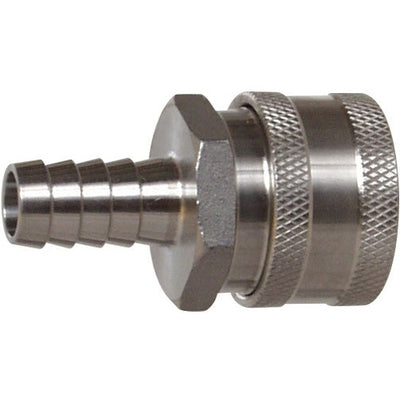
  • LinkTech - High Temp Plastic Female Quick Disconnect (QD) - 3/8 in Barb w/ Shutoff Valve

    LinkTech High Temp Plastic Female Quick Disconnect (QD) | 3/8" Barb w/ Shutoff Valve

    The LinkTech 60PS Series is a lineup of premium plastic Quick Disconnects.  These High Quality QDs are made from medical grade polypropylene, a high-strength plastic that is temperature tolerant 160° (Max!), and can handle pressure ranging from a vacuum to 60 psi. All of the 60PS Series will interconnect, and these units will also work seamlessly (and leaklessly!) with CPC Quick Disconnects of the same internal 3/8” flow path.  O-rings are a EPDM Rubber, and internal valve springs are constructed from 316 Stainless steel. This is a Female Socket, which can connect to any H501 Series Male Plug.  It has a 3/8" Hose Barb on the other end for attaching any 3/8" ID tubing.  This QD is equipped with a shutoff valve.   When not connected to another QD, this will not allow any flow.  While not quite as bulletproof as our Stainless Steel Quick Disconnects, this lineup does offer a few advantages.  These can be set up with Shutoffs, which will prevent flow when disconnected, and can be incredibly useful on Pump or Glycol systems.  The pricing of these products is more economical, yet the plastic is still medical grade. All in all, these are a premium lineup of quick disconnects with great features and lots of options. Features: LinkTech brand 60PS Series Equipped with Shutoff Valve Connections: Female Socket Quick Disconnect 3/8" Barb Medical Grade Materials: Body: High-Strength Polypropylene Spring: 316 Stainless Steel O-Ring: EPDM Operating Pressure: Vacuum to 60 PSI Temperature Tolerance: -40 to 280°F (-40 to 138°C) 3/8" Flow Path Interchangeable with CPC - Colder HFC35 Series

    $25.99

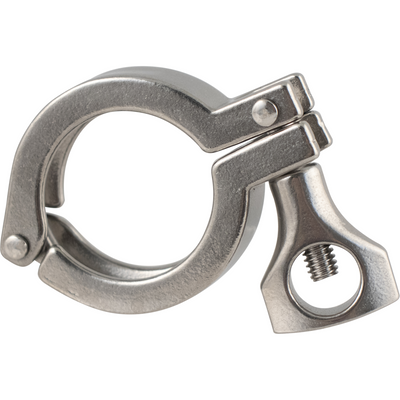
  • Stainless - 3 in. T.C. Clamp - 3 Piece Stainless - 3 in. T.C. Clamp - 3 Piece

    Stainless Tri-Clamp | 3 Piece | 3" Clamp

    Double-hinged for easier handling when connecting tri-clamp fittings Textured tightening knob for better grip with wet hands Hang the clamp by the knob on a peg board when not in use This stainless steel tri-clamp features two hinges and folds into three pieces. Some brewers find this style of clamp easier to work with on large equipment that requires a 3" clamp. Direct replacement part to the clamp included on the FermZilla Tri-Conical fermenter. KegLand Part Number: KL25799

    $14.49

  • ForgeFit - 1.5 in. T.C. x 2 in. T.C. Eccentric Reducer ForgeFit - 1.5 in. T.C. x 2 in. T.C. Eccentric Reducer

    ForgeFit® Stainless Tri-Clamp Eccentric Reducer | 2" x 1.5"

    Adapt any 2" tri-clamp port or valve to work with an existing 1.5" tri-clamp fitting. The eccentric design is ideal for reducing 2" to 1.5" pipe in horizontal runs. Perfect for attaching a 1.5" hose to the bottom of the pro fermenters with 2" bottom ports. 1.5" x 2" tri-clamp 3" tall Made from 304 stainless steel ForgeFit® is a brand of rugged, high-quality fittings made from certified 304 stainless steel. Each fitting is backed by our 60-day no-hassle return policy and a one-year warranty from MoreBeer!.

    $54.49

  • Sale -35% Stainless - 2 in. T.C. x 2 in. Barb

    Stainless Tri-Clamp Barb - 2 in. x 2 in. T.C.

    Convert 2" tri-clover fitting to 2" long barb for connection of tubing. 304-type stainless steel.

    $27.49 $17.87

  • Stainless - 1/4 in Nipple (Close)

    Stainless Close Nipple - 1/4 in. x 7/8 in.

    Stainless Nipple - 1/4" x Close Overall length - 7/8"

    $3.99

  • Stainless - 3/8 in. x 1/4 in. BSPT Reducing Bush Stainless - 3/8 in. x 1/4 in. BSPT Reducing Bush

    Stainless Reducing Bush - 3/8 in. x 1/4 in. BSP

    Stainless steel reducing bush. 3/8" BSP x 1/4" BSP. Made from stainless steel. BSP vs. BSPP BSP (or BSPT) fittings have a tapered thread and require teflon tape to form a seal between the male and female fitting. BSP fittings are generally intended to be used with their counterpart of the same thread type. ONLY 1/2" BSP fittings are compatible with US-standard NPT fittings of the same size. BSPP fittings, on the other hand, have a straight thread, require a gasket seated inside the female fitting to form a seal, and are not compatible with NPT. KegLand Part Number: KL06552  

    $2.79

  • ForgeFit - 1.5 in. T.C. Extension Tube (Spool) - 18 in. ForgeFit - 1.5 in. T.C. Extension Tube (Spool) - 18 in.

    ForgeFit® Stainless Tri-Clamp Extension Tube (Spool) | 1.5" T.C. | 18" Long

    This tri-clamp extension tube features 1.5" tri-clamp connections at both ends and is made from high-quality stainless steel. Extension tubes (or spools) are an easy way to extend the length of any T.C. fitting or can be used to hard pipe a brew system for easier cleaning. 1.5" tri-clamp 18" long Made from 304 stainless steel ForgeFit® is a brand of rugged, high-quality fittings made from certified 304 stainless steel. Each fitting is backed by our 60-day no-hassle return policy and a one-year warranty from MoreBeer!.  

    $34.49

  • Stainless Nipple - 3/4 in x 1 in (Close)

    $5.49

  • Tubing - GoodYear Nutriflex (1 in) - PLACEHOLDER

    GoodYear Nutriflex Tubing - 1 in.

    Food-Grade, FDA approved tubing with an outer spiral reinforcement "helix" ensures a kink-free transfer every time. Nutriflex tubing is made for transferring wine or must from container to container. The inside is smooth and without any crevasses for errant material to get caught in. Small bend radius means it will hold its shape even around tight corners. Working temperature range of -15F - 158F. Inner Diameter - 1" Outer Diameter - 1.33"   Please Note: Made to Order lengths have a lead time of approximately 2 weeks.    

    $44.99 - $369.99

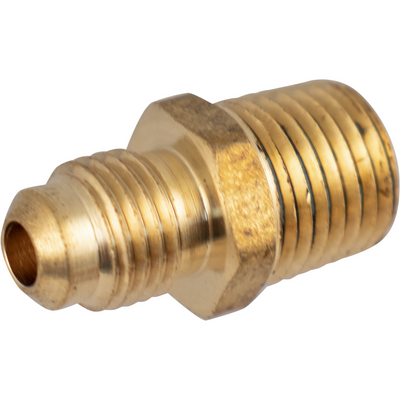
  • Brass - 3/8 in MPT x 1/2 in Barb

    $3.59

  • Stainless - 1/4 in. BSPT Hex Nipple Stainless - 1/4 in. BSPT Hex Nipple

    Stainless Hex Nipple - 1/4 in. BSP

    An excellent upgrade to a standard nipple, these have a hex nut in the center to allow easy tightening and loosening in whatever application it's used! 1/4" male BSP threads. BSP vs. BSPP BSP (or BSPT) fittings have a tapered thread and require teflon tape to form a seal between the male and female fitting. BSP fittings are generally intended to be used with their counterpart of the same thread type. ONLY 1/2" BSP fittings are compatible with US-standard NPT fittings of the same size. BSPP fittings, on the other hand, have a straight thread, require a gasket seated inside the female fitting to form a seal, and are not compatible with NPT. KegLand Part Number: KL06439  

    $2.79

  • Sale -15% Lock Nut for S/S Bulkhead (H726,H727)

    Weldless Kit - Replacement Lock Nut

    2 reviews

    Replacement Lock Nut for our Stainless Steel Weldess Bulkhead Kits. Please Note: These lock nuts are not standard size NPT and will only work with our Weldless Bulkhead Kits.  

    $4.39 $3.73

  • 8 in. T.C. Clamp Gasket - Flanged - EPDM

    Flanged Tri-Clamp Gasket | EPDM | 8"

    Flanged tri-clamp gaskets extend over the ferrule, holding them securely in place for easy, frustration-free connections EPDM gaskets are more resistant to acids and caustic chemicals, and don't show signs of wear as quickly as silicone For 8" tri-clamp connections A flanged tri-clamp gasket differs from a standard gasket or seal because one half of the flanged gasket extends over the edge of the T.C. ferrule, which holds it more securely in place. This makes the gaskets extremely easy to work with while clamping down connections, and helps you avoid the frustration of fumbling a freshly sanitized gasket onto the floor at the worst possible time. Available in both EPDM and Silicone. EPDM gaskets have a more narrow temperature range than silicone gaskets, but they are more resistant to acids and caustic chemicals. For 8" tri-clamp fittings Made from EPDM Temperature rated from -30°F to 300°F KegLand Part Number: KL45193   Example Image: Updated images coming soon. See the video below to check out the flanged gaskets in action.

    $4.99

  • BrewBuilt - 2 in. T.C. Butterfly Valve - Polished BrewBuilt - 2 in. T.C. Butterfly Valve - Polished

    BrewBuilt® Stainless Butterfly Valve | 2" T.C.

    The BrewBuilt Butterfly Valve has all the standard advantages you would expect from a butterfly valve in that they are the most sanitary valve, easy to clean and won't trap wort inside. It has a custom polished stainless steel handle which is designed to fit perfectly with the BrewBuilt X-series conical 2" T.C. bottom port. 2" tri-clamp Stainless steel handle 7 locking positions Squeeze trigger locking handle Made from 304 stainless steel

    $99.99

  • Sale -35% ForgeFit - 3 in. T.C. x 2.5 in. T.C. Concentric Reducer ForgeFit - 3 in. T.C. x 2.5 in. T.C. Concentric Reducer

    ForgeFit® Stainless Tri-Clamp Concentric Reducer | 3" x 2.5"

    Adapt any 3" tri-clamp port or valve to work with an existing 2.5" tri-clamp fitting. The concentric design limits flow resistance as you step down from 3" T.C. to 2.5" T.C. 3" x 2.5" tri-clamp 3" long Made from 304 stainless steel ForgeFit® is a brand of rugged, high-quality fittings made from certified 304 stainless steel. Each fitting is backed by our 60-day no-hassle return policy and a one-year warranty from MoreBeer!.   

    $49.99 $32.49

  • Stainless - 2 in. T.C. x 3/4 in. Female BSPP Stainless - 2 in. T.C. x 3/4 in. Female BSPP

    Stainless Tri-Clamp | 2" T.C. x 3/4" BSPP Female

    1 review

    Convert 3/4" BSPP (Straight Thread) fittings to 2" Tri-Clover. 

    $28.99

  • Stainless - T.C. Clamp (2.5 in)

    Stainless Tri-Clamp - 2.5 in. Clamp

    Used to connect two tri-clamp fittings together to make a sanitary connection. 304 stainless steel. For 2.5" tri-clamp fittings.

    $10.99

  • Quick Swivel Connector - Straight Barb - 9.5mm (3/8) - Duotight Compatible - Complete w/ Nut & O-ring Quick Swivel Connector - Straight Barb - 9.5mm (3/8) - Duotight Compatible - Complete w/ Nut & O-ring

    KegLand Quick Swivel Connector | 1/2" x 3/8" Straight Barb | 9.5 mm Duotight Compatible

    High temp silicone grip provides a cool touch even with hot liquids! Ribbed grips allow quick comfortable tool-free operation Fits all male 1/2" NPT and BSP fittings 9.5 mm Duotight compatible stainless steel barb tail The KegLand Stainless Steel Quick Connectors come with a heavy-duty silicone grip guard allowing comfortable and quick tool-free operation. Specs: Stainless steel and silicone construction Silicone O-ring seal is retained for perfect positioning but is easily cleaned or replaced 3/8" (9.5mm) OD barb tail KegLand Part Number: KL31622

    $8.79

  • Sale -15% Quick Swivel Connector - Elbow Barb Only - 13mm (1/2) Quick Swivel Connector - Elbow Barb Only - 13mm (1/2)

    KegLand Quick Swivel Connector | 1/2" Elbow Barb

    This elbow barb makes it easier to route lines and avoid kinks in your tubing. Commonly used for pump inlet/outlets, fermenter blowoffs, or gravity fed transfer lines. Quick Swivel Nut sold separately. Specs: 1/2" (13mm) OD x 1/2" Quick Swivel Nut compatible end Stainless steel KegLand Part Number: KL31660

    $7.69 $6.54

  • Speidel - DIN NW 25 Adapter - 1 in. DIN to 1.5 in. T.C. Adapter Speidel - DIN NW 25 Adapter - 1 in. DIN to 1.5 in. T.C. Adapter

    DIN to Tri-Clamp Adapter | DIN NW 25 | 1" DIN x 1.5" T.C.

    Speidel 1" DIN to 1.5" TC adapter. If you have a mixture of TC and DIN fittings, there is finally an adapter to help you connect everything together. To top it all off it is made with the expert craftmanship of Speidel.

    $58.99

  • Komos - Stainless Joiner - 8 mm (5/16 in.)

    KOMOS® | Stainless Joiner | 5/16 in. Barb x 5/16 in. Barb

    Stainless steel joiner fitting for joining multiple lengths of tubing. Recommended for 1/4" to 5/16" ID tubing. Made from 304 stainless steel.

    $4.39

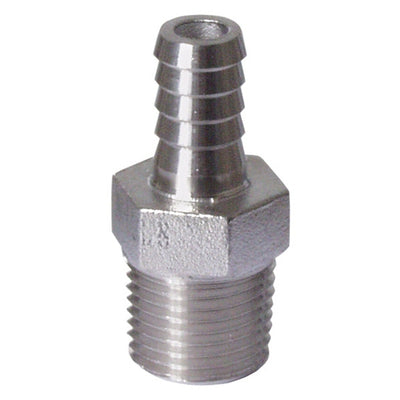
  • Sale -15% Stainless - 1 in MPT x 1 in Barb

    $8.79 $7.47

  • Stainless - 1/2 in. FPT x  1/2 in. Comp

    Stainless Compression Fitting | 1/2 in. x 1/2 in. FPT

    When you want to customize your own setup, it’s good to have the right fitting on hand.   This stainless steel compression fitting gives you the versatility to put your setup together in the way that works best for you.   304-Type Stainless Steel compression fitting.   1/2" Comp. x 1/2" FPT

    $28.99

  • Sale -15% Stainless - 2 in. T.C. Check Valve (1 p.s.i.) Stainless - 2 in. T.C. Check Valve (1 p.s.i.)

    Stainless - 2 in. T.C. Check Valve (1 PSI)

    1 review

    This is a Stainless Steel one way Check Valve. It has 2" T.C. Fittings on either side, and releases pressure at ~1 p.s.i. Can be used to inhibit a siphon in certain applications, or to vent gas pressure in a tank.

    $109.99 $93.49

  • Stainless Half Coupler - 1/2 in.

    Stainless Half Coupler - 1/2 in.

    3 reviews

    Half Coupler with 1/2" Female Pipe Thread. Half couplers have thread for insertion from one side only. 304 stainless. Weld into place. You will need to punch a 7/8" hole to install.

    $5.49

  • ForgeFit - 1.5 in. T.C. 45 Deg Elbow ForgeFit - 1.5 in. T.C. 45 Deg Elbow

    ForgeFit® Stainless Tri-Clamp Elbow | 45° | 1.5"

    This elbow fitting features 1.5" tri-clamp connections at both ends and is made from high-quality stainless steel. 1.5" tri-clamp 45° bend 3.5" tall Made from 304 stainless steel ForgeFit® is a brand of rugged, high-quality fittings made from certified 304 stainless steel. Each fitting is backed by our 60-day no-hassle return policy and a one-year warranty from MoreBeer!.

    $27.49

  • Quick Swivel Connector - Straight Barb Only - 13mm (1/2) Quick Swivel Connector - Straight Barb Only - 13mm (1/2)

    KegLand Quick Swivel Connector | 1/2" Straight Barb

    This straight barb in 1/2" (13mm) OD is only compatible with the 1/2" KegLand Quick Connector Swivel Nut. 3/8" (10mm) ID bore. Quick Swivel Nut sold separately. KegLand Part Number: KL31585

    $3.99

  • Stainless Nipple - 3/8 in x 1in threaded (close)

    Stainless Close Nipple - 3/8 in. x 1 in.

    These are typically used for connecting Ball Valves to couplers welded into tanks. “Close” thread means there is no space between the opposing threads

    $3.29

  • Tubing - GoodYear Nutriflex (1.5 in) - PLACEHOLDER

    GoodYear Nutriflex Tubing - 1.5 in.

    1 review

    Food-Grade, FDA approved tubing with an outer spiral reinforcement "helix" ensures a kink-free transfer every time. Nutriflex tubing is made for transferring wine or must from container to container. The inside is smooth and without any crevasses for errant material to get caught in. Small bend radius means it will hold its shape even around tight corners. Working temperature range of -15F - 158F. Inner Diameter - 1.5" Outer Diameter - 1.88"    

    $69.99 - $449.99

  • Replacement Base Gasket for Sight Gauge (MT510, MT520, MT530)

    Replacement Base Gasket for Sight Gauge

    Replacement Base Gasket for Sight Gauge. Compatible with sight gauges MT510, MT520, MT530, and weldless sight gauges WL316, WL321, WL326. Gasket only. Does not include base cap.

    $2.99

  • ForgeFit - 3 in. T.C. to 1/2 in. Barb ForgeFit - 3 in. T.C. to 1/2 in. Barb

    ForgeFit® Stainless Tri-Clamp Barb | 1/2" Barb x 3" T.C.

    Use this barbed fitting to connect 1/2" ID tubing to a 3" tri-clamp fitting. Works seamlessly with the BrewBuilt X3 Conical's 3" butterfly valve bottom port. Tri-clamp fittings are the gold standard in professional breweries and they've been widely adopted in homebrewing as T.C. kettles, fermenters, and pumps become more widely available. Tri-clamp fittings allow you to make a sanitary connection without any nooks or crannies for contaminants to hide in and they can be cleaned in place. 3" tri-clamp 1/2" OD barb Made from 304 stainless steel ForgeFit® is a brand of rugged, high-quality fittings made from certified 304 stainless steel. Each fitting is backed by our 60-day no-hassle return policy and a one-year warranty from MoreBeer!.

    $24.99

  • Stainless Reducing Coupler 3/8 in FPT x 1/2 in FPT

    Stainless Coupler - 3/8 in. FPT x 1/2 in. FPT

    Stainless Reducing Coupler 3/8" FPT x 1/2" FPT

    $5.49

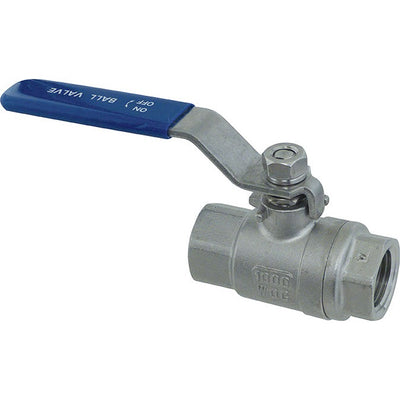
  • Sale -25% Stainless Ball Valve - 1 in Full Port Stainless Ball Valve - 1 in Full Port

    Stainless Ball Valve - 1 in. Full Port

    3 reviews

    Our Ball Valves will last for years. Easy to clean. High grade 304-stainless made to last. 1" FPT on input and output side. TIP: You can take a ball valve apart using two crescent wrenches. This will allow you to open up the valve to get to the ball and two gaskets that form the seal when closed. Please Note: the ball valve may be difficult to turn at first, but it will become less resistant after it is rotated back and forth a couple times.

    $29.99 $22.49

  • Sale -15% Blichmann T.C. Blow-off kit Blichmann T.C. Blow-off kit

    Blichmann Fermenator Blow-off kit

    1 review

    Tired of your small airlock getting clogged from aggressive ferments? This blow-off kit is designed to work with the Tri-Clover Blichmann Fermenator. A superb upgrade for those looking for an airlock system that can handle aggressive, high gravity ferments.

    $119.99 $101.99

  • Sale -15% MB - Pro Spunding Valve - 2 BAR MB - Pro Spunding Valve - 2 BAR

    MB® Tri-Clamp Spunding Valve | 2 BAR | 15-30 PSI | 1.5" T.C. | Etched Pressure Scale | Hand Adjustable | Polycarbonate Liquid Cylinder | Stainless Steel

    Ferment under pressure with precisely tuned pressure settings Pressure fermentations help to suppress unwanted esters Make clean lagers faster and at higher temperatures Easy-to-read etched pressure scale from 15 to 30 psi Hand adjustable—turn clockwise or counterclockwise to raise or lower your setting Made from 304 stainless steel with polycarbonate cylinder MB is a brand dedicated to crafting and sourcing high-quality, professional-level brewing supplies The MB T.C. spunding valve will give you the highest level of accuracy when fermenting under pressure. Designed for use with any pressurizable stainless steel conical with 1.5" T.C. top ports. For larger units, the spunding valve can also be integrated into the blowoff pipework and used with a pressure gauge and tri-clamp tee. The polycarbonate cylinder that surrounds the spunding valve can be filled with water or sanitizer to keep your tank 100% sanitary throughout the fermentation process. Adjustable from 15-30 psi Made from 304 stainless steel 11.75" H x 4" Ø For Your Safety: Never exceed the maximum rater working pressure of your vessel at any time during operation. The fixed-pressure PRV on your conical should always remain in place while using this spunding valve.

    $199.99 $169.99

  • Brass - 1/4 in. FPT  Tee Brass - 1/4 in. FPT  Tee

    Brass Tee - 1/4 in. FPT

    Brass tee with 1/4" female pipe thread on all ends.

    $4.99

  • Blichmann HopRocket - Replacement Clamp

    Blichmann HopRocket - Replacement Clamp

    1 review

    This is a Blichmann Spare Part. Replacement V-band clamp for the Blichmann HopRocket.

    $31.99

  • Sale -25% Stainless - 1/2 in. BSPP Female Tee Stainless - 1/2 in. BSPP Female Tee

    Stainless Tee - 1/2 in. Female BSPP

    With three places to attach tubing and accessories, this tee gives you the ability to customise your brewing setup. 1/2" Female BSPP on all three openings. Made from stainless steel. BSP vs. BSPP BSP (or BSPT) fittings have a tapered thread and require teflon tape to form a seal between the male and female fitting. BSP fittings are generally intended to be used with their counterpart of the same thread type. ONLY 1/2" BSP fittings are compatible with US-standard NPT fittings of the same size. BSPP fittings, on the other hand, have a straight thread, require a gasket seated inside the female fitting to form a seal, and are not compatible with NPT. KegLand Part Number: KL06606  

    $4.39 $3.29

  • Sale -15% ForgeFit - 2 in. T.C. Butterfly Valve (304 S/S) 7 Position - Stainless Handle ForgeFit - 2 in. T.C. Butterfly Valve (304 S/S) 7 Position - Stainless Handle

    ForgeFit® Stainless Butterfly Valve | 2" T.C.

    If you want to use the absolute best style of valve available to homebrewers, the butterfly valve is the clear choice. Brewers love butterfly valves because they are far and away the most sanitary option. Regular ball valves can trap small amounts of wort inside them, which inevitably leads to an infection that can sour your beer. That's why we always recommend breaking down your ball valves and cleaning them between uses. Butterfly valves have virtually nowhere for contaminants to hide and are easily cleaned in place. They also can be taken apart for a deeper cleaning if desired, although it's rarely necessary. This 2" Tri-Clamp Butterfly Valve features stainless steel construction and 7-position handle. The stainless steel handle can be rotated 180° for right or left hand operation. 2" tri-clamp Stainless steel handle 7 locking positions Squeeze trigger locking handle Made from 304 stainless steel ForgeFit® is a brand of rugged, high-quality fittings made from certified 304 stainless steel. Each fitting is backed by our 60-day no-hassle return policy and a one-year warranty from MoreBeer!.  

    $93.49 $79.47

  • Stainless - 1 in MPT x 1/2 in FPT Bushing

    Stainless Bushing - 1/2 in. FPT x 1 in. MPT

    2 reviews

    This bushing is to use when you want to use your larger pumps with an other fitting.

    $6.09


You have seen 336 out of 445 products

Frequently Asked Questions

Homebrew Hardware Collection Article +

Welding and Brazing Stainless Steel By John Palmer Many materials and joining processes are currently avalailable for use in constructing both home and microbreweries. Each material or process has its own limitations, and these usually become obvious when the economics of a situation are examined. One of the best beers in the world, Pilsener Urquell, is brewed and lagered in pitch-lined oak barrels . Although wood and pitch are readily available, the care and maintenance of such brewing systems can be extensive. Because of its relatively low maintenance requirements, stainless steel has become widely used in North America and throughout the world. Stainless Steels for Food-Grade Applications The stainless steel of choice in the food services industry is the austenitic 300 series. The stainless used for good pots (like Vollrath) is usually 304. Less expensive pots are often made of 303 alloy stainless, which is less weldable and is quickly attacked by chlorinated cleaners. Other stainless kitchen equipment, like utensils, are typically ferritic stainless, which has less chromium and nickel and is less acid-neutral. The 300 series of stainless steels was originally developed for use in cryogenics. These steels also perform well at elevated temperatures and are used extensively for steam pipes and exhaust systems. It is their resistance to elevated temperature, oxidation, and corrosion that makes alloys 304 and 316 the choice for food preparation equipment, including steam-heated boilers and storage tanks. But every silver lining has its cloud, and when it comes to joining stainless steel, that cloud is heat. The metallurgy that makes these alloys corrosion resistant and strong also makes welding more difficult than is the case with ordinary steel. Metallurgy Basics What makes a steel stainless? The addition of chromium and nickel to the iron creates a significant percentage of chromium and nickel atoms at the surface. These atoms form tenacious oxides that seal the surface and prevent oxidation of the iron. The process known as passivation for stainless steel is a common means of improving this protective oxide layer through the use of oxidizing acids. Anodizing aluminum alloys is a similar method in that a solid aluminum oxide barrier is created to prevent further corrosion. Like stainless steel, anodized (black) aluminum cookware (Magnalite, Calphalon) is acid neutral and resistant to acidic food because of this heavy oxide layer. Plain (bright) aluminum cookware lacks the degree of surface oxides necessary to prevent reaction with corrosive media. Stainless steel’s Achilles heel: All metals are crystalline materials that have specific crystal structures that are dependent on temperature. These structures are referred to as phases and are given names such as austenite and ferrite. A block of metal is very similar to a block of salt. A block of salt is really a bunch of grains of salt all fused together. These grains are oriented every which way, and the interface to the next grain of salt is called the grain boundary. As you would expect, the grain boundary is weaker than the grain itself. The crystalline structure of metals is exactly the same in this respect. (By the way, if you would like to see a metallic grain structure, go look at an aluminum street-light pole. That mosaic you see is the grain structure.) Because the grain boundaries within a metal are the weakest sites, heat and corrosion usually affect these areas first. The corrosion resistance of stainless steel depends on the chromium. Austenitic stainless is a supersaturated solution of chromium and nickel in iron. It is actually a very high temperature phase that has been quenched (quick-cooled) to preserve the distribution of elements. Austenitic stainless does not like middling-high heat. It performs well up to 600 °F (315 °C), but higher temperatures in the range of 800–1600 °F (425–870 °C) cause atom diffusion and change the metal’s properties. Such high temperatures allow the chromium to diffuse away from the grain boundaries to form chromium carbides, its preferred crystalline structure at that temperature range. If exposed to these high temperatures and chromium diffusion occurs, the metal becomes sensitized and prone to cracking. The diffusion of chromium away from the grain boundaries results in non-stainless grain boundaries surrounded by stainless steel. This situation soon leads to localized corrosion and rapid cracking of the grain boundaries. To correct this, the metal must be heated to at least 1900 °F (1040 °C) for a period of time in an inert gas atmosphere and then quenched to retain the austenite crystal structure. Unfortunately, doing this heat treatment to a welded keg would result in considerable warping and distortion. It is better to get another keg and start over. Welding is a local melting–freezing process that creates high temperature gradients in the metal around the weld. This heat affected zone (HAZ) is the region where unwanted atom diffusion can take place if it is hot enough, long enough. Time/temperature curves describe this phenomenon, and the curve for alloy 304 is shown in Figure 1. The figure shows that for type 304 stainless (nominal carbon content of 0.08%), 5 min at 600 °C (1110 °F) or higher will cause chromium diffusion that will later cause cracking in service. Type 304L stainless — “L” denoting less carbon (nominal 0.03%) — is more weldable and can spend about 6 hours at 600 °C before becoming sensitized. Most kegs (in North America) are made from 304L to facilitate welded construction. Caution must be taken when heating stainless steel equipment. I know of one home brewer whose cut-off keg boiler began cracking at the bottom. The cracks appeared at the flame line where the flame of the cajun cooker–style propane heater met the keg. This shows that he was running the flame too hot and that, over time, chromium atom diffusion was taking place. Diffusion is cumulative. Once this type of cracking occurs, there is no economical way to correct it. To browse our best-selling corny kegs, homebrew kegs, and keg parts, click here! Joining of Steel and Brass or Copper Stainless steel is routinely welded, but it must be welded under an inert gas atmosphere. The most reliable method for welding stainless is the tungsten inert gas (TIG) process, also known as GTAW or helio-arc. TIG welding has the advantage of a small weld head, it requires lower heat input, and filler metal is optional. Table I Manual Welding Parameters for 304L Stainless Steel Welding Method Thickness (in). Current (amps) Voltage (volts) Filler Rod (AWS) Argon Flow (ft 3 /h) Weld Speed (in./min) Wire Feed (in./min) MIG 0.063 85 DCEP 21 ER316L 15 19 184 TIG 0.045, 0.090 30/70 DCEN 12–14 ER316L 12 2–4 As Required The other common welding methods for stainless steel, metal inert gas (MIG) and shielded metal arc welding (SMAW), are not as well suited for welding thin sections like beer keg walls. ( Note: Never weld on vessels that you intend to use under pressure [i.e., kegs that will be used as kegs]. Because modern beer and soda kegs are designed thin to save on material, a modified keg should never again be pressurized. Welds are always weaker than the base metal, and at least one death has been attributed to a keg exploding after modification.) MIG is commonly used for all types of stainless welding, but the weld gun must be held close to the work, which decreases its effectiveness in tight areas. MIG equipment will be more available to a do-it-yourselfer and should provide a satisfactory joint. SMAW is commonly used for welding thicker pipe and tanks. It has the disadvantage of obscuring the weld joint during the pass, and the slag must be removed between passes. Equipment and electrode filler rods are readily available; however, this welding process is not recommended for brewing equipment. The welder lacks the control necessary to ensure a good weld. A Few Words About Brass Brass is an alloy of copper and zinc with some lead thrown in for machinability. The lead percentage varies, but for the common brass alloys used in plumbing fittings it is 7% or less. Lead is entirely soluble in copper, but the presence of zinc changes things. In brass, the lead exists as minute globules. These globules act as an intrinsic lubricant during machining. The result is a microthin film of lead being smeared over the machined surface. It is this lead (a very small amount) that can be dissolved off by the wort. Although this small amount is probably no cause for concern, most people would be happier if it were not there at all. Never let it be said that the space program never yields technology applicable to the home. Some chemists working on the International Space Station Alpha program were consulted for an etchant that would safely remove lead from the surface of brass parts. The chemists determined that a 1:1 volume ratio of glacial acetic acid (98% [v/v]) to hydrogen peroxide (30% [v/v]) would accomplish this without pitting the brass. The procedure was performed in the lab using the standard laboratory concentrations of these chemicals. The process consisted of a 30-second dunk, swirl, and rinse at room temperature, and it successfully removed the lead, as determined by a home lead test kit (swabs). In addition, the procedure had the added benefit of turning the brass into pure gold (the color of gold, anyway.) Because 98% acetic acid and 30% hydrogen peroxide are not available to the average brewer, the experiment was repeated using the concentrations available in the supermarket. These are 5% acetic acid (white distilled vinegar) and 3% hydrogen peroxide. Because of the difference in concentration, the relative concentration ratio changes. For household-variety concentrations, a 2:1 volume ratio of acetic acid to hydrogen peroxide was used. The process was expected to take longer with the more dilute solution, so the brass part was immersed for 10 min. The results showed the same gold color and the lead test swab indicated that the lead had been removed. The buttery yellow gold color can be used as an indicator that the process has completed. Home lead test kits should be available at most hardware stores. This procedure for removing surface lead from brass can easily be performed at home. A 10–15-min dunk, swirl, and rinse in a 2:1 volume ratio of 5% acetic acid (white distilled vinegar) and 3% hydrogen peroxide has been shown to be effective. The solution can be irritating to the skin, so it is advisable to wear gloves or use tongs. Because 300 series stainless steels are prone to high-temperature embrittlement and sensitization, the welder must be careful not to apply too much heat for too long during welding. An experienced welder will know how to produce a good weld without overheating it. Welding of thin-gauge stainless steel requires a definite skill. Producing defect-free welds without overheating the steel takes years of practice, no matter which welding process is used. This is not to say that a serviceable weld cannot be done by a novice. But in my experience, it is better to take critical stainless steel weld jobs to an experienced welder rather than attempting it yourself. Bad welds are difficult to correct in stainless steel. It is more economical to get things done right the first time. The scale of welding that a home brewer would require would most likely not exceed a welder’s 1-h minimum charge. In fact, I was quoted $ 25 to weld three pipe nipples into three kegs — not much to pay for a quality job. If you wish to do the welding yourself and have access to the necessary equipment, refer to the suggested weld schedules for manual TIG and MIG welding of 304L steel shown in Table I. The MIG weld setup uses a 97.5%/2.5% mix of argon and carbon dioxide and 0.030 electrode wire. The TIG welding uses a sharpened (~30#161#), thoriated (2%), 3/32-in. diameter electrode, and 1/16-in. diameter filler rod. The shielding gas for TIG welding is 100% argon. Note that the same filler metal is used for both processes. Vocational welding classes are usually available through adult education programs and community colleges. These classes can provide the necessary instruction, equipment, and practice material needed to get you working on your brewing equipment. Table II Common Silver Solders Composition (%) Temperature Silver Tin °F °C 3 97 430 220 2 98 450 230 Soldering Stainless steel can also be soldered or brazed to itself or to brass or copper, with good results. These processes provide good alternatives to the welding of stainless steel fittings. They allow the copper tubing and brass fittings to be attached directly onto the stainless steel. There is some potential for galvanic corrosion of the copper or brass in preference to the silver. (In terms of electrochemical activity, stainless steel is more passive than silver solder, which is more passive than brass or copper.) Available industry service data indicate that the corrosion rate should be quite small. Many people have used silver alloys with these metals and have experienced no galvanic corrosion problems. The difference between soldering and brazing is temperature. The American Welding Society defines soldering as metal coalescence below 800 °F and brazing as metal coalescence above 800 °F. Both processes bond adjoining metal surfaces by completely wetting the surfaces with molten filler metal and maintaining that bond until solidified. The bond is only as strong as the filler metal, but some braze metals can be very strong indeed. Stainless steel is difficult for solders and braze filler metals to wet. The surface oxides that protect it from corrosion also prevent the filler metals from wetting the surface. Special fluxes are needed to eat through these stainless oxides. The silver solder commonly sold for home plumbing with copper pipe will work on stainless, but a different flux is needed. Look for a flux containing hydrochloric acid or one that says it is for fluxing nickel alloys or stainless. The specifics for two common silver solders are listed in Table II. In my experience, getting the steel hot is the big problem. A propane torch can be used, but the flame needs to be slightly reducing in nature to prevent the reformation of surface oxides. The best method for soldering a copper or brass fitting onto a stainless steel pipe is to “tin” the fitting first with solder. Next, apply flux to the stainless pipe, and fit the two pieces together. Then heat the joint, and feed more solder into the joint once it is hot. By using this method, the steel surface is protected from the air until it is hot enough to be wetted by the solder. Brazing Silver-based brazing alloys have lower melting temperatures than copper or zinc brazing alloys, so the silver-based alloys are the more practical choice for do-it-yourselfers. Two issues must be kept in mind when brazing. First, most brazing temperatures are right in the temperature range that causes sensitization of the steel. The braze must be done efficiently to ensure that the time limit for the onset of diffusion is not exceeded. Acetylene and propane are two of the most common gases used for torch brazing. Use a slightly reduced flame and AWS-type 3A flux, which has the higher useful temperature range needed for brazing (1050–1600 °F). Both surfaces to be joined must be cleaned and fluxed for best results. As in soldering, it is a good idea to prebraze the fitting, because it has the higher thermal mass in the localized area. Preheating the fitting will help decrease the amount of time that heat is applied to the joint. A friend of mine recently brazed a stainless steel pipe nipple directly onto the side of a stainless steel milk can (Figure 2). He flattened the wall of the can with a hammer to allow a good flat fit-up with the nipple. The pipe was ½-in. NPT with a wall thickness of ¼ in. The pipe was heated first because it had a much higher thermal mass than the milk can wall. It was brazed using a flux-coated rod and an acetylene torch. The braze was quite strong, allowing him to torque up a connecting threaded fitting such that he later had trouble taking it apart! Silver brazing rod contains no lead, but some of the alloys contain cadmium, which is worse. Cadmium will cause severe heavy metal poisoning. The American Welding Society alloy designations are listed in Table III. Do not use the alloys containing cadmium. Look for rods that are made for food industry applications. The AWS BAg-5 is recommended for this purpose and is readily available from weld supply shops at about $ 15.00/oz (1/16-in. diameter, spooled). Table IV shows the usage temperatures for the alloys listed in Table III. Table III Standard AWS Silver-Based Brazing Alloys AWS 508 Spec’s Composition* Silver Copper Zinc Others BAg-1 44.0–46.0 14.0–16.0 14.0-18.0 23.0–25.0 Cd† BAg-1a 49.0-51.0 14.5-16.5 14.5-18.5 17.0-19.0 Cd BAg-2 34.0-36.0 25.0-27.0 19.0-23.0 17.0-19.0 Cd BAg-2a 29.0-31.0 26.0-28.0 21.0-25.0 19.0-21.0 Cd BAg-3 49.0-51.0 14.5-16.5 13.5-17.5 16 Cd, 3 Ni‡ BAg-4 39.0-41.0 29.0-31.0 26.0-30.0 1.5-2.5 Ni BAg-5 44.0-46.0 29.0-31.0 23.0-27.0 BAg-6 49.0-51.0 33.0-35.0 14.0-18.0 BAg-7 55.0-57.0 21.0-23.0 15.0-19.0 4.5-5.5 Sn § BAg-8 71.0-73.0 Remainder BAg-8a 71.0-73.0 Remainder 0.25-0.50 Li ΙΙ BAg-13 53.0-55.0 Remainder 4.0-6.0 0.5-1.5 Ni BAg-13a 55.0-57.0 Remainder 1.5-2.5 Ni BAg-18 59.0-61.0 Remainder 10 Sn. 0.125 max. P # BAg-19 92.0-93.0 Remainder 0.15-0.30 Li BAg-20 29.0-31.0 37.0-39.0 30.0-34.0 BAg-21 <p align="center

Login

Forgot your password?

Don't have an account yet?
Create account