
Nordic Harvest Ale in New England
By Ricky Alexander

There are a lot of things that signal the transition of summer into fall in New England. The mornings and evenings are accompanied by cool breezes, daily walks become crunchy with fallen leaves, and the weekends are acrid with the smell of pitchy pines roasting in backyard fire pits. For me, there is another cue; my garden hops blossom into sticky, resinous buds, whispering into my ear that it’s time to make beer! I’ve experimented with different approaches to utilizing my fresh hops in beer. While many folks may go straight to IPA, my brain focuses on earthy farmhouse characters. My hops produced a minimal yield their first year, as is to be expected, but I did add them to a dry-hopped pale ale and loved the slightly floral, fruity result. The next year, I got a decent harvest and made a really nice Dark Saison. I love hoppy saisons, and this had notes of raisins and citrus, along with a nice white-bread note from the pilsner malt. Last year, though, I mulled a different spice in my brewer’s brain; a Raw Ale, utilizing all of my garden hops in the mash. And because I dig farmhouse vibes, why not use some kveik? And while we’re at it, maybe we’ll go forth in the Nordic tradition and throw some juniper at it! Off to the races!
Before jumping into the recipe and process, I want to explain my hop situation a bit. I bought six varieties of hops; Fuggle, Comet, Crystal, Centennial, Chinook, and Northern Brewer. I built a pergola for them to climb and planted them in two rows, complete with strings running down to stakes and pretty little labels on wood with permanent marker.
Then it rained.
The hops loved it, but the markings didn’t hold up, and I lost track of which plants were which. Then, in the winter of 2021, I had to move so I did what any good brewer would do and set to work digging up the frozen rhizomes (and the pergola). Moving is always hectic, so I once again lost track of which hops were which, and by the time I re-planted I was mostly concerned with keeping them alive. With some minor repairs, the pergola is back in action and my hops are happy. Now I simply have a garden of assorted hops.


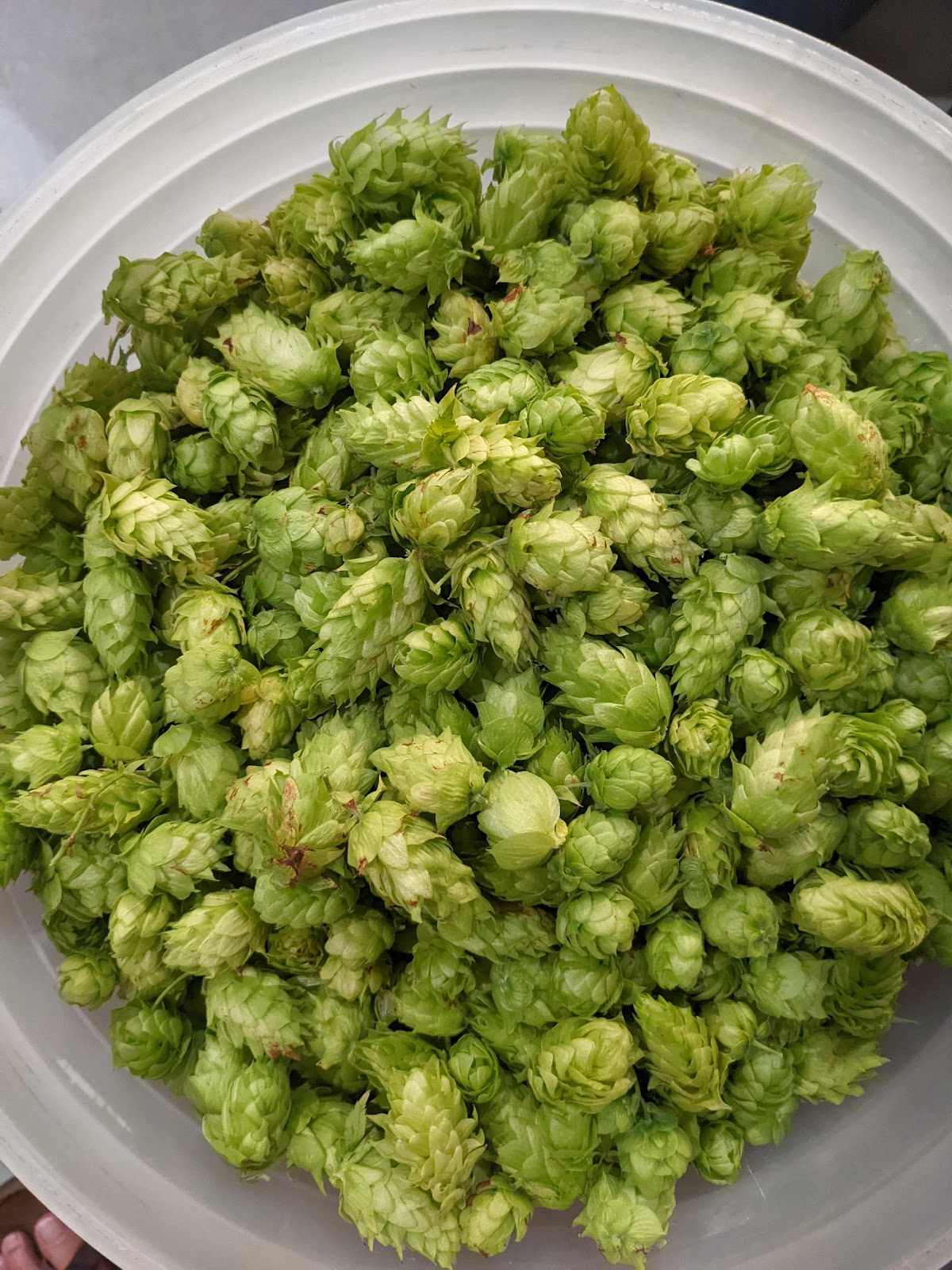
That brings me to hop harvest and hop selection. For my Raw Ale, I wanted primarily citrus, dank, and pine, with a bit of earthiness in the background to play with the juniper flavor. To see which hops I wanted to use in this beer, and to tell when the hops were ready for harvest, I simply grabbed a hop off the bine and split it in two down the middle, exposing the bright yellow lupulin glands. I gave them a big sniff, rubbed the hop pieces in my hands, and smelled again. I am always surprised at how different the hop aromas are from one another! Once the leaves of the hop buds started to feel like drying paper and the aroma was pungent, I picked a brew day and got to work. And it was a fair amount of work! I cut the bines and pulled them down for a more ergonomic picking process. I tossed the hop cones into a five-gallon bucket and discarded the bines and leaves. When the harvest was complete, I had a brew bucket full of fresh hops (over 5 lbs) and it was time to fire up the brew kettle!

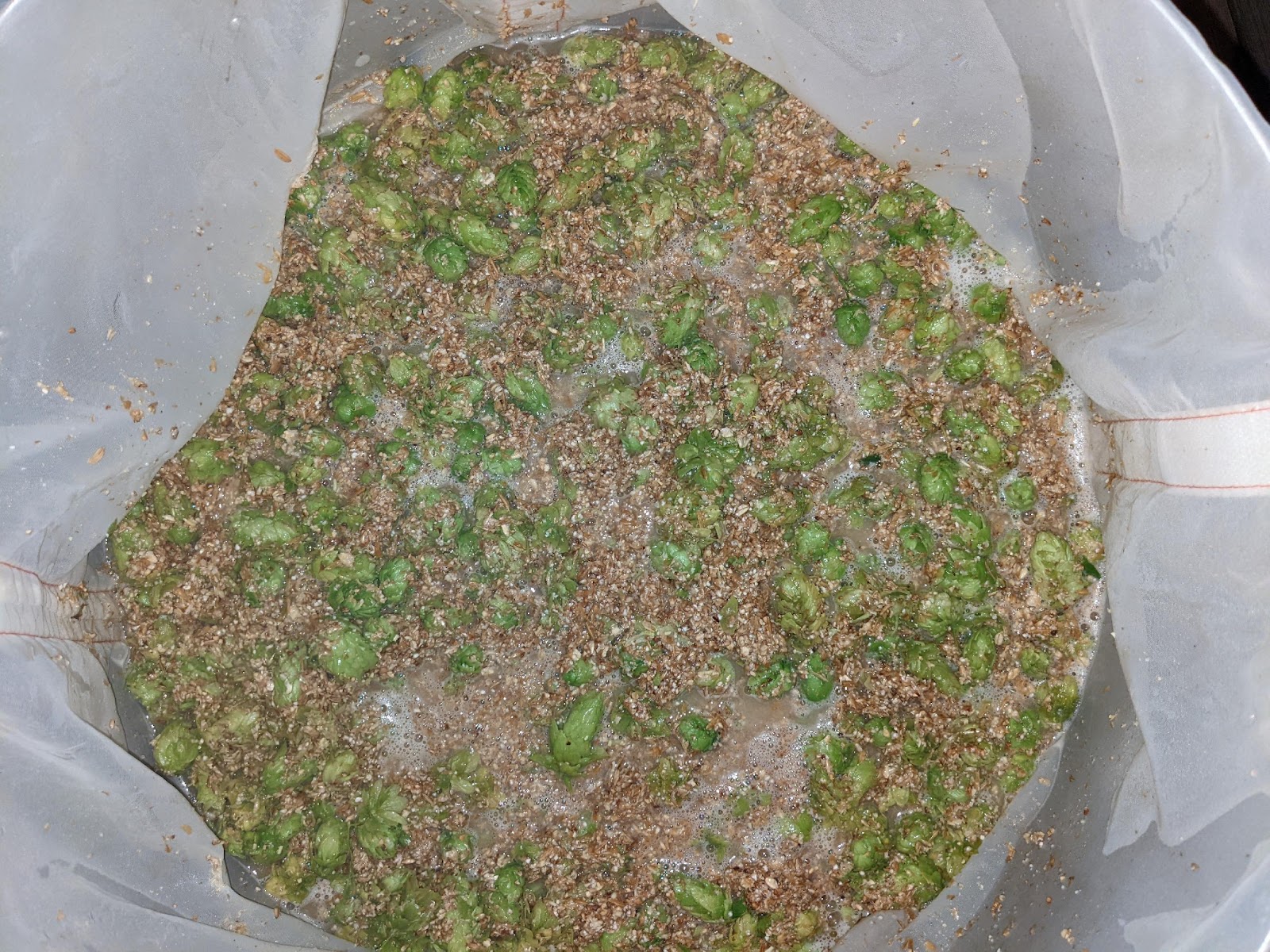
For a normal five-gallon batch, I typically use a 120v Digiboil with the mash tube upgrade, recirculating the mash to help distribute the heat during conversion. However, because I harvested over five pounds of hops and they were all going into the mash, I decided to brew up ten gallons, and thus needed to use my 20-gallon pot and a huge brew bag over the trusty ole propane burner.
Because this is a raw ale, I started off by sanitizing all my mashing equipment, then putting 12 gallons of strike water into the kettle and bringing it to 163° F. While that was coming up to temp, I weighed out my grains and salt additions, and measured my lactic acid. When the water reached strike temp, I dissolved the salts and whirlfloc in a bit of brewing liquor, then added them along with the lactic acid.

I then mashed in the grains, followed by the hops and the cedar branches. The smell reminded me of campfires in the northern woods of Maine. After mashing in, I closed up the lid and waited idly for 90 minutes, enjoying a fresh American light lime lager to pass the time. When the conversion step was complete, I fired up the burner again to get to a mash out temperature of 170° F, where it was held for approximately 15 minutes.
While getting up to temp, I brought two cups of distilled water to a boil on my stovetop and added one ounce of Warrior hops. Five minutes into the boil, I added 4.4 grams of crushed dried juniper, boiled for another five minutes, then added this mixture to the mash. I let the mash sit at 170° F for about 15 minutes before pulling the bag and squeezing the everloving crap out of it. I then added a sanitized wort chiller to the wort and began chilling.




When the wort got to 95° F, I pulled five gallons off into a fermenter and pitched a healthy starter of Arset kveik I picked up from the Yeaster Bunny on eBay. Arset is a relatively clean fermenter that produces tropical/stone fruit esters when fermented at high temperatures (>90°F). I placed a heat wrap around the fermenter and it was bubbling away within hours. The remaining 5 gallons of wort continued chilling until it reached 75° F, when I transferred it to a second fermenter and pitched some harvested Omega Cosmic Punch from a recent batch. Because this was sort of a last minute decision, I just added about half of the yeast I had harvested, which is probably two or three times the volume that would come in a liquid yeast pack. I placed this fermenter into a fermentation chamber set to 72° F. Unsurprisingly, the Arset finished within two days, with a final gravity of 1.011. The Cosmic Punch got started around the time the Arset was winding down and finished up about three days later with a final gravity of 1.012.

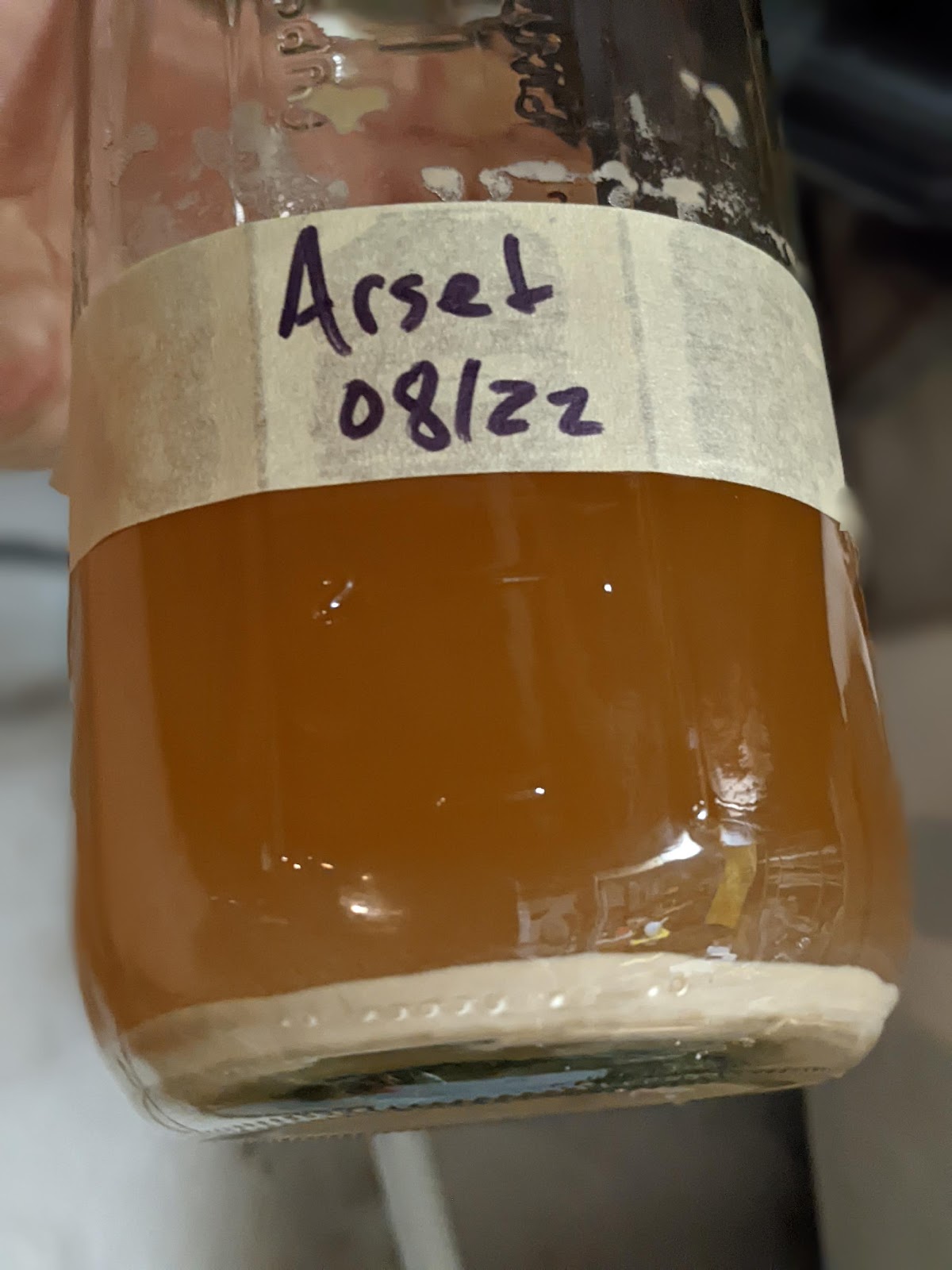
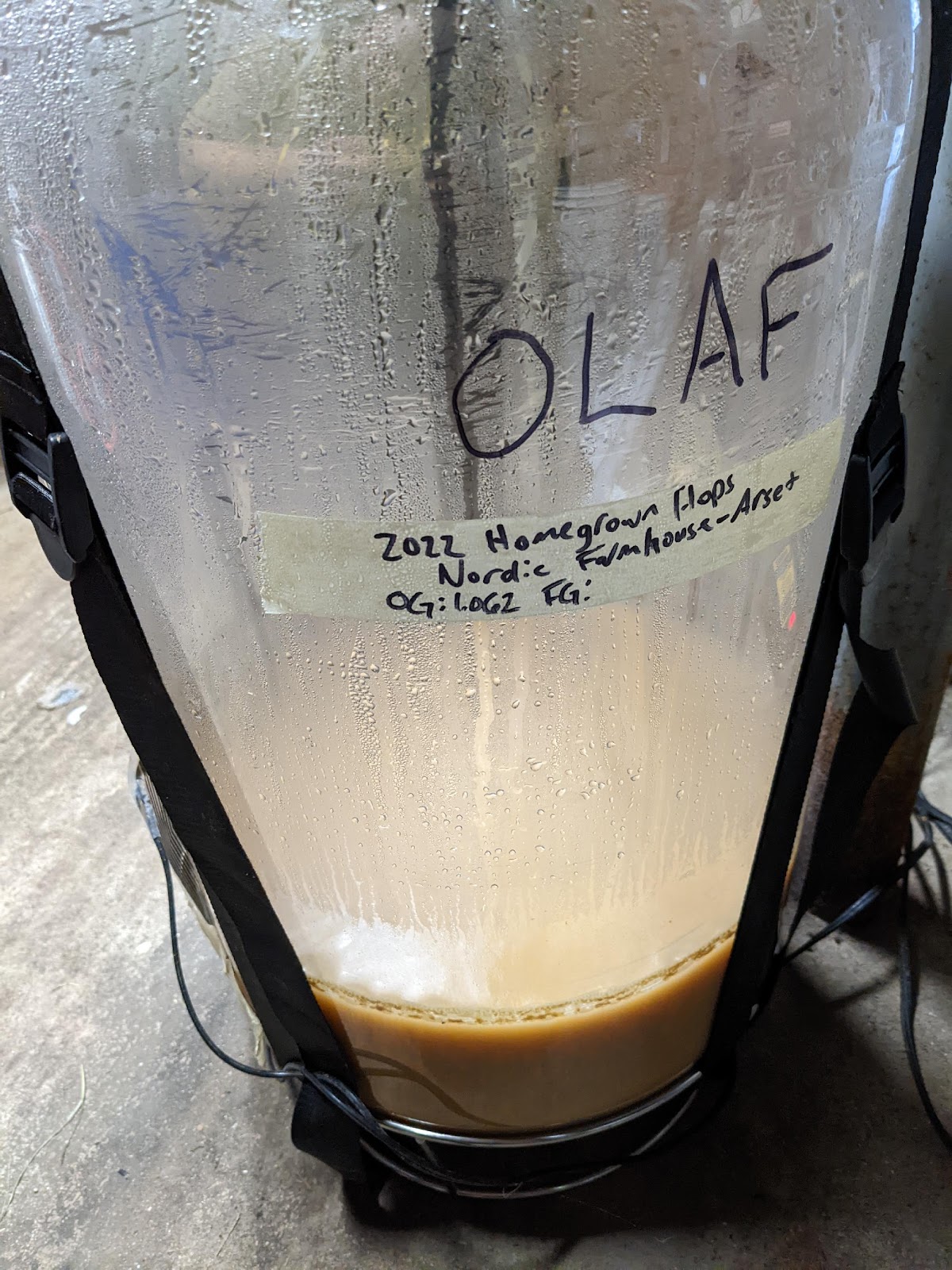
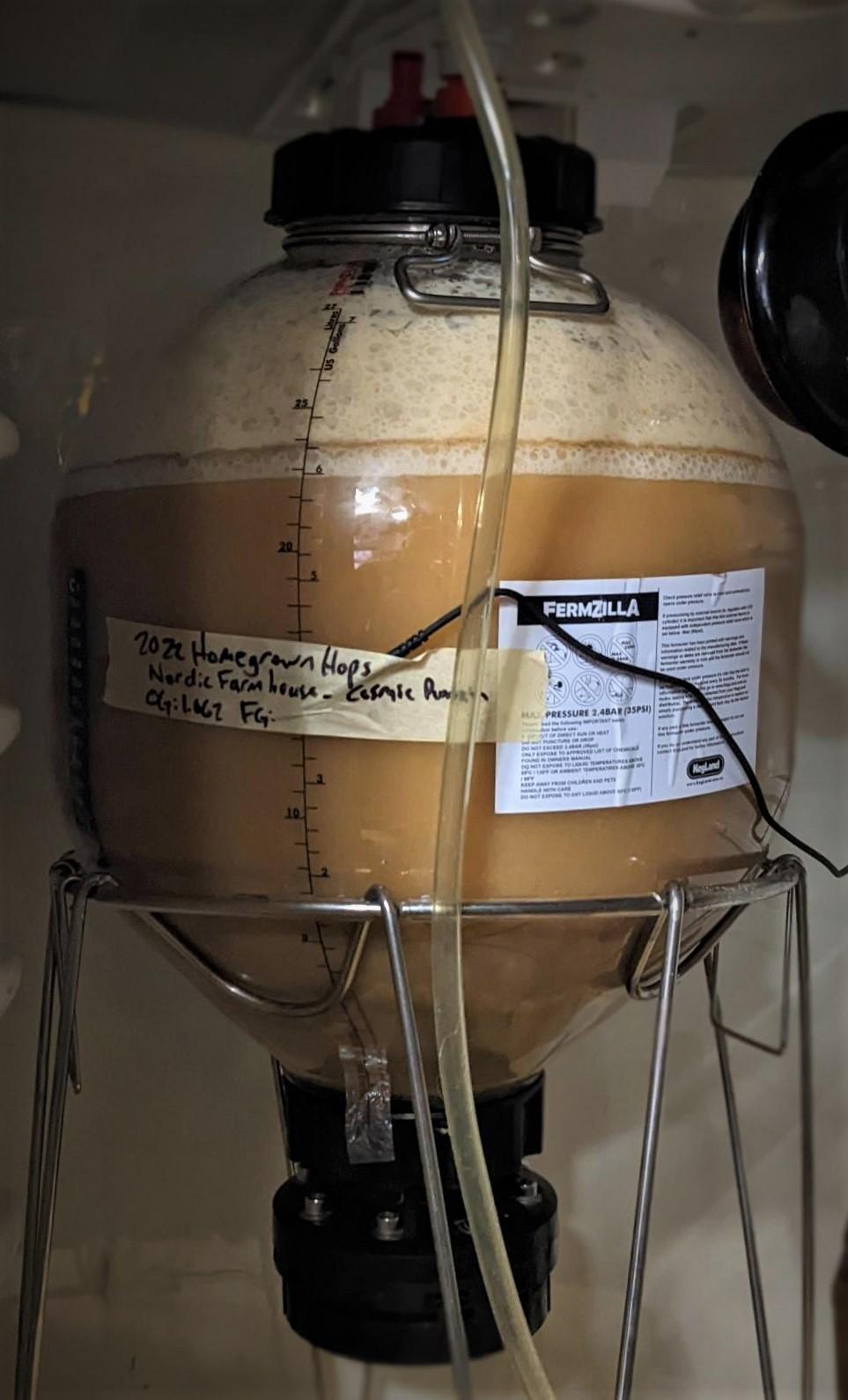


Arset kveik Cosmic Punch
On packaging day, about two weeks after brew day, I racked three gallons of each brew into purged and sanitized three-gallon kegs and set them in my kegerator at 30 psi to burst carbonate. The remaining two gallons of each batch were racked into a secondary fermenter and pitched with Brettanomyces claussenii. (Brett. c.) and Brettanomyces lambicus