GlutaStar – Lallemand Yeast Derivative for Enhanced Glutathione Protection
Improves protection against oxidation during aging and storage
Delivers high concentrations of reduced glutathione (GSH) for maximum antioxidant effect
Enhances tropical and citrus aroma stability, especially in thiol-rich varietals
Boosts mouthfeel and roundness without increasing bitterness
Outperforms traditional inactivated yeasts with a more targeted composition and higher GSH yield
GlutaStar is a next-generation specific yeast derivative developed by Lallemand using a proprietary process that yields exceptionally high levels of naturally reduced glutathione. Designed for use in white and rosé wines, especially those with delicate thiol-driven profiles, GlutaStar helps lock in freshness and prevent oxidative damage during maturation, bottling, and shelf life. In addition to preserving bright aromas like grapefruit, passionfruit, and lemon zest, it contributes to a rounder mouthfeel without adding astringency. Compared to conventional inactivated yeasts, GlutaStar delivers superior antioxidant protection and stability, particularly when used early in the winemaking process.
Usage Rates
White and rosé wines: 0.2–0.4 grams per liter
Equivalent to: 0.76–1.5 grams per gallon
Protocol
Rehydrate GlutaStar in ten times its weight of water at 30–35°C. Let sit for 10 minutes, then stir thoroughly. Add to must or wine at the beginning of fermentation or at the end of fermentation, depending on the goal. Do not combine directly with bentonite or tannins to preserve efficacy.
Storage: Dated expiration. Store in a cool and dry environment at 18°C (65°F). Once opened, keep tightly sealed and dry.
Reduces total acidity in musts and wines with precision and stability
Blended formulation of potassium bicarbonate and potassium tartrate minimizes pH overshoot
Preserves sensory quality while softening harsh acidity
Safer and more predictable than using raw deacidification salts individually
Improves conditions for malolactic fermentation by moderating acid stress
Deacid is a ready-to-use deacidification agent developed to safely and effectively lower acidity in musts and wines. It combines the acid-neutralizing power of potassium bicarbonate with the buffering and stabilizing action of potassium tartrate. This dual-action formula reduces the sharpness of excessive tartaric acid while avoiding the risks of using raw bicarbonate alone, such as overcorrection, CO₂ volatility, or sensory imbalance. Deacid works gently and predictably, preserving freshness and avoiding chalky or soapy off-notes. It also promotes a more favorable environment for malolactic fermentation to proceed by reducing overall acid stress. Winemakers choose Deacid not only for its effectiveness, but for its convenience, safety, and wine-friendly balance compared to standalone chemical treatments.
Protocol
Gradually add the calculated dose directly into the must or wine, ideally during pumping-over to ensure even distribution. If preferred, pre-dissolve in warm, chlorine-free water before addition. Monitor CO₂ release and volume increase during application. Rack or filter after salt precipitation settles fully.
Usage Rates
The manufacturer specifies 130 g/hL per 1 g/L reduction in total acidity. We’ve converted to more easily used dosage rates.
Target Acidity Reduction
Dosage (g/L)
Dosage (g/gal)
1 g/L TA reduction
1.30
4.92
2 g/L TA reduction
2.60
9.84
3 g/L TA reduction
3.90
14.76
Conduct bench trials to verify target acidity correction and flavor outcome prior to bulk application.
Adds sweetness to wine or other beverages without adding fermentable sugar
Also enhances mouthfeel richness, volume and preserves aromatics
Smooths harsh tannins in red wines, reducing astringency and angular structure
Liquid solution ensures fast dispersion and precise dosing
Diminishes harsh alcohol perception in young wines, simulating aged characteristics
Arabinol Dolce is a liquid gum arabic product specifically formulated to elevate the sensory profile of finished wines. By amplifying the perception of sweetness without residual sugar, it brings balance and mouthfeel to dry wines and reduces the need for sweetening. In red wines, it refines tannin structure, smoothing out harsh edges and improving mid-palate integration. In whites, it extends aromatic persistence and enhances complexity, while in fortified or liqueur-style wines it softens alcohol harshness and accelerates maturation-like roundness. Its highly soluble formulation disperses instantly, making it ideal for final polishing before bottling.
Protocol
Measure the correct dose of Arabinol Dolce, then dilute in ten times its weight with clean, chlorine-free water or wine. Add slowly into the wine tank or barrel during final polishing or pre-bottling operations, ensuring thorough mixing. Allow 1–2 days for full sensory integration before final filtration or bottling. No further clarification or filtration should follow to preserve colloidal effects.
Dosage
0.20–1.50g/l or 0.76–5.68 g/gal. Perform bench trials to fine-tune for varietal character, desired sweetness perception, and mouthfeel enhancement.
Activated carbon micro-pellets designed for powerful decolorization
High surface area (>1000 m²/g) for efficient removal of polyphenols and catechins
Removes browning and off-colors without stripping desirable varietal character
Pelletized form avoids dust generation, improving safety and ease of use
Suitable for both must and wine, with fast action and easy removal
Decoran Gran is an activated carbon in micro-pellet form, produced through controlled carbonization and activation. It excels at reducing excessive color, high-molecular polyphenols, and oxidized compounds in both must and wine. Unlike standard powdered carbon, its pelletized form significantly reduces dust, minimizes operator exposure, and enhances dosing accuracy. With an internal surface area exceeding 1000 m² per gram and pore sizes optimized for adsorption, Decoran Gran delivers fast, reliable color correction while preserving desirable sensory attributes.
Usage Protocol
Dissolve Decoran Gran at a ratio of 1:10 (carbon to water, wine, or must) to create a slurry.
Add the slurry to the tank with good circulation (e.g., pump-over).
Once the target color reduction is achieved, remove solids via filtration or sedimentation. You may follow with gelatine or bentonite agents for final polishing.
Dosage Guidelines
Application
Dosage (g/L)
Dosage (g/gal)
Mild decoloration
0.005–0.02
0.02–0.08
Moderate correction
0.02–0.05
0.08–0.19
Heavy decoloration
0.05–0.1
0.19–0.38
Engineered blend of cellulose fibers and perlite for optimal filter aid performance
Provides a stable, porous filtration layer with excellent particle retention
Enhances filtration flow rates while minimizing clogging and pressure buildup
Ideal for pre-coat filtration systems, including rotary drum and vacuum filters
Free of diatomaceous earth — safer handling and reduced environmental impact
AEB Fibroxcel 30 is a high-performance filtration aid composed of purified cellulose fibers and perlite, specifically designed to improve clarity and flow in wine, cider, juice, and other beverage filtration. Used as a pre-coat layer, Fibroxcel 30 creates a uniform, porous structure that traps particulates while maintaining excellent permeability and minimizing pressure increases. It’s particularly effective on rotary drum vacuum filters and other pre-coating systems where filter cake stability and throughput are critical. As a non-DE alternative, it offers safer handling, easier disposal, and improved environmental compatibility.
Usage Protocol
Fibroxcel 30 is typically used to form a pre-coat layer on filter surfaces prior to filtration.
May also be used in combination with finer grades (e.g., Fibroxcel 15 or 20) for multi-stage filtration setups.
Pre-mix with clean water or product before dosing into the filtration system.
Dosage Guidelines (Generic – adjust based on system and turbidity)
Application Type
Typical Dosage
Pre-coat layer
300–600 g/m² of filter surface
Body feed (if applicable)
0.1–0.3 g/L of product being filtered
Note: Dosage depends on the type of filtration system, product load, and desired clarity. Always conduct pilot trials to fine-tune use rates.
Pure Lees Delicacy – Lallemand Yeast Derivative to Smooth Tannins & Preserve Fruit
Smooths harsh tannins and green profiles for refined mouthfeel
Enhances fruit intensity and wine length with noticeable sensory impact
Stabilizes colloidal structure, improving clarity and filterability
Delivers fast results in days, mimicking long lees aging without extended contact
Leverages HPH™ disrupted whole-yeast biomass for superior phenolic coating
Pure Lees Delicacy is a premium inactivated yeast derivative crafted using Lallemand’s advanced High Pressure Homogenization (HPH™) method. This process liberates mannoproteins and polysaccharides that form soluble complexes with phenolic compounds, gently smoothing tannins while preserving vibrant fruit and structural integrity. Applied at the end of alcoholic fermentation or pre‑bottling, it delivers the quality of extended lees contact in just days, producing red wines with softer texture, richer palate weight, and enhanced length. Unlike generic lees products, Pure Lees Delicacy actively interacts with phenolics to refine texture without diluting variety character, making it ideal for reds seeking elegance and balance.
Protocol
Suspend Pure Lees Delicacy in ten times its weight of clean wine or water (e.g., 1 kg in 10 L) at room temperature. Stir gently until fully dispersed. Add to wine toward the end of alcoholic fermentation or before bottling, then mix thoroughly. Allow at least two days of contact before racking. A longer contact period (up to several weeks) may deepen texture refinement depending on wine style.
Usage Rates
Recommended dosage: 20–40 g per hectoliter
= 0.2–0.4 g per liter
= 0.76–1.5 g per gallon
Reskue – Yeast Derivative Nutrient for Detoxifying and Restarting Stuck Fermentations
Detoxifies fermentations by adsorbing toxic fatty acids that inhibit yeast and bacteria
Restores sugar uptake by clearing compounds that interfere with yeast membrane function
Reinvigorates both sluggish or stuck alcoholic and malolactic fermentations
Contains no measurable YAN, so it won't impact nutrient balance or promote excess yeast growth
More effective than standard yeast hulls due to its targeted high-capacity bioadsorptive properties
Reskue is a specific inactivated yeast derivative developed by Lallemand to help winemakers recover from sluggish or stuck fermentations. Unlike generic yeast hulls, which offer general detoxification support, Reskue is produced using a proprietary process that dramatically enhances its surface area and binding capacity for fermentation-inhibiting compounds—especially short- and medium-chain fatty acids. These compounds are produced by stressed yeast and can block sugar transport, stalling fermentation. Reskue removes them more efficiently than standard hulls, helping yeast and bacteria resume healthy metabolic activity. This makes Reskue particularly valuable not only in stuck alcoholic fermentations but also in challenging malolactic fermentations where similar toxins can block bacterial performance.
Protocol
Suspend Reskue in 10 times its weight of clean water at 30–37°C (86–98°F). Stir thoroughly and let sit for 20 minutes before adding to the fermentation. Mix evenly into the tank. In stuck alcoholic fermentations, allow Reskue to settle for 48 hours, then rack off before initiating the restart protocol.
Usage Rates
Recommended dosage: 30–40 grams per hectoliter
= 0.3–0.4 grams per liter
= 1.14–1.5 grams per gallon
Use 30 g/hL for moderate ferment stress and 40 g/hL when conditions are severe or when toxic byproducts are strongly suspected. Reskue is not a nutrient supplement—it provides virtually no YAN—and should be used as a detoxification tool to restore a viable fermentation environment.nd dry.
Due to high demand, the 2.5 kg size is currently out of stock. Be the first to receive your items by placing a pre-order today. We will automatically ship this to you when we receive more inventory.
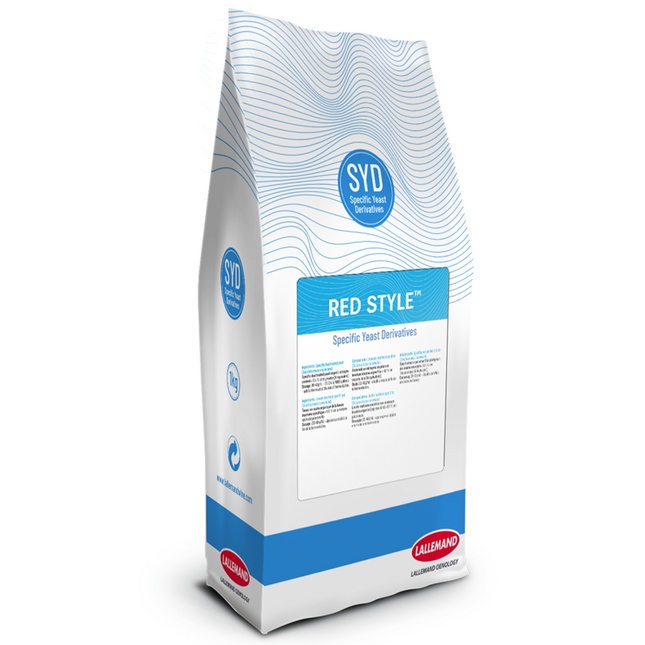
RedStyle – Lallemand Maceration Aid for Enhanced Color, Structure & Tannin Smoothness
Enhances color intensity and stability through polysaccharide–polyphenol complex formation
Improves tannin integration, reducing harshness and green characters
Boosts juice extraction and clarity during maceration with built-in pectinase
Builds fuller body and smoother mouthfeel without overwriting varietal character
Offers dual-action benefits (enzyme + yeast derivative), outperforming generic macerators
RedStyle combines a gentle pectinase enzyme with a specially selected and inactivated wine yeast derivative rich in soluble polysaccharides. When applied during red grape maceration, it breaks down pulp and skin walls—including pectin—enhancing juice yield and extraction. The released polysaccharides bind with anthocyanins and tannins, promoting richer color, more refined tannin structure, and a round, balanced body. The integrated enzyme also improves clarification and filterability, helping winemakers craft wines that are visually appealing, texturally complete, and varietally expressive.
Protocol
Suspend RedStyle in ten times its weight of clean must or water (e.g., 1 kg in 10 L). Stir thoroughly to ensure full dispersion. Add directly after crushing, either into the crusher, at the start of filling, or during initial pump-overs. Maintain suspension during addition to ensure even distribution.
Usage Rates
Recommended dosage: 30 g per hectoliter
= 0.3 g per liter
= 1.14 g per gallon
For dosage expressed per ton of grapes: 227 g per ton (≈ 0.5 lb/ton).
This balanced rate delivers optimal color stabilization, tannin smoothing, and maceration performance for most red wine styles.
Yeast Derivative Nutrient - For increased color stability, integrated mouthfeel and roundness in red wines; OMRI listed
OPTI-MUM RED™ helps to produce wines with intense color, a rounder, softer mouthfeel, and a decreased perception of astringency.
Early additions of OPTI-MUM RED lead to more stable color due to reactions between early-released color molecules (anthocyanins), phenolic compounds (tannins), and the polysaccharides from OPTI-MUM RED
Reduces the perception of green, astringent tannins in cool-climate or low maturity fruit
Reduces the sensation of hotness in high alcohol wines
Can help soften mouthfeel
The yeast strain behind OPTI-MUM RED was specifically selected and fully autolyzed for its highly reactive high molecular weight polysaccharides and oligosaccharides
Frequently used in: Medium-bodied reds, full-bodied reds, cool-climate reds, high maturity grapes
When to add: Directly to grapes or at first mixing
Provides: High molecular weight polysaccharides and oligosaccharides that contribute to color stability, volume, and softness
YAN contribution: Insignificant
Recommended Dosage: 20-40 g/hL (1.7-3.3 lb/1000 gal)
Usage: Mix OPTI-MUM RED in 10 times its weight of water or juice and add directly to the grapes or must. If adding later in fermentation, add during a pump-over or during tank mixings. This product is mostly soluble. Stir to maintain suspension before and during addition.
Storage: Dated expiration. Store in a cool, dry environment at 18°C (65°F). Once opened, keep tightly sealed and dry.
Finishing Tannin that enhances sweetness perception and roundness in low-alcohol or reduced-alcohol wines
Improves aromatic integration and boosts fruit expression
Reduces vegetal and bitter notes common in underripe grapes
Provides a smooth, full mouthfeel without contributing oak character
Can compensate for the structural loss often associated with dealcoholization
EnartisTan Unico 3 is specifically formulated to improve balance, aroma, and texture in wines with reduced alcohol content. By softening edges and enhancing mid-palate body, it helps recreate the sensory impact that is often diminished during alcohol reduction. Its proprietary blend of ellagic tannins contributes no oak flavor, allowing varietal and fruity notes to shine while rounding out acidity and bitterness. Particularly valuable in wines made from underripe grapes or those undergoing alcohol adjustment, Unico 3 restores harmony and structure in a way that supports freshness and drinkability.
Protocol for Use
Unico 3 should be added during aging or prior to bottling. Dissolve in 10 parts wine or warm water, mix thoroughly into the wine, and allow 3–5 days for integration. Bench trials are highly recommended to determine optimal dosage based on the degree of alcohol reduction and wine style.
Usage Rate
Recommended dosage is 2–15 g/hL, depending on the desired sensory enhancement.
— 0.02–0.15 g/L
— 0.076–0.57 g/gallon
Use at the lower end for light or delicate wines and increase the dose for wines requiring greater palate restoration or softness.
Finishing Tannin that enhances fruit expression and freshness in red and rosé wines
Contributes roundness and softness without adding oak character
Improves wine stability and protects against oxidation during aging
Reduces aggressive phenolics and green tannins
Ideal for refining texture and boosting aromatic intensity in young wines
EnartisTan Unico 2 is a naturally extracted, highly reactive ellagic tannin formulated to support and enhance fruit-driven wine styles. Unlike oak-based tannins, Unico 2 does not impart woody or toasted notes, making it an excellent choice for winemakers seeking to amplify red fruit aromas, add softness, and reduce harshness in red or rosé wines. Its high reactivity with oxygen contributes to increased oxidative stability, helping preserve freshness over time. Unico 2 is particularly well suited for wines made without barrel aging or those requiring a gentle tannic lift without changing the aromatic profile. It is often favored by winemakers who want to fine-tune mouthfeel and structure while preserving varietal purity.
Protocol for Use:
Unico 2 is typically added during maturation or in pre-bottling stages. Dissolve the tannin in 10 parts wine or warm water before adding to the tank. Mix thoroughly and allow 3–5 days for the tannin to integrate before bottling or filtration. Always perform bench trials to determine the ideal dosage for your specific wine.
Usage Rate:
Recommended dosage is 2–20 g/hL, depending on wine style and desired effect.
That is equivalent to:
— 0.02–0.2 g/L
— 0.076–0.76 g/gallon
Use lower doses for rosé or light red wines and higher rates for structured reds needing refinement and aromatic support.
Finishing Tannin that enhances mid-palate volume and aromatic complexity in red wines
Balances structure by integrating polymerized oak tannins with wine tannins
Reduces astringency while promoting a smooth, round mouthfeel
Stabilizes color and improves antioxidant capacity during aging
Ideal for use in premium red wines requiring subtle oak character without barrel aging
EnartisTan Unico 1 is a highly polymerized oak-derived tannin formulated to enhance structure, texture, and aromatic depth in red wines. Its composition mirrors the tannin profile of seasoned oak barrels, making it ideal for fine-tuning wines that need mid-palate weight, softness, or aromatic lift without introducing green or bitter notes. Unico 1 integrates seamlessly with the wine’s phenolic matrix, rounding out mouthfeel while reducing aggressive or coarse tannins. Its use promotes color stability and oxidative protection, especially during long-term aging. Unlike lower-grade tannins, Unico 1 offers refined elegance and consistency, which is why it's preferred by winemakers aiming to elevate premium lots without the variability of barrel aging.
Protocol for Use:
Unico 1 can be used during maturation or before bottling. Dissolve the tannin in 10 parts wine or warm water before addition, and mix thoroughly into the tank. Allow at least 3–5 days for the tannin to integrate before filtration or bottling. Bench trials are strongly recommended to determine ideal dosage and evaluate impact on taste and structure.
Usage Rate:
Recommended dosage is 5–30 g/hL depending on wine style and target structure.
That is equivalent to:
— 0.05–0.3 g/L
— 0.19–1.14 g/gallon
Start with lower doses for delicate reds or wines with existing oak influence, and increase for structured reds needing volume and polish.
Whether you're working with Pinot Noir, Tempranillo, or Bordeaux varietals, Pro Tinto offers a more refined and integrated approach to fermentation tannin use
It's not just about adding structure—it's about elevating the entire fermentation profile
Advanced fermentation tannin with built-in balance
Pro Tinto by Enartis is a next-generation fermentation tannin formulated specifically for red winemaking. It combines a carefully balanced blend of ellagic and condensed tannins with naturally derived mannoproteins, offering a unique advantage: powerful color and structure development with built-in softness and integration.
Designed for use at the start of fermentation, Pro Tinto enhances the binding of grape anthocyanins, significantly improving long-term color stability. At the same time, it contributes mid-palate structure without the harshness or drying sensation often associated with seed tannins or traditional condensed tannin products.
What Sets Pro Tinto Apart:
Most fermentation tannins provide structure and some antioxidant benefit, but few address the risk of over-extraction or unbalanced mouthfeel. Pro Tinto goes further:
Mannoproteins in the formula naturally soften perception of tannin, improving roundness and early drinkability without sacrificing age-worthiness.
Stronger color fixation than standard grape seed or oak-derived tannins due to precise polymerization with anthocyanins.
Lower sensory aggression, reducing the need for corrective fining later in the process.
Better aromatic retention, helping preserve delicate fruit and floral notes during active fermentation.
Why Winemakers Choose Pro Tinto:
Pro Tinto is ideal for premium red wine fermentations where elegance, structure, and aromatic integrity are critical. The inclusion of mannoproteins provides a built-in layer of polish—supporting wines that are more complete straight out of the fermenter.
Upgrade your bottling protocol with Enartis Hideki—the all-in-one solution for modern wine protection
Cleaner labels. Longer shelf life. Better wine
The ultimate natural wine protector
Protect your wine at bottling with the power of next-generation tannins. Enartis Hideki is a premium, multifunctional tannin blend engineered to provide exceptional protection against oxidation, metal-catalyzed spoilage, and microbial instability—without the need for high SO₂ additions.
Crafted from a proprietary mix of gallotannins and ellagitannins, Hideki binds metals, suppresses spoilage organisms, and enhances wine longevity—all while preserving delicate aromatics and mouthfeel. It’s ideal for winemakers seeking a clean-label solution for modern consumers, or those reducing sulfur use in natural, organic, or low-intervention winemaking.
Why Winemakers Choose Hideki:
Antioxidant Defense
Shields against oxygen damage during bottling and early bottle aging.
Metal Chelation
Binds iron and copper ions that accelerate oxidation and haze formation.
Microbial Control
Reduces spoilage risk from Brettanomyces and other spoilage microbes—works independently or alongside chitosan.
SO₂ Reduction
Enables a cleaner label by reducing or replacing sulfur additions without compromising stability.
Wide pH Range
Consistently effective in both white and red wines, regardless of acidity.
When to Use:
Ideal for pre-bottling addition after stabilization and prior to final filtration.
Effective across a wide range of wine styles—reds, whites, rosés, and even cider.
Recommended Dosage:
Antioxidant & Aroma Protection: 1–3 g/hL
Microbial Suppression: 5–10 g/hL
Proven Results:
Maintains brightness and fruit character during aging
Supports shelf stability in low- or no-SO₂ wines
Shown in winery and cider trials to outperform traditional sulfur-based regimens in preserving aroma and microbial safety
EnartisTan Skin delivers elegant structure and stability with clean-label confidence
Perfect for winemakers seeking balance, clarity, and aromatic purity without compromise
Offers grape-derived structure, stability, and freshness
EnartisTan Skin is a high-purity, condensed tannin extracted from fresh white grape skins, developed to improve structure, color stability, and aromatic expression in white, rosé, and red wines. Its origin from unfermented grape material makes it exceptionally clean in flavor, while delivering functional benefits during and after fermentation.
Ideal for wines with low natural phenolic content or limited maceration, EnartisTan Skin helps round out the palate, protect from oxidation, and reinforce aromatic freshness—without the risk of bitterness or astringency.
Key Benefits:
Enhances mid-palate structure and softness in white, rosé, and light red wines
Stabilizes color and improves protein stability
Boosts aromatic freshness by contributing thiol precursors
Clean, grape-derived source—neutral in taste and free from off-notes
Certified vegan, allergen-free, and compatible with organic winemaking
Helps reduce oxidation risk when added post-pressing or pre-aging
Recommended Uses:
Whites and rosés made with minimal skin contact
Red wines from thin-skinned varieties or short maceration
Aromatic varietals where fruit expression is a priority
Wines intended for aging on lees or with low-intervention protocols
Dosage: Use 3–20 g/hL depending on varietal, winemaking style, and desired mouthfeel impact. For best results, dissolve in water or wine (10:1 ratio) before addition and allow adequate contact time prior to racking or bottling.
Enhances mouthfeel and mid-palate roundness with a soft, creamy texture
Releases mannoproteins that increase stability and aromatic persistence
Mimics the effect of lees aging without the need for physical stirring
Adds a subtle perception of sweetness, balancing acidity and bitterness
Liquid format ensures easy, uniform dispersion with no rehydration required
Batonnage Plus Texture is a refined yeast derivative designed to deliver the benefits of traditional lees aging in a faster, more controlled way. Rich in soluble mannoproteins and polysaccharides, it enhances the tactile profile of wine by increasing volume and softness, while also improving aromatic lift and length. Its unique composition smooths rough edges, balances acidity, and imparts a subtle sweetness on the palate, making it especially valuable for wines that are overly lean or sharp. This soft finish helps round out both white and red wines without adding sugar, creating the impression of greater harmony and polish. Its liquid format ensures fast, clean integration with minimal handling.
Protocol
Dilute the desired amount of Batonnage Plus Texture in ten parts chlorine-free water or wine. Add during maturation or post-fermentation with gentle mixing. Allow 7–14 days of contact time before sensory evaluation. Once the desired effect is reached, rack or filter as needed.
Usage Rates
Manufacturer recommends 50–200 mL/hL. Converted to ml/L and ml/gal:
Application
Dosage (mL/L)
Dosage (mL/gal)
Light mouthfeel enhancement
0.50–1.00
1.89–3.79
Moderate roundness and aromatic lift
1.00–2.00
3.79–7.57
Maximum texture and soft finish
2.00–4.00
7.57–15.14
Conduct bench trials to dial in the desired mouthfeel, sweetness perception, and integration based on your wine style and aging goals.
Supports healthy yeast metabolism during alcoholic fermentation
Provides detoxifying action through inert cellulose, absorbing fermentation inhibitors
Improves fermentation kinetics and reduces the risk of sluggish or stuck fermentations
Enhances yeast distribution in the must, promoting uniform activity
Boosts wine stability and aromatic freshness by reducing reductive off-notes
Fermocel is an inactivated yeast-based fermentation aid enriched with purified cellulose, designed to improve the performance and reliability of alcoholic fermentation in white, rosé, and red wines. The cellulose acts as a physical support and detoxifying agent, adsorbing inhibitory compounds such as medium-chain fatty acids and pesticide residues that can hinder yeast performance. By promoting more uniform yeast dispersion and reducing stress factors, Fermocel helps prevent sluggish or stuck fermentations, especially in musts with high sugar content or low nitrogen availability. Its use results in cleaner, fresher wines with more complete fermentation and better preservation of aroma and mouthfeel.
Protocol
Rehydrate Fermocel in 10 parts chlorine-free water or must at room temperature
Mix thoroughly to form a uniform suspension
Add directly to the must at the start of alcoholic fermentation or during active fermentation if signs of stress occur
Ensure proper mixing for even distribution
Usage Rates
Application
Dosage (g/L)
Dosage (g/gal)
Preventive use
0.25–0.50
0.95–1.89
Corrective use (high-stress musts)
0.50–1.00
1.89–3.79
Special formulation of gum arabic that enhances and protects wine aromas
Smooths tannins and builds mid‑palate texture, ideal for both red and white wines
Stabilizes color pigments and suppresses bitterness in high‑polyphenolic wines
Lliquid format ensures fast dispersion and precise dosing every time
Concentrated gum arabic solution rich in arabinose‑rich polysaccharides
Arabinol Arome delivers a refined sensory boost through highly soluble gum arabic, shifting wine texture toward a softer, more rounded mouthfeel while enhancing aromatic intensity. It accentuates fruit and floral notes without altering varietal character. By reinforcing anthocyanin‑arabic interactions, it improves color stability in reds and rosés. In white wines, it creates a subtle sweetness and body that elevates clarity and appeal. The low‑viscosity liquid dissolves instantly, enabling clean integration and reliable performance across tank and barrel applications.
Protocol
Measure the correct dose of Arabinol Arome
Dilute in ten times its weight with clean, chlorine‑free water or wine
Add slowly into pumping or mixing operations for even distribution
Allow 1–2 days for full sensory integration before final filtration or bottling
Usage Rates
Use at a rate of .2-.6g g/L or .76-2.27 g/gal
Hydrosolubilized liquid gelatin making application immediate and easy
Rapid flocculation produces heavy, compact sediments that settle quickly
High polyphenol-reactivity reduces bitterness without dulling color
Excellent compatibility with silica sol for combined protein stabilization
Low-dust, pre-hydrolyzed liquid avoids solubilization issues common in powder gelatins
Gelsol is a stable, hydrosoluble gelatin colloid designed for effective clarification of musts, wines, and distillates. When in contact with polyphenols, it forms heavy macro-coagula that quickly settle, improving clarity while reducing bitterness and astringency. In red wines it minimizes off-tannins without affecting anthocyanin-based color. Gelsol works faster and cleaner than powdered gelatins, and pairs well with silica sol to bolster protein-haze removal—ideal for co-fining applications. Its liquid format ensures precise dosing and smooth integration throughout the batch.
Usage Protocol
Dilute Gelsol 1:1 with chlorine-free water or wine before addition.
Add slowly while stirring or via a dosing system to ensure even distribution.
For enhanced protein removal, add silica sol after Gelsol has fully dispersed (~30 minutes). See below for more details.
Allow 24–48 hours for flocculation and sedimentation before racking or filtration.
Dosage Guidelines
Application Level
Gelsol (mL/L)
Gelsol (mL/gal)
Light clarification
0.05–0.15
0.19–0.57
Moderate clarification
0.15–0.30
0.57–1.14
Intensive clarification
0.30–0.50
1.14–1.89
Using Gelsol When Pairing With Silica Sol
You typically use 25–50% less Gelsol when pairing with Silica Sol because Gelsol binds negatively charged phenolic and protein compounds.Silica Sol binds to positively charged protein-Gelsol complexes to complete the flocculation. The combination is synergistic, meaning you achieve the same (or better) clarification with lower doses of each. This sequence helps create stable, fast-settling lees and improves filterability.
Step 1: Add Gelsol first to the tank (diluted 1:1 in water or wine), with good mixing.
Wait ~15–30 minutes to allow Gelsol to bind proteins and form complexes.
Step 2: Add Silica Sol (also pre-diluted), again with mixing.
This ensures effective floc formation and maximizes settling.
Designed for use during fermentation to stabilize color and improve phenolic integration
Mixes much easier than powdered tannins thanks to its liquid formulation
Composed of ellagic tannins (oak) and condensed tannins (exotic woods)
Protects wine from oxidation by acting as a sacrificial tannin and antioxidant
Promotes anthocyanin-tannin binding, improving long-term color and mouthfeel stability
Ideal for red wines needing structure, color retention, and oxidative protection from the start
Fermotan Liquid is a balanced blend of ellagic, proanthocyanidinic, and gallic tannins designed to strengthen color, stabilize phenolic compounds, and shape the sensory profile of wines. Its liquid formulation makes it easy to dose and ensures rapid integration without the need for prior solubilization. Used during red wine fermentation, Fermotan Liquid enhances structure, preserves varietal character, and supports long-term aging potential. The result is a wine with deeper color, lifted aromatics, and a rounder, more polished mouthfeel compared to tannins from other sources.
From the onset of fermentation, anthocyanins are extracted faster than tannins. In order not to extract these color compounds in vain, it is imperative to protect them from the oxygen and steer them towards stable polymerization forms, such as those with proanthocyanidins. The synergy among the three classes of tannins (ellagic, proanthocyanidinic and gallic), exerts a triple protective action towards the anthocyanins.
Protocol
Add directly to the must at the beginning of alcoholic fermentation, ensuring thorough homogenization.
Usage Rates
0.05–0.20 ml/L (0.19–0.76 ml/gal)
Liquid gum arabic solution sourced from Senegal Acacia, rich in L‑Arabinose (>45%) and L‑Rhamnose (>18%)
Enhances mouthfeel and perceived sweetness without adding calories or fermentable sugar
Softens high‑tannin red and rosé wines, delivering pleasant body and volume
Promotes color stabilization by supporting anthocyanin retention in young wines
Acts as a colloidal stabilizer, slowing tartrate precipitation and improving wine texture
Arabinol Super Rouge is a premium liquid gum arabic solution specifically formulated to enhance the sensory profile of red and rosé wines. Its high monosaccharide content (arabinose and rhamnose) contributes a subtle sweetness and soft roundness to the palate, helping to balance astringent tannins and boost mid‑palate body. In addition to mouthfeel enhancement, it offers colloidal protection for color pigments and tartronate stability, making it particularly effective in young wines or those with unstable hue. The product’s liquid format allows precise dosing and rapid integration, delivering refined texture and maintaining varietal character.
Usage Protocol
Dilute 1:10 in wine or chlorine-free water before addition.
Add to clearly racked, filter-ready wine—preferably before or after final filtration.
Complete any necessary filterability testing before membrane filtration.
No further fining or clarification should follow to preserve colloidal effects.
Dosage Guidelines
Application
Dosage (g/L)
Dosage (g/gal)
Red/rosé wine texture & body
0.2–1.5
0.8–5.7
Color stabilization & colloidal protection
0.5–2.0
1.9–7.6
Bench trials are essential to optimize for varietal style and desired mouthfeel. Allow sufficient integration (1–2 days) before sensory evaluation.
Adds elegant oak structure and complexity without the need for barrel aging
Provides vanillin, coconut, and sweet spice notes reminiscent of fine toasted oak
Enhances mouthfeel, roundness, and mid-palate weight
Helps integrate tannin structure and stabilize color in red and rosé wines
Highly concentrated liquid format for precise dosing and quick integration
Ellagitan Barrique Liquid is a premium liquid ellagic tannin derived from high-quality toasted oak, formulated to bring the complexity and refinement of barrel aging into a fast, flexible, and efficient format. Ideal for use in both fermentation and maturation phases, it imparts sweet toasted oak characters such as vanilla, coconut, and subtle spice, while enhancing mouthfeel and phenolic integration. Vanilla is particularly enhanced. Very useful in wines that need added structure or aromatic lift, Ellagitan Barrique also plays a supporting role in color stabilization, especially when used in the early stages of red winemaking. Its liquid form ensures rapid homogenization, making it a versatile tool for final blending and polishing.
Usage Protocol
Dilute in 10 parts wine or water before adding to the tank or barrel.
Add during fermentation, post-fermentation, or during aging, depending on the desired effect.
Mix thoroughly to ensure even distribution.
Bench trials are strongly recommended to determine the ideal dose based on wine style and desired outcome.
Dosage Guidelines
Application
Dosage (g/L)
Dosage (g/gal)
White or rosé wines
0.5–2.0
1.9–7.6
Red wines (fermentation or aging)
1.0–5.0
3.8–19.0
Finishing & final adjustment
0.5–1.5
1.9–5.7
Always perform bench trials before full-scale additions. Allow at least 3–5 days after addition for evaluation.
Wine Fermentation Additives and Tannins Collection Article+
SO2 Management Download print friendly version An Introduction to SO2 Management If we want to make high quality wines, then one of the most important things we as winemakers need to learn is how to effectively manage the sulfite levels in our wines. When done correctly, maintaining the proper amount of sulfites in a wine protects it from oxidation and microbial contamination during ageing/storage. This allows the wine to continue developing safely throughout its entire lifetime. Yet, for this protection to be effective, the required sulfite levels need to be consistently maintained at all times. This is done by testing the SO2 levels in our wines at regular intervals and, if we are short of the desired range, by adding additional sulfur to make up the difference. As straightforward as this seems, however, accurate sulfite management is actually much more of a hands-on process than just adding a generic amount of SO2 from time to time and letting it ride. Here is the reason why: There are 2 technical concepts that need to be taken into account when making our sulfur additions or we run the risk of getting inaccurate results: Binding: Due to the complex way sulfite additions interact with the various chemical compounds and solids naturally present in our wines, the amount of free sulfite remaining in the wine after we make an addition often falls short of our calculated goal. This loss is coming from a binding phenomenon which needs to be taken into account and corrected for or our wines risk not being protected in spite of us making sulfur additions. The amount of SO2 needed to protect a wine is pH dependant: The free SO2 * levels required to protect wine are pH-dependent: as the pH goes up, higher levels of free SO2 are needed to protect the wine. In other words, you can have 25 ppm free SO2 in your wine and think everything was fine, but if your pH is above 3.3 the wine is still not adequately protected! When it comes to sulfite additions, one size definitely does not fit all! (Note: a full explanation of “free” and “total” SO2 is coming!) Since understanding these concepts is key to our ability to properly control sulfur levels, the first half of this manual will be spent focused on them. Then, once we have laid this foundation, the second half of the manual will show how to incorporate this knowledge into a technically sound protocol that will allow us to effectively manage our SO2 levels with confidence. Let’s get to it! Understanding SO2 Management Theory What is SO2? We’ll begin by starting with the basics. Sulfur Dioxide, or SO2 , is a chemical compound used by winemakers to help keep their wine protected from the negative effects of oxygen exposure as well as spoilage microorganisms. Sulfur Dioxide is known by a variety of different names to winemakers, the most common being “SO2 ”, “Metabisulfite”, and just plain “Sulfite.” In winemaking, the SO2 concentration in a wine is measured in Parts per Million, or ppm, which refers to the number of Parts of Sulfite per Million parts of wine. This unit of measure is equivalent to mg/L, or milligram of SO2 per Liter of wine. What is SO2 Management? When a wine contains the proper amount of sulfites, a protective buffer is created that helps the wine withstand any accidental oxygen or microbial exposure that may occur during the ageing/storage process. The sulfite does this by acting as an intermediary force that quickly intercepts and reacts with the offending element or organism before it can damage the wine. However, this is a one-way ticket and we will learn that once the sulfite becomes used-up, it is no longer available to react with future threats. It is still part of the “total” amount of SO2 in the wine, but it is no longer “free” to protect the wine (more in a moment). In its most basic form, SO2 management simply comes down to understanding how to create and maintain a small, stable reserve of Free SO2. Each Wine is Unique: Understanding the “Binding” Phenomenon Many of the solids and chemical compounds in wine (both good and bad) interact with sulfite, and their concentration/ presence has a direct effect on how an SO2 addition behaves. To begin with, no two wines are ever the same; each one possesses a unique ratio of chemical compounds and solids that are present at varying concentrations. Depending on winemaking techniques, handling, or even sanitation issues, these differences can be quite pronounced. It’s because of these inherent differences that two seemingly identical wines (ex: both are dry with the same pH and TA) can often end up with different free SO2 levels after equal sulfite additions. The discrepancy mentioned above between what we’ve calculated on paper and the amount of free SO2 we actually wind up with in the wine is coming from a phenomenon known as “binding”. It is based on the fact that when sulfite is added to a wine, portions of the addition react with and become chemically bound to the aldehydes, acids, furfural, sugars, solids, yeast/bacteria, etc that are naturally present in wine. Binding continues until all of the various reaction-able elements in the wine have either become bound up or there is no more free sulfite to interact with. This binding action actually serves to protect the wine; as long as there is free sulfur present, it is available to react with and effectively neutralize both oxidation and microbial spoilage threats. In effect, free SO2 can be viewed as an insurance policy that the winemaker takes out in case the wine has any problems during its lifetime: As long as you have the recommended amount of free SO2 your wine is protected (more on this later). Judicious is Best! Maintaining a reserve of free sulfur means that once a wine starts to lose its free SO2 content, we are obligated to add more sulfite to raise it back up again. Yet, there can be too much of a good thing. If we don’t monitor our amounts and blindly keep adding sulfur to the wine in an effort to maintain the required pool of free SO2 , it is possible to add so much that the total amount of sulfur in the wine becomes detectable in taste, negatively impacting the wine. This is one of the fine lines that we as winemakers walk, one more example of the junction between artistry and science that is winemaking. We need to have a sufficient quantity of sulfur present in order to maintain the free SO2 levels needed to protect the wine, but we don’t want the total levels to be so high as to be noticeable when we drink it. Therefore the goal of proper sulfite management in winemaking is learning to create the required amount of free SO2 in the wine while using the lowest total amount of sulfite possible. In order to help us do this it is important to take a further look into the implications of the binding process. Three Agents That Bind SO2 Managing our free SO2 levels starts as soon as our last fermentation is over (alcoholic or malolactic). When we make our first SO2 addition (by calculating, testing the results and correcting back up to our desired level if necessary- more on this later) we are establishing our starting point for free SO2 in the wine. Once this baseline has been established, as long as the wine remains completely sealed and devoid of oxygen contact the level of free SO2 should remain fairly stable over time. However, as soon as we start to open the vessels up for tasting, testing, blending, fining or topping up (for barrels), we will begin to see a clear drop in the free SO2 . This drop can be slight or quite drastic depending on how the wine is being handled. There are three main causes of the binding phenomenon responsible for this drop in the wine’s free SO2 levels: aldehyde formation, spoilage organisms, and the introduction of solids into the wine. Aldehydes: When a wine is exposed to oxygen the alcohol in it oxidizes into chemical compounds called aldehydes. Aldehydes are a class of chemical compound that bind with SO2 , resulting in lower free SO2 levels. In fact, there is a snowball effect often associated with aldehyde formation: As the aldehydes develop and react with the free SO2 in the wine, less SO2 is available to intercept oxygen. As a result, the incoming oxygen then reacts with more alcohol to create more aldehyde – and so on and so forth. This is the most common cause of a drop in a wine’s free SO2 and the most common cause of oxygen-related spoilage that we see in homemade wines. Note: Barrels and tanks with headspace tend to lose their free SO2 more quickly than fully topped inert vessels do. This is due to the wine’s interaction with oxygen in the environment/headspace. It’s important to note, however, that even if there is no oxygen exposure, free SO2 levels can still decrease gradually during ageing due to normal chemical reactions taking place in the wine as it continues to evolve (the higher the pH, the higher the level of decrease). Spoilage Organisms: If conditions are favorable and spoilage organisms contaminate the wine, this can create a cell mass that binds with the SO2 . The end result is a lower free sulfur level in a wine. Most commonly these organisms will be Acetobacter (vinegar bacteria), Lactobacillus, Pediococcus, and film yeasts (often if one spoilage organism is present others are as well). Spoilage problems usually gain a foothold when depleted free SO2 levels – usually due to excessive oxygen exposure - make the wine vulnerable. Introduction of Solids: Any time we add solids into our wine, such as oak (which, being porous, also brings some oxygen with it), tannins, sugars, specialized yeast products, fining agents, etc. we will have some amount of binding going on, thus lowering the free SO2 . Techniques to Limit Binding Now that we have taken a closer look at the elements that can bind-up our free SO2 levels, we can focus on how to eliminate or at least minimize the unwanted impact they have on our wine. For each of these three problems, there are proactive courses of action we can take to minimize potential ill effects: Aldehyde Formation: Since aldehydes form when alcohol oxidizes, if we eliminate or limit the amount of oxygen the wine comes into contact with then we also effectively eliminate or limit the amount of aldehyde that gets formed in our wines. This can be accomplished by flushing any air spaces that the wine will occupy with inert gas. Examples of these “air spaces” include the headspaces of vessels, transfer lines, pump cavities, filter housings, etc. Spoilage Organisms: Good sanitization practices and being vigilant about keeping free SO2 at the required level will help to keep any microbial issues at bay. This not only keeps the wine from developing off flavors from unwanted microbial action, but also limits the total SO2 additions to a minimum, lessening the risk of a negative sensory impact from SO2 . Introduction of Solids: Finally, when adding any solids into the wine, realize that a small portion of the sulfite will become bound to the newly introduced element in the wine. Therefore, we will need to add a little bit more SO2 to compensate for this. After its initial impact on sulfite levels, your oak or other additives should not continue to adsorb portions of future SO2 additions. SO2 Management Theory Summed-Up In this first section we have learned that the actual quantity of sulfite needed to maintain a desired free SO2 level is never a fixed, “one size fits all” amount. Depending on your wine, just adding 50 ppm of SO2 from time to time during ageing may or may not be enough to protect your wine. And we’ve mentioned how the SO2 level required to protect a wine is based on its pH and this level needs to be maintained at all times in order for the wine to be protected (we will look closely at this in the next section). However, each time we make a sulfur addition, a portion of our free SO2 may become bound by a variety of elements naturally found in the wine. When this binding occurs it lowers the amount of free SO2 that remains in the wine after we make an addition. Therefore, if we want to maintain accurate free SO2 levels, we need to test our wines after making an addition and make up any losses of free SO2 that became bound. Note: Once you have stable sulfite levels in a wine this doesn’t mean you can suddenly become negligent with your handling! As we have seen, improper handling of the wine will only cause the binding reactions we are hoping to avoid and as a result, the free SO2 will drop and force us to keep adding more and more sulfur into our wines. By knowing how the binding phenomenon works, you are now better to able to prevent this scenario. Testing and Calculating SO2 Additions Now that we have a better theoretical understanding of what’s needed for proper sulfite management, let’s put it to use by testing and calculating an actual addition. We’ll begin by determining how much sulfite is needed to protect our wine. Then we’ll look at how to test the amount of free SO2 we actually have in the wine. Finally, if the free sulfite level is below our desired range, we’ll focus on how to raise it to make-up the difference. Free SO2: How Much Do I Need? As mentioned previously, the amount of SO2 needed to protect a wine is based on the wine’s pH. To review, the higher the pH the more SO2 will be needed, and conversely, the lower the pH the less SO2 will be needed to attain the ideal level. Let’s look at the following chart to see how this all comes together: To use this chart, simply find your wine’s pH on the bottom axis, and then follow it up until you hit the red line. From this spot, look all the way to the left of the chart to see the number that corresponds to this height. That number is the ppm of free SO2 needed to protect your wine at that pH. So, for example, if your wine has a pH of 3.6, you will need 50 ppm free SO2 to keep it protected. No te : if your pH falls partway between the values on the chart, just go ahead and make a logical deduction (ex: a pH of 3.65 (1/2 way between 3.6 and 3.7) would need 57 ppm free SO2 (1/2 way between the 50 and 60 ppm marks). Test the Free SO2: How Much Do I Have? Once you have referenced the chart and know the amount of SO2 required for protecting your wine, you will need to test the wine’s free SO2 level to see where it is presently. This will determine whether an addition is required. There are a few ways to do this: “Titrets”: By far the simplest solution for the home winemaker would be to use a kit made by CHEMetrics. It is a Ripper-method titration cell and it’s manufactured under the brand name “Titrets” ( W510 ). These are relatively cheap and fairly easy to use, but they are not very accurate. However, reliable SO2 testing set-ups do require a bit of an investment and as a result many folks choose to accept this inaccuracy. Note: if you are making a small amount of wine and will consume it quickly, then taking a risk that the Titrets will be close enough to get the job done is probably fine. However, if you are making larger volumes that will represent a significant amount of time and money we recommend you make the investment in an accurate SO2 testing set-up or send it out to a wine lab for analysis (such as MoreWine!’s wine testing services). MoreWine!’s Economy A.O set-up ( MT140 ): This is a manual, wet lab testing set-up for testing free SO2 . Unlike the Titrets, MT140 is very accurate. The Economy A.O. set-up is just that, economical, and is easy to use. The cost per test comes out to $0.50. The only drawbacks are 1) Some of the reagents expire after 3-4 months and will need to be replenished a few times a year to ensure accuracy (however, these are cheap to replace), and 2) A single sample takes 15-20 min to prepare and run. Note: The MT140 will only allow you to do free SO2 . If you want to run total SO2 as well, you will need the Hanna SO2 Titrator (MT680). Hanna SO2 Titrator (MT680): Fully automated, very easy, accurate free + total SO2 testing out of the box. The reagents for the Hanna SO2 Titrator are stable for up to 4 years and free SO2 s can be run on an average of 2 min/test. (In our own winery, www.olinwines.com, this quick completion time has allowed us to test and adjust the sulfite in each of our 20-barrel vintage lots in a single evening during top-up. What used to take the better part of a day now takes 2 hours!). The only drawbacks of the MT680 is that each test costs $2.00 to run and the probe does require cleaning and maintenance from time to time. Following the directions, test the wine with your sulfite test kit to determine the level of free SO2 in your wine. Once you know the results, compare this to the ideal amount that is supposed to be in the wine (that you determined from the chart). If the amount of sulfite is at the desired number then we are done; no addition is necessary. However, if the amount of free SO2 in the wine is less than our targeted value, then we will need to make up the difference to re-establish/maintain protection in the wine. Calculating an SO2 Addition Let’s say we have 5.5 gallons of wine with a pH of 3.65. When we test the SO2 levels we discover that we have 18 ppm free. If we look at the pH/SO2 dosage chart we see that at a pH of 3.65 we actually need 55 ppm free SO2 in order to protect the wine. Since we have 18 ppm but need 55 ppm, we will need to make up the difference. If we subtract 18 from 55 we get 37. Therefore we need to add enough sulfite to add 37 ppm free SO2 in the wine. Calculating Grams of Metabisulfite for the Desired PPM PPM stands for “parts per million” and is a measure of concentration that can be expressed as 1mg/L. When we say 20 ppm of SO2 in our wine, we are saying for every million parts of wine we have 20 mg of SO2 . The way we find out how much Potassium Metabisulfite is needed to add the desired ppm of SO2 into a specific volume of wine (in this case 37 ppm SO2 into our 5.5 gallons) is by using the following equation: PPM of free SO2 desired x 3.785 x Gallons (US) of wine you are adjusting 0.57 (the actual % of SO2 that is contained in Metabisulfite by weight) ( Note: It is important that the number you get for the “ ppm of free SO2 desired” for your adjustment needs to have its decimal point moved three places to the left before you plug it in to the equation! In this example, the 37 ppm of free SO2 needed goes into the equation as .037). Since 37 ppm is the amount of SO2 we want to add, let’s plug it in to the equation: .037 x 3.785 x 5.5 (we have 5.5 gallons of wine) = 1.35 grams. 0.57 So, the amount of Potassium Metabisulfite needed to add 37 ppm of free SO2 into our 5.5 gallons (to bring you up from the 18 ppm to the 55 ppm that you needed), is 1.35 grams. Compensate for Binding Reactions: 2-Steps for Accuracy: Since you never know how much of the 37 ppm SO2 you are adding will become bound (and therefore lower the amount of free SO2 you think you are adding your wine), getting our 55 ppm free will be a two-step process: First we’ll perform our calculation to determine how many grams of SO2 are needed to add 37 ppm free SO2 to our 5.5 gallons and add this to the wine (taking care to gently but thoroughly mix it in). Then, once the addition is made we recommend checking the free SO2 in a few days to see how much of our added sulfite became bound. At that point if the free SO2 is lower than our targeted level we just add the amount needed to get us back up to our desired 55 ppm free. Note: Once you have made this correction you are good to go until the next time you are adjusting the SO2. If you don’t have a scale: ¼ tsp SO2 per 5 gallons (US) = 50 ppm. Fudge accordingly. 1 tsp SO2 = 5.9 grams. Note: Since it’s easier to measure with a pipette than to keep weighing out SO2 each time you need it, you can also make a 10% stock solution and add your SO2 via a graduated 5 ml pipette (: In a 750 ml bottle (standard wine bottle size), put in 75 grams (circa: 12 tsp) of Potassium Metabisulfite. Fill the bottle ½ full with warm water shake until crystals are dissolved, then top up with cold water. Add it according to the following table: Amount of 10% SO2 Solution Needed to Add: Desired Dose 10 ppm 30 ppm 50 ppm Per Liter: 0.18 ml 0.53 ml 0.88 ml Per Gallon (US): 0.67 ml 2.00 ml 3.33 ml If you don’t have a pH meter or an SO2 test kit: Typically, you can just add 50 ppm (1/4 tsp per 5 gallons) of SO2 at the crush. On the other hand, if there were rotted or blistered clusters mixed in with your grapes, or you run your tests and find that you have a high sugar/low acid/high pH must, then you may want to add as much as 80-100 ppm for this first addition. True, this sounds like a lot to add, but keep in mind that the must just after the crush will have a lot of solids in solution, so a good portion of the 80-100 ppm SO2 will become bound at this stage. (However, you will want to keep the SO2 levels low if you will be doing a MLF. In this case, do not add more than 50 ppm before you ferment). Post-ferment (once the MLF is done), you will want to augment the SO2 level during your transfers by another 25-50 ppm. Finally, you will add another 40-50 ppm at bottling time. By doing this you will only be maintaining a generic level of SO2 , and you obviously run the risk of having it be too much or too little. Still, this is far better than not doing it at all. *Note: these generic levels of SO2 are based on a wine with a pH of around 3.5-3.6. If your wine has a pH that is higher than this, your wine will require more SO2 to keep it safe. Refer back to the SO2 / pH dosage chart and adjust accordingly. Just an important reminder: With all the benefits of potassium metabisulfite comes a need to respect its nature. Its fumes are highly caustic and care should be used when handling it (depending on how sensitive you are to it, you may want to use rubber gloves). You should avoid breathing it and do not get it in your mouth, or eyes.