Detecting your location...
FREE FERMZILLA with every BrewZilla Gen 4.1 Dads & Grads · Ends in 7 days · No code needed
Shop the Bundle

VineCo Wine Kits

The very best wine. Yours for the making. Hey you, with the great taste. Are you looking for a delicious and rewarding experience crafting your own premium quality wines? Join VineCo™ as they source ingredients from the world’s best wine growing regions for our unique selection of the highest quality craft wine kits. Working closely with suppliers from around the world, VineCo™ is simply meticulous. Selecting only the finest grape juices and concentrates, they combine the most premium ingredients, a unique process and a pure love of the craft to deliver the very best winemaking kits around. Your great taste and their premium winemaking kits. Now that’s a match made in wine heaven!

Click here for tips and tricks for wine kits!

Shop by collection
74 products

  • Wine Kit - VineCo - Original Series - Trilogy, CAL Wine Kit - VineCo - Original Series - Trilogy, CAL

    California Trilogy Wine Making Kit - VineCo Original Series™

    A delicious, dark blend of Californian juices, the VineCo Original Trilogy is a medium-bodied red wine with notes of toasty black cherry and blackberry matched by a medium oak presence. What's also toasty is this dry red's stout alcohol level at 13% by volume. The Trilogy blend includes medium toast French oak chips. Medium toast French oak is subtle and provides refined flavors of custard, chocolate, and spice. French oak in general is often used by winemakers when they want to increase the mouthfeel and complexity of a wine without stepping on or suppressing the fruit. Trilogy, California Toasty black cherry and blackberry Sweetness: Dry Oak: Medium Body: Medium ABV: 13% Kit Volume: 8 L Approximate Yield: 23 L Ready to bottle in 4 weeks    

    $98.99

  • Wine Kit - VineCo - Original Series - Matador Red, CHL Wine Kit - VineCo - Original Series - Matador Red, CHL

    Chilean Matador Red Wine Making Kit - VineCo Original Series™

    The VineCo Original Matador Red embodies the traditional Chilean red blend with juices of Merlot and Carmenere. With a medium-full body and heavy oak presence, this wine is replete with flavors of ripe berries and jammy spicy notes. A dry red blend with an alcohol level of 13% by volume. The Matador is one of the only VineCo kits to feature heavy toast oak chips. The unique heavy toast is not timid! Heavy toast oak is known to impart bold flavors of caramel, smoke and spice. Matador Red, Chile Ripe berries, jammy spice Sweetness: Dry Oak: Heavy Body: Medium-Full ABV: 13% Kit Volume: 8 L Approximate Yield: 23 L Ready to bottle in 4 weeks    

    $98.99

  • Sale -15% Wine Kit - VineCo - Estate Series - Carmenere, CHL Wine Kit - VineCo - Estate Series - Carmenere, CHL

    Chilean Carmenere Wine Making Kit - VineCo Estate Series™

    Although it is listed as one of the original six red grapes of Bordeaux, Carménère is all but impossible to find in France today. After a phylloxera plague in the mid-19th century, the vines were nearly all destroyed in Europe and presumed extinct. But the grape lived on, unbeknownst to anyone, in the grape growing regions of Chile where some speculate it was mistaken for Merlot and thus unwittingly preserved over the last 150 years. Indeed the two grapes share a common ancestor and are strikingly similar in appearance. Commonly used as a blending grape, but as a varietal wine Carménère is known for its deep red color, gentle tannins, and fruit-forward character with earthy notes. Growing Carménère is all but unheard of in Bordeaux today, but the grape has thrived in the vineyards of Chile where it has become the country’s leading red grape. The resulting wine is a full-bodied, dry red with aromas and flavors of red fruit and berries, plum, and floral notes. Our Chile Carménère follows the classic description, characterized by flavors of raspberry, red cherry, and plum. Medium-bodied and dry with a moderate oak presence. This red wine weighs in at the higher end of the spectrum with an alcohol level of 13.5% by volume. This Carmenere wine kit includes medium toast French oak chips. Medium toast French oak is subtle and provides refined flavors of custard, chocolate, and spice. French oak in general is often used by winemakers when they want to increase the mouthfeel and complexity of a wine without stepping on or suppressing the fruit. The VineCo Estate Carménère is the perfect wine for those that enjoy the spice of life. Or maybe more specifically, those that enjoy spice in their meals. Carménère pairs wonderfully with dishes that have a kick. Lamb curry, spicy pork sausage, Chile con Carne—these mouth watering foods are great options to enjoy with a glass of this delicious red wine. Carménère shouldn’t only be poured alongside hot dishes, but if you’re looking for something to pair with a meal that raises your heart rate, you’ve found it here. Carménère, Chile Raspberry, red cherry, and plum Sweetness: Dry Oak: Medium Body: Medium ABV: 13.5% Kit Volume: 10 L Approximate Yield: 23 L Ready to bottle in 6 weeks Bottle Labels sold separately

    $144.99 $123.24

  • Wine Kit - VineCo - Estate Series - Riesling, CAL Wine Kit - VineCo - Estate Series - Riesling, CAL

    California Riesling Wine Making Kit - VineCo Estate Series™

    Of the six noble grapes, Riesling is the lone variety to be of German origin rather than French. Originally from the Rheingau region of Germany, where it is still the most widely cultivated grape today, Riesling is known for its outstanding aromatics and is commonly regarded by wine experts as the finest white grape variety in the world. Mercurial in nature, Riesling is highly “terroir-expressive” and begs to be planted in cooler climates; but even small climatic variances in a characteristically cool growing region can lead to markedly different results in the finished wine. Often noted for having a high acidity and palpable mineral character, Riesling is adored for its floral aroma and mouthwatering orchard flavors of apricot and peach, as well as many other ripe fruit notes that vary depending on the region. To this day, Germany continues to boast the highest production of Riesling in the world, despite the fact that the vines have made their way to countries with far more tremendous growing capacity in terms of sheer acreage. By example, California’s vast collection of vineyards dedicate less than 4,000 acres to Riesling, with nearly half of the total being grown in Monterey. Californian Riesling tends to be softer, with less mineral quality and somewhat more subdued fruit flavors. Our California Riesling sports a light-medium body and leaps out of the glass with notes of apricot and mango, followed by a delightful acidity. This dry white wine has no oak character and an easy-drinking alcohol level of 12.5%. The VineCo Estate Riesling is one of those wines that seems to effortlessly improve the vibe wherever and whenever it is enjoyed. A bright and cheerful wine that is outgoing to a fault. Regardless of your current mood, once the aromas start popping out of the glass and the acidity starts tickling your tongue, it’ll be hard to hold back a smile. Try it alongside prawns and fresh crab or cuts of pork belly with choucroute. Riesling, California Apricot, mango, high acidity Sweetness: Dry Oak: None Body: Light-Medium ABV: 12.5% Kit Volume: 10 L Approximate Yield: 23 L Ready to bottle in 6 weeks Bottle Labels sold separately

    $137.99

  • Wine Kit - VineCo - Estate Series - Merlot, CAL Wine Kit - VineCo - Estate Series - Merlot, CAL

    California Merlot Wine Making Kit - VineCo Estate Series™

    Merlot is extraordinary in its flexibility, able to be paired with many different grapes to create magnificent blends, but easily stands on its own in varietal wines. Sometimes mistaken for Cabernet Sauvignon in blind tastings, the two grapes are both descendents of Cabernet Franc and can display similar flavors and textures, although Merlot is known for being softer and less tannic. Aromas and flavors include blackberry, cassis, baked cherries, dark chocolate and mocha, among others. Merlot ranks as the second most-widely grown grape in the world, but reigns supreme in the Médoc district of Bordeaux. California-grown Merlot grapes produce what is known as “Warm-Climate Merlot”, which is the category that Merlot grown in Australia and Argentina also fall under. These grapes tend to be heavier on the fruit notes. Due to the lower tannin levels and softer finish, some vintners employ a longer oak-aging process to give the wine more structure. Our California Merlot is a full-bodied red characterized with flavors of chocolate, black cherry and tobacco. With an alcohol content of 13%, this wine has a dry chocolate finish with a medium oak character. Includes medium toast American oak chips. Medium toast oak is the most popular toast level used in red wines as it imparts a complex balance of vanillin and spice. American oak is famous for providing classic oak aromas. The VineCo Estate Merlot is not to be sequestered to the dinner table. This is a wine you want to pack up and take with you on a picnic. Enjoy with the sun overhead, a light breeze at your back, and a charcuterie board within arm’s reach. At supper time, you may find Merlot to be the perfect compliment to grilled beef burgers or a freshly chopped Caesar salad. Merlot, California Black cherry, tobacco and mint Sweetness: Dry Oak: Medium Body: Full ABV: 13% Kit Volume: 10 L Approximate Yield: 23 L Ready to bottle in 6 weeks Bottle Labels sold separately

    $144.99

  • Wine Kit - VineCo - Niagara Mist - Orchard Crisp Wine Kit - VineCo - Niagara Mist - Orchard Crisp

    Orchard Crisp Wine Making Kit - VineCo Niagara Mist™

    1 review

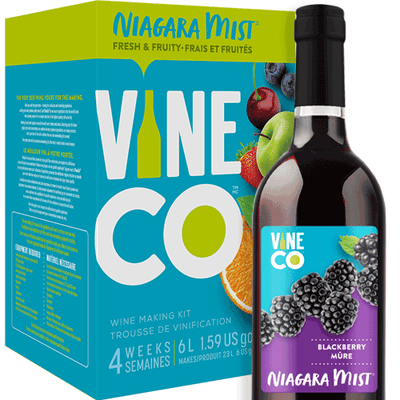
    Due to high demand, this item is currently out of stock. Be the first to receive your items by placing a pre-order today. We will automatically ship this to you when we receive more inventory. The VineCo Niagara Mist lineup offers a crisp, easy-drinking alternative to more traditional winemaking kits. These fruit-forward wine kits are all about capturing the refreshing essence of juicy ripe fruit. Light and crisp and offered in a full assortment of reds, whites, and rosés. Niagara Mist wines are easily enjoyed on their own, but also work well as the base for punches or wine spritzers. One sip of this wine and you’ll spiral into daydreams of meandering through columns of fruit trees with a wicker basket in hand. Slip into flavors of vibrant juicy peach with tart and crispy apple notes. Orchard Crisp is a light-bodied, sweet white wine with an alcohol level of 6% by volume. Orchard Crisp Peach, apple Sweetness: Sweet Oak: None Body: Light ABV: 6% Kit Volume: 6 L Approximate Yield: 23 L Ready to bottle in 4 weeks    

    $75.99

  • Wine Kit - VineCo - Estate Series - Traminer Riesling, AUS Wine Kit - VineCo - Estate Series - Traminer Riesling, AUS

    Australian Traminer Riesling Wine Making Kit - VineCo Estate Series™

    A delightful blend of two incredibly outgoing white wine grapes, Traminer (or Gewurztraminer) and Riesling. Gewürz is renowned for its explosive aromatics that rocket out of the glass, while Riesling is adored for its mouthwatering orchard flavors of apricot and peach, palpable mineral character, and floral aroma. The VineCo Estate Traminer Riesling features a blend of Australian grape juices that produce a delicious white wine that is truly aromatic with notes of lime, apple, honey and stonefruit. Off-dry with a light-medium body and no oak. Fabulously easy-drinking with an alcohol level of 12% by volume. Traminer Riesling, Australia Aromatic with lime, apple, honey, stonefruit Sweetness: Off-Dry Oak: None Body: Light-Medium ABV: 12% Kit Volume: 10 L Approximate Yield: 23 L Ready to bottle in 6 weeks Bottle Labels sold separately

    $142.99

  • VineCo Wine Kit Label  Amarone 30/pk

    Wine Bottle Labels for VineCo Wine Kit - Amarone Style (30 pack)

    Keep your growing home made wine collection organized with these adhesive bottle labels. 30 labels per pack.  

    $6.59

  • Wine Kit - VineCo - Estate Series - Cabernet Merlot, CAL Wine Kit - VineCo - Estate Series - Cabernet Merlot, CAL

    California Cabernet Merlot Wine Making Kit - VineCo Estate Series™

    When the winemaker from Vineco says this is her favorite wine we listened. We made the wine, featured in the video below, and we can attest that this is really great choice. Cabernet and Merlot is quite possibly the premier wine blend, pairing two of the most widely-grown grape varieties in the world. Cabernet Sauvignon and Merlot on their own are the foundation of countless remarkable wines produced in Bordeaux, France. Now staples in other major wine growing countries such as Italy, Chile, and the US, these grapes have also become rooted in such far-flung countries as South Africa, New Zealand, Israel, and on and on. The “Bordeaux Blend” combines the tannic, more acidic structure of Cabernet Sauvignon with the juicier, fruit-forward contribution from Merlot for a result that is greater than the sum of its parts. Our Californian Cabernet Merlot blend summons classic flavors of black currants and plums, accentuated by chocolate, spice, toasted notes, and medium oak character. A full-bodied blend with a sturdy alcohol content of 13.5% and decidedly dry finish. The Cab/Merlot blend includes medium toast American oak chips. Medium toast oak is the most popular toast level used in red wines as it imparts a complex balance of vanillin and spice. American oak is famous for providing classic oak aromas. The Vinceo Estate Cabernet Merlot pairs well with any evening occasion, and should be one of your go-to bottles for an important dinner or classy date night. Even though this blend can add a touch of refinement when served along a perfectly seared lamb chop, don’t be afraid to pour a tall glass while cozied up for a night of takeout pizza and show bingeing. Cabernet Merlot, California Black currant, chocolate, spice, toasted notes Sweetness: Dry Oak: Medium Body: Full ABV: 13.5% Kit Volume: 10 L Approximate Yield: 23 L Ready to bottle in 6 weeks Bottle Labels sold separately

    $145.99

  • VineCo Wine Kit Label  Chardonnay 30/pk

    Wine Bottle Labels for VineCo Wine Kit - Chardonnay (30 pack)

    Keep your growing home made wine collection organized with these adhesive bottle labels. 30 labels per pack.  

    $6.59

  • VineCo Wine Kit Label Cab Sauv 30/pk

    Wine Bottle Labels for VineCo Wine Kit - Cabernet Sauvignon (30 pack)

    Keep your growing home made wine collection organized with these adhesive bottle labels. 30 labels per pack.  

    $6.59

  • VineCo Wine Kit Label  Malbec 30/pk

    Wine Bottle Labels for VineCo Wine Kit - Malbec (30 pack)

    Keep your growing home made wine collection organized with these adhesive bottle labels. 30 labels per pack.  

    $6.59

  • VineCo Wine Kit Label  Shiraz 30/pk

    Wine Bottle Labels for VineCo Wine Kit - Shiraz (30 pack)

    Keep your growing home made wine collection organized with these adhesive bottle labels. 30 labels per pack.  

    $6.59

  • VineCo Wine Kit Label Riesling 30/pk

    Wine Bottle Labels for VineCo Wine Kit - Riesling (30 pack)

    Keep your growing home made wine collection organized with these adhesive bottle labels. 30 labels per pack.  

    $6.59

  • VineCo Wine Kit Label  Gewurztraminer 30/pk

    Wine Bottle Labels for VineCo Wine Kit - Gewurztraminer (30 pack)

    Keep your growing home made wine collection organized with these adhesive bottle labels. 30 labels per pack.  

    $6.59

  • VineCo Wine Kit Label  Sauvignon Blanc 30/pk

    Wine Bottle Labels for VineCo Wine Kit - Sauvignon Blanc (30 pack)

    Keep your growing home made wine collection organized with these adhesive bottle labels. 30 labels per pack.  

    $6.59

  • VineCo Wine Kit Label  Grenache Rose 30/pk

    Wine Bottle Labels for VineCo Wine Kit - Grenache Rose (30 pack)

    Keep your growing home made wine collection organized with these adhesive bottle labels. 30 labels per pack.  

    $6.59

  • VineCo Wine Kit Label  Cab Merlot 30/pk

    Wine Bottle Labels for VineCo Wine Kit - Cabernet Merlot (30 pack)

    Keep your growing home made wine collection organized with these adhesive bottle labels. 30 labels per pack.  

    $6.59

  • VineCo Wine Kit Label  Pinot Noir 30/pk

    Wine Bottle Labels for VineCo Wine Kit - Pinot Noir (30 pack)

    Keep your growing home made wine collection organized with these adhesive bottle labels. 30 labels per pack.  

    $6.59

  • VineCo Wine Kit Label  Pinot Grigio 30/pk

    Wine Bottle Labels for VineCo Wine Kit - Pinot Grigio (30 pack)

    Keep your growing home made wine collection organized with these adhesive bottle labels. 30 labels per pack.  

    $6.59

  • VineCo Wine Kit Label  Mystic 30/pk

    Wine Bottle Labels for VineCo Wine Kit - Mystic (30 pack)

    Keep your growing home made wine collection organized with these adhesive bottle labels. 30 labels per pack.  

    $6.59

  • VineCo Wine Kit Label  Carmenere 30/pk

    Wine Bottle Labels for VineCo Wine Kit - Carmenere (30 pack)

    Keep your growing home made wine collection organized with these adhesive bottle labels. 30 labels per pack.  

    $6.59

  • VineCo Wine Kit Label  Traminer Riesling 30/pk

    Wine Bottle Labels for VineCo Wine Kit - Traminer Riesling (30 pack)

    Keep your growing home made wine collection organized with these adhesive bottle labels. 30 labels per pack.  

    $6.59

  • VineCo Wine Kit Label  Primo Rosso 30/pk

    Wine Bottle Labels for VineCo Wine Kit - Primo Rosso (30 pack)

    Keep your growing home made wine collection organized with these adhesive bottle labels. 30 labels per pack.  

    $6.59

  • VineCo Wine Kit Label  Merlot 30/pk

    Wine Bottle Labels for VineCo Wine Kit - Merlot (30 pack)

    Keep your growing home made wine collection organized with these adhesive bottle labels. 30 labels per pack.  

    $6.59

  • VineCo Wine Kit Label  Cab Shiraz 30/pk

    Wine Bottle Labels for VineCo Wine Kit - Cabernet Shiraz (30 pack)

    Keep your growing home made wine collection organized with these adhesive bottle labels. 30 labels per pack.  

    $6.59

You have seen 74 out of 74 products

Frequently Asked Questions

VineCo Wine Kits Collection Article +

Top 15 Tips, Tricks, and Troubleshoots for Kits Making wine from a kit is the perfect way for a craft winemaker to explore unique varietals from regions around the world that are not typically accessible. With kits, the science behind producing a great wine has been taken care of, while the art of making a great wine is in your hands. Although wine kits are designed to be user friendly, new and even experienced winemakers can occasionally hit a few bumps along the way. After more than a decade of answering questions and chatting with home winemakers from around the world, I have been asked plenty of questions and offered many tips. Here, in no particular order, are the most frequently asked questions about wine kits, along with simple solutions for making wines that you will be proud to have in your cellar and share with your friends. 1. How do I clean and sanitize my equipment? Keeping your equipment clean is the number 1 rule for winemaking success! Cleaning and sanitizing is a 2-step process. First, clean your equipment by removing soil and stains. Use a wine equipment cleaner and follow the manufacturer’s instructions. Next, sanitize your equipment with sanitizer solution or potassium or sodium metabisulfite (sulfite), a wine-friendly sanitizer that is inexpensive and easy to use. To make a sanitizer solution, mix 3 tablespoons of sulfite powder into 1 gallon (4 L) of cool water. Dip or spray each piece of equipment that will touch your wine and then rinse with cool water. Be sure to do this before each use. Leftover solution can be stored in a tightly sealed container for two months. Proper preparation will pay off when you enjoy that first taste from your perfectly crafted wine. 2. How do I know when my wine is degassed? It can be hard to know when your wine is sufficiently degassed. The best degassing method is to use a cordless drill equipped with a degassing wand. Drill on medium speed for 2–4 minutes while switching directions to agitate your carboy of wine. Make sure to keep the prongs of the wand well below the surface to discourage the introduction of oxygen into the wine. Another option is to vigorously stir your wine by hand for 10 minutes with a winemaking spoon handle. Remember: Degassing wine is not gentle stirring. The purpose is to agitate the wine and knock the CO2 bubbles out of solution. Use the timer on your phone to make sure you do not over- or underdo it. Over-degassing can cause oxygen to be injected into your wine. Too little degassing and your wine might have difficulty clearing or have a spritzy feel on your tongue. We do not recommend allowing wine to degas naturally. This method extends the time to an unpredictable length, which doesn’t work with the instructions and runs a risk of oxidizing your wine and exposing it to infection. Adding a few extra days here or there to the process will not make any difference, but lengthy, extended processing time is not recommended. Here are a couple of ways to tell if your wine is sufficiently degassed: • Thief out a sample of the degassed wine from the carboy, put it in the hydrometer test jar and give it a good shake with your hand over the top. If there is a noticeable “pop” sound when you remove your hand, your wine might need further degassing. If there is only a “pfft” sound, it should be sufficiently degassed. • It is always a good idea to taste your wine before bottling. If it is spritzy on the tongue, a little more degassing might be needed. If extra degassing is needed, rack your wine off of any sediment before degassing and allow the wine to sit for 48 hours to settle before bottling. 3.  Why is my specific gravity low on Day 1? Check that the juice base and water mix is filled to the correct primary fermenter measurement. If your kit has a grape skin pack, make sure to add it after reaching the proper fill level. Stir, stir, then stir some more! You can even use your wine whip to mix the juice base and water. For an accurate reading, it is important to take the specific gravity reading right after stirring. Sugars are heavier than water and will naturally sink. This will not affect your fermentation but might skew your day 1 reading. If your kit has grape skins, it is important to wait 5 to 6 hours after the grape skin addition before taking a reading. This allows time for the sugars in the skins to incorporate into the must. Again, make sure to stir very well before taking your reading. It is nearly impossible to stir too much on Day 1! Adding extra sugar is never recommended. As long as the fill level is correct, the sugars will be at the right level to reach the prescribed alcohol content. While adding extra sugar will bump the alcohol, this can lead to a stuck fermentation and an unbalanced wine that might not have the character and complexity you are expecting. 4. Are sulfite and sorbate really all that important? It cannot be overstated how important these stabilizers are in the winemaking process. Sulfite is a winemaker’s best friend! It is used for equipment sanitizing, wine stabilizing, and protecting wines while they age in the bottle. Sulfite is an anti-oxidant that preserves the flavor, color, and character of wine and offers protection from microbial infection. Sulfite is also a naturally occurring by-product of winemaking, which means there is no such thing as "sulfite free” wine — it is scientifically impossible! Sorbate works in tandem with sulfite to ensure that any rogue yeast cannot propagate and spoil your wine after being stabilized. Reducing or omitting sulfite and sorbate is never a good idea but, if the sulfite is omitted, then the sorbate must also be omitted. Otherwise, there is a real risk that your wine will be vulnerable to geranium fault caused by a type of bacteria that feeds on sorbate, which will ruin your wine and potentially contaminate other equipment and batches — not to mention that all of your hard work will go down the drain. For wines that are back-sweetened, like fruit wine and off dry wine, reducing or eliminating sulfite and sorbate is an absolute no-no, even if you are drinking it quickly. Without the addition of stabilizers, there is a risk that these wines will re-ferment in the bottle, pop corks, and cause a mess! 5. Can I top up my carboy of wine with water? Topping up is usually not necessary. As long as the wine reaches the “shoulders” of the carboy, the fill level will be fine during the clearing time as indicated in your instructions. If your wine is going to remain in a carboy longer than the recommended clearing time in the instructions, it can be topped up into the neck of the carboy with a similar style of wine. Water is never recommended for this because the result can be a watery, weak, and unbalanced wine. 6.  Why are tartrates in my bottle? Tartrates, also known as wine diamonds, occur naturally over time. Tartrate crystals are seen by winemakers and sommeliers alike as a sign of quality and are not considered a fault. The process is accelerated when wine is exposed to cold temperatures. Avoid temperatures below 55° F (13 °C) — do not leave wine in a cold car, garage, or directly on a cement floor. Cold storage can affect the stability of the wine and allow wine diamonds to form. Decanting or using an aerator with a fine screen effectively keeps tartrates out of your glass of wine.  Tartrates will never impart an unpleasant flavor or aroma, however they aren’t necessarily pleasant to have in the glass as it can feel like specs of sand in the mouth. Looking like little shards of glass, they can also cause concern for consumers who are unfamiliar with them. Cold stabilizing is an easy and effective solution that encourages tartrates to drop from your wine before bottling. You will need refrigeration or a cold garage in the winter. Allow your carboy of finished wine to sit for 3 to 5 days at a temperature hovering around 32 °F. The tartrates will drop and the wine can be bottled leaving tartrates behind. The warmer the area, the slower the process will be. 7. Can wine kits be made in double batches? Yes, wine kits can be made in double batches. The primary fermenter must be large enough to comfortably accommodate the full contents of both juice bags. There must also be enough space to add the required water and grape skins, if included, and to allow for foaming during primary fermentation. The carboy must be large enough to allow all of the wine to be racked into it. Make sure to add all of the additives included in both kits: yeasts, clearing agents, oak, flavor packs or reserves, which are included in fruit, dessert and most off-dry wines, etc. All are to be added at the appropriate time according to the instructions. Combining different wine-kit styles is not recommended, as the results can be unpredictable. 8. How come my wine isn’t fermenting? “My airlock is not bubbling — help!” This is probably the most common concern I hear from winemakers. Staring at the airlock is not an accurate way to monitor fermentation. Sometimes, fermentation is quiet and you will not see much action in the airlock or on the surface of the must, particularly if the fermentation area is cool. Other times, the CO2 may be escaping another way. If you have concerns, monitor your fermentation using a hydrometer. The reading should be lower than it was on Day 1 and should continue to drop as the fermentation progresses. Depending on the temperature of the room and the must, it can take up to 48 hours for fermentation to become noticeable. Wine kits are already balanced with the correct dosage of energizer and nutrient to ensure a complete fermentation. Sometimes, cleaners and sanitizers can impede fermentation; so, always make sure to rinse your equipment well after cleaning and sanitizing. It is best to make your wine within a few months of purchasing your kit. Do not leave kits in your basement for a year or two, as the yeast and other components will expire. Age your wine, not your wine kit! 9. Why is fermentation still happening Once again, do not monitor your fermentation by looking at the airlock. CO2 is a by-product of fermentation and the wine will naturally off-gas through the airlock even after fermentation has completed. Use your hydrometer. If the specific gravity has not changed after taking readings 48 hours apart, the fermentation is considered complete. Checking the specific gravity with a hydrometer is always the best way to determine what stage you are at in the winemaking process. 10. Why won’t my wine clear? Be patient. Occasionally, a wine will need extra time to clear. Every fermentation is unique. Although most wines will be ready to bottle within the instruction timeline, a batch can sometimes take an extra week or two to clear — this is nothing to worry about. Keep the winemaking area 68–77 °F (20–25 °F) for the entire fermentation process and check your notes to confirm that the proper specific gravity was reached before stabilizing. Ensure that your wine was thoroughly degassed and that all of the additives were added according to the instructions. If these steps have been completed, then all your wine needs is a little extra time to clear. And whatever you do, never filter or bottle cloudy wine. The sediment will pass through most filter pads and your wine will continue to clear in the bottle, resulting in sediment in the bottle and, ultimately, in your glass. 11. What kind of water should I use when making my kit? Excellent quality drinking water makes excellent quality wine. Good quality tap water works well, as long as it is not overly chlorinated. Well water can be great as it often has a natural minerality, which is helpful for a healthy fermentation and can add a subtle complexity to your wine, but there is always the concern of other microorganisms negatively impacting your wine. It is crucial that the water have no off flavors or aromas. If you are unsure, bottled spring water is a good choice. Distilled and reverse osmosis water are not ideal for winemaking, as the lack of minerals does not offer a thriving environment for yeast propagation. 12. Can I add oak sticks or cubes?  Does that change the timing of my kit? Tinkering with wine kits is part of the fun of being your own winemaker. Kits come with everything you need to make great wine, including oak if appropriate for that wine style. Generally, kits are guaranteed only if the wine is made following instructions. If you choose to add more oak, it is best to do this during the clearing process and taste your wine every couple of days to ensure that it does not become too oaky or astringent. Oak is absorbed at a faster rate in alcohol than in must, so it is important to monitor for your desired flavor.  Make sure to taste your wine before deciding on extra oak. You might like it just the way it is! 13. Can I add more yeast if the wine stops fermenting while still sweet? If a kit doesn’t ferment within the instruction range it is a good idea to ensure that your hydrometer is reading correctly before taking any other action. Restarting fermentation can be tricky depending on how much sugar and alcohol are in the wine, both of which can interfere with yeast propagation. Fermentation is considered complete if, after 14 days, the specific gravity does not change when re-read in 48 hours. The closer the S.G. is to being in spec the more difficult it will be to re-start the fermentation, but there is no harm in trying. Use wine yeast that has a good alcohol and temperature tolerance. Rehydrate using the package directions. Stir a small amount of must into the hydrated yeast to help it acclimate. Pour the yeast into the fermenter in smaller drops so that it is evenly dispersed, stir well to inject lots of oxygen and keep the room warm (mid 80s). Fermentation should re-start within 72 hours. If the fermentation doesn’t take, you can blend your sweeter wine with a dryer one. You will want to do bench trials to get the percentages right. You might just end up with an excellent limited release! 14. Is a plastic bucket OK for aging and clarification? There are two reasons why clearing wine in a bucket is not recommended. First, the opening is too big, which can cause the wine to oxidize. Second, you will not be able to monitor the clearing process to ensure it is on track.  This is why it is important to clear wine in a glass or clear plastic carboy. 15. Is my wine ruined if additives are added out of order? It is very important to add the yeast on Day 1. If yeast addition is forgotten or delayed, mold or bacterial infections can develop in the must. Chitosan and Kieselsol work best when added in the correct order, but should still be fine if added out of sequence. You might need to give your wine a few extra clearing days. It is important that the sulfite/sorbate packet be added after fermentation is completed to ensure a dry, stable wine. If the sulfite/sorbate is added on Day 1, yeast may struggle to propagate and cause a sluggish or incomplete fermentation. Bentonite can be stirred in after the onset of fermentation with no issue. For most wines, if the Flavor Pack or Reserve is added on Day 1, the wine should still ferment successfully. Give the must a good stir and keep it warm.  However, the alcohol will be higher and the wine will have a drier profile. The wine can be back-sweetened to taste at clearing, if desired. If oak chips or granules are forgotten, they can be added at clearing. It is a good idea to put them in a muslin bag to help the clearing process.

Login

Forgot your password?

Don't have an account yet?
Create account