Detecting your location...
FREE FERMZILLA with every BrewZilla Gen 4.1 Dads & Grads · Ends in 7 days · No code needed
Shop the Bundle

Fermenters & Accessories

The fermenting process is a main part of what turns wort into a crisp pilsner or delicious IPA, so you’ll need high quality fermenter for your home brewing system. MoreBeer! carries a vast selection of homebrew fermenters and accessories for brewers of all skill levels, and they come in all sizes to cater to your specific batch.

Homebrew Fermenters

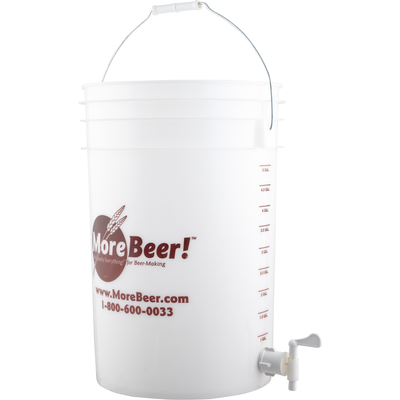
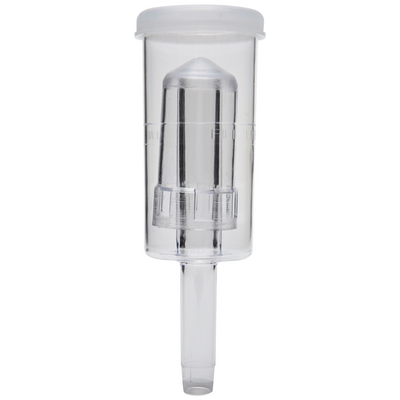
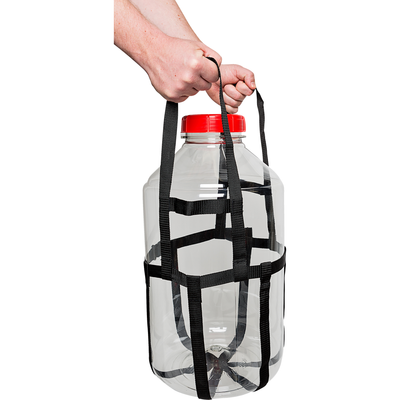
Carboys, jugs and buckets are the large vessels in which most homebrewers fermentation process occurs, and MoreBeer! offers a wide variety of these to choose from. Whether you’re looking for a smaller 1-gallon size or a large 6-gallon bucket, you’ll find it here at a great low price. We also offer airlocks and stoppers to create a tight fit and encourage fermentation, while our carboy drainers make it easy to drain a carboy without holding it upside down. Shop carboy handles, carriers, screw caps and a number of other fermentation equipment pieces to keep your glass carboys operating at their full potential and ensure a great batch with every brew. 

Are you looking for a Conical Fermenter? Click here, to view our selection of Homebrew Conical Fermenters
Shop by collection
241 products

  • Sale -15% RAPT - Fermentation Chamber - Replacement Foam Filled Door RAPT - Fermentation Chamber - Replacement Foam Filled Door

    RAPT Fermentation Chamber | Replacement Door

    Replacement Foam Filled Door for RAPT Fermentation Chamber. This is a direct replacement for the standard door included in the RAPT. Brushed stainless steel with PU foam insulation. KegLand Part Number: KL15837

    $219.99 $186.99

You have seen 241 out of 241 products

Frequently Asked Questions

Should I use a secondary fermenter when making an ale? +

We answer this question a lot because we don't mention the use of secondary fermenters in our instructions and other instructions do. First lets take a look at the supposed benefits of secondary fermenters. The first one we have always read was that the beer would clear out more in the secondary. This is not true. A beer will clear just the same in a primary as it will in a primary/secondary. Another benefit is supposed to be less trub in the bottles. If you you use a racking clip and siphoning set up you should get no more trub pick up in the primary than in the secondary. The most legitimate argument for a secondary fermenter is that you remove the beer from the trub. However we have researched quite a bit of material and have done a fair amount of actual testing and can find no evidence of trub breaking down within two weeks to a point where this an affect on flavor.

Can I repitch WLP200 after a fermentation? +

Yes you can, however repitching multiple times may promote a higher percentage of English yeast cells. This is mainly because English is more flocculent so more of it will be at the bottom for collection (assuming you use a conical fermentor). With a carboy, or other flat bottom fermenter, you'll get a pretty even distribution of both strains that is equivalent to the original blend.

How long will my lager fermentation last? +

It depends on the yeast strain and temperature conditions, but you can expect fermentation with a lager to be done within four weeks. This is not a hard and fast rule. You may have fermentation that is done in as little as two weeks as well. We recommend a minimum primary fermentation at 48-50F for three weeks and a diacetyl rest for three days at 54F. For all lagers it is best to make a yeast starter 48 hours in advance to give your yeast time to replicate in preparation for a cold environment. Don't be alarmed if you don't see krausen (foam) for 2-3 days after pitching yeast this is normal behavior for lager yeast.

How can I tell if fermentation is done? +

Often times the airlock will slow down and brewers will assume the fermentation is completed. The airlock is a good indicator, however is not the best method of knowing that fermentation is completely finished. If you suspect your beer is done, it is best to double check with a hydrometer. Check the fermentation two days in a row, and if the hydrometer reading hasn't changed at all, you're finished!

Is secondary fermentation something I need to do? What is it? +

Secondary fermentation on ales is something that a lot of people do because that is how most of the older homebrewing books taught people how to ferment. The theory was that you remove the yeast and trub from the ferment so that you have less flavor impact on the beer, and that less sediment would make it into bottles. More recent books and literature has proven that single stage fermentation for 2 weeks without racking yields great results without any added off flavors from the yeast and trub. Also, we notice that in that time frame the yeast has enough time to compact, so when the wort is racked to the bottling bucket or keg, most of yeast stays on the bottom of the fermenter. This procedure usually is beneficial to the brewer as it is less work and less chance of exposure to bacteria and oxygen. This method has proven very successful to thousands of our customers so far, however, we invite you to try both procedures and draw your own conclusions to which method you prefer.

What kind of effect can fermenter geometry have on fermentation? +

This is an advanced question and one which won't really affects us as homebrewers due to our limited type of fermenting vessels. Certain designs have effects on flavor. For example, a wide fermenter, such as those used by Samuel Smith, will cause more ester production due the amount of surface area available for the yeast to settle on. There are also effects on the speed at which the yeast will clear, the shallower the fermenter the less time it takes for gravity to pull yeast to the bottom. In commercial brewing a tall, skinny fermenter will give off different esters than a carboy or bucket will. In addition, a tall, skinny fermenter can stress yeast and contribute different esters - ideal for Belgian beers! The only way to truly know what the geometry of a fermenter contributes to a beer, is to use two fermenters with the same yeast strain, fermented at identical temperatures.

When should I see the signs of fermentation? +

If White Labs or Wyeast fermentation will begin 5-15 hours after pitching. As the yeast nears its 4 month shelf life fermentation will begin somewhat later, usually between 15-20 hours. The first sign of fermentation will be a raised airlock. This signals CO2 production. A fine layer of foam will begin forming on top of the liquid. Within a few hours the head of foam will become thicker and rocky , and the airlock will rapidly expel the CO2 gas. Fermentation will usually be complete in 7-14 days, depending on the strain, starting gravity and ferment temperature.

Login

Forgot your password?

Don't have an account yet?
Create account